
TL;DR

Get baking supplies delivered free with Prime
- Fast, free delivery on millions of items
- Prime Video, Amazon Music and more included
- Member-only deals all year
Dough can feel sticky because it has high hydration, needs more time to absorb water, lacks gluten development, is warm, or has fermented too long. Let it rest for 10–20 minutes, then check whether it stays cohesive and elastic; use wet hands or a scraper for tacky dough, and add flour only a spoonful at a time if it still smears or pours.
The dough clinging to your fingers may be doing exactly what the recipe asks. Sticky dough is common, especially in breads designed for a soft, open crumb, and adding flour at the first sign of tackiness can leave you with a heavier loaf.
This guide helps you tell normal tackiness from dough that is too wet. You’ll learn what to check, how to handle the dough in front of you, and when a small recipe adjustment makes sense.
A tacky dough can be normal if it stays cohesive, elastic, and shapeable.
Rest newly mixed dough for 10–20 minutes before deciding to add flour.
Use wet hands or a bench scraper for many high-hydration doughs; match the method to the recipe.
Warmth and overproofing can make dough slack, so judge texture alongside fermentation cues.
If you need to adjust, add flour a spoonful at a time and change one factor per bake.
Why Your Dough Is Too Sticky to Handle
Sticky dough is common—and often intentional. Learn to tell a workable, tacky dough from one that needs more structure, time, or a small adjustment.
Sticky and too wet are different
A high-hydration loaf may cling to your fingers and still bake beautifully. Judge what the dough does when you touch, lift, or fold it—not whether it feels dry.
Likely manageable
- Tacky, but holds together in one piece
- Stretches and releases rather than smearing
- Responds to folds and can be shaped for its recipe
Pause and investigate
- Smears into a shiny puddle or pours
- Tears with little resistance or collapses quickly
- Feels unusually slack alongside warmth or overproofing cues
Lift a portion gently. Cohesive dough stretches and releases; weak dough smears or collapses. A ripe-peach-like cling can be normal—the recipe’s intended texture matters.
Why dough gets sticky after mixing
Water, flour, time, strength, temperature, and fermentation all affect handling. More than one factor can be at work in the same bowl.
Hydration mismatch
Volume measurements vary, and flour differs in protein, milling, freshness, and bran. A different flour may absorb water differently.
Not rested yet
Flour continues absorbing water after mixing. A shaggy or rough dough can become easier to handle after 10–20 minutes.
Gluten needs work
Underdeveloped dough can cling and feel slack. Kneading, folds, or stretch-and-folds can build strength as the recipe directs.
Warm and soft
A warm room, warm hands, or long fermentation can soften dough. A brief chill may make shaping easier.
Overproofed
Too much fermentation can weaken structure, leaving dough fragile, slack, and harder to shape. Handle it gently.
Designed to be tacky
High-hydration breads often need a soft dough for an open crumb. Adding lots of flour can make the loaf dense and dry.
What the dough may be telling you
Early tackiness is not a final verdict. Check again after resting and developing strength; use the recipe’s texture cues along with timing.
| What you notice | What it may mean | What to try |
|---|---|---|
| Tacky, cohesive, stretchy | Normal hydration for this recipe | Wet hands, folds, or a scraper |
| Shaggy soon after mixing | Flour may still be absorbing water | Rest 10–20 minutes, then reassess |
| Slack and weak, not pouring | May need more gluten development | Knead or fold as directed |
| Smears, pours, won’t hold shape | Could be too wet, warm, or overproofed | Check recipe, temperature, fermentation |
If whole-grain dough feels rough after mixing but turns stretchy after resting, extra flour would have been the wrong first move. Let structure guide you instead of expecting a dry feel.
Work through these steps in order
Each step addresses a different cause. Change one factor at a time so you can tell what actually helped.
If it remains unmanageable after resting and developing, add flour a spoonful at a time and mix it in before judging again. For the next bake, weigh ingredients in grams and consider a small water reduction if the same flour and method consistently produce dough that smears.
Why handfuls can make the loaf worse
Extra flour can make sticky dough easier to touch, but it changes hydration and may leave the baked result heavier and drier. First check whether the dough still smears after a rest and gentle development.
One spoonful at a time
Mix in a small amount, pause, and reassess before adding more.
Change one factor
Adjust water, flour, kneading, or fermentation separately to learn what matters.
Keep the intended style
Soft, tacky dough may be exactly what an open-crumb bread requires.
How to tell whether sticky dough is normal
Sticky dough is normal when it feels tacky but still holds together, stretches, and responds to handling; dough that smears, pours, or tears with little resistance may need more structure or a small hydration adjustment. The right feel depends on the recipe, so a soft high-hydration dough should not be judged by the standards of a firm bagel dough.
Think of tackiness like a ripe peach: a little cling tells you something about its texture, but it doesn’t mean the fruit has turned to mush. If your bread dough sticks lightly to a fingertip yet pulls away in one piece, it may be ready for folds or shaping. If it spreads into a shiny puddle on the counter, pause and investigate.
“Sticky” and “too wet” are different. A cohesive, elastic dough can be hard to handle and still bake beautifully. A slack dough that cannot hold its shape deserves attention, though stickiness by itself does not predict whether it will rise.
Key check: Watch what the dough does after you touch or lift it. Cohesive dough stretches and releases; weak, excessively wet dough smears or collapses.
Products Worth Considering

Cuisinart ICE-70P1 2-Quart Ice Cream Maker with Countdown Timer

Ninja PossibleCooker PRO Plus 11-in-1 8.5 qt Trace Blue (MC2002BL)

Cuisinart PerfecTemp Electric Kettle, 1.7 L, 1500 W, 6 Temperature Settings
As an affiliate, we earn on qualifying purchases.
Why your dough is too sticky after mixing
Why your dough is too sticky often comes down to the balance between water, flour, time, and dough strength. A recipe can feel different in your kitchen if your flour absorbs less water, your measurements vary, or the dough is warmer than expected.
Too much water for the flour is one possible cause. Measuring flour by cups introduces variation because a cup can weigh differently depending on how you fill it; weighing flour and water in grams gives you a steadier starting point. For example, a lightly scooped cup and a tightly packed cup can send the same recipe in different directions.
Flour type matters, too. Protein level, milling, freshness, and whole-grain bran all affect water absorption. Whole-grain flour may take longer to hydrate, so a dough made with a new bag of whole-wheat flour can feel rough or sticky at first and change after resting.
Sometimes the flour simply hasn’t had enough time to absorb the water. Letting the mixed dough sit for 10–20 minutes before correcting it can help. Gluten development also matters: dough that has not been kneaded or folded enough may cling and feel slack even when the water measurement is right.
- Warmer dough often feels softer; a warm kitchen, warm hands, or a long fermentation can all contribute.
- Overproofing can weaken the dough so it becomes fragile, slack, and harder to shape.
- A high-hydration recipe may call for a tacky texture as part of its style.
These causes can overlap. On a summer afternoon, a dough may start with the right water amount and still feel looser because it has warmed and fermented faster than it would in a cool kitchen.
What the dough should feel like at each stage
Why your dough is sticky can be easier to answer when you check its feel after mixing, resting, and developing strength. Early dough often feels rough and uneven; after a rest and some folds, it may become smoother and more elastic without any extra flour.
Early tackiness is not a final verdict. Flour needs time to take up water, and the dough needs handling to build strength. If your dough looks shaggy right after mixing, cover it and give it a short rest before deciding it needs more flour.
| What you notice | What it may mean | What to try |
|---|---|---|
| Tacky, cohesive, and stretchy | Normal hydration for the recipe | Use wet hands, folds, or a scraper |
| Shaggy soon after mixing | Flour may still be absorbing water | Rest for 10–20 minutes, then reassess |
| Slack and weak, but not pouring | It may need more gluten development | Knead or fold as the recipe directs |
| Smears or pours and will not hold shape | It may be too wet, overproofed, or very warm | Check the recipe, temperature, and fermentation; adjust gently |
For instance, if a whole-grain dough feels rough after mixing but becomes stretchy after a rest, more flour would have been the wrong first move. Let the dough’s structure and response guide you, rather than expecting it to feel dry.
How to handle sticky dough without drying it out
Why your dough is sticky does not always call for a recipe change; first rest it, check its structure, and choose a handling method that suits the dough. Work through these steps in order so you can see what improves it.
- Cover and rest the dough for 10–20 minutes. This gives flour time to absorb water. If you have just mixed a shaggy dough, this pause may be all it needs.
- Lift or stretch a portion to check its strength. Elastic dough that holds together can often be managed with folds; dough that tears or collapses may need more development or gentler handling.
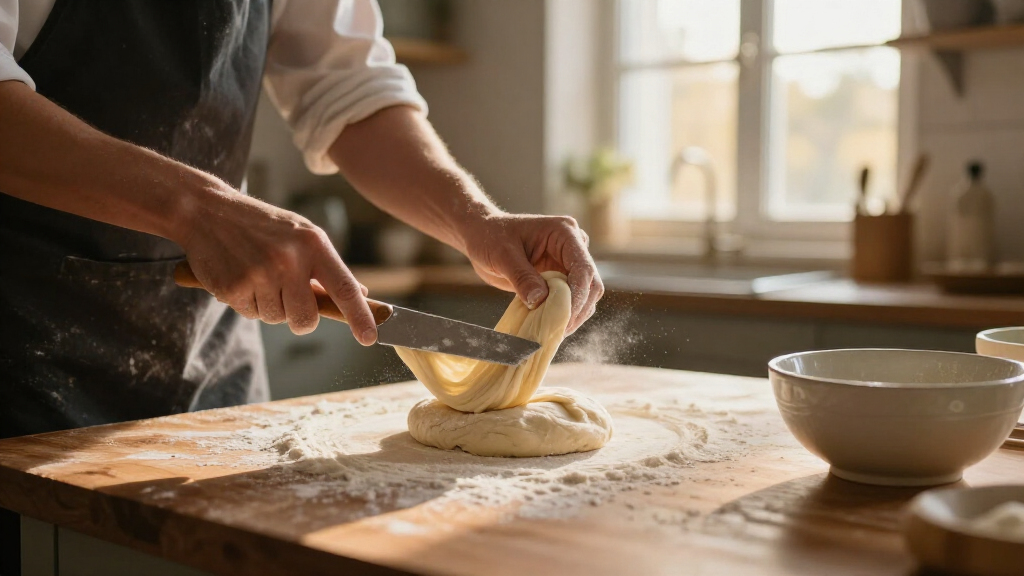
- Use wet hands for wet bread dough. A light coating of water can help your fingers release from a high-hydration dough. For a firmer dough, a lightly floured hand or a bench scraper may work better.
- Build strength gradually. Knead, fold, or use stretch-and-folds according to the recipe. A baker working with a loose sourdough, for example, can use a scraper to lift and fold the dough instead of pressing extra flour into it.
- Check temperature and fermentation. If the dough feels unusually soft in a warm room, a brief chill may make shaping easier. If it has overproofed, handle it gently and consider baking it in a pan.
- Adjust only if it remains unmanageable. Add flour a spoonful at a time, mixing it in before judging the texture again. For your next batch, reduce water slightly if the flour and method consistently produce dough that smears.
Each step solves a different problem, so change one factor at a time. If you add flour, knead longer, and chill the dough all at once, you won’t know which change helped—and the dough may end up too firm.
Use the recipe’s texture cues as well as its timing. Flour type, room temperature, and dough temperature affect how quickly dough develops and ferments.
Why handfuls of flour can make the loaf worse
Adding a large handful of flour can make sticky dough easier to touch, but it changes the dough’s hydration and may produce a heavier, drier bake. The key points for deciding whether to add flour are whether the dough still smears after a rest and whether gentle development has improved its structure.
Picture adding flour like tightening a loose stitch: a little can steady the fabric, but too much can pull the whole shape out of line. A spoonful at a time gives you a chance to stop once the dough is cohesive and workable. You do not need to make every bread dough dry or nonsticky.
High hydration is a style, not a mistake. Some open-crumb breads depend on a softer dough, so extra flour can make the loaf dense and close-grained. If the recipe calls for wet hands or a scraper, that is a sign the intended method may involve tackiness.
If you bake the same recipe regularly and find the dough remains unmanageably wet after resting and folding, adjust the next batch in a small, measured way. Reduce the water slightly or use a scale to repeat your flour and water amounts, then note the change. Small records beat guessing from one bake to the next.
When warm or overproofed dough needs gentle handling
Warm or overproofed dough can feel sticky because heat softens it and excess fermentation can weaken its structure. A brief chill can help with handling when dough is simply warm, while dough that has lost strength needs a gentler plan than a vigorous round of kneading.
In a warm kitchen, fermentation may move faster than the recipe’s clock suggests. If your dough has puffed dramatically, feels fragile, and deflates as you touch it, it may have gone too far. That is a sign that something beyond flour quantity is affecting the texture.
Read the dough, not just the timer. A cool kitchen can slow fermentation; a warm one can speed it up. If a sticky dough still holds shape and springs back somewhat, continue with the recipe’s cues. If it is delicate and slack, handle it carefully, reshape only if it can tolerate that, or bake it in a loaf pan to give it support.
For example, a loaf that spreads during shaping may still bake into a tasty sandwich bread in a pan, even if it no longer holds a tall free-form shape. That option salvages the bake without pretending overproofing can always be reversed.
What to remember the next time your dough sticks
Sticky dough is manageable when you identify whether it is simply tacky, still absorbing water, short on strength, too warm, or past its best proof. You can make the next decision from a small set of observations instead of reacting to the sensation on your fingers.
- Rest first: give newly mixed dough 10–20 minutes before adding flour.
- Check structure: cohesive and elastic usually means tacky; smearing or collapsing signals a deeper issue.
- Choose the right tool: wet hands suit many wet doughs, while a scraper helps lift and fold without pressing in extra flour.
- Adjust gradually: add flour by the spoonful only when rest and development have not made the dough workable.
- Use small recipe changes: weigh ingredients and change one variable at a time so your next bake teaches you something useful.
If you are following a new recipe, take a quick note of the flour, room warmth, rest, and handling method. The next time the dough feels sticky, you will have a better starting point than a fistful of flour.
Frequently Asked Questions
Should bread dough be sticky?
Often, yes. Bread dough can be tacky and still be cohesive, elastic, and workable, especially when the recipe uses high hydration. Follow the recipe’s handling cues instead of expecting the dough to feel dry.
Can I add flour if my dough is too sticky?
You can, but let the dough rest for 10–20 minutes and check its structure first. If it still smears or will not hold together, add flour one spoonful at a time and mix it in before adding more.
Why is my dough stickier after kneading?
The recipe may be designed for a tacky dough, your flour may absorb less water, or the dough may be warm or underdeveloped. Check whether it stretches and holds together, then consider a rest, folds, or a brief chill based on what you observe.
Why is my dough stickier in summer?
Warm conditions can soften dough and speed fermentation, making it feel looser during shaping. Use the dough’s texture and rise as cues, and chill it briefly if warmth is making an otherwise sound dough hard to handle.
Can I fix overproofed sticky dough?
Sometimes you can reshape it gently, but overproofed dough may have lost strength and may not recover fully. If it cannot hold a free-form shape, try baking it in a loaf pan for support.
Conclusion
When your dough sticks, pause before adding flour: rest it, check whether it holds together, and use a wet hand or scraper if the recipe calls for a tacky dough. Make small adjustments only when the dough still smears or collapses after it has had a chance to develop.
Let the dough tell you what it needs. Sometimes the best loaf begins with a little flour on your fingers and a lighter touch.