TL;DR

Get baking supplies delivered free with Prime
- Fast, free delivery on millions of items
- Prime Video, Amazon Music and more included
- Member-only deals all year
To make cinnamon rolls that stay gooey, use a soft, slightly tacky dough, spread the filling evenly, and proof the rolls until visibly puffy. Bake until the centers are set and cooked through, then store the cooled rolls airtight and reheat them gently under a cover.
A cinnamon roll can look perfect on top and still turn dry by the time you reach the center. The fix starts long before the pan goes into the oven: a little too much flour, a rushed proof, or a few extra minutes of baking can each steal softness from the spirals.
This guide shows you how to make cinnamon rolls that stay gooey while still baking the dough through. You’ll learn what the dough should feel like, how to keep cinnamon sugar in the roll, when the rolls are ready for the oven, and how to store and reheat them without drying them out.
Here, gooey should mean tender and moist, with a soft center and cinnamon filling that clings to the layers. It should not mean raw dough. Think of the bake as a narrow path: soft enough to feel plush, cooked enough to hold its shape.
Measure flour by weight or spoon and level it, then stop adding flour when the dough is soft and slightly tacky.
Knead until the dough feels smooth and supple, and spread softened butter and cinnamon sugar in an even layer.
Judge proofing by puffiness and a slow spring-back, since kitchen temperature changes how long the rise takes.
Bake until the center is set; enriched rolls are often done around 190°F (88°C), but recipes and ovens vary.
Cool and store rolls airtight, then reheat briefly under a cover to bring back softness.
BAKE SOFT · KEEP THE SPIRALS
How to Make Cinnamon Rolls That Stay Gooey
The secret is a soft, slightly tacky dough, an even ribbon of filling, and proofing by feel. Bake the centers until set, then protect every roll’s softness through storage and a gentle reheat.
01 / BUILD THE SOFTNESS
Four details that protect the crumb
Softness starts before the pan reaches the oven. Handle the dough gently, spread the filling evenly, and let the rolls tell you when they are ready.
Stop before it turns dry
Milk, butter, egg, and a modest amount of sugar enrich the dough. Add flour gradually and stop when it pulls together while staying slightly tacky.
Keep flour consistent
Weigh flour when possible. With cups, spoon it in lightly and level the top; scooping from the bag can pack in too much.
Develop a supple stretch
Knead until smooth and elastic. A soft cushion that stretches without tearing right away is a better target than a firm, perfectly clean bowl.
Spread an even ribbon
Use softened butter that spreads but holds its shape. Layer cinnamon sugar evenly and leave a narrow border to seal the log.
Roll snugly, cut cleanly
Roll without squeezing out the filling. Slice with a sharp knife or unflavored thread so the spirals keep their shape.
Try a recipe-made tangzhong
A cooked flour-and-liquid paste can help retain moisture. Use a formula designed for tangzhong rather than adding it on a whim.
Filling rule: Aim for a thin, consistent coat—not a tall mound. Melted butter can run ahead of the sugar; very cold butter can tear the dough.
02 / PROOF BY LOOK AND FEEL
Let puffiness—not the clock—set the pace
Yeast works faster in a warm kitchen and more slowly in a cool one. After shaping, keep the rolls covered and look for visible expansion and a gentle, slow spring-back.
- 1Look: rolls are visibly larger, softer, and lightly touching.
- 2Press: a gentle fingertip dent returns slowly when they are ready.
- 3Wait or bake: an immediate bounce suggests more time; a deep dent that stays may mean overproofing.
The proofing window
UnderproofedPuffy
ReadyFragile
Overproofed
Cool kitchen? Give the dough more time and check again. For an overnight bake, refrigerate shaped rolls as directed, then let cold dough warm and finish proofing before baking.
03 / BAKE THE CENTER THROUGH
Lightly golden tops. Set centers.
The middle is usually the last part to bake. A dark top can look finished while the center is still catching up, so check the middle rolls and follow your recipe’s timing and pan guidance.
Use a thermometer as one cue
Enriched bread is often done around this temperature at the center. Recipes and ovens vary, so pair the reading with a set center and lightly golden tops.
If tops brown too quickly, tent the pan loosely with foil and continue baking until the centers are set.
SMALL CHOICES, SOFTER RESULTS
- ✓Close together: rolls tend to keep softer sides.
- ✓More space: allows more edge browning.
- ✓Pan matters: metal and glass can bake differently; use the recipe’s pan instructions.
- ✓Optional cream: some recipes pour cream over shaped rolls for a richer, softer result. It does not replace baking the centers through.
04 / THE SOFTNESS PATH
From flour to the next-day bite
Each stage protects the texture you want at the center. Follow the cues as the dough changes.
05 / TROUBLESHOOTING
What went wrong—and what to adjust
Finishing touch: frost while rolls are warm so icing softens into the spirals. Let them cool slightly first; scorching-hot rolls can melt the icing away.
06 / STORE & REHEAT
Save the soft center for later
Moisture escapes as rolls sit exposed. A good seal slows drying; a gentle covered reheat helps restore softness without leaving the edges tough.
Use soft dough to keep the rolls tender
To make cinnamon rolls that stay gooey, start with an enriched dough that feels soft and slightly tacky, not stiff or dry. Milk, butter, egg, and a modest amount of sugar help create a tender crumb, while flour gives the dough structure. Too much flour can tip that balance and leave the baked rolls dense.
Measure flour by weight when you can. If you use cups, spoon flour lightly into the measuring cup and level the top; scooping straight from the bag can pack in more than the recipe intended. Add flour gradually during mixing, and stop when the dough pulls together but still feels a little tacky when you touch it.
Knead until the dough looks smooth and supple and stretches without tearing right away. It should feel like a soft cushion, not a firm ball of modeling clay. If you’re kneading by hand, expect the dough to feel stickier at first; give it a few minutes before adding more flour.
For example, if dough clings slightly to your fingertips but releases when you lift your hand, that’s usually more promising than a dry ball that leaves the bowl perfectly clean. A stand mixer can make kneading easier, but it isn’t required. The texture matters more than the equipment.
An optional method called tangzhong cooks a small amount of flour with liquid into a paste before it goes into the dough. That paste can help the dough retain moisture, but it changes the recipe, so use a formula designed for it rather than adding it on a whim.
Soft dough is the starting point. If you add flour until the dough stops feeling tacky, you may bake away the softness you wanted to keep.
Products Worth Considering

Instant Pot InstantChill Ice Cream Maker with Rolled Ice Cream Cold Plate, 2-Pint

Vitamix 5200 Professional-Grade Blender, 64 oz. Container, Black

Instant Pot Duo Crisp Ultimate 6.5-Quart 13-in-1 Pressure Cooker and Air Fryer
As an affiliate, we earn on qualifying purchases.
Spread filling evenly so every spiral stays moist
An even layer of soft butter, cinnamon, and sugar gives you moist spirals without a puddle of filling at the bottom of the pan. Spread softened butter over the dough, then distribute the cinnamon sugar across the surface in a consistent layer. The goal is to give each bite a ribbon of filling while leaving the dough enough structure to roll and bake.
Very cold butter tears the dough and leaves bare patches; melted butter can run ahead of the sugar and leak during baking. Softened butter should spread easily while still holding its shape. Leave a small border along one edge so the roll can seal, then roll the dough snugly without squeezing the filling out.
If you’ve ever pulled a roll apart and found the cinnamon gathered in one sticky clump, the filling was probably too thick in that spot or the roll wasn’t snug enough. Aim for a thin, even coat instead of piling on more sugar to chase extra goo. A generous filling is about coverage, not height.
Cut the log with a sharp knife or unflavored thread so you don’t squash the spirals. Set the rolls close together if you want softer sides; leave more room if you prefer browned edges. A metal and a glass pan may brown differently, so follow the recipe’s pan instructions and watch the rolls as they bake.
These small details that keep cinnamon rolls soft also help the filling stay where it belongs. When the log is evenly rolled and each piece holds its round shape, the cinnamon forms distinct, moist ribbons rather than escaping into the pan.
- Use spreadable butter, not melted butter.
- Keep the filling even and leave a narrow border to seal the log.
- Roll snugly, then cut without pressing the dough flat.
Proof until puffy, even when the kitchen is cool
Proof cinnamon rolls until they look visibly expanded and puffy, rather than relying on a fixed timer. Yeast moves faster in a warm kitchen and more slowly in a cool one, so the same dough may need different amounts of time on different days. The dough’s appearance and feel give you a better signal than the clock alone.
After shaping, look for rolls that have grown and softened, with the spirals filling out and sitting lightly against one another. Press a fingertip gently into the side of a roll. If the dent springs back immediately, the dough may need more time; if it returns slowly, it’s usually ready. If the dent stays deep and the roll looks fragile, it may have proofed too far.
Underproofed rolls often bake up dense because the dough has not had enough time to build the airy structure that makes the crumb tender. Overproofed dough can lose strength and collapse in the oven. Picture a balloon: you want it inflated enough to feel light, not stretched until it can no longer hold its shape.
A chilly winter kitchen can slow the rise, so a pan that looks unchanged after the recipe’s suggested time may simply need more time. Keep it covered to prevent the surface from drying, and check again later. In a warm kitchen, start checking earlier so the rolls don’t pass their best proof.
For an overnight bake, cover the shaped rolls and refrigerate them according to the recipe. Cold dough may need time at room temperature to warm up and finish proofing before baking. Look for the same puffy shape and slow spring-back rather than putting cold, compact rolls straight into the oven.
Bake the centers through without drying the tops
Bake cinnamon rolls until their centers are set and cooked through, with tops that are lightly golden rather than deeply browned. A dark top can fool you: the center is the last part to bake, so color alone cannot confirm that the dough is ready. Check the middle rolls, since they are often the softest and slowest to finish.
An instant-read thermometer can help you make the call. Enriched bread is often done around 190°F (88°C) at the center, though ovens and recipes vary. Use that number alongside the look and feel of the rolls instead of treating it as a universal timer.
If the tops brown before the centers set, lay foil loosely over the pan and continue baking. That simple cover slows browning while the middle catches up. For instance, if the outer rolls look golden but the center rolls still seem doughy when gently separated, tent the pan and check again after a short interval.
Some bakers pour a little cream over the rolls before baking for a richer, softer result. It’s an optional technique; use the amount specified by the recipe and still check that the centers are baked through. Cream can add moisture, but it can’t turn underbaked dough into a properly set crumb.
For dependable results, follow the recipe’s recommended pan and temperature, since glass and metal transfer heat differently. Start checking near the earlier end of the suggested baking range. A few minutes can make the difference between a soft, tender middle and a dry edge.
Soft and fully baked can go together. Aim for a tender center that holds its shape, not a raw streak of dough.
Store and reheat rolls without losing their softness
Let cinnamon rolls cool, then seal them airtight to slow moisture loss. Leaving the pan uncovered on the counter lets the warm crumb dry out as it sits. Once the rolls are cool enough to store, use a close-fitting lid or a covered container.
For a single roll, reheat it briefly in the microwave under a microwave-safe cover. A few drops of water nearby or a lightly damp paper towel can add a little steam. Heat in short bursts and check between them; too long at high power can make the edges tough.
If you’re warming several rolls, cover the pan loosely with foil and use a low oven until they’re warm. The cover helps trap moisture, much like a small tent over the rolls. Skip prolonged high heat, which can dry the outside before the middle warms.
For example, a roll from yesterday can regain a soft center after a short covered reheat, while the same roll left uncovered in the microwave may turn chewy at the edges. Let the roll rest briefly after heating so the warmth can settle through the spiral. Frosting may soften, so add it after reheating if you want a thicker layer.
For longer storage, baked rolls generally freeze well when wrapped airtight. Thaw and reheat gently. Unbaked rolls can also be frozen, but their proofing and baking steps depend on the recipe. If the rolls include perishable toppings or fillings, follow food-safety guidance for those ingredients and avoid leaving them at room temperature longer than recommended.
Fix dry rolls, leaking filling, and doughy centers
Dry cinnamon rolls usually point to excess flour, too little proofing, overbaking, or storage that let moisture escape. Start troubleshooting with the dough: if it felt stiff before the rise, flour may be the culprit. If it was soft but baked up dense, check whether it had enough time to become puffy before it went into the oven.
Filling that leaks out often comes from butter that was too warm or melted, a layer that was too thick, or a loose roll. Leave a small clean border at the edge and roll the dough snugly. If a little sugar escapes, that’s normal; a large pool at the bottom suggests the filling needs a more even hand next time.
A doughy center can mean the rolls were underbaked, especially if the tops browned quickly. Tent with foil and keep baking until the center is set; use a thermometer if you have one. Don’t rely on a dark crust as proof of doneness.
Use this quick check after a batch misses the mark:
- Dry and dense: measure flour more carefully and check the proof before baking.
- Filling on the pan: soften, but don’t melt, the butter; use a thinner layer and roll snugly.
- Brown outside, doughy inside: cover loosely with foil and continue baking.
- Soft on day one, tough on day two: cool fully, store airtight, and reheat under a cover.
Change one factor at a time. If you reduce flour and shorten the bake together, you won’t know which change helped. A note on your recipe—such as “cool kitchen; proofed 25 minutes longer” or “center needed foil”—can make the next pan easier to read.
Frequently Asked Questions
How do I keep cinnamon rolls soft and gooey?
Use a soft, slightly tacky dough, avoid excess flour, and proof the rolls until visibly puffy. Bake until the centers are set, then cool and store the rolls airtight. Reheat briefly under a cover to restore softness.
Can I pour heavy cream over cinnamon rolls before baking?
Yes, some recipes use cream for a richer, softer result. Follow the recipe’s amount and bake until the centers are fully set; cream does not replace checking doneness.
How can I tell when cinnamon rolls are proofed?
They should look expanded and puffy. Press a fingertip gently into the side: a slow spring-back usually means they’re ready, while an immediate spring-back suggests they need more time.
Why did my cinnamon roll filling leak out?
The butter may have been melted, the filling layer too thick, or the dough rolled too loosely. Use softened butter, spread a thin even layer, leave a small border, and roll snugly.
Can I make cinnamon rolls the night before?
Usually, yes. Refrigerate shaped rolls covered according to your recipe, then let them warm and finish proofing before baking. Cold dough may need extra time, so look for puffiness rather than following the clock alone.
How do I reheat a cinnamon roll without drying it out?
Cover a single roll and microwave it briefly in short bursts, or warm a covered pan in a low oven. Avoid prolonged high heat, which can toughen the edges before the middle warms.
Conclusion
For rolls that stay gooey, protect the softness at every stage: keep the dough slightly tacky, proof it until puffy, and bake until the center is set without letting the tops overbrown. Store the cooled rolls airtight, then reheat them gently under a cover.
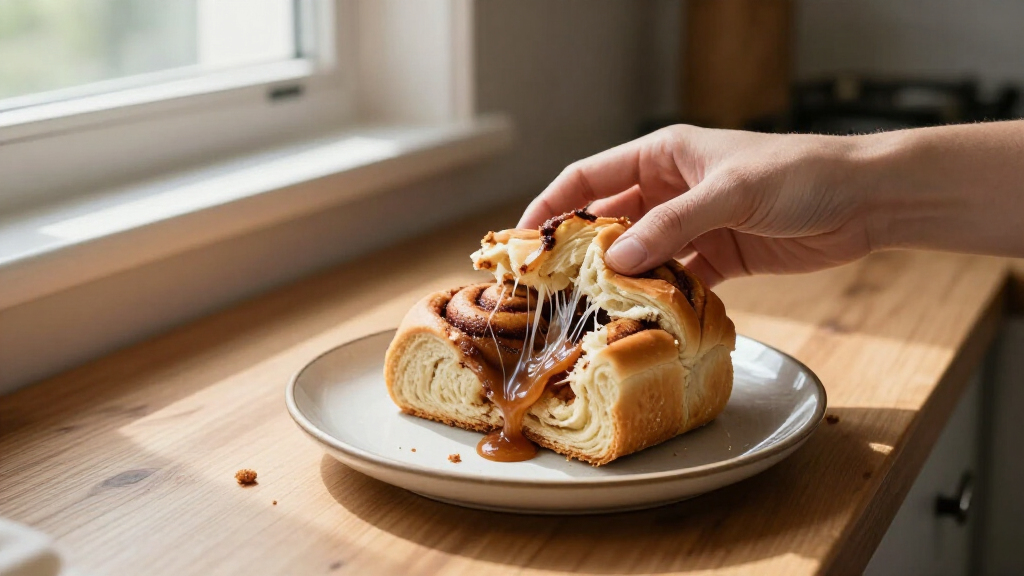
Remember the feel of the dough and the look of the proof more than the timer. The reward is a warm spiral that pulls apart in soft layers, with cinnamon tucked into every bite.