
TL;DR

Get baking supplies delivered free with Prime
- Fast, free delivery on millions of items
- Prime Video, Amazon Music and more included
- Member-only deals all year
Uneven baking often results from oven hot spots, improper rack placement, or unsuitable pans. Adjusting temperature, rotating items, and choosing the right bakeware can make a big difference.
Always use an oven thermometer to verify your oven’s actual temperature.
Rotate pans during baking to counteract hot spots and promote even browning.
Choose light-colored, heavy-duty pans for more uniform heat transfer.
Adjust oven temperature downward slightly and extend baking time to prevent burning.
Identify hot spots by testing with a simple baking experiment before your main batch.
Why Your Oven Might Be Sabotaging Your Baking
Your oven isn’t always the perfect baking partner. Many home ovens have hot spots, which are tiny areas that run hotter than others. This uneven heat distribution can cause the bottoms of your cake or bread to burn while the tops remain undercooked, leading to inconsistent textures and appearances. Regularly calibrating your oven with an accurate thermometer helps identify these quirks, allowing you to adjust baking times or rack positions accordingly. Recognizing hot spots is crucial because it informs how you position your baked goods, rotate trays, and set your oven temperature—small changes that can significantly improve your results. Ignoring these irregularities often results in wasted ingredients and frustration, but understanding their impact empowers you to bake smarter, not harder.
Products Worth Considering

Le Creuset Enameled Cast Iron Round Dutch Oven, 5.5 Qt, Flame

Le Creuset Signature Enameled Cast Iron Round Dutch Oven, 5.5 qt, Deep Teal

Le Creuset Enamemed Cast Iron Oval Dutch Oven, 5 qt., White/Crucible
As an affiliate, we earn on qualifying purchases.
How to Recognize and Fix Hot Spots in Your Oven
- Place an oven thermometer on different racks and spots inside your oven to map out temperature variations.
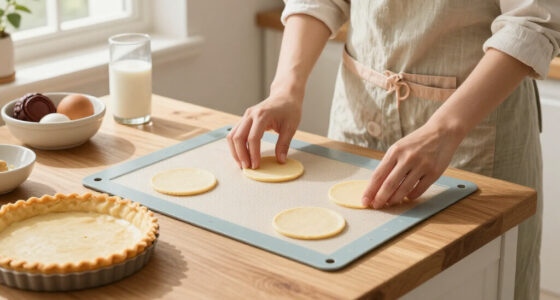
- Bake a simple item like sugar cookies on each spot to observe where burning or uneven browning occurs. This practical test helps you understand the hot zones and their severity.
- Rotate trays halfway through baking, especially if hot spots are evident, to ensure even cooking. This step is crucial because it compensates for temperature inconsistencies, preventing burnt edges or undercooked centers. The tradeoff here is that it requires a bit more attention during baking, but the payoff is consistent results. Knowing your oven’s quirks allows you to plan your baking process better—whether by adjusting rack positions, extending baking times, or lowering oven temperatures—saving you time and ingredients in the long run.
This simple test reveals where your oven’s hot spots are, so you can plan your baking accordingly. If you notice a particular corner or section browns faster, rotate your pans to distribute heat evenly. Recognizing these areas helps you make informed decisions about placement and timing, ultimately leading to more uniform baked goods and less guesswork.
Choosing the Right Bakeware for Consistent Results
The material and color of your baking pans influence heat absorption and reflection, which directly impacts how evenly your treats bake. Dark, non-stick pans tend to absorb more heat, often causing the bottoms to burn before the tops are fully cooked. Conversely, light-colored or reflective pans bounce heat, promoting a gentler, more uniform bake. The choice of bakeware affects not just the appearance but also the texture and taste of your baked goods. For instance, switching from a dark metal pan to a shiny aluminum one can significantly reduce burnt bottoms on cookies, while heavy-duty, flat-bottomed pans help distribute heat evenly across the surface. Investing in the right pans means fewer burnt edges, more evenly risen cakes, and a more predictable baking process—saving you time, ingredients, and frustration.
Taming the Temperature: How to Bake Without Burning or Undercooking
Lowering your oven’s temperature slightly and extending baking times often results in more evenly baked goods. For example, baking a cake at 325°F instead of 350°F allows heat to penetrate more gradually, preventing the bottom from burning while giving the top enough time to cook thoroughly. This tradeoff involves longer baking times, but it reduces the risk of burnt edges and undercooked centers. Covering the top with foil if it browns too quickly helps manage surface color without sacrificing internal doneness. Preheating your oven for at least 15-20 minutes ensures the temperature remains steady, avoiding hot spots that can cause uneven results. While it might seem counterintuitive to lower the temperature, this approach often yields more reliable, professional-looking baked goods, especially for delicate items like cakes and bread.
Modern Tools and Techniques That Make Even Baking Easier
Recent technological innovations can dramatically improve your baking precision. Convection ovens, which circulate hot air with fans, help eliminate hot spots by providing a more uniform temperature distribution throughout the oven cavity. Infrared heating elements deliver consistent warmth, especially in older or less sophisticated ovens, reducing the likelihood of uneven browning. Using a baking stone or steel acts as a heat reservoir, providing steady, even heat transfer during bread baking—a technique favored by professionals. Silicone mats and parchment paper not only prevent sticking but also promote even browning by reflecting heat away from direct contact with hot metal surfaces. Incorporating these tools into your baking routine can significantly reduce the trial-and-error process, giving you more control and confidence over your results.
Quick Fixes for Already Baked Goods with Uneven Color
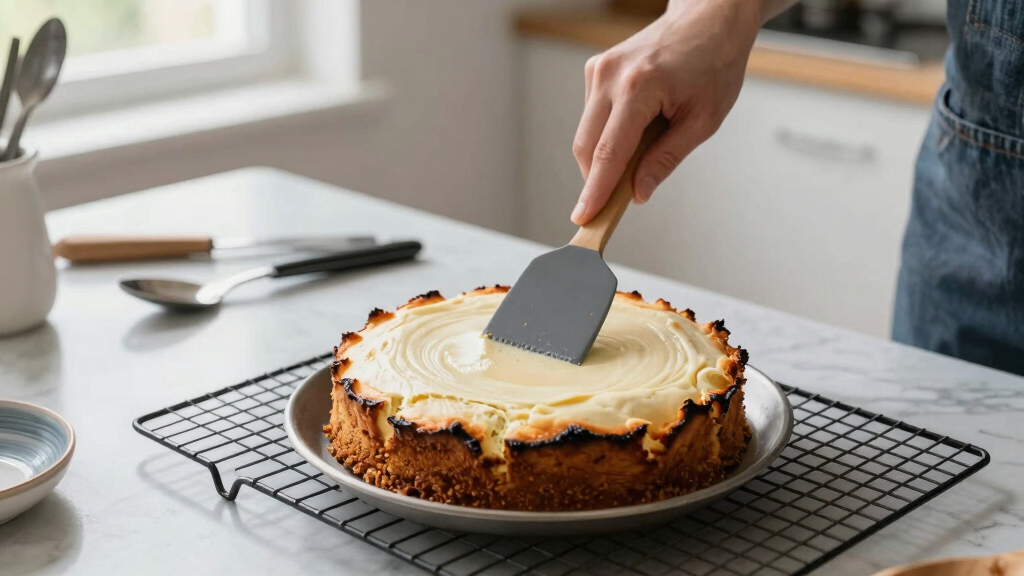
If your baked item has already come out of the oven with burnt bottoms and pale tops, don’t despair. For future batches, adjusting your oven rack to the middle, lowering the temperature slightly, and rotating your baked goods halfway through can prevent this issue from recurring. To salvage your current baked goods, carefully trimming burnt bottoms can remove the most charred parts, while covering pale tops with a light layer of frosting or glaze can improve appearance and flavor. A quick fix like this can sometimes salvage your effort, but it’s important to recognize that these are temporary solutions. The real solution lies in understanding your oven’s quirks and applying preventive measures to achieve more consistent results in the future—saving time, ingredients, and disappointment.
The Best Pans to Prevent Uneven Baking
Choosing the right pan is crucial for consistent baking. Light-colored, heavy-duty pans with flat bottoms facilitate even heat transfer, which helps your baked goods rise uniformly and prevents burning on the bottom. Thin or dark pans tend to absorb and concentrate heat, creating hot spots that can lead to uneven browning or burnt edges. For bread, using a baking steel or stone mimics professional hearth ovens by providing a steady, even heat source. Investing in quality bakeware not only improves results but also extends the lifespan of your pans, making your baking more predictable and less prone to mishaps. The right pan acts as a foundation for success, reducing the need for constant monitoring and adjustment during baking.