
TL;DR
Hydration in bread dough—measured as water to flour ratio—controls texture, crumb, and crust. Adjusting this number skillfully can turn good bread into great bread. Recent trends show bakers pushing hydration above 80% for open, airy loaves, made easier with new tools and techniques.
Ever wonder why some loaves turn out with that perfect, airy crumb, while others are dense and tight? The secret often lies in just one number: hydration. That’s the water-to-flour ratio that shapes every aspect of your bread’s texture and character.
Understanding hydration isn’t just about following a recipe. It’s about mastering a fundamental control that can elevate your baking from good to extraordinary. Whether you’re chasing that rustic baguette or experimenting with high-hydration sourdough, this guide will show you how hydration really changes everything.
Hydration percentage is the most influential number in shaping your bread’s crumb, crust, and flavor.
Adjust hydration gradually to discover what your dough can handle without tearing or sticking.
High-hydration doughs create more open, airy loaves but require gentle handling and experience.
Modern tools like digital scales and hydration calculators make precise adjustments easier.
Hydration levels directly speed up fermentation and deepen flavor, especially above 75%.
Why Hydration Percentage Is Your Baking Superpower
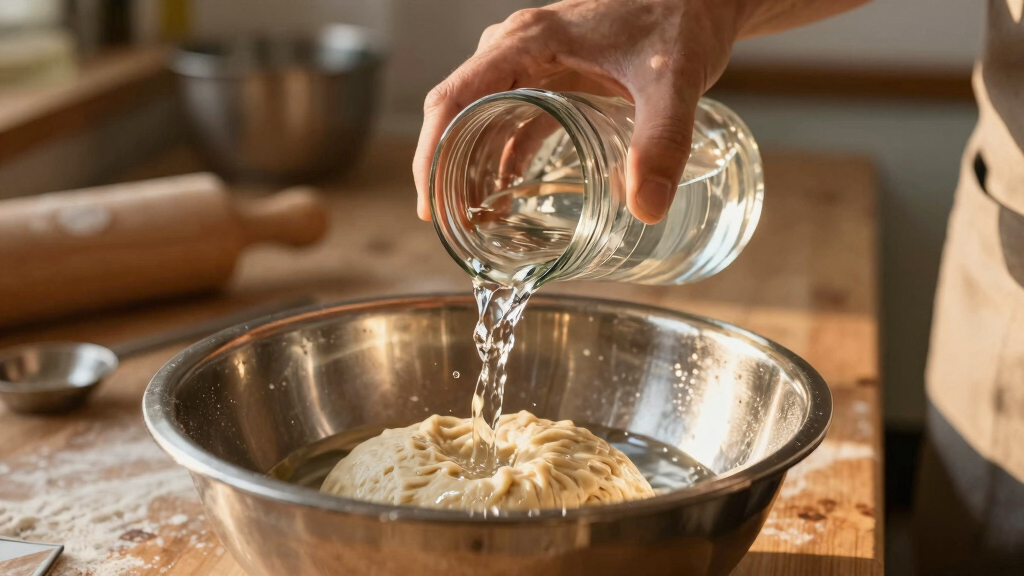
Hydration percentage is simply the amount of water in your dough relative to the flour’s weight. It’s the magic ratio that influences how your dough feels, stretches, and bakes. Think of it like the volume knob for bread texture—turn it up or down, and you reshape the entire loaf.
Why does this matter? Because hydration directly affects gluten development, dough extensibility, and how the bread will ultimately crumb and crust. A dough with optimal hydration balances strength and elasticity, allowing it to hold gas and rise well while maintaining a desirable open crumb. Too low, and the bread may be dense and tight; too high, and it can become unmanageable or lack structure. Mastering this ratio means you can predict and manipulate the dough’s behavior, saving time and reducing waste.
Adjusting hydration involves understanding the tradeoffs: higher hydration yields airier, more open loaves but increases handling difficulty and the risk of collapse. Conversely, lower hydration is easier to work with but may produce denser bread. Recognizing these implications helps bakers choose the right hydration for their style, ingredients, and equipment, ultimately leading to more consistent and satisfying results.

Etekcity Food Kitchen Scale, Digital Grams and Ounces for Weight Loss, Baking, Cooking, Keto and Meal Prep, LCD Display, Medium, 304 Stainless Steel
𝗘𝗳𝗳𝗼𝗿𝘁𝗹𝗲𝘀𝘀 𝗪𝗲𝗶𝗴𝗵𝗶𝗻𝗴: Supports 5 units (oz/lb:oz/fl'oz/g/mL), tare function, and includes 2 AAA batteries for hassle-free operation
As an affiliate, we earn on qualifying purchases.
As an affiliate, we earn on qualifying purchases.
How Different Hydration Levels Shape Your Bread’s Texture
| Hydration Level | What It Feels Like | Best For |
|---|---|---|
| 50-60% | Firm, dough that’s easy to knead. Less sticky, more manageable. | Dense sandwich loaves, traditional wheat bread. |
| 60-70% | Balanced, slightly tacky, elastic dough. Good stretch. | Everyday loaves, baguettes, ciabatta. |
| 70% and above | Sticky, wet, and very extensible. Challenging but rewarding. | Open crumb, artisan-style bread like sourdough or ciabatta. |
High-hydration doughs, especially those above 75%, are prized for their ability to produce a light, airy crumb with large, irregular holes. This is because the excess water creates a more fluid gluten network that traps gases more effectively. However, this also means the dough is more delicate and prone to tearing if mishandled. Bakers must develop techniques like gentle stretch and folds and careful shaping to maintain structure. The tradeoff is clear: greater hydration can unlock superior crumb and crust qualities but requires patience, skill, and experience to manage properly. Understanding these nuances allows bakers to push boundaries while minimizing frustration, ultimately expanding what’s possible in artisan baking.
bread hydration calculator
As an affiliate, we earn on qualifying purchases.
As an affiliate, we earn on qualifying purchases.
The Latest Trends: Pushing Hydration Beyond Traditional Limits
Today’s bakers are experimenting with hydration levels above 80%, creating loaves with stunningly open, irregular crumb structures. Think of rustic baguettes with a crackling crust and a sponge-like interior. This trend isn’t just for show; it’s backed by new tools and techniques that make managing such high-hydration doughs feasible.
Digital scales and hydration calculators help bakers hit exact targets, reducing guesswork. Emerging hydration sensors in professional bakeries enable real-time adjustments, providing feedback on dough consistency during mixing and fermentation. Using higher-protein flours also plays a crucial role, as they absorb more water while maintaining gluten strength. These innovations allow bakers to push hydration beyond traditional limits without sacrificing dough stability.
Higher hydration accelerates fermentation because water acts as a catalyst for enzymatic activity, speeding up flavor development and creating a more complex profile. Autolyse techniques—mixing flour and water before adding yeast or salt—become especially effective at these levels, as they promote gluten formation and dough extensibility early on. Overall, these innovations empower bakers to craft bread with extraordinary crumb and crust characteristics, expanding the creative possibilities in baking.
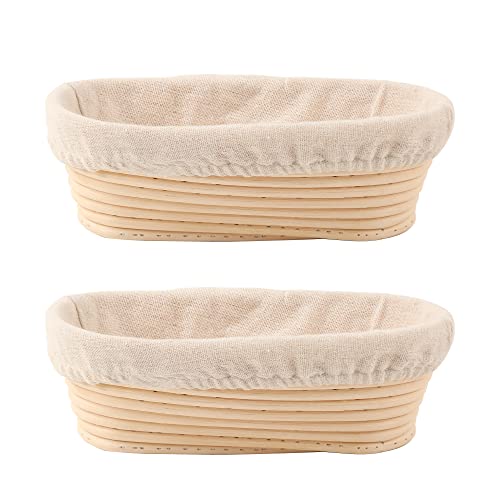
DOYOLLA Bread Proofing Baskets Set of 2 10 inch Oval Shaped Dough Proofing Bowls w/Liners Perfect for Professional & Home Sourdough Bread Baking
Best for making artisan bread,Both for home use or bread shop;
As an affiliate, we earn on qualifying purchases.
As an affiliate, we earn on qualifying purchases.
Practical Tips for Perfecting Your Hydration Game
- Start small: Adjust hydration by 5% increments to see how your dough reacts. This gradual approach prevents overwhelm and helps you learn your dough’s limits.
- Use a digital scale for precise measurements—both for water and flour. Accuracy here is key to reproducibility and understanding how small changes impact your results.
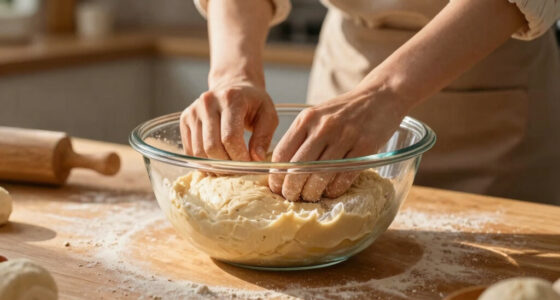
- Keep your work surface lightly floured but avoid excess dust, which can dry out the dough or interfere with gluten development. For sticky doughs, wet hands and tools help manage stickiness without compromising the dough’s structure.
- Practice stretch and folds regularly to develop gluten strength, especially at higher hydration levels. This technique enhances dough elasticity and gas retention, crucial for open crumb.
- Observe your dough’s texture carefully: it should be tacky and supple but not a gluey mess. Recognizing this balance is essential for success.
For example, when baking sourdough, increasing hydration from 75% to 80% can produce a more open, airy crumb. But this also makes the dough more delicate and prone to tearing during shaping. Patience, gentle handling, and experience are your best tools to navigate these challenges and achieve the perfect loaf.

BOORIKA Sourdough Bread Baking Tool Set with Danish Dough Whisk, Bread Lame & Blades, Bench Scraper, Dough Scrapers and Silicone Brush – Sourdough Starter Kit
* All-in-One Artisan Bread Kit – Includes everything you need to bake like a pro: Danish dough whisk,…
As an affiliate, we earn on qualifying purchases.
As an affiliate, we earn on qualifying purchases.
Handling the Challenges of High-Hydration Doughs
High-hydration doughs are notoriously sticky and loose, making shaping and handling intimidating for many bakers. However, understanding the underlying principles allows you to develop strategies that turn this challenge into an advantage. The key is recognizing that wetter doughs have more extensibility—they can stretch more without tearing—if handled correctly.
Using wet hands and tools minimizes sticking, while light flouring prevents dough from tearing during shaping. Patience during the stretch and fold process is essential; rushing can cause collapse or tears. Over time, as you become more familiar with how your dough responds, you’ll learn how much hydration your environment and ingredients can support. This knowledge enables you to push hydration levels higher, unlocking superior crumb and crust qualities.
For instance, with an 85% hydration sourdough, I employ gentle stretch and folds at regular intervals—every 20 minutes during fermentation—to build gluten strength gradually. This method results in an airy, open loaf that retains its structure despite the high water content. Developing this skill set opens new horizons in artisan baking, allowing you to produce bakery-quality bread at home.
Flavor Boosts and Fermentation: How Hydration Changes Everything
Hydration doesn’t just influence the texture of your bread; it also profoundly impacts flavor development. Higher water content acts as a catalyst for enzymatic activity, which speeds up fermentation and enhances the bread’s complexity. This means that with increased hydration, the bread can develop deeper, more nuanced flavors in a shorter amount of time.
For example, a high-hydration sourdough allows enzymes to break down starches more efficiently, producing organic acids like lactic and acetic acid, which contribute to tang and aroma. The increased water also facilitates the diffusion of flavor compounds, making the bread more aromatic and flavorful overall. However, this acceleration can sometimes lead to over-fermentation if not monitored carefully, so bakers must balance hydration levels with fermentation times. Recognizing this interplay enables bakers to craft bread with rich, layered flavors that stand out.
Key Takeaways for Your Next Bake
- Hydration is a powerful control tool: It shapes crumb, crust, and flavor, influencing every stage from mixing to baking. Understanding its effects allows you to tailor your bread to your desired outcome.
- Experiment gradually: Small, incremental changes help you discover your dough’s limits and develop intuition. This minimizes frustration and maximizes learning.
- High hydration creates beautiful, open crumbs but demands gentle handling and experience. Pushing hydration levels too high without proper technique can lead to collapse or tearing.
- Use tools wisely: Digital scales and stretch-and-fold techniques are essential for managing high-hydration doughs. They help ensure consistency and improve dough strength.
- Hydration affects fermentation: More water accelerates enzymatic activity and flavor development, but requires careful timing to avoid over-fermentation or structural issues.
Your Next Step: Play with Water and Flour
Next time you bake, think of hydration as your secret weapon—an adjustable parameter that can unlock a world of bread textures and flavors. Start by measuring precisely, then make small adjustments based on the results you observe. Keep detailed notes on how different hydration levels influence dough feel, handling, and final crumb. This record becomes your personal guide to mastering hydration tailored to your environment and ingredients.
Remember, bread baking is both science and art. The more you understand your dough’s behavior, the more confidently you can push its limits and create extraordinary bread. So, grab your scale, set your target hydration, and embrace experimentation. Each loaf will teach you something new, bringing you closer to your perfect loaf.
Frequently Asked Questions
What is the ideal hydration level for a basic sandwich bread?
Most sandwich breads turn out well with a hydration level around 60-65%. It’s manageable, produces a soft crumb, and is forgiving for home bakers.
How can I handle sticky, high-hydration doughs without frustration?
Use wet hands, lightly flour your work surface, and employ stretch and fold techniques. Patience and gentle handling will keep the dough manageable and prevent tearing.
Can I change hydration during the mixing process?
Absolutely. Many bakers add water gradually, especially with very wet doughs. Adjusting on the fly helps you find the perfect feel for your environment and ingredients.
Does higher hydration make baking more difficult?
It can, but with proper technique—like stretch and fold—and patience, high-hydration breads can be just as straightforward as traditional ones. It’s worth the effort for the texture and flavor benefits.
How does hydration influence the flavor of my bread?
Higher hydration speeds up fermentation, leading to more complex acids and deeper flavors. It also enhances the aroma, making your bread more inviting and rich.
Conclusion
Mastering hydration transforms your bread from a simple mixture into a work of art. It’s the secret behind those bakery-worthy, airy loaves that turn heads and delight the senses.
So next time you bake, think of hydration as your control knob. Tweak it, observe, and enjoy the delicious results—your perfect loaf is just a ratio away.