TL;DR

Get baking supplies delivered free — and shop member deals
- Fast, free delivery on millions of items
- Access to Prime Big Deal Days deals on October 6–7
- Prime Video, Amazon Music and more included
Bread that won’t brown usually results from low oven temperature, insufficient baking time, lack of steam, or dough with low sugar. Adjusting these factors can transform pale loaves into beautifully browned, flavorful bread.
Have you ever pulled a loaf out of the oven only to be disappointed by its pale, uninviting crust? It’s a common frustration, especially when you’re aiming for that perfect golden finish that signals flavor and texture. The good news? A few simple adjustments can turn your pale bread into a crusty masterpiece.
In this guide, you’ll learn the key reasons bread refuses to brown and discover practical fixes rooted in the science of baking. Whether you’re baking artisan sourdough or simple sandwich bread, these tips will help you troubleshoot and elevate your crust game.
Increase oven temperature to at least 400°F (205°C) for richer browning.
Use steam during the first part of baking to delay crust formation and enhance color.
Apply a milk or egg wash for shiny, golden crusts.
Choose baking surfaces like stones or steels for even heat and better crust development.
Avoid underbaking by checking internal temperature and extending bake time if needed.
The Fix for Bread That Won’t Brown
Pale, uninviting crusts are one of the most common baking frustrations. The culprit is usually low oven temperature, insufficient baking time, missing steam, or low-sugar dough — and every one of these is fixable.
Why Your Bread Won’t Turn Golden
Crust color comes from two chemical processes: the Maillard reaction — amino acids and sugars transforming under heat, starting at 285°F (140°C) — and caramelization of surface sugars. If the oven isn’t hot enough or the dough lacks sugar, the crust stays pale. Think of it like toast: not enough heat or sugar means no golden finish.
How to Make Your Bread Brown Better
Five practical fixes, each rooted in baking science — with the tradeoffs to watch for.
Crank Up the Oven
Bake at 400°F (205°C) or higher and preheat thoroughly. A hotter oven means faster Maillard browning and better oven spring.
Use a Baking Surface
A baking stone or steel retains heat and radiates it upward into the dough, promoting even crust development. Preheat it with the oven.
Introduce Steam
Spray water or place a pan of water in the oven for the first 10–15 minutes. Steam delays crust formation so color develops later — just like professional bakeries.
Brush with Egg or Milk Wash
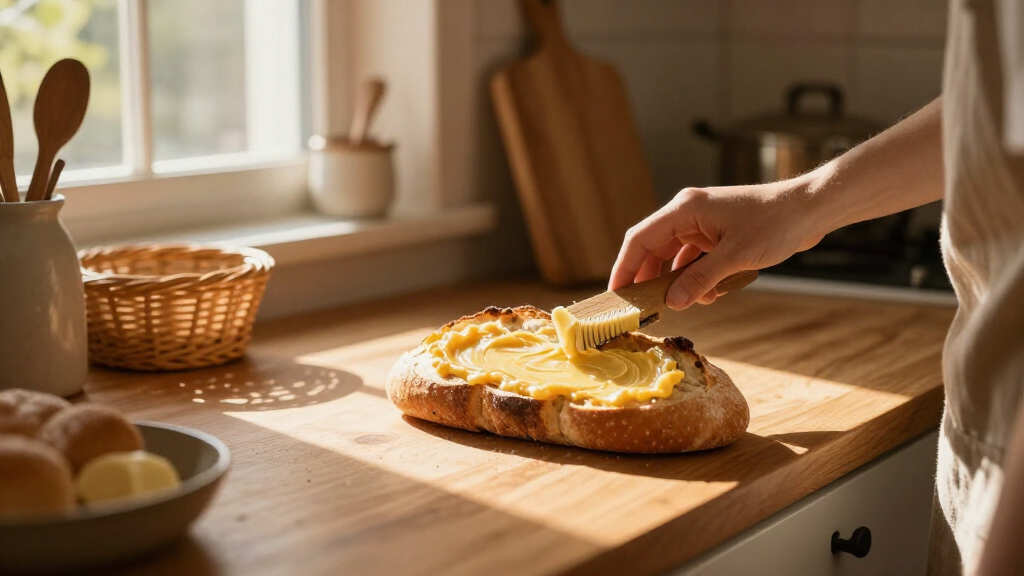
Brush the dough with beaten egg or milk before baking. Surface sugars and proteins caramelize into a shiny, golden crust.
Adjust Baking Time
A few extra minutes lets the Maillard reaction continue deepening the hue. Check the internal temperature — around 200°F (93°C) means done.
The Key Insight
Browning is a balance. Each fix accelerates color development — combine two or three (e.g., steam + stone + higher heat) for a deep, bakery-quality crust.
What Each Method Delivers
Baking Techniques for Better Crust Color
| Technique | Effect | Best For | Effort |
|---|---|---|---|
| High Oven Temperature | Deepens crust color, increases oven spring | All bread types | Low |
| Steam in Baking | Delays crust formation, enhances shine | Sourdough, artisan breads | Low |
| Egg / Milk Wash | Shiny, golden crust via caramelization | Enriched breads, sandwich loaves | Low |
| Baking Steel / Stone | Even heat distribution, better browning | Crusty artisan loaves | Medium |
| Longer Bake Time | Extends Maillard reaction, deepens hue | Any underbaked loaf | Low |
What Keeps Your Bread Pale
Oven Too Low
If the oven never reaches 285°F+ at the surface, the Maillard reaction simply never kicks in strongly enough.
Skipping Steam
Without moisture, the crust sets too quickly — locking in a pale, dull finish before color can develop.
Low-Sugar Dough
Plain sourdough has little sugar to brown. Add a touch of malt or sugar to feed the reaction.
Underbaking
Pulling the loaf early leaves the crust soft and pale. Verify the internal temp hits ~200°F (93°C).
A rustic sourdough — airy inside, pale outside. One change: sprinkling water into the oven for the first 15 minutes. The result was a deep golden crust with a satisfying crunch. Night and day.
Case Study · Steam Technique · No Recipe ChangeFrequently Asked Questions
Why isn’t my bread brown even after baking?
Most likely the oven isn’t hot enough, the bake was too short, steam was missing early on, or the dough is low in sugar. Any one of these can limit browning.
How do I get a darker crust without burning?
Raise the temperature slightly, brush with milk or egg wash, and use a baking stone or steel. Monitor color closely — high heat accelerates Maillard reactions fast.
Should I use steam during baking?
Yes. Steam delays crust formation so the loaf can fully expand, then develop a rich caramelized crust. Too much moisture, though, can soften the crust.
Can I fix a pale loaf after baking?
Crust color is largely set once baked. Focus on heat, steam, and washes next time — though toasting can boost color in a pinch.
Why Your Bread Won’t Turn Golden — The Science Behind the Color
Understanding why bread browns in the first place makes fixing the problem easier. The crust’s color comes mainly from the Maillard reaction and caramelization—two chemical processes triggered by heat and sugars. The Maillard reaction starts happening around 285°F (140°C), turning amino acids and sugars into that beautiful brown hue.
If your bread lacks browning, it’s often because the oven isn’t hot enough, or the surface isn’t getting enough heat. Sugars in the dough are also crucial—without enough, the crust stays pale. Think of it like a toast—if it’s not hot enough or doesn’t have enough sugar, it won’t develop that inviting golden crust.
Deepening your understanding of these reactions reveals the tradeoffs involved. For instance, increasing oven temperature can risk burning the crust if not carefully monitored, especially with thinner loaves. Similarly, adding sugar or applying surface washes enhances browning but can alter the bread’s flavor and texture. Recognizing these implications helps you balance achieving a golden crust while maintaining the desired bread qualities.
As an affiliate, we earn on qualifying purchases.
How to Make Your Bread Brown Better — 5 Simple Fixes
- Crank Up the Oven: Bake at 400°F (205°C) or higher for a deeper color. Preheat thoroughly—an oven that’s not fully hot won’t give you the same crust. Keep in mind, higher temperatures can also cause the crust to burn if baking times aren’t adjusted accordingly. It’s a balancing act: hotter oven equals quicker browning, but monitor closely to avoid charring.
- Use a Baking Surface: A baking stone or steel retains heat better, radiating upward and helping the crust brown evenly. Place it in the oven during preheating for maximum effect. This method ensures a more uniform heat transfer to the dough, promoting better crust development. However, the tradeoff is that stones and steels can make handling the hot surface more cumbersome and require careful placement to prevent accidents.
- Introduce Steam: Spray water into the oven or place a pan of water at the bottom during the first 10-15 minutes. Steam delays crust formation, giving the bread more time to expand and develop color later. This technique mimics professional bakery environments where moisture is used to control crust development. The tradeoff is that too much steam or prolonged steaming can make the crust overly soft or cause uneven coloration if not managed properly.
- Brush with Egg or Milk Wash: Just before baking, brush the dough with beaten egg or milk. This adds shine and promotes browning through caramelization. The surface wash can also influence the crust’s texture, making it crisper or softer depending on the application. The tradeoff? It may alter the flavor profile slightly and isn’t suitable for all bread types, especially those aiming for a rustic or matte finish.
- Adjust Baking Time: Sometimes, simply baking a few extra minutes at the right temperature boosts crust color. Keep an eye to avoid burning. Extending baking time allows the Maillard reaction to continue, deepening the crust’s hue. However, overbaking can lead to dryness or a burnt flavor, so monitoring internal temperature (around 200°F/93°C) is crucial for optimal results.
As an affiliate, we earn on qualifying purchases.
Comparison Table: Baking Techniques for Better Crust Color
| Technique | Effect | Best For |
|---|---|---|
| High Oven Temperature | Deepens crust color, increases oven spring | All bread types |
| Steam in Baking | Delays crust formation, enhances shine | Sourdough, artisan breads |
| Egg/Milk Wash | Shiny, golden crust | Enriched breads, sandwich loaves |
| Use of Baking Steel/Stone | Even heat distribution, better browning | Crusty artisan loaves |
As an affiliate, we earn on qualifying purchases.
Common Mistakes That Keep Your Bread Pale and How to Avoid Them
Many bakers unintentionally prevent browning with simple errors. Baking at too low a temperature is a common culprit. If your oven isn’t reaching the right heat, the Maillard reaction never kicks in strongly enough.
Another mistake? Skipping steam. Without moisture in the oven, the crust forms too quickly and stays pale. Also, using a dough with very low sugar content—like a plain sourdough—can result in a less browned crust unless you add a bit of malt or sugar.
Finally, underbaking leaves the crust pale and soft. Always check your bread’s internal temperature (around 200°F/93°C) and bake a bit longer if needed. Recognizing these mistakes and understanding their implications helps you make informed adjustments for better crust color and overall bread quality.
As an affiliate, we earn on qualifying purchases.
Real-World Example: How a Simple Change Made All the Difference
Imagine baking a rustic sourdough loaf that’s airy inside but pale outside. After reading about steam, you sprinkle water into the oven’s bottom during the first 15 minutes. The result? A gorgeous, deep golden crust with a satisfying crunch. The difference is night and day.
Or consider a baking session where you brushed the dough with milk before baking. The shiny, caramel-colored crust made the bread look bakery-worthy—without altering the recipe itself. These small adjustments demonstrate how understanding the science behind browning can lead to consistently better results, turning a pale loaf into a bakery-quality masterpiece.
Frequently Asked Questions
Why isn’t my bread turning brown even after baking?
It could be because your oven isn’t hot enough, you’re not baking long enough, or you’re missing steam during the early baking phase. Also, low sugar content in your dough can limit browning.
How can I get a darker crust without burning the bread?
Increase oven temperature slightly, brush the crust with milk or egg wash, and bake a bit longer, keeping an eye on the color. Using a baking stone or steel can also promote browning without risking over-baking. Remember, higher heat accelerates Maillard reactions, but it requires careful monitoring to prevent charring.
Should I use steam during baking?
Yes. Steam helps delay crust formation, allowing the bread to expand fully and develop a rich, caramelized crust later. It’s a simple trick that makes a big difference in crust color and texture. The tradeoff is that managing steam requires an extra step, and too much moisture can make the crust overly soft or uneven if not carefully controlled.
Can I fix a pale loaf after baking?
Once baked, the crust color is largely set. To get better results next time, focus on increasing oven heat, using steam, and applying surface washes. However, you can still toast the bread to boost color if needed. Remember, the initial baking conditions are critical for that perfect crust—post-baking adjustments are limited.
What ingredients help promote browning?
Sugars, milk, butter, and malt extracts all aid in browning through caramelization and the Maillard reaction. Enriching your dough with these can help achieve a darker, more appealing crust. Keep in mind, adding too much can alter flavor and texture, so balance is key for optimal results.
Conclusion
Getting that perfect, golden-brown crust isn’t magic; it’s science and technique working together. By paying attention to oven heat, moisture, and surface treatments, you can turn pale, underwhelming loaves into eye-catching, flavorful bread.
Next time your bread refuses to brown, remember these simple fixes. Your crust will thank you—and so will everyone who gets to enjoy that satisfying crunch and rich flavor.
Fall Picks
fall essentials
As an affiliate, we earn on qualifying purchases.