TL;DR

Get baking supplies delivered free with Prime
- Fast, free delivery on millions of items
- Prime Video, Amazon Music and more included
- Member-only deals all year
A cake top often gets sticky when steam condenses on its cooler surface and dissolves sugar in the crust. Cool the cake uncovered on a rack, check doneness in the center, and wait until it is fully cool before storing it airtight. A tacky top alone does not mean the cake is raw or spoiled.
You slice into a cake that smells wonderful, only to find a shiny, sticky top clinging to your finger. The middle looks baked, the edges have pulled slightly from the pan, and yet the surface feels more like syrup than cake. That mismatch can be frustrating, especially when you followed the recipe closely.
A tacky top is often a cooling problem, not proof that you did something wrong. As a warm cake releases steam, moisture can settle on the cooler crust and dissolve sugar there. In this guide, you’ll learn how to tell condensation from underbaking, how humidity and ingredients affect the surface, and what to do with a cake that’s already sticky.
You’ll also get a simple cooling and storage routine you can use the next time a loaf, snack cake, or layer cake comes out of the oven. The goal is practical: keep the crumb tender, let the surface dry, and avoid mistaking a texture issue for a safety problem.
Steam can condense on a cake’s cooler top and dissolve sugar, leaving a sticky film.
Check the center with a tester and look for a set crumb; a tacky top by itself does not prove underbaking.
Let cakes cool uncovered on a wire rack, following any initial pan-rest instructions in the recipe.
Humid rooms and batters with fruit, honey, syrup, or more sugar can make a tacky surface more likely.
Wait until the cake is fully cool before storing it airtight, and follow recipe guidance for perishable fillings or frosting.
Why Your Cake Has a Sticky, Wet Top What to check and how to prevent it
A tacky top often forms as steam condenses on the cooler crust and dissolves surface sugar. It can happen even when the cake is fully baked.
Why the surface gets sticky
Moisture gathers on the crust as the warm cake cools, leaving a sugary film.
A warm cake releases water vapor as it cools.
Vapor condenses on the cooler top and dissolves some surface sugar.
The crust feels sticky, though the crumb may be fully baked.
What can make it more likely
Cooling conditions and the recipe both affect the surface.
Covered while warm
A lid or wrap traps steam close to the crust.
Humid air
Moist air slows evaporation, so the top can stay tacky.
Moist or sugary batters
Fruit, honey, syrup, and some sugar-heavy batters can leave a softer surface.
Check the center for doneness
A sticky top alone does not prove a cake is underbaked.
- Tester comes out clean or with a few moist crumbs.
- Center looks set and holds its shape.
- Tester shows wet batter.
- Center looks gummy or sinks as it cools.
Cool, then store
Give steam room to escape before sealing in freshness.
Why steam can leave a sugary film on your cake
A cake’s top gets sticky when moisture settles on the crust and dissolves some of its surface sugar. The warm cake releases water vapor as it cools; when that vapor meets a cooler surface, it can turn back into tiny droplets. The result is a damp, tacky film, even when the cake inside seems fully baked.
Think of the cake as a warm window on a cold morning: the air carries moisture, then the cooler surface gathers it. A cake’s crust is not glass, of course, but the same simple change from vapor to liquid helps explain that unexpected sheen. Sugar in the crust dissolves in the water, making the top feel sticky instead of merely damp.
This can happen after baking, particularly if you put the cake in a covered container while it is still warm. A lid holds the steam close, much like closing a bathroom door during a hot shower. For example, a loaf cake that sits under an inverted bowl for 20 minutes may grow tackier than the same loaf cooling uncovered on a rack.
A sticky surface alone does not show that the cake is raw or spoiled. Check the center, smell the cake, and look for other signs before deciding what happened. If the interior is baked and the cake looks and smells normal, surface tackiness is often a texture issue you can address with better cooling.
Key idea: A damp top can develop while a fully baked cake cools. Check the crumb before blaming the bake.
Products Worth Considering

Breville Bambino Espresso Machine, Brushed Stainless Steel

Ninja SP101 Digital Air Fry Countertop Oven, 8-in-1, XL, Silver

Instant Pot Pro 8-Quart 10-in-1 Electric Pressure Cooker, Black
As an affiliate, we earn on qualifying purchases.
Check the middle before you blame the recipe
A cake with a sticky top may be fully baked, but underbaking can also leave extra moisture that moves toward the surface. Check the center rather than using the top’s appearance as your verdict. For many cakes, a tester comes out clean or with a few moist crumbs; wet batter on the tester suggests the center needs more time.
Insert a toothpick or cake tester into the thickest part, avoiding a patch of fruit or melted chocolate if your recipe includes them. Look at the center’s texture too: a properly baked crumb should feel set, while a gummy band, wet-looking middle, or center that sinks as it cools points toward underbaking. A pale top does not settle the question either way.
Imagine a banana loaf that looks browned after the recipe’s stated baking time. If the tester comes out with streaks of raw batter and the center dips as the loaf cools, the sticky surface may be one part of a broader doneness problem. If the tester shows only a couple of moist crumbs and the middle holds its shape, condensation is a more likely explanation for a tacky top.
Pan size, oven behavior, and batter depth all affect baking time. A smaller, deeper pan can take longer than a wider pan the recipe expects, while an oven that runs cool may leave the middle behind the edges. Follow the specified pan size and begin checking near the recipe’s stated bake time; avoid extending the bake just because the surface feels sticky.
Use these checks together: a center tester, a set crumb, and a cake that holds its shape tell you more than a damp surface does. If the center is genuinely wet, return the cake to the oven only when the recipe and its current stage allow it. Once a cake is sliced, the exposed crumb may dry before the middle finishes evenly.
Cool your cake uncovered to keep steam moving
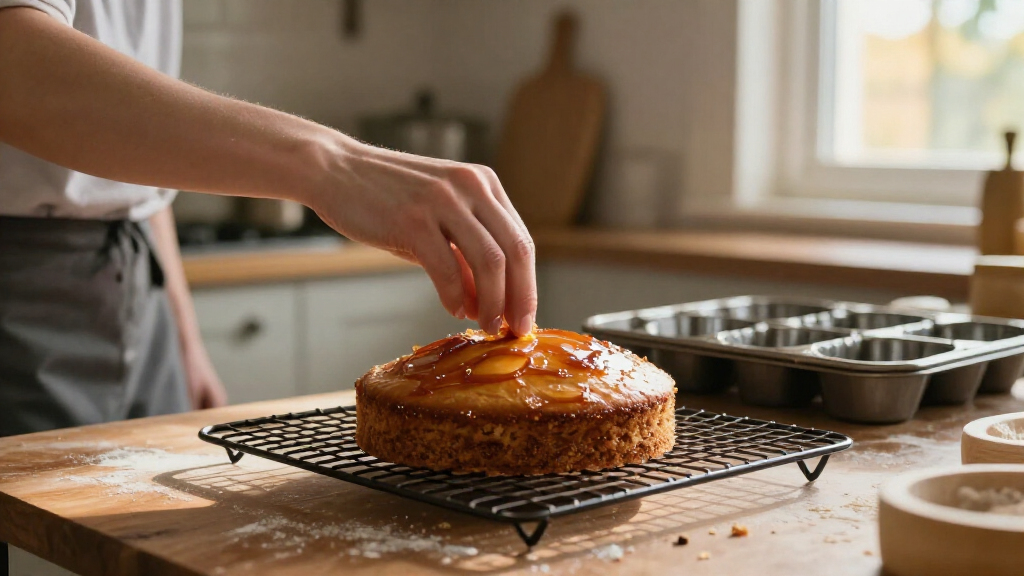
To reduce a sticky top, cool the cake uncovered on a wire rack before you wrap it or put it in a container. A rack lets air move around the cake and gives steam a way to escape instead of pooling against the surface. The cake should be fully cool before you seal it away.
Start with the recipe’s cooling directions, since some cakes need a short rest in the pan before you turn them out. Then move the cake to a rack when the instructions call for it and leave the top exposed. For example, a small lemon loaf might rest in its pan for 10 minutes, then cool on a rack; sealing it in a tin while it still feels warm can trap vapor inside.
Use this simple sequence when you’re unsure what to do:
- Follow the recipe’s first cooling step. If it says to rest the cake in its pan, do that before removing it.
- Set it on a rack. Leave space around the cake so air can circulate.
- Wait for it to cool completely. Check the center or underside for lingering warmth; a large cake can take longer than a thin snack cake.
- Store it once cool. Choose an airtight container to slow drying, following any recipe guidance for fillings or frosting.
Skip plastic wrap, tight foil, and fitted lids while the cake is still warm. They act like a lid on a steaming pot: convenient for holding heat, but they keep moisture close to the crust. If your kitchen is humid, allow more open-air cooling time in a dry spot, without setting the cake near a steamy dishwasher or kettle.
Uncovered cooling doesn’t mean leaving cake out indefinitely. It is a short step that releases steam before storage. Once the cake is fully cool, an airtight container helps keep a tender crumb from drying out.
Adjust your expectations for humid days and moist batters
Humidity and recipe ingredients can make a cake top more likely to stay tacky. Moist air slows evaporation from the surface, while ingredients such as fruit, honey, syrup, and some sugar-heavy batters bring extra moisture or sugar into the bake. That can leave the crust naturally softer than the top of a plain sponge.
On a damp summer afternoon, a berry cake may cool more slowly at the surface than it does in a dry kitchen. A bowl of steam from nearby cooking can add to the problem. You may find that the cake is baked through yet its top still feels sticky after cooling; that doesn’t automatically mean the recipe has failed.
Different cakes also have different surface textures. A lightly sweetened sponge may form a dry, delicate top, while a honey cake can stay moist and slightly tacky because of its ingredients. If your recipe includes a soak or syrup brushed over the top, a sticky finish may be part of the intended result rather than a cooling mishap.
For a high-moisture batter, avoid making several recipe changes at once. Keep the stated pan size, check the center near the end of the suggested bake time, and give the cake open-air cooling space. If a familiar recipe turns tackier only on humid days, the room’s moisture may explain the difference more clearly than a change in your measuring.
Make small, useful adjustments: cool the cake away from steam, leave extra room around it, and avoid covering it until it is cool. Don’t add more flour or cut sugar on a hunch; those changes can alter the crumb, rise, and flavor without fixing condensation on the surface.
Save a sticky top without drying out the crumb
If your cake already has a sticky top, let the surface breathe first. Set it uncovered on a rack in a dry part of the kitchen and give it time to release surface moisture. Gentle air exposure may help the tackiness ease; heating is not a universal fix and can dry the cake or change its texture.
For example, if you uncover a loaf after storing it warm and find a damp top, move it to a rack rather than putting it straight back in the oven. Once the surface feels less tacky, taste a slice and inspect the middle. If the crumb is tender and baked, you can serve it as it is; a light dusting of powdered sugar can also make a slightly uneven surface look polished, though it won’t remove moisture underneath.
If the cake is gummy in the center, treat that as a doneness concern rather than a surface-only issue. A whole cake that has not been cut may sometimes go back into the oven if it is still warm and the recipe’s structure supports further baking, but results vary. For a sliced cake, extra baking can dry the edges before the center improves.
Refrigeration may firm some cakes, but cold storage can also dry the crumb or change its texture. A refrigerator does not undo sugar dissolved by condensation, and moving a cold cake into a warm, humid room can create new moisture on its surface. Cool it completely first and follow the recipe’s storage directions, especially when it has a perishable filling or frosting.
A tacky top is generally a texture issue when the cake is fully baked and otherwise looks and smells normal. Discard cake with signs of spoilage, such as mold or an unusual odor, and handle perishable fillings according to their recipe guidance. For an ordinary plain cake, air circulation and correct storage are better first moves than applying heat or chilling it without a reason.
Store the cake only after it has fully cooled
Store cake in an airtight container after it has cooled completely, so it stays tender without trapping fresh steam against the top. A cake can feel cool at the edges yet hold warmth in its center, especially when it is tall or dense. If you close the lid too soon, that remaining warmth can supply enough vapor to dampen the crust.
Try a simple touch check on the top and bottom, and give a thick cake extra time if either still feels warm. A small loaf on a wire rack may cool faster than a tall, dense fruit cake. If you need to leave the kitchen, keep the cake uncovered on its rack until you return, then seal it once it is cool.
Storage depends on the cake. A plain cake may be kept according to its recipe’s directions in a covered container, while cream cheese frosting, custard, or other perishable fillings may require refrigeration. Follow the recipe’s storage guidance for those ingredients; don’t trade food safety for a drier-looking top.
Here’s the balance: open air during cooling, protection during storage. Leaving a fully cooled cake uncovered for too long can dry it out, while sealing it while warm can leave it tacky. Once cooled, a snug container slows moisture loss and protects the cake from kitchen odors.
If the top becomes sticky again after storage, consider when you covered it and where it sat. A container placed near a warm oven or in a humid area may create a warmer, damper environment. Small changes to cooling and placement often make more difference than buying different bakeware or rewriting a recipe.
Frequently Asked Questions
Why is my cake sticky on top but cooked inside?
Steam from the warm cake may have condensed on the cooler surface and dissolved sugar in the crust. If the center is set and the cake looks and smells normal, the sticky top is often a texture issue.
Should I cover a cake while it cools?
Usually, let it cool uncovered on a wire rack first, following any initial rest-in-the-pan step in the recipe. Covering a warm cake can trap steam and leave moisture on its top.
How can I tell if the cake is underbaked?
Check the thickest part of the center with a toothpick or cake tester. Depending on the recipe, it should come out clean or with a few moist crumbs; wet batter, a gummy middle, or a center that collapses points to underbaking.
Can I still eat cake with a sticky top?
A tacky surface alone does not mean cake is raw or spoiled. If the middle is baked and it looks and smells normal, it is generally a texture issue; discard it if you see mold or notice an unusual odor.
Will putting my cake in the refrigerator fix the sticky top?
Refrigeration can firm some cakes, but it may dry the crumb or change its texture, and it does not undo sugar dissolved by condensation. Cool the cake fully first and follow the recipe’s storage directions, especially for perishable fillings or frosting.
Why does my cake get stickier when the weather is humid?
Humid air makes it harder for moisture to evaporate from the cake’s surface. Leave extra space around the cake as it cools and keep it away from steam from cooking or a dishwasher.
Conclusion
When your cake has a sticky top, check the center first, then think about steam. A fully baked cake can turn tacky as moisture settles on its sugary crust, especially in a humid room or after being covered warm.
Next time, let the cake cool uncovered on a rack and store it only when it is fully cool. Give the steam somewhere to go, and your cake is more likely to keep the tender crumb you baked it for.