
TL;DR

Get baking supplies delivered free with Prime
- Fast, free delivery on millions of items
- Prime Video, Amazon Music and more included
- Member-only deals all year
Good Housekeeping’s fitness report recommends planks as a way for adults over 50 to work their core, with a suggested starting point of 30 seconds a day. A trainer quoted in the report says the exercise may support balance and the lower back, but the material does not provide research establishing that planks prevent falls, bone loss or muscle wasting.
Good Housekeeping’s report on exercise for adults over 50 recommends the plank as a simple way to train core muscles, suggesting that beginners start with 30 seconds a day. Personal trainer and injury rehabilitation specialist Chris Berardi says the exercise may support balance and the lower back, but the report does not establish that planks prevent falls or age-related bone and muscle loss.
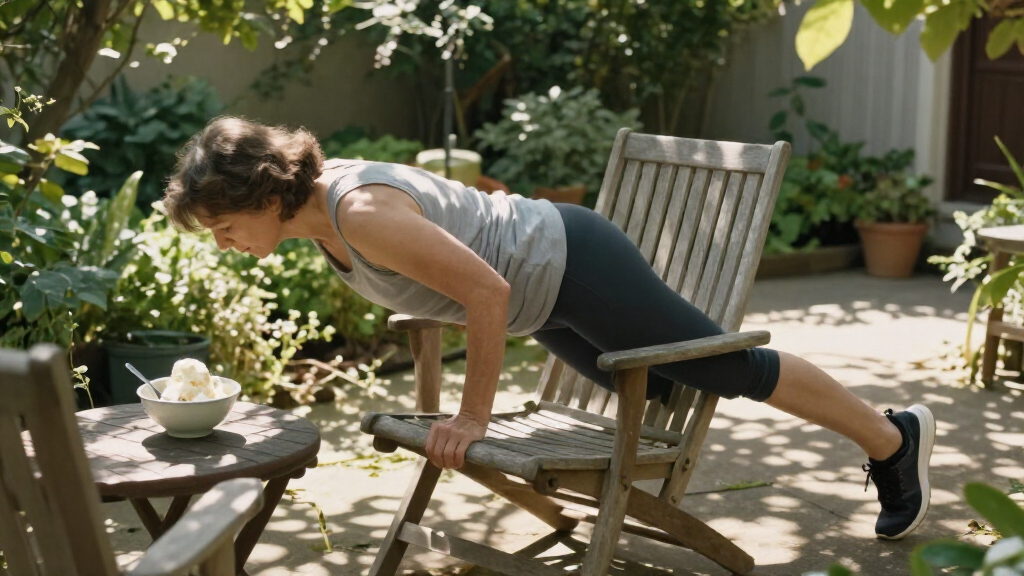
A plank is a core-strength exercise in which a person holds a straight, braced position, supported either by the hands or forearms and the balls of the feet. The report describes it as requiring little equipment: a mat and enough space to lie down. Berardi says people with wrist discomfort may find a forearm plank more comfortable.
For people who find a full plank difficult, the report suggests beginning on the hands and knees and progressing if possible. Berardi advises tightening the glutes and keeping the body braced. The article recommends starting with a 30-second hold, building toward one minute, and trying up to two minutes only if that feels manageable.
Berardi says planks work the stomach muscles and provide weight-bearing exercise. He also says the movement supports the lumbar region and sacrum, the bones in the lower back. Those benefits are presented as the trainer’s guidance in the report; the supplied material does not include study details, a medical review or evidence that a particular plank duration produces specific health outcomes.
A Manageable Way to Train Core Strength
Core strength can contribute to everyday movements that involve posture, stability and balance. The appeal of the plank is practical: it can be adapted, requires no gym equipment and can be performed for a short period. For some readers, those features may make it easier to add strength work to a routine.
Still, the headline’s suggestion that this is the one exercise to prioritize is not established by the supplied report. A plank works particular muscle groups; it is not a complete fitness program. The article does not compare planks with other exercises or provide evidence that planking alone preserves mobility, prevents falls, improves bone density or stops muscle loss. Readers should treat the recommendation as fitness guidance, not a guarantee of those results.
Products Worth Considering

De’Longhi Classic Matte Black Espresso Machine with Milk Frother

Cuisinart Tabletop Propane Patio Heater, 11,000 BTU, Gray

Le Creuset Toughened Nonstick PRO 11-Inch Crepe Pan with Rateau
As an affiliate, we earn on qualifying purchases.
How the Report Defines a Plank
The report frames the plank as an exercise that can be adjusted to suit different starting abilities. In its standard version, the person faces the floor and supports their body on their forearms or hands and toes. The body is held in a firm, straight-line position rather than lowered and raised repeatedly.
Berardi’s instructions include squeezing the glutes and bracing the torso. The report also names osteopenia, a reduction in bone density, and sarcopenia, age-related muscle loss, when discussing weight-bearing activity. It does not say that planks prevent either condition or cite evidence quantifying their effects. Its specific recommendation is a short daily hold, with duration increased only as a person feels able.
“Some people find one option easier than the other — if you have a problem with your wrists, for example, resting on your forearms might be more comfortable.”
— Chris Berardi, as quoted by Good Housekeeping
Limits of the Report’s Health Claims
The supplied report does not identify studies supporting its claims about balance, bone density or muscle loss, and it gives no comparison with other forms of exercise. It is also unclear whether the suggested 30-second daily hold is based on a specific guideline or research finding. The recommendations are attributed to Berardi, rather than presented with evidence establishing a universal prescription for everyone over 50.
The report does not address medical conditions, prior injuries or symptoms that could affect whether a plank is suitable. It also does not set out criteria for progressing from a modified position to a full plank. Anyone who experiences pain or has health concerns may need advice tailored to their circumstances; the article itself does not provide individualized medical guidance.
Progress Only as Form Allows
The report’s practical next step is to try a modified plank if a full version feels too difficult, then increase the hold gradually if comfortable. It suggests moving from 30 seconds toward one minute and, for those who are able, up to two minutes. It does not describe a formal training schedule, prescribe rest days or specify how quickly to add time.
No further research findings, expert responses or follow-up developments are included in the supplied material. For readers, the key distinction is between a low-equipment exercise suggestion and a proven method of preventing age-related conditions: the report offers the former, but does not establish the latter.
Key Questions
What does the report recommend for adults over 50?
It recommends trying planks to train core strength, beginning with a 30-second hold each day and increasing the duration if manageable.
Can beginners modify a plank?
Yes. The report suggests starting on the hands and knees if a full plank is too difficult. It also says forearm support may be more comfortable than resting on the hands for some people with wrist problems.
Does the report prove planks prevent falls or bone loss?
No. It attributes potential benefits for balance and bone strength to trainer Chris Berardi, but the supplied report does not provide studies showing that planks prevent falls, osteopenia or muscle loss.
How long should someone hold a plank?
The report suggests starting at 30 seconds and aiming toward one minute, with up to two minutes as an ambitious goal. It does not specify a universal duration or progression plan for every person.
Source: goodhousekeeping.com