TL;DR

Get baking supplies delivered free with Prime
- Fast, free delivery on millions of items
- Prime Video, Amazon Music and more included
- Member-only deals all year
Many baking failures stem from inaccurate oven temperatures. An oven thermometer provides real readings, showing if your oven runs hot or cold, so you can adjust and perfect your recipes.
Ever wonder why your cookies spread too much or your bread doesn’t rise? The culprit often hides in your oven. Many ovens aren’t as precise as they seem, and subtle temperature swings can throw off your baking timing and texture. Luckily, a simple device—a good oven thermometer—can expose these hidden issues. It’s like having a secret weapon for perfect baking every time.
In this guide, you’ll learn how these thermometers work, why they’re essential, and how choosing the right one can transform your baking. No more guesswork—just reliable results that match your recipes perfectly.
Always place your oven thermometer in the center of the middle rack for the most accurate readings.
Regularly test your oven’s temperature—at least once a month—to catch drifting temps early.
Many ovens are off by up to 20°F, which can significantly affect baking outcomes.
Smart thermometers offer real-time data and remote monitoring, ideal for tech-savvy bakers.
Calibrating your oven using an accurate thermometer can prevent many common baking failures.
Why Your Oven Temp Matters More Than You Think
Oven temperature is the backbone of baking. It influences rise, crumb, color, and even flavor. When the temperature is inaccurate, it can lead to undercooked centers or burnt exteriors, ruining your efforts and ingredients. For example, a oven that’s 15°F cooler than the dial indicates might cause muffins to be dense or dry because they don’t get enough heat to rise properly. Conversely, an oven running too hot can cause quick burning on the outside while leaving the inside raw. Understanding and controlling oven temperature is crucial because it directly impacts the chemistry of baking—how ingredients interact, how gases expand, and how proteins set. By ensuring your oven runs at the correct temperature, you gain consistency, reduce waste, and elevate the quality of your baked goods. This is why investing in an accurate thermometer and calibrating your oven regularly isn’t just a tip—it’s a baking necessity that can make or break your results.
Products Worth Considering

Ninja Artisan 5-in-1 Portable Electric Pizza Oven, Blue & Gold

Instant Pot Vortex Plus 10-Quart 7-in-1 Air Fryer Oven

Le Creuset Signature Enameled Cast Iron Round Dutch Oven, 5.5 qt, Deep Teal
As an affiliate, we earn on qualifying purchases.
Types of Oven Thermometers and Which One Fits You
Oven thermometers come in a few varieties. Here’s a quick rundown:
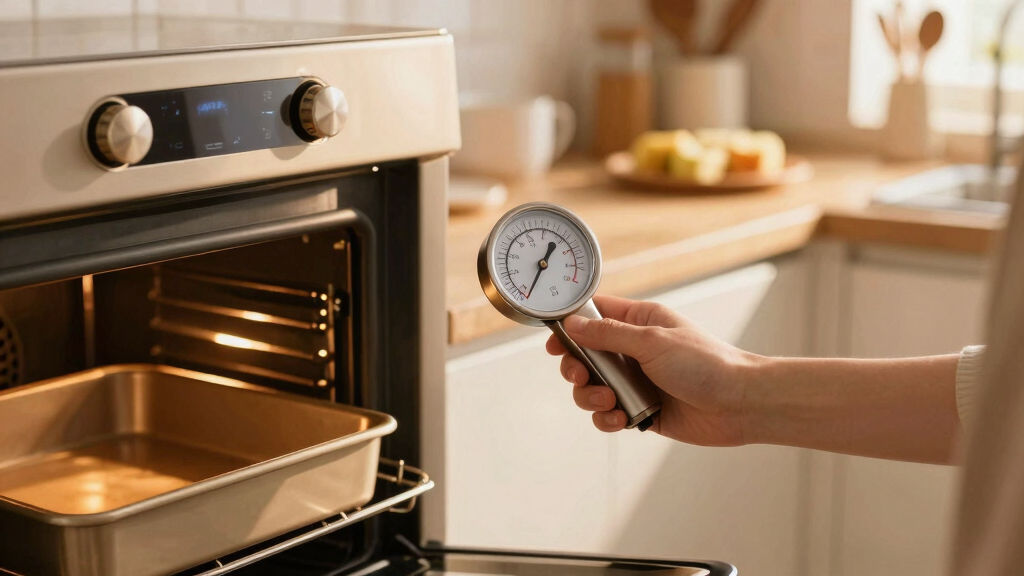
- Analog Dial: Simple, inexpensive, easy to read. They typically sit on your oven rack and provide a quick glance at temperature. While reliable, they may lack precision and can be affected by placement or calibration drift over time.
- Digital: More precise, often with features like backlit screens, temperature alerts, and sometimes remote monitoring via apps. They tend to be faster and more accurate but can be more expensive and require batteries.
- Infrared: Measures surface temperatures of oven walls or food surfaces. Less useful for internal oven calibration because they only assess external surfaces, which can be misleading if you’re trying to gauge the overall oven environment.
- Smart Thermometers: These connect via Bluetooth or Wi-Fi and sync with smartphone apps, offering real-time data, alerts, and logging capabilities. They are ideal for tech-savvy bakers who want detailed insights and remote control.
Choosing the right thermometer depends on your baking frequency, desired precision, and budget. For occasional baking, a sturdy analog or basic digital model might suffice. For frequent baking or precision work, investing in a smart thermometer can provide ongoing benefits, helping you fine-tune your oven’s performance and troubleshoot issues quickly.
How to Use an Oven Thermometer to Fix Your Baking Woes
Here’s a step-by-step guide:
- Place the thermometer: Position the thermometer in the center of the middle rack, away from walls, racks, or door seals. This spot provides the most representative reading of your oven’s true temperature, since heat distribution varies throughout the oven cavity.
- Preheat: Turn on your oven and let it run for at least 15-20 minutes before baking. This allows the oven to stabilize at its actual temperature, which is crucial because many ovens take time to reach the temperature indicated on the dial, especially if they’re uncalibrated or aging.
- Read the temperature: Once the oven signals it’s preheated, check the thermometer. Compare the reading to your oven’s dial. If there’s a discrepancy, note the difference. This can reveal whether your oven runs hotter or cooler than intended, which impacts baking times and results.
- Adjust or calibrate: If your oven has a calibration setting, tweak it according to the thermometer reading. If not, use the discrepancy to adjust your baking process—bake at a slightly lower or higher temperature or extend or shorten baking times accordingly. This proactive approach helps compensate for oven inaccuracies.
- Repeat monthly: Regularly testing your oven’s temperature ensures you catch any drift over time, maintaining consistent results and avoiding surprises during critical bakes.
This process uncovers hidden issues like your oven running 15°F hotter or cooler than the dial claims. Recognizing these discrepancies allows you to make informed adjustments, leading to more reliable, predictable baking outcomes and less wasted ingredients and effort.
What Recent Tech Has Done to Make Thermometers Better
Smart oven thermometers have transformed baking. Many now sync with apps, sending real-time temperature data right to your phone. This makes it easier to monitor and adjust, especially if your oven has uneven heat zones. These devices allow you to see the temperature fluctuation during the entire baking process, giving you a clearer picture of how your oven performs over time and helping you identify hot spots or inconsistent heating patterns that can ruin delicate baked goods.
New models boast faster response times and better accuracy—some respond in seconds instead of minutes. Wireless connectivity lets you walk away from the oven and still keep tabs, making troubleshooting quicker and more precise. This immediate feedback helps you make real-time adjustments, ensuring your oven stays within the optimal temperature range for your specific recipe.
Plus, some devices log temperature patterns over time, revealing if your oven fluctuates during the bake—something many bakers never knew. This insight allows for more strategic calibration and understanding of your oven’s quirks, leading to more consistent results and fewer surprises.
Key Facts That Will Change How You Bake
Did you know that many oven thermostats are off by up to 20°F? That’s enough to ruin a batch of cookies or undercook a cake. This discrepancy can be the difference between a perfectly baked treat and a kitchen disaster. Studies indicate that a significant percentage of home ovens—up to 80%—are improperly calibrated, often unknowingly. This means many bakers are unknowingly baking at incorrect temperatures, which impacts rise, texture, and color. Placement matters—always put your thermometer in the center of the middle rack for the most accurate reading, as this is generally the most stable and representative spot in your oven. And remember, a preheated oven should sit for at least 15 minutes to allow the temperature to stabilize fully, especially if your oven is uncalibrated or aging. Testing your oven monthly helps catch drifting temps early, so you can adjust before baking stress hits. Recognizing these facts and actively managing your oven’s temperature can drastically improve your baking consistency and success rate.
Questions You’re Probably Asking About Oven Thermometers
Q1: How do I pick the best oven thermometer? Look for accuracy, ease of reading, and connectivity features. Consider your baking frequency and tech preferences. A highly accurate thermometer with a clear display and optional app integration can make a big difference in troubleshooting and maintaining consistent oven temperatures.
Q2: How often should I test my oven’s temperature? Every few months or whenever you notice uneven baking, color inconsistencies, or recipe failures. Regular testing helps you catch calibration issues early and ensures your oven operates reliably.
Q3: Can a thermometer fix my baking problems? Yes. It reveals whether your oven runs hot or cold, allowing you to adjust baking times, temperatures, or calibrate the oven directly. This targeted insight helps you troubleshoot and correct issues that otherwise would require guesswork or costly repairs.
Q4: Are smart thermometers worth the extra cost? For serious bakers or those who bake frequently, yes. They provide real-time data, alerts, and logs that help refine your baking process. The added convenience and precision can justify the investment, especially when consistent results matter.
Q5: Where’s the best spot to place my thermometer? In the center of the middle rack, away from walls, racks, or door seals. This ensures the most accurate and representative reading of your oven’s true temperature, reducing the risk of misjudging heat zones.
Q6: What if my oven’s temperature is off? Use the thermometer readings to calibrate if possible or adjust your baking times and temperatures accordingly. Recognizing and compensating for these discrepancies can prevent undercooked or burnt baked goods, saving ingredients and time.
Conclusion
Arming yourself with a good oven thermometer is like giving your kitchen a secret advantage. It reveals hidden temperature quirks, helping you adjust and bake with confidence every time. Next time your baked goods aren’t quite right, check that thermometer first—your perfect bake might just depend on it.
Remember, precision isn’t just for science labs. It’s the key to making your baking predictable, delicious, and stress-free.