TL;DR

Get baking supplies delivered free with Prime
- Fast, free delivery on millions of items
- Prime Video, Amazon Music and more included
- Member-only deals all year
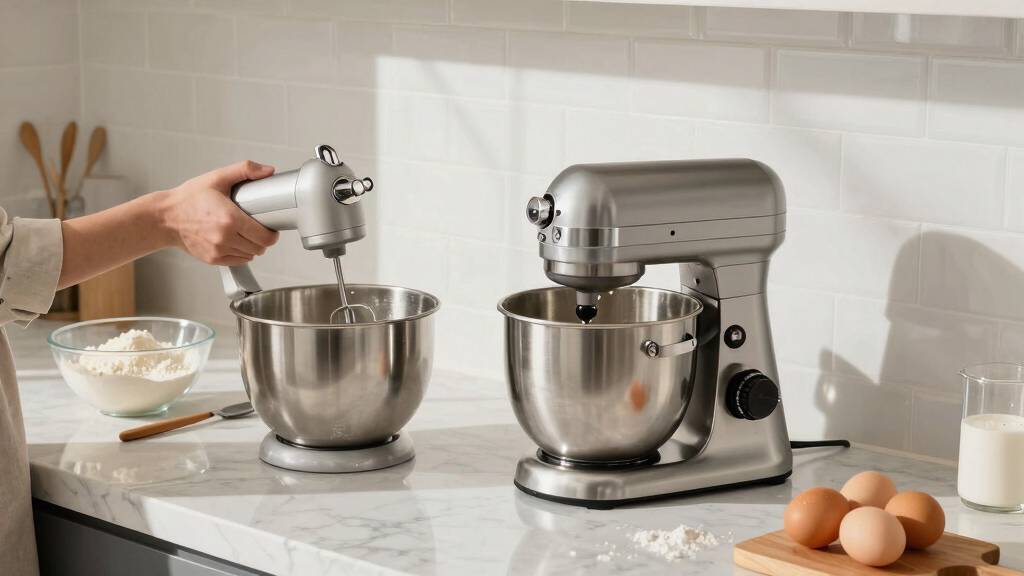
A stand mixer handles heavy, large-batch baking with ease and durability, making it perfect for serious bakers. A hand mixer offers flexibility, portability, and quick results for lighter tasks, ideal for casual cooks. Choosing depends on your baking frequency, space, and budget.
Ever tried whipping up a batch of cookie dough or kneading bread by hand? It’s a workout—and not always fun. That’s where mixers come in. But which one do you really need: the sturdy stand mixer or the nimble hand mixer? Knowing the difference can save you time, space, and frustration in your kitchen.
Whether you’re a weekend baker or a casual cook, choosing the right mixer depends on what you bake, how much space you have, and how often you mix. This guide will break down the core differences, plus practical tips to match your baking style with the perfect tool.
For heavy, large-batch baking, a stand mixer provides unmatched power and stability.
Hand mixers are ideal for quick, light tasks and small spaces, offering portability and ease.
Invest in a stand mixer if you bake frequently or want versatile attachments; choose a hand mixer for casual, occasional baking.
Size and storage are key—measure your space before buying a bulky stand mixer.
Durability varies: stand mixers often last decades, while hand mixers suit lighter, less frequent use.
Stand Mixer vs Hand Mixer: When You Truly Need Which
A stand mixer wins on heavy dough, large batches, durability and hands-free work. A hand mixer wins on speed, portability, control and storage. The right answer lives at the intersection of what you bake, how often you bake and how much kitchen space you can spare.
Two tools, two very different kitchen rhythms
The choice is less about which mixer is “better” and more about which machine removes friction from the recipes you actually make.
Torque vs agility
Stand mixers sustain dense cookie and bread dough without demanding arm strength. Hand mixers move quickly through cream, eggs, frosting and pourable batter.
Permanent vs packable
A stand mixer may weigh 10–30 pounds and often deserves a permanent counter position. A hand mixer fits into a drawer or small cabinet.
Hands-free vs hands-on
A stand mixer kneads while you prep the next step. A hand mixer gives direct control, fast setup and easy movement around any suitable bowl.
Platform vs specialist
Stand mixers can add dough hooks, grinders, pasta rollers and spiralizers. Hand mixers focus on beaters, whisks and occasional light-duty hooks.
Investment vs access
Stand mixers cost more but can reward frequent bakers with years of heavy service. Hand mixers offer an affordable entry point for everyday basics.
Decades vs duty cycles
Well-built stand mixers are designed for repeated workloads. Hand mixers can last well when kept within lighter, shorter mixing sessions.
What each mixer can realistically handle
Green means naturally suited, amber means workable with limits, and red means the task risks strain, uneven results or unnecessary frustration.
| Task or factor | Stand mixer | Hand mixer | Best call |
|---|---|---|---|
| Bread dough | ✓Stable, sustained kneading | ✗Motor and wrist strain | Stand |
| Large cookie batch | ✓Strong torque and capacity | ~Split into smaller batches | Stand |
| Whipped cream | ✓Fast and hands-free | ✓Fast with direct control | Either |
| Pancake batter | ~More setup than needed | ✓Quick and efficient | Hand |
| Meringue or frosting | ✓Ideal for long whipping | ✓Excellent for small batches | Frequency decides |
| Small kitchen | ✗Needs dedicated space | ✓Drawer-friendly | Hand |
| Expanded attachments | ✓Broad accessory ecosystem | ~Mostly standard beaters | Stand |
Where the capability gap becomes visible
Relative bars show typical suitability for recurring kitchen demands. They are decision aids—not claims that every model performs identically.
A four-question route to the right machine
Move through the chain using your normal month of cooking—not the fantasy version of your future baking routine.
How often?
Weekly or more favors a durable stand mixer; occasional sessions favor a hand mixer.
How dense?
Bread and stiff cookie dough point toward stand power. Pourable batter does not require it.
Where will it live?
Measure counter height, width and cabinet access before committing to a bulky machine.
Will you expand?
If pasta, grinding or frequent bread is likely, a stand mixer platform has room to grow.
Choose the mixer that matches your real life
You bake with weight and repetition
- You regularly knead bread or mix dense dough.
- You make large or double batches.
- You value hands-free mixing and multitasking.
- You have dedicated storage or counter space.
- You want a long-term appliance with expandable attachments.
You bake lightly and value flexibility
- You mostly whip cream, beat eggs or mix cake batter.
- You cook in small quantities.
- You need compact, portable storage.
- You prefer direct control and rapid setup.
- You bake casually and want to spend less.
Power and Performance: Which Mixer Handles Heavy Doughs and Large Batches?
When it comes to power, stand mixers are the heavyweight champs. They pack between 250 to 1,000 watts, tackling dense bread doughs and big batches with ease. This power translates directly into their ability to knead tough doughs thoroughly without overheating or straining. For bakers, this means less manual effort and more consistent results, especially when working with recipes that require thorough mixing or kneading. The tradeoff is that more powerful motors often mean higher cost and increased size, so you need to consider if your space and budget align.
In contrast, hand mixers usually hover around 100-300 watts. They excel at lighter tasks because their motors don’t generate as much torque. While they can handle small batches of batter or whipped cream efficiently, trying to push them into heavy-duty territory—like mixing stiff bread dough—risks burning out the motor or uneven mixing. This means hand mixers are best suited for quick, light tasks where speed and convenience matter more than power. The implication for bakers is a clear tradeoff: you gain portability and ease but sacrifice the ability to handle dense, large batches without strain.
For example, a baker making a 5-quart batch of cookie dough will find a stand mixer more reliable and less tiring because it can sustain the workload without overheating or slowing down. Conversely, whipping up a single batch of pancake batter is quick and effortless with a hand mixer, saving time and cleanup.
Products Worth Considering

Cuisinart SM-50R 5.5-Quart Stand Mixer, Ruby Red

KitchenAid Artisan 5-Quart Tilt-Head Stand Mixer, Almond Cream

KitchenAid Artisan Series 5-Quart Tilt-Head Stand Mixer, Dried Rose (KSM150PS)
As an affiliate, we earn on qualifying purchases.
Size and Storage: Can Your Kitchen Handle a Big, Bulky Mixer?
Size matters more than you might think when choosing a mixer. Stand mixers are substantial appliances, often measuring around 12 inches tall and 8 inches wide, with a weight that can range from 10 to 30 pounds. This bulk means they require dedicated counter or storage space and are less portable once set up. For kitchens with ample space—like a dedicated baking area or spacious countertops—they can become a permanent fixture, offering convenience at the expense of flexibility. If your kitchen is small or has limited storage, a stand mixer might be a less practical choice, unless you’re willing to dedicate a specific spot for it.
In comparison, hand mixers are compact, typically about the size of a large soda can, and weigh just a few pounds. They fit easily into drawers or small cabinets, making them ideal for kitchens where space is a premium or for those who prefer to keep their countertops clear. Their portability means you can store them away after use and pull them out when needed, which is a significant advantage in smaller or shared kitchens.
For instance, in a small apartment kitchen, a stand mixer might sit unused for days, occupying valuable space, while a hand mixer can be tucked away until needed. The practical implication is that your choice should align with your available space and your baking habits—if you bake frequently and have room, a stand mixer can be a valuable long-term investment; if not, a hand mixer offers convenience and flexibility without clutter.
Ease of Use and Convenience: Which Mixer Fits Your Cooking Rhythm?
Ease of use isn’t just about how simple it is to operate, but also how it integrates into your baking routine. Stand mixers excel in providing hands-free operation. Once you add ingredients and select a setting, you can walk away—ideal for long or repetitive tasks like kneading bread or making large batches of frosting. This reduces fatigue and allows you to multitask, such as preparing filling or cleaning up. The tradeoff is that they require setup and can be heavier to move if you need to relocate them during a session.
Meanwhile, hand mixers offer unmatched control and agility. You hold and maneuver them freely, giving you the ability to add ingredients gradually or switch between tasks seamlessly. This makes them perfect for quick jobs like beating eggs or folding in delicate ingredients, where precision matters. However, they require more manual effort and may be less suitable for very large or dense mixes, as they can tire your arm after extended use.
For example, baking a cake with a hand mixer allows you to easily fold in chocolate chips or nuts without transferring batter between bowls, maintaining control and reducing cleanup. Conversely, preparing a dense bread dough with a stand mixer means you can set it up and walk away, trusting it to handle the heavy lifting. The implication is that your choice depends on whether you prioritize convenience and automation or manual control and flexibility.
Versatility and Attachments: Which Mixer Offers More Options?
Versatility in a mixer translates to the range of tasks it can perform and how easily it adapts to various recipes. Stand mixers are often considered the Swiss Army knives of baking because they come with multiple attachments—paddle, whisk, dough hook—and can be expanded with optional accessories like pasta makers, meat grinders, or citrus juicers. This modularity allows you to tackle a wide variety of culinary projects with a single appliance, making it a valuable investment for serious bakers or those who enjoy experimenting in the kitchen. The tradeoff is that these attachments and extra features add to the initial cost and bulk.
In contrast, hand mixers typically include beaters, whisks, and sometimes dough hooks, but their attachment options are more limited. They’re optimized for standard tasks like whipping cream or mixing batter, and their smaller size means they lack the power or versatility to handle more complex or heavy-duty projects. This limitation means they’re less adaptable to expanding baking interests but are perfectly suited for straightforward, quick tasks.
Imagine making pasta dough, whipping meringue, and preparing bread with a stand mixer—each task benefits from the right attachment, providing efficiency and consistency. A hand mixer might require additional gadgets or simply not be suitable for such diverse applications. The practical implication is that your choice should consider whether you want a multi-functional machine or a dedicated device for specific tasks, balancing cost, space, and versatility.
Cost and Long-Term Value: Is a Big Investment Worth It?
Price tags reflect power, durability, and features, but understanding what you’re paying for is key. Stand mixers often start around $200 and can exceed $500 for high-end models with advanced controls, larger capacity bowls, and a variety of attachments. This higher initial investment is justified by their durability and ability to handle frequent, heavy-duty use over many years. They can become long-term kitchen partners, especially if you’re serious about baking, saving you money on replacements and repairs in the long run. The tradeoff is the upfront cost and the need for sufficient space.
Hand mixers are typically more budget-friendly, priced between $20 and $80. They are ideal for casual bakers or those with limited space who don’t want to commit to a large appliance. While they may not last as long under constant heavy use, they’re sufficient for occasional baking tasks and small households. The practical implication is that choosing a hand mixer can be a cost-effective solution for infrequent bakers, but might lead to earlier replacement if used intensively.
For example, a dedicated home baker who makes bread weekly might find that investing in a sturdy stand mixer pays off over time, providing reliability and performance. Conversely, someone who bakes only a few times a year might prioritize saving money and opt for a hand mixer, accepting the tradeoff of potentially needing to replace it sooner.
Durability and Longevity: Which One Lasts Longer?
Durability isn’t just about how long a mixer lasts; it’s about how well it withstands regular use and the type of tasks you throw at it. Stand mixers are engineered for durability, with sturdy metal gears, powerful motors, and high-quality components. When maintained properly, they often last for decades, becoming a fixture in your kitchen and sometimes even an heirloom piece. Their design allows them to handle heavy doughs, large batches, and continuous use without significant wear, making them a reliable long-term investment.
In contrast, hand mixers are generally built for lighter tasks and may wear out faster if used regularly for heavy doughs or large batches. Their plastic bodies and smaller motors are more susceptible to wear and tear, and their lifespan can be shorter if subjected to frequent, intensive use. However, with proper care—such as avoiding overloading and cleaning after each use—they can serve well for years of casual baking. The key is matching the tool’s durability profile with your baking frequency and the types of recipes you pursue.
Think of it as the difference between a sports car and a reliable sedan: both can last if maintained, but one is designed for high performance under stress, while the other prioritizes consistent everyday use. Your choice should reflect your baking habits and expectations for longevity.
Which Is Better for Your Kitchen? Quick Tips to Decide
- Assess your baking volume: Large batches or dense doughs? Go with a stand mixer, as its power and capacity can handle these demands without fatigue or inconsistency.
- Check your space: Do you have room for a bulky machine? If not, a hand mixer is more practical, offering portability and easy storage.
- Think about frequency: If you bake frequently—weekly or multiple times a week—a stand mixer can save time and effort, justifying the higher cost. For occasional baking, a hand mixer suffices and saves space.
- Evaluate your budget: Can you invest in a long-term, durable appliance? If yes, a stand mixer provides value over years. If your budget is limited or baking is a hobby, a hand mixer offers a cost-effective solution.
- Consider versatility: Do you want to explore various recipes requiring different attachments? A stand mixer’s expandability makes it a versatile choice, while a hand mixer is more limited but straightforward.
By considering these factors, you can make a confident decision that aligns with your baking habits, space, and budget, ensuring you select the right tool for your kitchen.
Frequently Asked Questions
Can I use a hand mixer for bread dough?
While some hand mixers come with dough hooks, they’re generally not recommended for heavy bread doughs. Stand mixers are better suited because of their higher power and stability, making kneading much easier and more consistent.
Is a stand mixer worth it for casual baking?
If you bake once a month or less, a hand mixer likely suffices. A stand mixer makes large tasks easier and faster, but for occasional use, the investment may not be justified.
How much space does a stand mixer need?
Most stand mixers occupy about 12 inches tall and 8 inches wide, requiring a dedicated spot on your countertop or storage shelf. Measure your available space before buying to avoid surprises.
Are stand mixers more durable than hand mixers?
Yes. Stand mixers are built for frequent, heavy use and often last decades. Hand mixers are more lightweight, suitable for lighter tasks, and may wear out faster if overused.
Can I replace a stand mixer with a hand mixer?
For many basic tasks—whipping cream, mixing batter—yes. But for dense doughs or large batches, a stand mixer offers better power and stability, making it the more reliable choice.
Conclusion
Choosing the right mixer isn’t about which is better, but which suits your baking life best. A stand mixer becomes a baking partner for big batches and heavy doughs, turning a daunting task into a breeze. A hand mixer is your quick helper for small, fast jobs—no fuss, no clutter.
Think about your baking habits, space, and budget. Your perfect match is out there, ready to turn your kitchen into a baking haven.