
TL;DR

Get baking supplies delivered free with Prime
- Fast, free delivery on millions of items
- Prime Video, Amazon Music and more included
- Member-only deals all year
Online search and media interest in whether frozen food can spoil has spiked, though the trigger for the surge is unconfirmed. Long-standing USDA guidance holds that food kept constantly at 0°F is safe indefinitely, but quality — taste, texture, nutrition — declines over time.
Searches and articles asking whether frozen food can go bad have increased across food and lifestyle outlets in recent days. The surge has no confirmed single trigger — no recall, outbreak, or official announcement has been publicly linked to it. According to long-standing USDA Food Safety and Inspection Service guidance, food kept constantly frozen at 0°F (-18°C) remains safe to eat indefinitely, though its quality declines over time.
The guidance rests on a basic fact: at 0°F, the temperature of a properly functioning freezer, microbial growth — including the growth of bacteria responsible for foodborne illness — is effectively halted. The USDA has long advised that frozen food stored at that temperature stays safe indefinitely because freezing prevents the pathogens that cause spoilage and illness from multiplying. Frozen items therefore do not “expire” in the safety sense that refrigerated or shelf-stable foods can, and dates printed on frozen packaging are generally quality indicators, not safety deadlines.
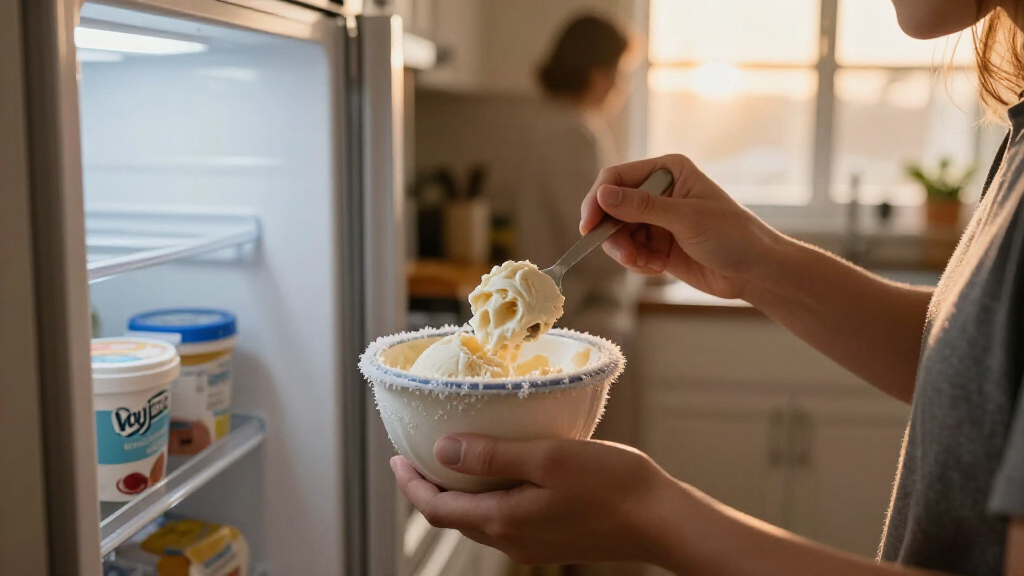
Safety and palatability are distinct, according to the USDA and food scientists: while frozen food remains safe, quality degrades over months through enzymes, slow chemical changes, moisture loss, and oxidation. Freezer burn — the grayish-brown, dry patches caused by air reaching the food’s surface — is a texture and flavor issue rather than a safety hazard, though heavily freezer-burned portions are often trimmed away or discarded for taste reasons. Charts published by the USDA provide rough timelines for best quality, typically ranging from about three months for some items to a year or more for others, depending on the food.
Safety risks arise primarily when the cold chain is broken. If food thaws — during a power outage, a malfunctioning freezer, or being left out on a counter — bacteria can resume growing. USDA advice distinguishes between partial thawing while the food remains at or below 40°F, which can be refrozen with some quality loss, and food left above 40°F for extended periods (more than roughly two hours by standard food-safety rules), which should be discarded. Perishable food that has thawed and warmed into the danger zone between 40°F and 140°F is where the agency identifies the primary risk.
Why the Safety-Quality Distinction Matters
The distinction between safety and quality has practical implications for household budgets and food waste. USDA guidance states that a date on frozen packaging reflects the manufacturer’s estimate of peak quality, not a point after which the food becomes unsafe — provided it has been stored continuously at 0°F. Under that guidance, frozen items past their printed dates may remain safe to eat, though with reduced quality.
The guidance also addresses the reverse case: freezing does not protect food that was left out too long before freezing, and it does not reverse bacterial growth that occurred beforehand. The USDA’s consumer materials identify both scenarios — discarding safe food based on dates, and assuming freezing neutralizes prior mishandling — as misconceptions the agency’s resources are designed to correct.
Products Worth Considering

Ninja PossibleCooker Plus 6-in-1 8.5 Qt Black (MC1010)

De’Longhi Classic Matte Black Espresso Machine with Milk Frother

Weber Searwood 600 Wood Pellet Smoker Grill, Black
As an affiliate, we earn on qualifying purchases.
Where the Guidance Comes From
The “safe indefinitely at 0°F” position is not new. It reflects decades of settled guidance from the USDA Food Safety and Inspection Service and is echoed by the FDA in its consumer advice on freezing, which recommends keeping the freezer at 0°F and the refrigerator at or below 40°F. The USDA’s Freezing and Food Safety resource, maintained and periodically reissued, is the reference most food-safety articles on this topic draw from. The recent wave of articles and searches asking whether frozen food can go bad recycles this established advice rather than reporting any new finding, ruling, or research result.
What’s Driving the Interest Surge
What remains unclear is why this topic is trending now. No food recall, freezer-related outbreak, regulatory change, or major scientific publication has been identified that would explain the spike in searches and articles. It is not confirmed whether the surge stems from a viral social media post, seasonal factors such as storm-season stocking of freezers, or ordinary news-cycle recycling of evergreen food-safety content. The articles themselves largely restate established USDA guidance rather than report new developments.
How to Check Your Own Freezer
No regulatory or scientific development is expected on this topic; the practical step for readers is applying the existing guidance. That means using an appliance thermometer to verify the freezer holds 0°F, since built-in dials do not always reflect actual temperature. After any power outage, the USDA advises checking whether food still contains ice crystals or remains at or below 40°F before refreezing, and discarding anything that sat in the danger zone for more than two hours. No new official statement or consumer advisory related to the current interest has been announced.
Key Questions
Can frozen food actually go bad?
Food kept constantly frozen at 0°F does not become unsafe over time, according to USDA guidance — but its quality declines, and it can become unsafe if it thaws and warms above 40°F for too long.
Are the dates on frozen food packages expiration dates?
Generally no. On frozen products, printed dates typically indicate the manufacturer’s estimate of best quality, not a safety cutoff, assuming continuous storage at 0°F.
Is freezer-burned food safe to eat?
Yes. Freezer burn is caused by air exposure and moisture loss and affects texture and flavor, not safety. Affected areas can be trimmed off, though heavily burned food may taste poor.
Can I refreeze food that thawed during a power outage?
Per USDA guidance, yes — if it still contains ice crystals or stayed at or below 40°F. Food that sat above 40°F for more than two hours should be discarded.
Is there new research or a recall behind the current interest?
None has been identified. The trend appears to recycle long-standing USDA and FDA guidance; the specific trigger for the surge in searches and articles is unconfirmed.
Source: rss