TL;DR

Get baking supplies delivered free with Prime
- Fast, free delivery on millions of items
- Prime Video, Amazon Music and more included
- Member-only deals all year
Light-colored pans reflect heat, leading to more even baking and softer textures, while dark pans absorb heat, causing faster browning and crisper edges. Adjust oven temps accordingly for optimal results.
Ever notice how some cookies turn a perfect golden-brown in one pan but burn in another? The secret often lies in the pan’s color. It’s a simple detail, but it packs a punch when it comes to how your baked goods look and taste.
Understanding the difference between light and dark baking pans can transform your baking game. Whether you’re aiming for moist cakes or crispy cookies, your choice of pan color influences heat absorption, baking speed, and final texture. Let’s explore what makes each type tick—and how to use that knowledge to get perfect results every time.
Dark pans absorb more heat, causing faster baking and crisper crusts; reduce oven temp by 25°F when switching from light to dark pans.
Light-colored pans are better for cakes and delicate baked goods that require gentle, even heat.
Adjust baking times based on pan color—expect shorter times with dark pans to prevent over-browning.
Choose your pan based on the final texture you want—crisp edges or soft centers.
Proper care and cleaning extend your pans’ lifespan and preserve their heat properties.
Light vs Dark Baking Pans: The Color That Changes Your Bake
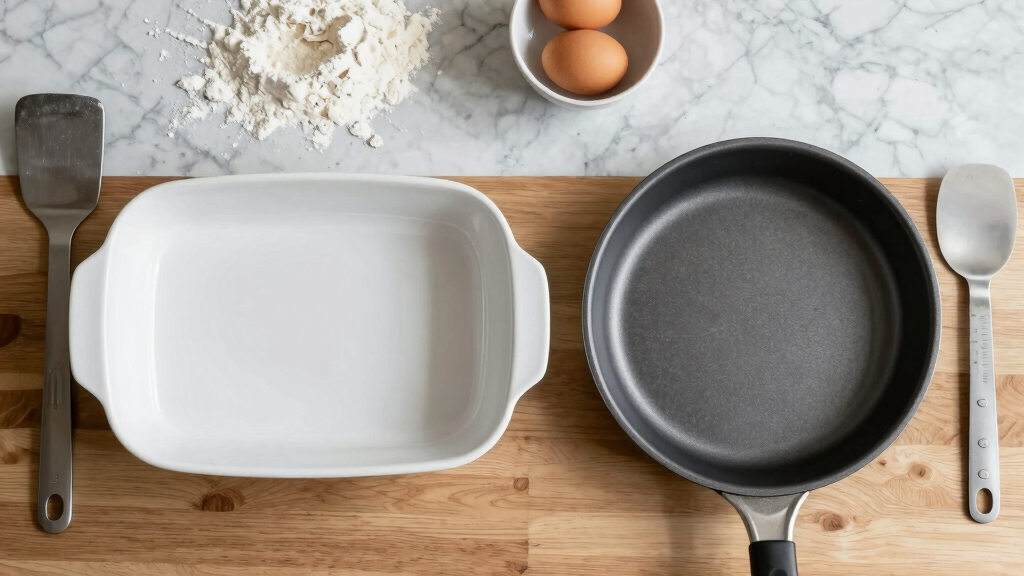
The same dough, temperature and timer can produce two very different results. Light pans reflect heat for a gentler, more even bake; dark pans absorb it for quicker browning and crisper edges.
01 / At a glance
Two surfaces, two heat behaviors
Pan color changes how radiant heat interacts with your bake. Material and finish still matter, but color is a powerful clue to how quickly the exterior will set and brown.
Reflects heat
A shiny or pale surface maintains a gentler surface temperature, helping the center and exterior finish closer together.
Absorbs heat
A dark or coated surface becomes hotter more quickly, accelerating caramelization where the food touches the pan.
02 / Heat to texture
The browning chain reaction
Color affects energy absorption; energy changes the pan’s surface temperature; surface temperature controls how quickly edges set, brown and crisp.
Pan color
Light reflects more energy. Dark absorbs more.
Heat transfer
The pan surface warms gently or intensifies quickly.
Browning rate
Edges caramelize slowly or develop ahead of the center.
Final texture
Choose tender and even, or crisp and deeply colored.
Relative browning intensity
Illustrative comparison under otherwise similar baking conditions.
Cookie crispness timeline
A practical example: dark pans can reach a crisp edge sooner.
03 / Recipe matcher
Pick the finish you want
Start with the desired texture, then select the pan. If substitution is unavoidable, change the temperature and begin checking earlier.
| Bake | Light pan | Dark pan | Best choice | Target result |
|---|---|---|---|---|
| Layer cake | ✓Even heat | ~Lower heat | Light | Moist, pale, level layers |
| Sponge or soufflé | ✓Gentle bake | ✗Fast exterior | Light | Tender, evenly set center |
| Cookies | ~Softer edge | ✓Quick crisp | Goal-dependent | Soft center or crisp rim |
| Brownies | ✓Gentler edge | ✓Crisp border | Goal-dependent | Fudgy middle, chosen edge |
| Bread or pie crust | ~Lighter crust | ✓Deep color | Dark | Golden, crunchy exterior |
Lower the heat
Turn the oven down about 25°F when moving from a light pan to a dark one.
Check sooner
Begin testing approximately five minutes before the recipe’s stated finish time.
Watch the edges
Rapid edge color is your cue to test the center or shield the exterior.
Record the result
Note the pan, temperature and timing so the next batch becomes repeatable.
04 / Quick decisions
Your texture chooses the pan
No color is universally better. The right pan is the one whose heat behavior supports the structure, moisture and crust you want.
Soft + evenly risen
Use a light surface when over-browning would hide subtle color, dry delicate edges or set the exterior before the center.
Cakes and pastriesCrisp + caramelized
Use a dark surface when a crunchy rim, stronger crust or quick golden finish is part of the recipe’s appeal.
Cookies and breadControl the variables
Both can work when you compensate. Adjust temperature, inspect early and learn how your specific oven and pan behave together.
Adapt and observe05 / Traceability
From recipe goal to reliable result
Make the decision in this order. Texture comes first; pan choice and oven adjustment follow.
06 / Pan care
Preserve the surface, preserve the bake
Scratches, worn coatings and baked-on residue can alter performance. Gentle, consistent maintenance supports predictable heat transfer and a longer pan life.
Dark and non-stick pans
- Use soft tools: wash with warm soapy water and a non-abrasive sponge.
- Avoid steel wool: scratching can weaken or remove the coating.
- Follow maker guidance: coatings vary in heat and dishwasher tolerance.
Light metal pans
- Clean residue promptly: dark buildup can create localized hot spots.
- Dry thoroughly: help prevent oxidation, staining and surface damage.
- Inspect regularly: warping can cause uneven batter depth and baking.
What’s the real difference between light and dark pans?
Light pans reflect most of the heat that hits them, which means they tend to keep the baking environment cooler and more uniform. This reflection helps prevent the outer layers from overcooking before the interior is done, resulting in a more evenly baked product. Conversely, dark pans absorb more heat, often increasing the surface temperature significantly. This absorption accelerates browning, which can be advantageous for certain recipes but problematic for others.
Why does this matter? If you’re baking something delicate like a soufflé or a sponge cake, a light pan minimizes the risk of over-browning or burning the exterior while the inside remains undercooked. On the other hand, for recipes like brownies or cookies where a crisp, caramelized crust is desirable, a dark pan can help achieve that texture faster. The tradeoff is that dark pans require more careful monitoring and temperature adjustments to prevent burning or uneven baking. Recognizing these differences allows you to tailor your approach, ensuring your baked goods turn out just right—moist and tender or crispy and browned, depending on your goal.
Products Worth Considering

De'Longhi Linea Classic Espresso Machine with Adjustable Milk Frother

Le Creuset Enameled Cast Iron Round Dutch Oven, 5.5 Qt, Flame
Vitamix 5200 Professional-Grade Blender, 64 oz. Container, Black
As an affiliate, we earn on qualifying purchases.
How pan color affects your baking results in real life
| Pan Type | Heat Absorption | Baking Effect | Best For |
|---|---|---|---|
| Light-colored | Reflects heat, maintains lower surface temperature | Produces even browning, softer crusts, prevents over-browning | Cakes, delicate pastries, soufflés |
| Dark-colored | Absorbs heat, increases surface temperature | Leads to faster browning, crisper edges, potential for uneven cooking | Cookies, brownies, bread crusts |
Imagine baking chocolate chip cookies. In a dark pan, the edges might crisp up within 8 minutes, giving you that satisfying crunch. In a light pan, it might take 10 or 11 minutes to reach the same level of doneness. This difference isn’t just about time—it reflects how heat transfer is affected by pan color. Dark pans accelerate browning because they absorb more heat, which can be beneficial for quick-crisp results but may also lead to over-browning if not monitored carefully. Conversely, light pans provide a more forgiving environment, promoting uniform heat distribution that helps achieve tender, evenly baked goods. Recognizing these effects helps you choose the right pan and baking strategy for each recipe, ensuring your baked items look and taste exactly as intended.
Adjusting your oven for different pan colors: easy tips
- Reduce oven temperature by about 25°F (14°C) when using dark pans to avoid burning or over-browning, as the pan absorbs more heat and can cause uneven results.
- Monitor your baked goods closely, especially if transitioning from light to dark pans or vice versa, since baking times and browning rates will differ.
- Start checking for doneness 5 minutes earlier with dark pans to prevent over-baking or burning, adjusting as needed based on your oven’s behavior.
- If your recipe specifies a certain temperature, lower it slightly when using a dark pan and observe how your baked goods respond—this helps maintain the intended texture and appearance.
For example, when baking banana bread in a dark loaf pan, lowering the oven temperature by 25°F prevents the crust from burning while allowing the interior to bake through evenly. This small adjustment can make the difference between a perfectly moist loaf and a burnt crust. Understanding how pan color influences heat transfer enables you to modify your process proactively, giving you greater control over your baking outcomes and ensuring consistent, delicious results.
Are there benefits to using dark or light pans?
Dark pans can give you that beautifully crisp crust and faster baking times, which is ideal for recipes like cookies and bread where a crunchy exterior enhances flavor and texture. The tradeoff, however, is the increased risk of over-browning or burning if not carefully monitored. Light pans, by reflecting heat, help you achieve softer, more evenly baked cakes and delicate pastries. They are particularly useful for recipes that require gentle, uniform heat to prevent over-browning and preserve moisture inside.
Choosing between them depends on your baking goals. For instance, if you want a brownie with a perfectly crisp edge, a dark pan is advantageous. But for a tender sponge cake that stays moist and light, a light-colored pan provides a safer, more forgiving environment. Recognizing these benefits helps you select the right tool for each recipe, balancing desired texture with baking safety and efficiency.
How to pick the right pan for your favorite recipes
Match your pan to what you’re baking, considering the texture and appearance you want to achieve. For cakes that should be soft, moist, and evenly risen, a light-colored pan is preferable because it provides a gentle, reflective heat that minimizes over-browning. For cookies or bread where a crisp, golden crust is desirable, a dark pan accelerates browning and creates that satisfying crunch. Remember, adjusting oven temperature slightly downward when using a dark pan can help prevent over-baking and ensure a balanced final product.
Think of it like choosing shoes: lighter for comfort and ease, darker for style. Similarly, your pan’s color influences not just the look but also the feel of your baked goods. Making the right choice based on your recipe’s goals and adjusting your oven accordingly ensures consistent, high-quality results every time.
Cleaning and caring for your pans—does color matter?
Yes, especially when it comes to maintenance. Dark pans, often made of non-stick or coated materials, require gentle cleaning to preserve their surface and prevent damage. Using abrasive scrubbers can scratch or degrade coatings, reducing their effectiveness and lifespan. Light pans, typically made of aluminum or stainless steel, can usually handle more vigorous scrubbing without damage, but proper care still extends their usability. Regular cleaning with warm, soapy water and soft sponges helps maintain their heat properties and appearance. Proper maintenance ensures your pans continue to perform optimally, with consistent heat transfer and durability over time.
For example, avoiding steel wool on non-stick dark pans prevents coating damage, while gentle scrubbing of light aluminum pans keeps them looking and functioning like new. Recognizing the importance of tailored care based on pan material and color helps you preserve your investment and maintain consistent baking results.
The future of baking pans: trends and innovations
Expect more hybrid materials that combine reflective and absorptive surfaces, offering bakers greater control over heat management. Some brands are developing pans with embedded sensors or heat-conductive layers that monitor and adjust temperature during baking, leading to more precise results. Additionally, eco-friendly options like recycled aluminum or ceramic coatings are gaining popularity, providing sustainable choices that also influence heat behavior. These innovations aim to give bakers smarter, more efficient tools, reducing guesswork and improving consistency. As technology advances, the future of baking pans promises to enhance both convenience and performance, making it easier to achieve perfect results with less trial and error.
By staying informed about these trends, you can select pans that not only meet your baking needs but also align with sustainable practices and cutting-edge technology, elevating your baking to new levels of precision and quality.
Frequently Asked Questions
Can I use a dark pan for cakes without burning them?
You can, but it’s wise to lower the oven temperature by 25°F and keep a close eye. Dark pans heat up faster, so your cake might brown quicker than expected.Is it better to have a mix of light and dark pans in my kitchen?
Absolutely. Having both allows you to choose the right pan for each recipe, giving you more control over texture and appearance.Do non-stick coatings affect how pan color influences baking?
Non-stick coatings can mitigate some effects of heat absorption. Still, adjusting temperature and baking time is recommended for best results.How do I know if my pan needs to be replaced because of color or wear?
Look for scratches, peeling coatings, or warping. A pan that’s heavily scratched or warped may not heat evenly, affecting your bake quality.Conclusion
Understanding how pan color influences heat absorption transforms your baking approach. The next time you bake, consider the pan’s hue—sometimes, a simple switch can mean the difference between perfectly golden and burnt to a crisp.
Remember, small adjustments make big differences. Your perfect bake is just a color choice away—so experiment, observe, and enjoy that golden, crispy crust or tender crumb every time.