
TL;DR

Get baking supplies delivered free with Prime
- Fast, free delivery on millions of items
- Prime Video, Amazon Music and more included
- Member-only deals all year
Carrot cake stays moist longer when you use neutral oil, finely grate fresh carrots, avoid overbaking, and store it airtight. These tricks keep your cake soft, flavorful, and fresh for days.
Ever cut into a carrot cake and wonder why it’s still moist after several days? The trick isn’t just a fancy ingredient; it’s a handful of simple strategies that work together. You’ll find that small tweaks—like choosing the right oil or storing it airtight—can turn your cake into a moist, tender treat that lasts.
Understanding these little secrets means you can bake ahead for parties or enjoy a slice tomorrow without it drying out. Let’s look at how to keep your carrot cake irresistibly soft, day after day.
Choose a neutral oil over butter for lasting moisture.
Finely grate fresh carrots and avoid squeezing excess water.
Bake just until moist crumbs appear—never overbake.
Wrap the cake airtight after cooling to lock in freshness.
Rest the cake overnight to enhance tenderness and flavor.
The Carrot Cake Secret That Keeps It Moist for Days
The secret is a coordinated system: liquid oil softens the crumb, finely grated carrots distribute water, brown sugar holds moisture, precise baking prevents loss, and airtight storage keeps freshness from escaping.
Six small decisions create one tender cake.
No single add-in can rescue an imbalanced batter. Lasting softness comes from controlling fat, water, sugar, heat, exposure, and time.
Choose neutral oil
Canola, sunflower, or light olive oil coats the crumb and remains fluid as the cake cools.
Grate carrots finely
Fresh, fine shreds release and distribute water more evenly than thick, dry packaged shreds.
Include brown sugar
Molasses attracts and retains water, supporting a tender crumb that resists drying.
Stop at moist crumbs
Pull the cake when a tester has moist crumbs but no raw batter. Residual heat completes the bake.
Seal only when cool
Wrap layers tightly or use an airtight container to prevent the crumb’s natural humidity from escaping.
Rest it overnight
Moisture redistributes, spices meld, and the crumb becomes more cohesive by the following day.
The five-step path to lasting softness.
Each stage protects moisture established by the one before it. Skipping the cooling or sealing step breaks the chain.
Oil-based batter
Measure flour by weight and use a light, neutral oil.
Fine fresh carrots
Grate finely, never purée, and do not squeeze away the water.
Moist-crumb test
Remove the cake before the tester emerges completely dry.
Cool, then seal
Let steam settle before wrapping the cake airtight.
Rest overnight
Allow moisture and spice to move evenly through the crumb.
What each moisture booster really does.
Optional fruit additions can increase moisture, but too much water weakens structure. Oil, carrots, and brown sugar provide the most dependable foundation.
| Ingredient | Moisture action | Lasting softness | Flavor impact | Primary tradeoff |
|---|---|---|---|---|
| Neutral oil | Remains liquid and coats the crumb | ✓ Excellent | Minimal | Adds richness and calories |
| Brown sugar | Molasses attracts and holds water | ✓ Strong | Caramel depth | Too much can become sticky |
| Fresh grated carrots | Release water throughout baking | ✓ Strong | Fresh sweetness | Requires fine, even grating |
| Applesauce or yogurt | Add water while reducing some fat | ~ Moderate | Mild tang or fruit | Can make the crumb dense |
| Crushed pineapple | Adds abundant fruit liquid | ~ Variable | Sweeter and fruitier | Excess can become gummy |
| Butter alone | Softens when warm, firms when cool | ✗ Lower | Distinct buttery flavor | Crumb feels firmer after cooling |
Moisture-retention influence
A practical relative scale based on each factor’s direct role in softness and shelf life.
Relative influence index for editorial comparison; not a laboratory percentage.
Protect the crumb after the oven.
Storage cannot add moisture, but it determines how quickly the moisture already inside the cake escapes.
Wrap tightly
Once completely cool, wrap individual layers closely or place them in a sealed container. Limit exposed edges.
Refrigerate safely
Use an airtight cake container, then let the portion sit briefly at room temperature before serving for a softer texture.
Freeze the layers
Wrap unfrosted layers tightly and freeze for roughly two to three months for best quality.
The best carrot cake is not rescued by pineapple. It is designed to retain moisture from mixing bowl to storage box.
Why Oil Makes Your Carrot Cake Stay Soft Longer
Oil is the hero of moisture retention. Unlike butter, which firms up when cooled, oil stays liquid at room temperature, giving your crumb a silky, tender feel that lasts for days. When you bake with neutral oil—like sunflower, canola, or light olive oil—the cake remains moist and soft even after a few days.
If you’ve ever had a carrot cake that dries out quickly, switching to oil can make a noticeable difference. Think of it like spreading butter on toast—oil soaks into every crumb, keeping it supple.
For best results, choose a flavorless oil to avoid altering your cake’s taste. This is especially true if you’re aiming for a healthier, less greasy finish. Remember, the type of oil can subtly influence the cake’s texture and shelf life. Heavier oils might add richness but could also slightly alter the moisture balance, so opt for light, neutral oils for longevity.
Products Worth Considering
Vitamix 5200 Professional-Grade Blender, 64 oz. Container, Black

De'Longhi Linea Classic Espresso Machine with Adjustable Milk Frother

Le Creuset Enameled Cast Iron Round Dutch Oven, 5.5 Qt, Flame
As an affiliate, we earn on qualifying purchases.
How Finely Grated Fresh Carrots Help Keep It Moist
Freshly grated carrots release water during baking, which helps in maintaining moisture throughout the crumb. The finer the grate, the more evenly this water disperses, ensuring the entire cake stays tender. Coarse shreds tend to release water unevenly, risking dry patches or uneven texture.
Think of it like seasoning—smaller, more uniform pieces blend better and distribute moisture more evenly. This prevents dry spots and ensures each bite is consistently moist. However, over-grating or squeezing excess moisture from carrots can lead to overly wet batter, which might cause the cake to be dense or gummy, so balance is key.
Choosing the right grate size and handling the carrots carefully ensures the water release is controlled, giving you a moist crumb without compromising structure. This step is crucial because uneven moisture distribution can lead to dryness or sogginess, both of which reduce the cake’s shelf life and enjoyment.
The Role of Brown Sugar in Moisture Retention
Brown sugar’s molasses content acts like a natural moisture magnet, attracting and holding onto water molecules within the batter. This creates a more tender, moist crumb that resists drying out over time. The presence of molasses not only enhances flavor but also extends the cake’s freshness, especially when stored for several days.
White sugar alone lacks this moisture-retaining property, so substituting it with brown sugar or a mix can make a significant difference in the cake’s longevity. Think of brown sugar as a built-in humectant—keeping your cake moist from the inside out.
However, it’s important to strike a balance. Using too much brown sugar can lead to a sticky or overly dense crumb, which might affect how the cake keeps. The tradeoff is between added moisture and texture; too much can compromise the structure, so measuring carefully ensures you get the benefits without downsides.
Perfect Baking Time: When to Pull the Cake Out
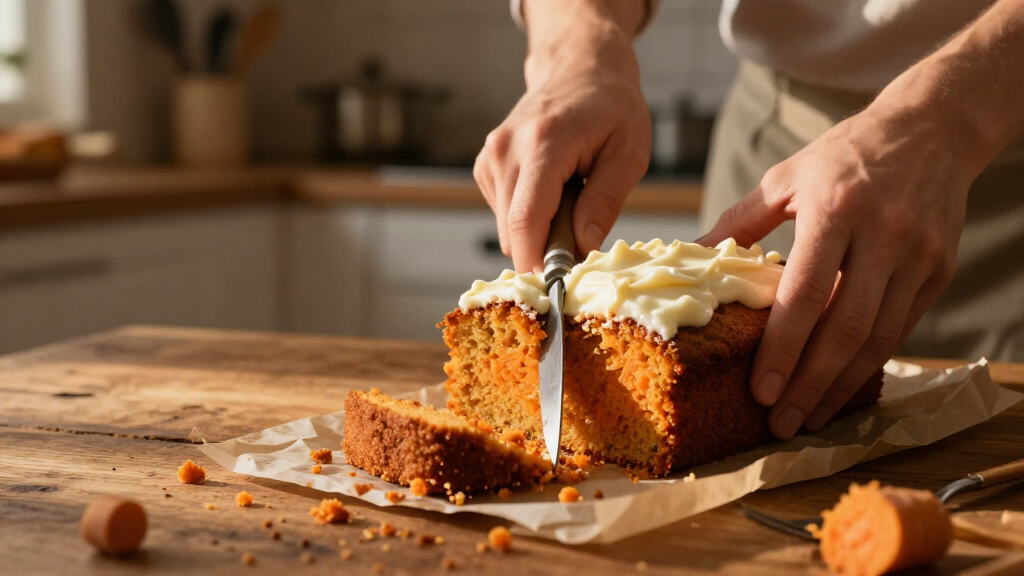
Overbaking is the fastest way to dry out your carrot cake. Using a toothpick or cake tester—when it comes out with moist crumbs but no raw batter—you’ve hit the perfect point. Removing the cake at this stage preserves its moisture and softness.
Imagine a sponge cake—if left in too long, it turns dry and crumbly. The same principle applies here. Slight underbaking ensures the crumb remains tender and moist, as the residual heat continues to gently finish the bake. Cooling the cake completely before slicing also prevents moisture from escaping through steam, which is crucial for maintaining that moist texture.
While it might be tempting to bake longer for a firmer structure, doing so risks losing the delicate moisture that keeps your cake fresh for days. The key is to find that balance where the cake is just set but still moist inside, ensuring a tender crumb that endures.
How Airtight Storage Keeps Your Carrot Cake Fresh
Once your cake is cooled, airtight storage becomes essential for preserving moisture. Wrapping unfrosted layers tightly in plastic wrap or placing them in a sealed container traps the natural humidity inside, preventing moisture from escaping and staling the cake. This method preserves the cake’s tender crumb for days.
For frosted cakes, using an airtight container or covering with a cake dome helps retain moisture while protecting the surface from drying out. If refrigerating, be aware that cold temperatures can sometimes dry out the frosting or crumb, so bringing the cake to room temperature before serving helps restore softness. This practice ensures the cake remains as fresh and moist as when it was first baked.
Think of it like storing bread—exposed bread dries out quickly, but sealed in a bag, it stays fresh longer. The same principle applies to your carrot cake, where proper sealing directly impacts how long it retains its moisture and flavor.
Why Resting the Cake Overnight Boosts Moisture and Flavor
Allowing your carrot cake to rest overnight enhances its moisture and flavor profile through redistribution. During this period, water released from the carrots and sugar dissolves and evenly disperses throughout the crumb, resulting in a more cohesive and tender texture. The spices also meld, deepening the overall flavor.
Think of it like marinating—giving the ingredients time to harmonize results in a more moist, flavorful cake. This resting period also allows the gluten structure to relax, reducing crumbliness and making each slice more satisfying. If you plan ahead, baking a day early and wrapping the cake tightly in plastic ensures it benefits from this process, leading to a softer, more flavorful result.
Skipping this step can mean missing out on the full potential of your cake’s moisture and flavor. The tradeoff is time—patience here yields a noticeably better texture and taste, making your cake not just moist but also richer in flavor and more cohesive in crumb.
Comparing Common Moisture-Boosting Ingredients
| Ingredient | Effect on Moisture | Pros | Cons |
|---|---|---|---|
| Neutral oil | Remains liquid, softens crumb | Long-lasting moistness, neutral flavor | Adds calories |
| Brown sugar | Retains moisture via molasses | Rich flavor, tender crumb | More calories, sweeter |
| Fresh grated carrots | Release water during baking | Natural moisture, flavor boost | Extra prep required |
| Applesauce or pineapple | High water content, adds moisture | Reduces added fats, moist crumb | Can make cake dense or gummy |
Simple Steps to Keep Your Carrot Cake Moist for Days
- Use a neutral oil like sunflower or canola in your batter.
- Finely grate fresh carrots, don’t squeeze excess moisture.
- Bake until moist crumbs cling to a toothpick—no raw batter.
- Cool completely, then wrap tightly in plastic or store in an airtight container.
- Refrigerate frosted cakes and bring to room temp before slicing.
Frequently Asked Questions
Can I use butter instead of oil to keep it moist?
While butter adds flavor, it firms as it cools, making the cake less moist over time. If you prefer butter, consider mixing it with a little neutral oil to balance flavor and softness.
How long can I keep carrot cake fresh?
Wrapped airtight, unfrosted carrot cake stays soft and fresh for about 3-5 days. Frosted cakes should be refrigerated and eaten within 2-3 days for best moisture and safety.
Does adding pineapple or applesauce help keep it moist?
Yes, these ingredients add moisture, but too much can make the cake gummy or dense. They’re optional but can enhance moistness if balanced correctly.
What’s the best way to store a frosted carrot cake?
Keep it refrigerated in an airtight container or covered with a cake dome. Before serving, let it sit at room temperature for 15-20 minutes to regain softness.
Can I freeze carrot cake and still keep it moist?
Yes, freeze unfrosted layers wrapped tightly for up to three months. Thaw while still wrapped to prevent moisture loss, then frost and serve.
Conclusion
The secret to a carrot cake that stays moist for days isn’t about one ingredient but how you treat each step. From using oil to airtight storage—these practical tips turn a good cake into a memorable one. Next time you bake, remember: moisture isn’t just about ingredients; it’s about how you handle them.
Imagine slicing into a cake that feels as tender as the day you baked it—soft, flavorful, and still moist. That’s the magic of these simple tricks. Give them a try, and enjoy cake that keeps its charm long after the first slice.