TL;DR

Get baking supplies delivered free with Prime
- Fast, free delivery on millions of items
- Prime Video, Amazon Music and more included
- Member-only deals all year
Soggy bakes often come from trapped moisture rather than a failed recipe: steam needs a way to escape as baked goods cool, and warm food should not go straight into sealed storage. Cool with airflow, then choose storage for the texture you want, while remembering that underbaking, excess liquid, and perishable fillings need separate attention.
The top of your loaf looks beautifully browned, but the bottom feels damp when you lift it. That frustrating contrast often comes from trapped moisture, not a failed recipe. As a bake cools, steam needs a way to escape. If it gets held against the base, caught under a cover, or sealed into a container, it can condense back into water.
This guide helps you tell a wet base from a gummy crumb, softened crust, or damp topping, because each points to a different cause. You’ll learn when to leave a bake in its pan, why a rack helps, and how to store bread, cake, cookies, and pastry without expecting one container to do every job.
The practical rule is simple: cool with airflow, then store for the texture you want to keep. Follow the recipe’s cooling instructions, and treat foods with cream, custard, cheese, or other perishable fillings as a food-safety question as well as a texture question.
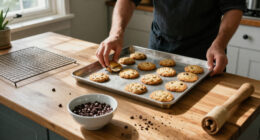
Move bakes to a wire rack after the recipe’s pan-rest period so air can reach the underside.
Let baked goods cool fully before sealing them, unless food-safety guidance for a perishable filling calls for prompt refrigeration.
Choose storage based on desired texture: sealed containers help many cakes stay moist, while crusty bread and crisp pastry may need more airflow.
Store crisp and moist foods separately because moisture can migrate and soften biscuits, pastry, and crusts.
A damp base can come from trapped steam, but a gummy center may point to underbaking or excess liquid.
The Cooling and Storing Mistakes That Cause Soggy Bakes
Trapped steam can dampen a bake even when the recipe is sound. Cool with airflow, then store for the texture you want to keep.
Read the texture clues
Different kinds of sogginess point to different causes.
Steam trapped below
A pan or solid plate can hold warmth and moisture against the underside.
Check doneness
A gummy crumb may point to underbaking or excess liquid; airflow cannot fix it.
Moisture moved
A cover, humid air, or nearby moist foods can soften crisp surfaces.
Cool with airflow
Follow the recipe’s pan-rest directions, then give steam a way out.
Some bakes need time in the pan to set their shape.
Air can circulate beneath the bake and around its sides.
Sealing a warm bake can trap steam and create condensation.
Match storage to texture
No single container keeps every bake at its best.
| Bake | Useful starting point | Tradeoff to watch |
|---|---|---|
| Soft cake or cookies | Cool fully, then use a suitable airtight container | Trapped moisture can make surfaces sticky |
| Crusty bread | Bread box or paper bag for short-term use | Humidity and time can soften the crust |
| Flaky pastry or crisp biscuits | Keep cool and dry, away from moist foods | Moisture can dull the crunch |
Keep crisp and moist foods apart
Moisture can migrate from softer bakes to crisp ones during storage.
- Store biscuits and pastry away from soft bakes.
- Allow airflow where a crisp crust matters.
- Use suitable sealed storage for many cakes and cookies.
- Expect a crust to soften when moisture is held in.
Use the texture to find out why your bake turned soggy
Soggy bakes often come from trapped moisture, but “soggy” can describe several problems: a wet base, a gummy middle, a softened crust, or a damp topping. The texture gives you a useful clue. For example, a loaf with a damp underside after cooling on a plate points toward trapped steam, while a gummy stripe through the middle may signal that the center needed more baking.
Think of cooling as opening a window for steam. A bake releases heat and moisture as it rests; if a pan, solid counter, or tight cover blocks that route, the moisture can settle back onto the food. But airflow cannot repair every problem. Too much liquid in a batter, an underbaked center, or a juicy filling can leave a wet result even when you cool the bake well.
Compare the symptoms before changing your recipe:
- Damp bottom: Check whether the bake sat in its pan or on a flat plate for too long.
- Gummy center: Check doneness and the recipe’s cooling time before slicing.
- Soft crust or crisp topping: Look for moisture moving during cooling or storage, especially in humid air.
Imagine your muffins look done at 25 minutes, but their centers cling to the paper after cooling. A rack can prevent a steamy underside, but it won’t correct an underbaked crumb. Diagnose first; then adjust the baking, cooling, or storage step that fits.
Products Worth Considering

Breville Bambino Espresso Machine, Brushed Stainless Steel

Instant Pot Pro 8-Quart 10-in-1 Electric Pressure Cooker, Black

KitchenAid Artisan 5-Quart Tilt-Head Stand Mixer, Almond Cream
As an affiliate, we earn on qualifying purchases.
Move bakes to a wire rack before steam softens the bottom
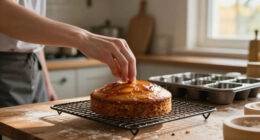
The cooling and storing mistakes that cause soggy bakes often begin when hot food sits against a solid surface. A wire rack lets air pass beneath the bake as well as around its sides, giving steam a route out instead of leaving warmth pressed against the base. A plate or baking tray can hold that heat in place, so the bottom stays damp longer.
Use the recipe’s pan-cooling time as your guide. Some cakes need to rest in their tins briefly so they hold their shape; others should come out promptly. After the directed rest, turn the cake or muffins onto a rack if the recipe says to do so. Rushing them out of a delicate pan can break the bake, while leaving them there much longer than instructed can trap steam.
Picture a batch of banana muffins cooling on a dinner plate. The tops feel cool, but the paper liners are damp underneath. Moving the muffins to a rack after the recipe’s pan rest gives the base breathing room. Leave space between items, too: muffins packed shoulder to shoulder cool more slowly than muffins with a little air around them.
If you do not have a wire rack, use a clean, dry surface that allows air to circulate as much as possible, and avoid stacking hot items. A rack is especially handy for bread, cookies, and pastry where a crisp underside matters. For a soft cake, the aim is still to release steam before you cover it.
Wait until the bake is cool before wrapping or sealing it
A bake should cool completely before you wrap it or close it inside an airtight container, unless food-safety guidance for a perishable filling calls for a different course. When you cover a warm bake, escaping steam meets the cooler lid or wrapping and turns into droplets. Those drops can fall back onto the crust, cake surface, or cookies, leaving a damp film where you wanted a clean finish.
“Cool completely” depends on the size and shape of the bake, so use the recipe’s directions and check that the center no longer feels warm. A small cookie cools much faster than a tall loaf or a deep cake. For example, if you frost a cake while it is still warm, the frosting may soften and moisture may collect under a cover; waiting until the cake cools avoids both texture problems.
A simple sequence helps:
- Follow the recipe’s pan rest so the bake can set without staying trapped too long.
- Move it to a rack when directed and leave room around each piece.
- Let it cool fully before wrapping, stacking, or closing a container.
- Choose storage for the texture you want, and refrigerate perishable fillings according to reliable food-safety guidance.
There is an exception: a cream-filled pastry or cake with a perishable topping may need prompt refrigeration. In that case, follow food-safety recommendations for the ingredients rather than leaving it out for hours to chase a perfect crust.
Store bread, cake, cookies, and pastry for the texture you want
The right container depends on what you want to preserve. Airtight storage can help many cakes and cookies stay moist, but it can soften a crisp crust or flaky pastry. Bread often does better in a bread box or paper bag for short-term use, depending on its crust and the humidity in your kitchen. No single container keeps every bake in peak condition.
Think of a container as a dial for moisture exchange. A sealed container slows drying, which can suit a soft cake, but it also holds moisture in. A paper bag allows more exchange and can suit crusty bread for short-term storage, though the loaf may dry sooner. If you keep a crusty loaf in plastic because you like a softer crust, that is a texture choice; expect the crust to lose some crispness.
| Bake | Useful starting point | Tradeoff to watch |
|---|---|---|
| Soft cake or cookies | Cool fully, then use a suitable airtight container | Trapped moisture can make surfaces sticky |
| Crusty bread | Try a bread box or paper bag for short-term use | Humidity and time can soften the crust |
| Flaky pastry or crisp biscuits | Keep cool and dry, away from moist foods | Moist air and nearby soft bakes can dull the crunch |
| Bakes with perishable fillings | Follow food-safety advice for their ingredients | Texture goals do not override safe handling |
Say you bake crisp biscuits and a soft muffin tray on the same afternoon. Store them separately. Moisture can move from the softer food to the crisp one, leaving the biscuit less crunchy even if the container is clean and closed.
Stop dampness from building up in a humid or crowded kitchen
Airflow and the room around a bake affect how quickly it cools. In a humid kitchen or on a crowded counter, moisture has fewer opportunities to disperse, and items pressed together can hold warm, damp air between them. Leave space around bakes and keep them away from steaming pots, dishwashers, or other sources of heat and moisture.
For example, a tray of cookies cooling beside a boiling stockpot sits in a cloud of warm, humid air. Even a well-baked cookie can lose its crisp edge in those conditions. Move the tray to a clear, dry spot and let each cookie cool with a little breathing room before storing it.
Humidity also changes how storage works. A paper bag that suits crusty bread in a dry kitchen may not preserve the same crust on a muggy day. If your pastry or crisp topping softens despite cooling on a rack, check what is around it: a damp container, a crowded shelf, or humid air may be contributing.
Keep crisp and moist bakes apart, too. A soft cake covered in the same container as crisp biscuits creates an easy path for moisture to move. If you want both textures to last, store them separately and serve them together at the table. That small choice can make the difference between a crisp biscuit and one that bends instead of snapping.
Refrigerate perishable fillings and toppings safely
Perishable fillings and toppings, such as cream, custard, or cheese, can require prompt refrigeration even when the bake has not cooled completely. Texture advice does not replace food-safety guidance: follow reliable recommendations for the specific ingredients and do not leave a perishable bake out for an extended cooling period just to preserve a crisp edge.
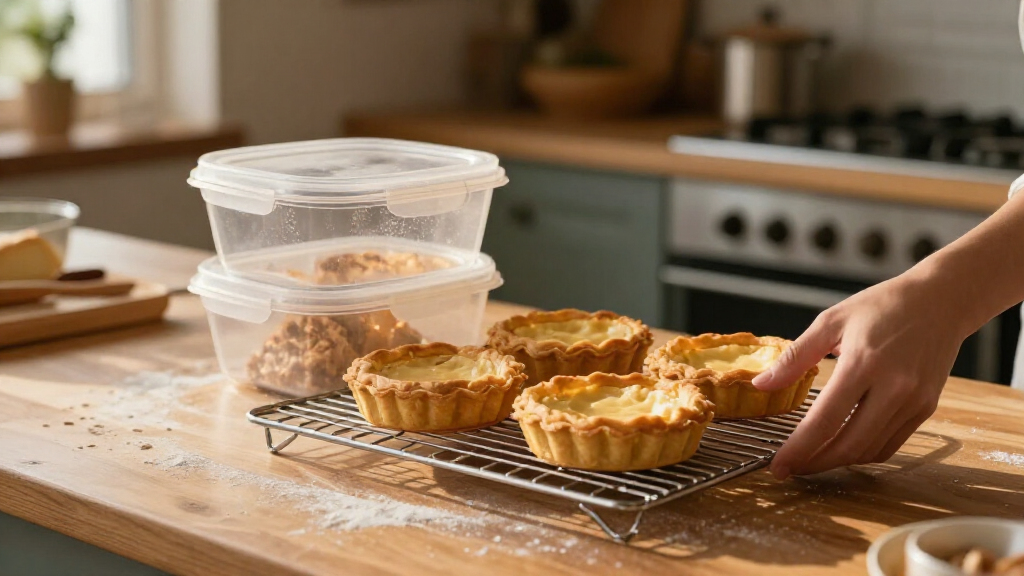
This creates a real tradeoff. A custard tart may lose some crispness in the refrigerator, while sitting out too long can create a food-safety problem. Plan around the filling: cool and handle it as directed by a reliable safety source, then refrigerate when required. If you are serving the tart later, you can focus on the crust when you rewarm or serve it, while accepting that storage may change its texture.
For a simple loaf without perishable additions, room-temperature storage may better suit its texture than refrigeration. Many breads stale faster in the fridge because refrigeration changes their starch structure. That is different from sogginess: staling and excess moisture are separate texture changes, so a loaf can become firm and stale without being damp.
When in doubt, treat the filling as the deciding factor. A plain muffin and a cream-filled pastry do not have the same storage needs, even if they came from the same oven. Keep the food-safety directions for the filling in view, and make the texture tradeoff with that guidance in mind.
Use reheating to refresh texture, not to hide a storage problem
Reheating can restore some crispness to bread or pastry for a short time, but it cannot reverse every texture change or make improperly stored food safe. A brief warm-up may dry a softened crust, yet it will not reliably fix an underbaked center, a soggy filling, or moisture that has already changed the crumb.
Consider a savory pastry that softened after sitting overnight in a sealed container. Warming it in an oven can bring back some flakiness at the surface, but the pastry may soften again as it cools, especially in a humid room. That is a temporary refresh, not a permanent repair. Avoid assuming reheating makes food safe if it was stored incorrectly.
Viral storage tricks can sound appealing, but moisture moves differently across recipes, container sizes, and kitchen conditions. A piece of bread stored with cookies, for instance, may affect their softness, but the result varies and may not suit someone aiming for crisp cookies. Use a method that matches your intended texture and the bake’s ingredients instead of expecting one hack to work every time.
If a bake is repeatedly gummy even after careful cooling, revisit the recipe and doneness. Check the center, confirm your oven temperature if needed, and look at whether the batter or filling carries more moisture than the structure can hold. Cooling and storage help protect a good bake; they cannot reliably rescue every bake that came out of the oven underdone.
Frequently Asked Questions
Why is the bottom of my cake, pie, or loaf soggy?
A damp base can come from trapped steam when a bake cools in its pan or on a solid surface. A wire rack allows air to move under it. If the center is gummy too, check whether it was fully baked; cooling cannot correct an underbaked crumb.
Should I cool baked goods in the pan or take them out?
Follow the recipe’s pan-rest instructions. Some bakes need a short rest to hold their shape, while leaving them in too long can trap steam against the sides and base. Move them to a rack when the recipe directs.
How long should a bake cool before I cover it?
Use the recipe’s guidance and wait until the bake is fully cool before wrapping or sealing it. Size matters: a small cookie cools faster than a deep cake or large loaf. Covering warm food can trap steam and create droplets on the surface.
Can I put warm baked goods in the fridge?
Perishable fillings or toppings may need prompt refrigeration, so follow reliable food-safety recommendations for their ingredients. For other bakes, cool fully before sealing or storing when practical, since warm food can create condensation. Do not leave a perishable bake out for an extended time just to protect its texture.
Does refrigeration make bread go stale faster?
Refrigeration can make many breads stale faster by changing their starch structure. That process differs from sogginess, which often involves excess moisture or condensation. For a plain loaf, a bread box or paper bag may suit short-term storage better, depending on crust and kitchen humidity.
Can I re-crisp soggy pastry or bread?
An oven can restore some surface crispness temporarily, but it may soften again as it cools. Reheating will not reliably fix an underbaked center, reverse all texture changes, or make food safe after improper storage. Check the cause before relying on a quick warm-up.
Conclusion
When a bake turns soggy, start with the route its steam took: check the pan, the cooling surface, the cover, and the container. Cool with airflow, then store for the texture you want, while following food-safety guidance for perishable fillings.
A wire rack and a little patience can protect the crisp crust or tender crumb you worked for. Give steam a way out, and your next slice is more likely to feel like it should: dry where it needs to be, soft where it belongs.