
TL;DR

Get baking supplies delivered free with Prime
- Fast, free delivery on millions of items
- Prime Video, Amazon Music and more included
- Member-only deals all year
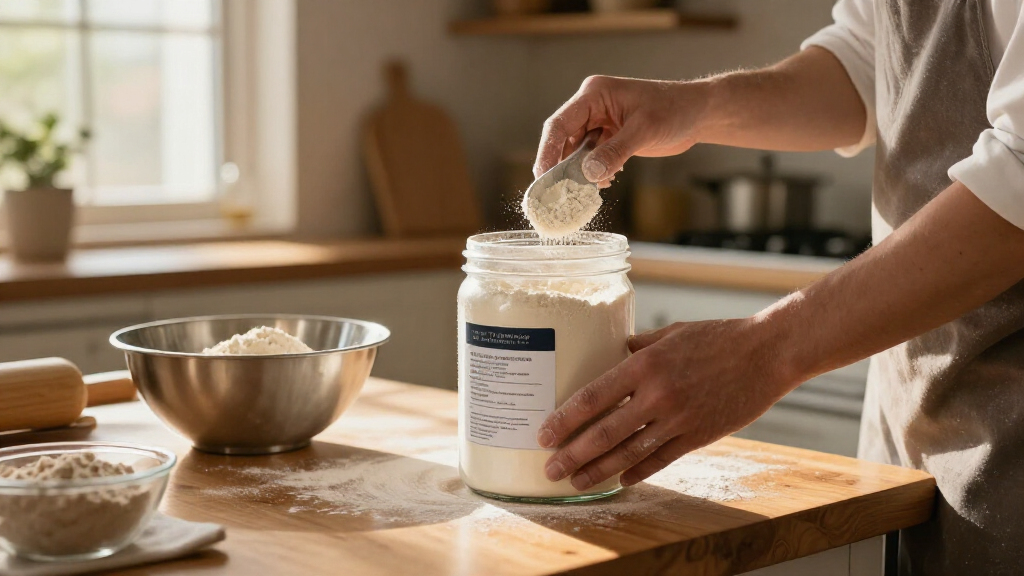
White flour generally keeps for six to 12 months unopened in a pantry and six to eight months after opening; whole-wheat flour has a shorter pantry life of about three to six months. Storage conditions matter, and mold, moisture, pests or an off smell are reasons to discard flour regardless of its best-by date; proper pantry containers can help protect flour during storage.
A Good Housekeeping report says flour’s storage life depends on its type, whether the package is open and how it is stored: white flour typically lasts six to 12 months unopened in a pantry, while whole-wheat flour lasts about three to six months. The guidance matters for home cooks deciding whether an older bag is still usable, but signs of spoilage or pests should outweigh the date printed on the package.
After opening, white flour generally lasts six to eight months in the pantry, according to the report. See more storage guidance for baked goods. Refrigerated after opening, it can last about a year. Whole-wheat flour keeps for approximately three to six months in the pantry and six to eight months in the refrigerator. These are general storage estimates, not guarantees for every package or kitchen.
Food-safety expert Dr. Darin Detwiler, quoted by Good Housekeeping, says flour can lose quality, absorb moisture and odors, attract insects and become rancid. Whole-grain, nut, seed and some gluten-free flours may be more prone to rancidity because of their higher fat content. The report advises checking flour before use for an unusual smell, visible mold, clumping caused by moisture, discoloration or signs of insects such as webbing, larvae, weevils or moths.
A best-by date is not, by itself, a spoilage test, the report says. But flour should be discarded if it shows spoilage or pest activity, has sustained moisture damage or is covered by a recall, regardless of the date. The report also warns that raw flour should not be eaten: baking or cooking is needed before consumption because raw flour can carry pathogens.
Keeping Pantry Flour Safe
Flour is often kept for months and used in recipes where it may be tempting to taste the dough before baking. Knowing the difference between a quality date and signs of spoilage can help households avoid using flour damaged by moisture or pests, while reducing unnecessary waste when an older bag shows no warning signs.
The storage estimates also show why a single rule does not fit every flour. Whole-wheat and higher-fat varieties may lose quality sooner than white flour, while heat, humidity, an open package and exposure to odors can affect how well flour keeps. The report’s recommendations are practical guidance, not a laboratory guarantee that any particular bag is safe for a set period.
Food safety is a separate issue from freshness. Even flour that looks and smells normal is not ready to eat raw, Detwiler says in the report. People should bake or cook dough and batter rather than sampling them uncooked.
Products Worth Considering

Le Creuset Enamemed Cast Iron Oval Dutch Oven, 5 qt., White/Crucible

Traeger Pro 22 Wood Pellet Grill and Smoker, 572 sq. in.

Instant Pot Duo 6-Quart 7-in-1 Electric Pressure Cooker
As an affiliate, we earn on qualifying purchases.
Storage Timelines by Flour Type
The Good Housekeeping report groups its estimates by flour type and storage conditions. For white flour, it gives a pantry range of six to 12 months unopened and six to eight months after opening. Refrigeration after opening extends the stated estimate to about a year. For whole-wheat flour, it gives three to six months in the pantry and six to eight months in the refrigerator.
The report recommends transferring flour from its paper packaging to an airtight container, or placing the original bag inside one. This can reduce exposure to moisture, pests and odors. Refrigeration or freezing may be useful for whole-grain, nut-based and higher-fat gluten-free flours, bulk purchases, or flour kept in a hot, humid kitchen. Chilled or frozen flour should be allowed to return to room temperature before baking.
The source does not provide separate shelf-life figures for every kind of gluten-free flour or every storage method, so its ranges should not be treated as precise expiration dates for all products.
“Flour is dry, but it is still an agricultural product.”
— Dr. Darin Detwiler, food-safety expert, author and professor emeritus of food policy, quoted by Good Housekeeping
Why Timelines Can Vary
The shelf-life ranges are general estimates. The report does not specify a single test standard behind each range or give a precise timeline for every brand, flour blend, package or combination of temperature and humidity. It also does not establish that flour remains safe simply because it falls within a stated period.
For an individual bag, its storage history may be unknown. A pantry that is hot or humid, a container that is not sealed, or exposure to moisture can change the result. The report advises using observable warning signs and discarding flour affected by moisture, pests, spoilage or a recall; it does not offer a way to verify safety by date alone.
Check Before Your Next Bake
Before using stored flour, check the packaging and contents for moisture, clumping, mold, discoloration or pests, and smell it for musty, sour, bitter, stale, oily or rancid odors. Discard it if any of those warning signs are present, or if it has been recalled. If it appears in good condition, the report’s timelines can serve as a general guide rather than a guarantee.
For future storage, seal flour in an airtight container and consider refrigeration or freezing for flour types more prone to rancidity or for bags kept in warm, humid conditions. Bring chilled or frozen flour back to room temperature before baking, and cook or bake all flour-containing dough and batter before eating.
Key Questions
How long does unopened white flour last in the pantry?
Good Housekeeping gives a general estimate of six to 12 months for unopened white flour stored in the pantry. Storage conditions can affect how well it keeps.
How long does whole-wheat flour last?
The report estimates three to six months in the pantry and six to eight months in the refrigerator. Check for spoilage signs before using it.
Should I throw flour away after its best-by date?
Not automatically. The report says the date alone is not necessarily a reason to discard flour, but flour should be thrown out if it has an off smell, mold, moisture damage, pests or a recall.
What is the best way to store flour?
Keep it in an airtight container to limit exposure to moisture, pests and odors. Refrigeration or freezing can help with whole-grain, nut-based and higher-fat gluten-free flours, as well as bulk flour or flour stored in a hot, humid kitchen.
Can I taste raw dough made with flour?
No. Detwiler warns that raw flour can carry pathogens. Cook or bake dough and batter before eating them.
Source: rss