TL;DR

Get baking supplies delivered free — and shop member deals
- Fast, free delivery on millions of items
- Access to Prime Big Deal Days deals on October 6–7
- Prime Video, Amazon Music and more included
A tough pastry often results from overmixing, excess water, or warm ingredients. Keeping ingredients cold, handling the dough minimally, and chilling thoroughly are key to flaky, tender layers.
Nothing kills the joy of baking like pulling out a pastry that’s hard and dense instead of light and flaky. It’s frustrating — especially when you followed the recipe and thought you did everything right.
The good news? Most problems come down to a few common mistakes. Fix those, and your next batch can be perfectly flaky instead of tough. In this guide, I’ll walk you through why your pastry might turn out tough and exactly how to troubleshoot each issue to get that crisp, layered texture you’re craving.
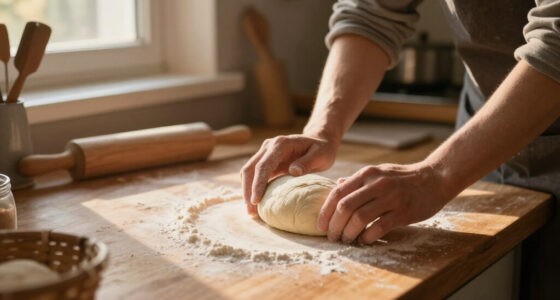
Handle dough minimally to prevent gluten development, which causes toughness.
Keep ingredients cold and work quickly to maintain flaky, layered textures.
Chill dough thoroughly before baking to relax gluten and firm fat pockets.
Use a hot oven to help fat melt and generate steam for puffed, flaky layers.
Avoid excess flour during rolling and handling to keep the pastry tender.
The Reason Your Pastry Is Tough Instead of Flaky
A tough pastry almost always comes down to overmixing, excess water, or warm ingredients. Keep everything cold, handle the dough minimally, and chill thoroughly — that’s the formula for crisp, tender, layered pastry.
From overworked gluten to a cool oven — every culprit, ranked and fixed.
Resting relaxes gluten and firms fat pockets before baking.
Cold fat in visible pieces, separated by layers of dough.
Six Mistakes That Ruin Flaky Layers
Flaky pastry is cold fat trapped between layers of dough. Make any of these mistakes and the fat blends in, the gluten tightens up, and the layers collapse into a dense, chewy crust.
Keeping small pieces of cold fat separated by layers of dough is what creates flaky pastry. Overhandling or warm ingredients blend the fat into the flour — and the pastry turns tough.
Key InsightYou Overworked the Dough
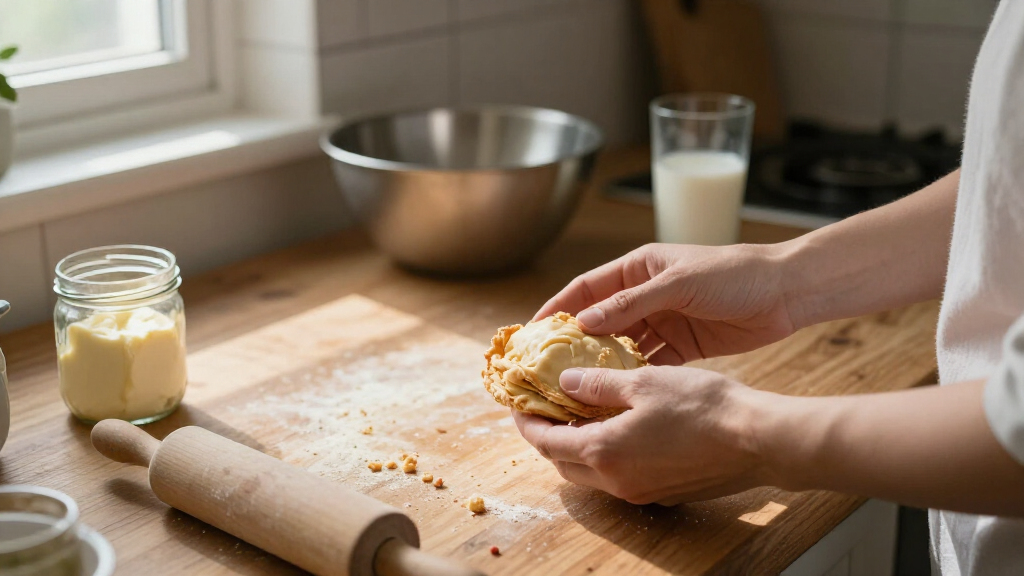
Kneading and rolling too much develops gluten — great for bread, fatal for pastry. It turns tender layers into a chewy, dense mass and prevents the dough from trapping steam.
You Added Too Much Water
Water activates gluten proteins. Excess liquid overdevelops the strands, making the dough elastic, resistant to shaping, and unable to separate into layers during baking.
Your Ingredients Were Warm
Warm butter smears into the flour instead of staying in distinct pockets. Without those pockets, no steam — no lift. The result is a uniform, dense crumb.
You Cut the Fat Incorrectly
Fat worked into a paste produces a mealy, tough texture. Visible, irregular chunks of cold butter are the steam pockets that expand in the oven and lift the layers apart.
You Used Too Much Flour
Extra flour on the surface dries the dough, makes it rigid, and creates a barrier that stops layers from bonding — leaving you with a crumbly, dense crust.
You Skipped Chilling or Used a Cool Oven
Unchilled dough spreads instead of puffing; a cool oven melts the fat slowly before steam can lift the layers. Both paths lead to a dense, heavy crust.
How Flakiness Actually Happens
Every flaky layer is created by the same physical chain reaction. Break any link and the system collapses into toughness.
Cold Fat Chunks
Visible, irregular pieces of butter stay separate from the flour.
Hot Oven Hit
Rapid heat vaporizes the fat before it can leak away into the dough.
Steam Expands
Steam pockets inflate and push the surrounding dough layers apart.
Layers Set
The flour structure sets around the lifted layers — crisp and flaky.
Fat Size Decides Everything
The size of your fat pieces is a dial between mealy and flaky. Find the sweet spot just past “large visible chunks.”
Impact of Common Mistakes on Toughness Risk
Relative contribution of each error to a tough outcome, based on troubleshooting frequency.
Flour & Fat: What to Reach For
Your ingredients set the ceiling on flakiness before you even start mixing.
| Ingredient Choice | Tenderness | Flakiness | Handling Ease | Notes |
|---|---|---|---|---|
| Pastry flour (low protein) | ✓ Excellent | ✓ High | ~ Moderate | The classic choice for tender, delicate results. |
| All-purpose flour | ~ Good | ✓ High | ✓ Easy | A reliable middle ground for most home bakers. |
| Bread flour (high protein) | ✗ Tough | ✗ Poor | ~ Elastic | Too much gluten — resist the swap. |
| All butter | ✓ Tender | ✓ Very flaky | ~ Must stay cold | Best flavor; keep it firm and visible. |
| Butter + shortening blend | ✓ Very tender | ✓ Very flaky | ✓ Easy | Shortening adds plasticity; butter adds flavor. |
| Vegan butter / coconut oil | ~ Varies | ~ Improving | ~ Temperature-sensitive | Modern formulations are closing the gap. |
Cold → Quick → Chill → Hot
Follow this chain from bowl to oven and toughness simply can’t develop.
A Little Acid Helps
A splash of vinegar or lemon juice can limit gluten development — but it can never compensate for overmixing. Handle gently first.
Roll Evenly, Never Stretch
Thin spots bake dry while thick spots stay undercooked. Stretching the dough causes shrinkage and uneven layers in the oven.
Pulse, Then Finish by Hand
A food processor cuts butter efficiently with short pulses — but finish the dough by hand to avoid overmixing.
Tough Dough? Partial Rescue
You can’t reverse developed gluten, but thorough chilling plus minimal further handling can still improve the final bake.
Common Questions
The questions bakers ask most when their pastry turns out tough.
Why is my pastry tough even though I followed the recipe?
The likely culprits: overmixing, too much water, excessive rolling, or too much flour added while shaping.
Should pastry dough be kneaded?
Usually no. Press and fold it just enough to hold together — then stop.
How cold should the butter be?
Firm but workable. If it turns greasy or soft, chill the whole dough before continuing.
Why does my butter disappear into the dough?
It was too warm, cut too finely, or mixed too hard. Larger visible pieces create more distinct flakes.
The #1 reason your pastry is tough: You overworked the dough
When you knead or roll the dough too much, you develop more gluten — the protein that gives bread its chew. But for pastry, too much gluten is a villain. It turns what should be tender, crumbly layers into a chewy, dense mass.
Imagine trying to make a delicate lace out of heavy fabric. The more you manipulate it, the more it loses its lightness. The same applies to pastry dough. Handle it gently, just enough to bring it together, and stop.
For example, if you’re rolling out dough and keep pressing and flipping it, you’re building gluten unnecessarily. Instead, use a light touch, and fold the dough just once or twice during shaping. This minimal handling preserves the delicate layers, ensuring they puff up properly during baking. Overworking not only makes the pastry tough but also reduces its ability to trap steam, which is essential for creating those airy, flaky layers. The tradeoff is simple: handling too much gives you a dense, chewy crust, while gentle handling helps maintain the light, layered structure you desire.
As an affiliate, we earn on qualifying purchases.
Why too much water makes your pastry tough and how to avoid it
Adding excess water to your pastry is like pouring too much glue into a project. It encourages gluten development and makes the dough elastic and tough instead of tender and flaky.
But why does excess water cause this? Water activates the gluten proteins in the flour. Too much water creates a more elastic, less tender dough because gluten strands become overdeveloped. This elasticity makes the dough resistant to shaping and prevents the layers from separating during baking. The implication is that a dough with too much water will be harder to work with and will result in a dense, heavy crust rather than a light, flaky one. The tradeoff here involves balancing enough moisture to bind the dough without crossing into overhydration, which can compromise texture. Using just enough water to bring the dough together ensures you retain control over gluten development and achieve the tender layers you want.
As an affiliate, we earn on qualifying purchases.
How warm ingredients sabotage flaky layers — and what to do about it
Warm ingredients melt the small pieces of fat into the flour, turning flaky layers into a mealy, dense texture. If your butter or fat isn’t cold enough, you won’t get those distinct, puffed layers.
Why does this happen? When fat is warm, it blends into the flour instead of remaining in small pockets. During baking, these pockets of cold fat create steam that lifts the layers apart, forming the flaky structure. Warm fat, on the other hand, results in a more uniform, dense crumb because it melts into the dough, eliminating the pockets needed for steam to puff the layers. The tradeoff is that warm ingredients seem easier to work with initially, but they sacrifice the final texture. To maintain those delicate layers, keep your ingredients, especially fat, cold throughout the process. This ensures the fat stays in small chunks, which are essential for creating the steam pockets that lift and separate the layers during baking.
As an affiliate, we earn on qualifying purchases.
Avoid uneven layers: The importance of cutting fat correctly
Cutting fat into the flour isn’t just about size; it’s about control. Large, visible chunks of cold butter create distinct flaky layers, while overworking the fat into a paste results in a mealy, tough texture.
Picture a snowball — if you pack it tightly, it’s dense. If you leave it loose and powdery, it’s light and flaky.
Using a pastry cutter or two knives, work quickly to incorporate the fat into the flour until you see irregular, small chunks that are still visibly separate from the flour. These chunks act as tiny steam pockets that expand during baking, lifting the layers and giving the pastry its characteristic flakiness. Overworking the fat into a paste eliminates these pockets, resulting in a denser, tougher crust. The key is to strike a balance: enough mixing to distribute the fat but not so much that the chunks disappear. The tradeoff is clear—properly cut fat ensures distinct layers, while overmixing leads to a uniform, tough crust.
As an affiliate, we earn on qualifying purchases.
Why using too much flour during rolling can ruin your flaky layers
Extra flour during rolling is like dusting a cake with too much powdered sugar — it dries out what should be tender and makes it rigid. Too much flour on your surface or dough can cause uneven baking and a tough crust.
But beyond dryness, excessive flour can interfere with the delicate layers forming during baking. It creates a barrier that prevents the layers from sticking together properly, leading to a crumbly, dense texture. Also, the flour can absorb moisture from the dough, making it less pliable and more prone to cracking or tearing. The tradeoff is that a lightly floured surface prevents sticking, but overdoing it compromises the pastry’s integrity. To minimize this, dust lightly and only as needed, and brush off excess flour before baking. This preserves the delicate structure and ensures your pastry remains tender and flaky rather than tough.
The critical role of chilling: Why rest times make or break flaky pastry
Resting and chilling are like giving your pastry a nap. When you chill the dough, the gluten relaxes, and the fat firms up, making rolling easier and layers more defined.
Why is this so important? Chilling allows the gluten strands to relax after handling, which prevents shrinkage during baking. It also solidifies the fat pockets, so they melt slowly in the oven, creating steam that lifts the layers. Without adequate chilling, the fat can soften too much, causing the layers to merge and the pastry to spread out instead of puffing up. The tradeoff involves patience—skipping chilling might seem faster, but it jeopardizes the texture. For best results, chill your dough at least 30 minutes, or up to an hour or more if your schedule allows, wrapped tightly to prevent drying. This step is essential for achieving the crisp, flaky layers that make pastry so delightful.
How oven temperature impacts flakiness — and why a hot oven is your best friend
A hot, fully preheated oven is essential for flaky pastry. It helps the fat melt quickly, releasing steam that lifts the layers apart before they can spread out or turn tough.
Low oven temperatures cause the fat to melt slowly, resulting in a dense, heavy crust that lacks the characteristic puffiness of flaky layers. The rapid heat ensures the small pockets of cold fat vaporize immediately, creating the steam needed to lift and separate the layers. The tradeoff is that if the oven isn’t hot enough or preheated properly, your pastry might bake unevenly or end up dense and tough. Always preheat to at least 400°F (200°C), and give your oven ample time to reach this temperature. Using an oven thermometer can help you verify accuracy. This step guarantees a quick, intense heat that’s crucial for developing those signature flaky layers.
Handling the dough: Why stretching causes shrinkage and tough spots
Stretching the dough during rolling or transferring pulls on the gluten network, which can cause shrinkage and uneven baking. It also risks creating tough spots where the dough has been over-manipulated.
Think of a rubber band — stretch it too much, and it doesn’t bounce back evenly. The same happens with pastry dough. Overstretching can break the gluten strands, causing the dough to shrink back when baked and resulting in misshapen or uneven layers.
Work gently, rotate the dough as you roll, and avoid pulling or stretching. Use minimal flour to prevent sticking, and handle the dough with light, quick motions. This preserves the delicate gluten structure and ensures even baking, preventing tough spots and shrinkage that compromise the flaky layers you want to achieve.
Overbaking turns your flaky layers into hard bricks
Too much baking dries out the pastry, making it tough and hard instead of crisp and tender. Overbaking is like leaving toast in the toaster until it’s blackened — it loses the delicate texture you want.
Pay attention to the color of your pastry; a golden hue typically indicates doneness. Residual heat continues to cook the pastry after removal, so timing is crucial. Overbaking not only makes the crust hard but can also cause it to become brittle and prone to breakage. To avoid this, set a timer and check your pastry a few minutes before the expected finish. Remember, a perfectly baked flaky pastry should be golden and crisp but not dark or burnt. Recognizing the right doneness ensures your layers remain tender and flaky, not tough and hard.
Frequently Asked Questions
Why is my pastry tough even though I followed the recipe?
The most common reasons are overmixing, adding too much water, or handling the dough too aggressively. These steps develop gluten and make the pastry dense instead of flaky.
Should pastry dough be kneaded?
No. Pastry dough should be pressed and folded just enough to hold together. Overkneading activates gluten and leads to tough crusts.
How cold should the butter be?
Butter should be firm but workable, usually straight from the fridge. If it’s greasy or soft, chill the dough before continuing to keep layers distinct.
Why does my butter disappear into the dough?
If butter melts into the flour, it’s probably too warm or worked too aggressively. Keep butter cold and cut into small pieces, working quickly to leave visible chunks for flaky layers.
Can I fix pastry dough that has become tough?
While you can’t undo gluten development, chilling the dough and handling it minimally can help improve the texture in the final bake.
Conclusion
Perfect flaky pastry isn’t about complexity — it’s about respect for the ingredients and gentle handling. Keep everything cold, don’t overwork, and give your dough the rest it needs.
Next time, picture those delicate layers puffing up into golden, crisp sheets. That’s the magic of a well-made pastry — and now, you’re equipped to make it happen every time.
Fall Picks
fall essentials
As an affiliate, we earn on qualifying purchases.