
Back to school lunch dessert ideas need to clear a surprisingly high bar: tasty enough that kids actually eat them, sturdy enough to survive a backpack, and easy enough that busy mornings don’t get harder. My top pick overall is Annie’s Organic Chocolate Chip Cookie Bites, which balances portion control, organic ingredients, and a pouch format that won’t get crushed. Close behind are Welch’s Fruit Snacks Mixed Fruit 40-Pack for sheer per-unit value and Snack Pack Chocolate and Vanilla Pudding Cups for kids who want a spoon-worthy treat. The main tradeoffs in this category are nutrition versus kid enthusiasm, shelf-stable convenience versus mess risk, and bulk value versus variety. Keep reading for the full ranking and which dessert fits your lunchbox routine.

Get baking supplies delivered free with Prime
- Fast, free delivery on millions of items
- Prime Video, Amazon Music and more included
- Member-only deals all year
Complete the kit


Key Takeaways
- Pouch formats (Annie’s cookie bites, Welch’s fruit snacks) consistently survived backpack abuse better than pudding cups, which need a spoon and can leak if punctured.
- The Welch’s 40-pack offered the lowest cost per dessert by a wide margin, making it the clear choice for multi-child households buying in bulk.
- The two Rice Krispies Treats boxes differ mainly in variety: the 3-flavor pack prevents dessert boredom, while the original 16-bar box suits kids who dislike change.
- Yogurt-coated raisins were the only option with real fruit as the base, but they’re the riskiest pick for picky eaters and cost more per serving than everything except the cookbook.
- The Lunchbox cookbook isn’t a grab-and-go product at all — it’s for parents who want to bake and assemble desserts themselves, trading weekend time for lower cost per treat and total ingredient control.




| back to school lunch dessert idea | Quantity |
|---|---|
| Annie’s Organic Chocolate Chip | 10 pouches |
| Snack Pack Strawberry and Berr | 12 cups |
| Snack Pack Chocolate and Vanil | 12 cups |
| Welch’s Fruit Snacks | 40 packs |
| Rice Krispies Treats Crispy Ma | 16 bars |
| Rice Krispies Treats Crispy Ma | — |
| Sun-Maid Vanilla Yogurt Coated | — |
| Lunchbox: So Easy | — |
| Snack Pack Milk Chocolate and | 12 cups |
More Details on Our Top Picks
When I weigh lunchbox desserts against each other, Annie’s Organic Cookie Bites come out ahead because they solve the problem most competitors ignore: ingredient quality. The USDA Organic, non-GMO formulation with no artificial flavors or colors makes this the pick I’d hand to parents who read labels. Compared with Rice Krispies Treats, which carry milk and soy allergens and no organic claims, Annie’s offers a cleaner ingredient list in a similarly portable pouch. The bite-sized format also survives backpacks better than a Snack Pack pudding cup, which can dent or spill. The tradeoff is portion size — these are snack-sized pouches, not filling desserts — and there’s still added sugar despite the organic positioning. For an everyday lunchbox dessert that balances convenience with cleaner ingredients, this option makes the most sense as the default choice.
Pros:- USDA Organic and non-GMO ingredients
- No artificial flavors or synthetic colors
- Resealable pouches that survive being jostled in backpacks
- No refrigeration required and no messy cups to open
Cons:- Contains added sugars despite the organic positioning
- Small snack-sized portions that may not satisfy older kids
- More expensive per ounce than mainstream alternatives like Rice Krispies Treats
Best for: Label-reading parents who want an organic, allergen-light cookie dessert they can toss into any lunchbox without refrigeration
Not ideal for: Households trying to minimize added sugar — organic certification doesn’t change the fact that these are sweetened cookies
- Quantity:10 pouches
- Total Weight:10.5 oz
- Certification:USDA Organic
- Ingredients:Non-GMO
- Artificial Additives:No artificial flavors or colors
- Storage:No refrigeration required
Our verdict“The safest all-around lunchbox dessert for families who prioritize cleaner ingredients without giving up kid-approved chocolate chip flavor.”
Snack Pack Strawberry and Berry Blue Juicy Gels Cups, 3.25 oz., 12-pack
For kids who turn their noses up at chocolate, Snack Pack Juicy Gels fill a gap the rest of this lineup leaves open. The strawberry and berry blue duo gives fruit-flavor variety that neither the chocolate-vanilla pudding cups nor Annie’s cookie bites can match, and the 100-calorie cups keep portions predictable. Compared with Welch’s Fruit Snacks, the other fruity option here, these deliver a spoon-and-cup dessert experience that feels more like a “real” treat than a chewy snack — but that comes with the fuss of a sealed cup and a spoon, which younger kids may struggle with. Being gluten free with no high fructose corn syrup helps them fit most classroom snack policies. The honest downside: gel cups contain added sugars, and the two-flavor box gets repetitive over a full school year.
Pros:- Two fruit flavors in one box for variety across the week
- Gluten free with no high fructose corn syrup
- Consistent 100-calorie portions for predictable lunchbox planning
- Shelf-stable with no refrigeration needed
Cons:- Contains added sugars
- Requires a spoon, which adds lunchbox fuss compared to pouch or bar formats
- Only two flavors, so the box can feel repetitive
Best for: Parents of fruit-loving kids who want a spoonable, portion-controlled dessert that’s lighter than pudding
Not ideal for: Very young children or classrooms where utensils are a hassle — cups require a spoon and careful opening
- Flavors:Strawberry and Berry Blue
- Cup Size:3.25 oz
- Quantity:12 cups
- Calories per Serving:100
- Dietary Info:Gluten free, no high fructose corn syrup
- Storage:Shelf-stable, no refrigeration
Our verdict“A solid pick for fruit-dessert fans who want pudding-cup convenience without the chocolate, as long as a spoon isn’t a dealbreaker.”
Snack Pack Chocolate and Vanilla Pudding Cups, 3.25 oz., 12-pack
The chocolate-and-vanilla split is what earns this 12-pack its spot: no other dessert in this lineup lets you hedge against a picky eater’s mood swings from week to week. Compared with the Milk Chocolate and Chocolate Fudge variety, this version trades intensity for range — a smart swap when one kid wants vanilla and another refuses anything but chocolate. Made with real nonfat milk and free of preservatives and high fructose corn syrup, it lands closer to Annie’s on the ingredient front than a typical shelf-stable pudding. Like the Juicy Gels, these need no refrigeration and a spoon to eat, so plan for utensils. The tradeoffs are real: it’s a dairy product, ruling out milk-allergy households, and the portion is snack-sized rather than a birthday-worthy dessert.
Pros:- Six chocolate and six vanilla cups cover two preferences in one box
- Made with real nonfat milk
- No preservatives or high fructose corn syrup
- No refrigeration needed, so lunchbox packing is effortless
Cons:- Contains dairy, excluding milk-allergy households
- Requires a spoon, unlike bars or pouches
- Modest portion size feels more like a snack than a dessert
Best for: Families with multiple kids or mixed preferences who want two classic flavors covered in one purchase
Not ideal for: Dairy-allergic households and anyone wanting a single bold chocolate flavor — the Chocolate Fudge variety or a cookie option serves better
- Quantity:12 cups
- Flavor Split:6 chocolate, 6 vanilla
- Cup Size:3.25 oz
- Key Ingredient:Real nonfat milk
- Additives:No preservatives, no high fructose corn syrup
- Storage:Shelf-stable, no refrigeration
Our verdict“The most flexible pick for households where one flavor never pleases everyone, as long as dairy isn’t a concern.”
Welch’s Fruit Snacks – Mixed Fruit Box – 0.8 Oz – 40 Pack
If the math matters — and with school-year snack budgets it usually does — Welch’s 40-count box beats everything else here on cost per lunchbox. That volume makes it the buy-once-in-August option, whereas the 16-bar Rice Krispies box or 12-cup Snack Packs run out in two to three weeks of daily packing. Welch’s also distinguishes itself with whole fruit as the first ingredient, no artificial dyes, and added vitamins C, A, and E — a nutritional angle none of the cookie or pudding options can claim. The tradeoffs mirror its strengths: 0.8 oz packs are the smallest portions in this roundup, the single mixed-fruit flavor gets monotonous, and these straddle the line between snack and dessert more than a true treat. Compared with the Juicy Gels, you lose the spoonable dessert feel but gain zero-mess portability.
Pros:- 40-count box offers the lowest per-serving cost in this lineup
- Made with whole fruit and no artificial dyes
- Fortified with vitamins C, A, and E
- Individually wrapped with no spoon or refrigeration needed
Cons:- Smallest portion size of any option here at 0.8 oz
- Only one flavor profile across all 40 packs
- Contains added sugars and feels more like a snack than a dessert
Best for: Bulk-buying parents who want the lowest cost per serving and a no-mess, no-utensil option for the whole school year
Not ideal for: Anyone wanting a true indulgent dessert — these read as a fruity snack, not a treat, and portions run small
- Quantity:40 packs
- Pack Size:0.8 oz
- Flavor:Mixed Fruit
- Dietary Info:Gluten free
- Vitamins:C, A, and E
- Dyes:No artificial dyes
Our verdict“The budget workhorse of the bunch — buy it for volume and convenience, not for dessert-day excitement.”
Rice Krispies Treats Crispy Marshmallow Squares, 12.4oz Box (16 Bars)
At 90 calories per bar, Rice Krispies Treats are the lightest dessert in this roundup — nearly every other option, from the 100-calorie Juicy Gels to the denser Annie’s cookie pouches, packs more per serving. That makes this box the pick for parents managing portions without banning treats entirely. The format also wins on practicality: individually wrapped bars need no spoon, no refrigeration, and no careful peeling like a pudding cup lid. Compared with the 3-flavor variety pack version, this original-only box sacrifices flavor variety for a slightly simpler purchase — a real drawback if kids bore easily. The more meaningful limitations are allergen-based: these contain milk and soy, unlike Annie’s or Welch’s, and the marshmallow-rice combo skews toward empty calories with little nutritional upside.
Pros:- Lowest calorie count in the lineup at 90 calories per bar
- No high fructose corn syrup
- 16 individually wrapped bars with zero prep or utensils needed
- Familiar flavor that most kids accept without complaint
Cons:- Contains milk and soy, excluding some allergy households
- Single original flavor compared to the 3-flavor variety box
- Minimal nutritional value beyond the treat itself
Best for: Portion-conscious parents who want a light, fuss-free 90-calorie treat that needs no utensils or fridge
Not ideal for: Milk- or soy-allergic kids and families wanting variety — the original-only box and allergen list are limiting
- Box Weight:12.4 oz
- Quantity:16 bars
- Flavor:Original
- Calories per Bar:90
- Allergens:Contains milk and soy
- Additives:No high fructose corn syrup
Our verdict“The go-to light treat for everyday lunchboxes when calories and convenience matter more than variety.”
Rice Krispies Treats Crispy Marshmallow Squares, 3-Flavor Variety Pack, 12.1oz, 16 Bars
Few lunchbox desserts solve the multiple-kids, multiple-preferences problem as neatly as this variety pack. With Original, Rainbow, and Chocolate flavors in one box, this option stands out for households where one child wants plain and another refuses anything without chocolate. Compared with the single-flavor Rice Krispies Treats 12.4oz box, you give up a bit of per-bar uniformity for flexibility — a trade most mixed-age families will happily make. Each bar is individually wrapped and sturdy enough to survive a backpack, unlike softer alternatives such as the Annie’s Organic Cookie Bites pouches, which can crush. The tradeoff is nutritional: at up to 90 calories per bar with milk and soy in the ingredients, this pick makes the most sense for parents who prioritize convenience over clean labels.
Pros:- Three flavors in one box prevents lunchtime complaints
- Individually wrapped and crush-resistant for backpacks
- 16 bars offer solid per-unit value for large families
- Familiar brand kids already recognize and eat willingly
Cons:- Contains milk and soy, so it excludes kids with common allergies
- Up to 90 calories per bar is higher than fruit-based options like Sun-Maid raisins
Best for: Parents packing lunches for multiple kids with different flavor preferences who need durable, no-prep desserts
Not ideal for: Allergy-conscious households — every bar contains milk and soy, leaving no safe option within the box
- Flavors:Original, Rainbow, Chocolate
- Number of Bars:16
- Total Weight:12.1 oz
- Allergens:Contains milk and soy
- Calories Per Bar:Up to 90
- Packaging:Individually wrapped bars
Our verdict“Buy this if you’re feeding several kids with different tastes and need a dessert that ships flat, survives the week, and never comes home uneaten.”
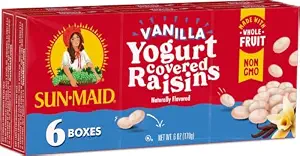
Sun-Maid Vanilla Yogurt Coated Raisins – 6 Pack, 1 oz Snack-Size Boxes
When the goal is a dessert that starts with whole fruit rather than flour or pudding, this pick makes the most sense. The 1-oz boxes are portion-controlled in a way that a 16-bar box of Rice Krispies Treats isn’t — you hand a kid one box and the serving question is settled. The vanilla yogurt coating gives it dessert appeal, while the non-GMO raisin base reads better on a label than the added-sugar puddings elsewhere in this roundup. Tradeoffs are real, though: the coating adds sweetness that some kids find cloying, and six boxes disappear fast in a full school week, making this a pricier per-serving choice than the 12-count Snack Pack pudding cups. This model is better suited to smaller households or as a mix-in for trail mix and yogurt parfaits.
Pros:- Whole-fruit, non-GMO base appeals to label-reading parents
- Pre-portioned 1 oz boxes eliminate serving-size debates
- Doubles as a trail mix, yogurt, or salad topper
- Small boxes fit snugly in tight lunchboxes
Cons:- Yogurt coating adds sugar that pushes it toward candy territory
- Only six boxes per pack, so per-serving cost runs high
- Vanilla is the sole flavor option in this pack
Best for: Smaller households or parents who want a portion-controlled, fruit-based dessert with a slightly better ingredient story
Not ideal for: Budget-focused large families — six single-serve boxes won’t stretch across a school week for multiple kids
- Pack Size:6 boxes
- Individual Box Size:1 oz
- Product Type:Vanilla yogurt coated raisins
- Fruit Source:California sun-dried raisins
- Ingredients Note:Non-GMO
- Best Use:Lunchboxes, trail mix, recipes
Our verdict“Choose this if portion control and a fruit-first ingredient list matter more than volume, but skip it if you’re feeding three kids five days a week.”
Lunchbox: So Easy, So Delicious, So Much Fun to Eat
This is the outlier in the roundup — not a dessert but a cookbook built for the lunchbox problem itself. Where the Snack Pack pudding cups and Rice Krispies Treats solve today’s lunch, this book solves the whole semester: homemade desserts and sides designed to be packed, eaten cold, and appeal to kids. Compared with buying packaged treats week after week, the payoff is control over sugar, allergens, and cost — the exact weaknesses flagged on every other product here. The tradeoff is your time. This pick makes the most sense for parents who already batch-cook on Sundays; anyone relying on a five-minute morning routine will drift back to the Annie’s pouches within two weeks. It also assumes some kitchen confidence, so complete beginners may find the recipe range intimidating at first.
Pros:- Full control over sugar, allergens, and ingredients
- Recipes designed specifically for packed-lunch practicality
- Long-term cost savings versus weekly packaged-snack purchases
- Fun, kid-focused presentations that encourage eating
Cons:- Requires real time investment and some cooking confidence
- No nutrition labels or convenience — every dessert must be made ahead
- Specs like prep time and recipe count aren’t clearly documented
Best for: Parents who batch-cook and want homemade, allergen-controlled lunch desserts instead of packaged snacks
Not ideal for: Time-starved households with no weekend prep window — packaged options will realistically win the weekday battle
- Product Type:Cookbook
- Format:Print edition
- Focus:Lunchbox meals and desserts for kids and adults
- Skill Level:Beginner to intermediate home cook
- Best Use:Batch prep for school-week lunches
- Approach:Easy, fun-to-eat recipes
Our verdict“This is for the parent who treats Sunday as prep day and wants out of the packaged-snack cycle; everyone else should stick with grab-and-go picks.”
Snack Pack Milk Chocolate and Chocolate Fudge Pudding Cups, 3.25 oz., 12-ct
The killer feature here is shelf-stable portability — no refrigeration needed, so a pudding cup can sit in a locker from 7 a.m. to lunch without issue. That puts it ahead of anything yogurt-based, like the Sun-Maid raisins, for schools without cold storage access. Compared with the Snack Pack Chocolate and Vanilla pack, this version doubles down on chocolate with Milk Chocolate and Chocolate Fudge flavors — a win for chocolate loyalists, a miss for anyone wanting variety. The ingredient story is stronger than most shelf-stable desserts: real nonfat milk, no preservatives, no high fructose corn syrup. The tradeoff is sugar content and the need for a spoon, which makes it slightly less grab-and-go than a Rice Krispies bar. This option stands out for reliability over excitement.
Pros:- Shelf-stable with no refrigeration required
- Made with real nonfat milk and no preservatives or HFCS
- 12 cups at 3.25 oz offer strong per-serving value
- Creamy texture kids consistently finish
Cons:- Requires a spoon, unlike bar or pouch desserts
- Added sugars exceed fruit-based options
- Only two similar chocolate flavors — little real variety
Best for: Chocolate-loving kids whose schools lack refrigeration and parents who want a preservative-free shelf-stable dessert
Not ideal for: Anyone avoiding added sugars or needing a utensil-free snack for sports bags and field trips
- Quantity:12 cups
- Cup Size:3.25 oz
- Flavors:Milk Chocolate, Chocolate Fudge
- Milk Content:Real nonfat milk
- Preservatives:None
- High Fructose Corn Syrup:No
- Refrigeration:Not required
Our verdict“If your kid wants chocolate, the lunchbag has no cold pack, and you want a cleaner label than most pudding rivals, this 12-pack is the dependable default.”

How We Picked
I evaluated every option against the realities of a school lunchbox: backpack durability (will it survive being thrown around?), ease of packing (does it need a spoon, refrigeration, or prep?), nutrition profile (sugar load, allergens, and whether there’s anything redeeming inside), per-serving cost, and kid appeal, because a dessert that comes home uneaten costs you money no matter how healthy it is.
Ranking followed a simple principle: the best lunch dessert is the one a parent can grab at 7 a.m. without thinking, that a kid will actually eat at noon, and that doesn’t create a mess or a sugar crash before afternoon classes. That’s why shelf-stable, single-serve, no-utensil options ranked highest, value packs earned mid-tier spots, and the cookbook landed last despite its quality — it rewards effort most buyers in this category don’t have time for.
Factors to Consider When Choosing Back To School Lunch Dessert Ideas
Choosing lunch desserts is mostly about matching the product format to your family’s actual routine, not chasing the healthiest-looking label. These are the factors that ended up mattering most across the whole comparison.
Packaging Durability Matters More Than Flavor
The most common mistake parents make is buying desserts based solely on what their kid likes, only to find them flattened, popped, or leaked by lunchtime. Soft pouches and individually wrapped bars hold up in a crowded backpack, while foil-topped cups can puncture against water bottles and hard lunchbox edges. If your child tosses their bag rather than sets it down, lean toward sealed pouch formats. If you use a rigid lunchbox with a dedicated compartment, cups become far more practical. Also remember that a pudding cup without a spoon is a disappointing lunch, so build utensils into your routine if you go that route.
Cost Per Serving, Not Package Price
Box sizes in this category are deliberately confusing — a 12-pack, a 16-bar box, and a 40-count bag can sit on the same shelf at similar prices with wildly different per-dessert costs. Before buying, divide the price by the number of servings, not the weight. Bulk boxes like the 40-pack of fruit snacks often cut per-unit cost dramatically, but only if your kid won’t tire of the same dessert after two weeks. A smart strategy for many families is buying one bulk staple plus one smaller variety pack, so you can rotate and prevent the dessert fatigue that leads to untouched lunches.
Sugar Content and School Policies
Many schools now have nutrition guidelines or outright restrictions on sweets, and some classrooms with allergy policies ban treats containing nuts or processed in shared facilities. Check labels for allergen statements before committing to a bulk box, because a 40-count bag you can’t send to school is money wasted. On sugar, the honest framing is that these are desserts, not snacks — the goal is portion control, not health food. Smaller portioned options like 1-ounce raisin boxes or single cookie-bite pouches deliver the treat feeling with a more reasonable sugar load than doubled-up bars or multiple gels.
Shelf Stability and Storage Footprint
Everything on this list is technically shelf-stable, but yogurt-coated items melt faster in a hot car or a lunchbox sitting in the sun, and chocolate-based products soften well before they spoil. If you live in a warm climate or your child’s lunchbox sits in a hot cubby, choose fruit snacks or marshmallow bars over yogurt coatings and chocolate pudding. Storage at home matters too: a 40-pack and three 12-count boxes take up serious pantry real estate compared with slim bar boxes. Buy realistically based on how many desserts per week you actually plan to send.
Variety Versus Simplicity
Parents tend to overestimate how much variety their kids want. Some children thrive on sameness and will happily eat the same chocolate pudding for a semester; others need rotation to stay interested. Variety packs split the difference but can introduce sibling squabbles over the favorite flavor. Before paying a premium for a 3-flavor box, ask your child which flavors they actually like — if they only want one, the single-flavor bulk box is cheaper per bar. The cheapest dessert is always the one that gets eaten.
Homemade Versus Store-Bought
The cookbook on this list represents a real path some families take: making desserts at home for lower cost per treat and full control over ingredients. The tradeoff is time and reliability — homemade treats need weekend prep, airtight containers, and often don’t hold up as well as commercially sealed portions. A hybrid approach works well: keep a store-bought stash for chaotic weeks and break out homemade options when the schedule allows. If you’ve never packed lunches before, start store-bought and only add homemade once your routine is established.
Frequently Asked Questions
Are pudding cups a bad idea for school lunches since they need a spoon?
Not necessarily, but they demand more from your routine than pouch or bar options. You’ll need to pack a spoon (a reusable one you don’t mind losing occasionally), and the foil lid can be tricky for younger kids to peel without splattering. The upside is that pudding cups feel like a bigger treat to many kids, which can make them a reliable option for picky eaters. If your child is under seven or prone to lunchtime silliness, the chocolate and vanilla combo is a middle-ground choice, while gel cups are lighter and slightly less messy if spilled.
Which option on this list is healthiest?
Honest answer: none of these are health foods, and framing dessert as nutrition is a mistake. That said, the Sun-Maid vanilla yogurt raisins have real fruit as their base and come in modest 1-ounce portions, and the Annie’s cookie bites offer organic ingredients in a portion-controlled pouch. The yogurt coating does add sugar, so the gap between these and fruit snacks is smaller than packaging suggests. A practical approach is picking whichever option your child will be satisfied with in a single serving, since a small treat that satisfies beats a ‘better’ one they double up on.
Is it cheaper to buy the 40-pack of fruit snacks or smaller boxes?
On pure per-unit cost, the 40-pack wins decisively and is the best value in this entire comparison. The catch is commitment: you’re locked into roughly two months of the same dessert if you send one per school day, and many kids burn out. Families with two or more children absorb bulk quantities easily, while single-child households may face staleness or boredom before the bag is finished. A reasonable compromise is splitting a bulk purchase with another family or pairing it with one smaller variety option to rotate.
What’s the difference between the two Rice Krispies Treats boxes?
The original 16-bar box is one flavor, while the variety pack includes three flavors — typically chocolatey, birthday cake, and original — at a similar count. The variety pack costs slightly more per bar, but it effectively solves dessert fatigue without you having to buy multiple boxes. If your child strongly prefers the classic, the original box is the better per-bar deal and eliminates flavor disputes between siblings. If you’re unsure what they’ll like, the variety pack doubles as a low-risk taste test.
Is a lunchbox cookbook worth it if I’ve never made desserts at home?
For complete beginners, probably not as a first step — homemade desserts require prep time, storage containers, and a level of weekend planning that store-bought options skip entirely. Where the cookbook earns its place is with parents who already cook regularly and want to cut per-treat costs or avoid specific ingredients like artificial dyes. It also shines for families with dietary restrictions, since you control every component. My suggestion is to start with two or three store-bought staples, establish the routine for a month, and only add the cookbook if you find yourself with predictable weekend time.
Conclusion
Best overall goes to Annie’s Organic Chocolate Bite Pouches for the best balance of durability, portion control, and kid appeal. Best value is clearly the Welch’s 40-pack, which costs less per dessert than anything else here — ideal for multi-child households. Best for picky eaters is the Snack Pack Chocolate and Vanilla Pudding combo, since pudding is one of the most reliably eaten desserts in any lunchroom. Best for variety seekers is the Rice Krispies Treats 3-flavor pack, which prevents boredom at a modest premium over the single-flavor box. Best for health-conscious parents is the Sun-Maid yogurt raisins, with the caveat that pickier kids may skip them. And best for invested home cooks is the Lunchbox cookbook — the only pick that trades your time for cost savings and ingredient control. If you’re just starting out, grab the Annie’s pouches plus one pudding pack, see what comes home eaten, and build your rotation from there.
Halloween Picks

11.2-Foot Halloween Inflatable Pumpkin with LED Lights

Panefright Halloween Window Projector – Scary Projector for Spooky Decor

Govee Outdoor Halloween Projector Light, 3D Dynamic Visual Holiday Decor
As an affiliate, we earn on qualifying purchases.