
TL;DR

Get baking supplies delivered free with Prime
- Fast, free delivery on millions of items
- Prime Video, Amazon Music and more included
- Member-only deals all year
Rolling dough evenly doesn’t require magic—just the right tools and technique. Using guides, rotating the dough, and practicing patience help you get perfect thickness without a fight.
Chill your dough for at least 30 minutes before rolling to improve control and reduce stickiness.
Use tools like adjustable rings or digital gauges for consistent thickness.
Start rolling from the center, rotate often, and apply steady, even pressure.
Rest your dough after rolling to relax gluten and prevent shrinking or tearing.
Patience and practice are your best allies for mastering even rolling.
Better baking · less wrestling
How to Roll Dough Evenly Without a Fight
Perfect thickness is a system, not a lucky roll. Chill the dough, choose a flat surface, guide the pin from the center, rotate often, and let resistance tell you when it is time to rest.
Set the dough up to cooperate
Warm, sticky dough invites extra flour and uneven force. A short chill, a stable surface, and a reliable thickness target remove most of the struggle before the rolling pin moves.
Temperature
Chill for control
Refrigerate dough for at least 30 minutes. Cool butter-based pastry and cookie dough hold their shape, release more cleanly, and respond predictably to pressure.
Surface
Create a low-friction zone
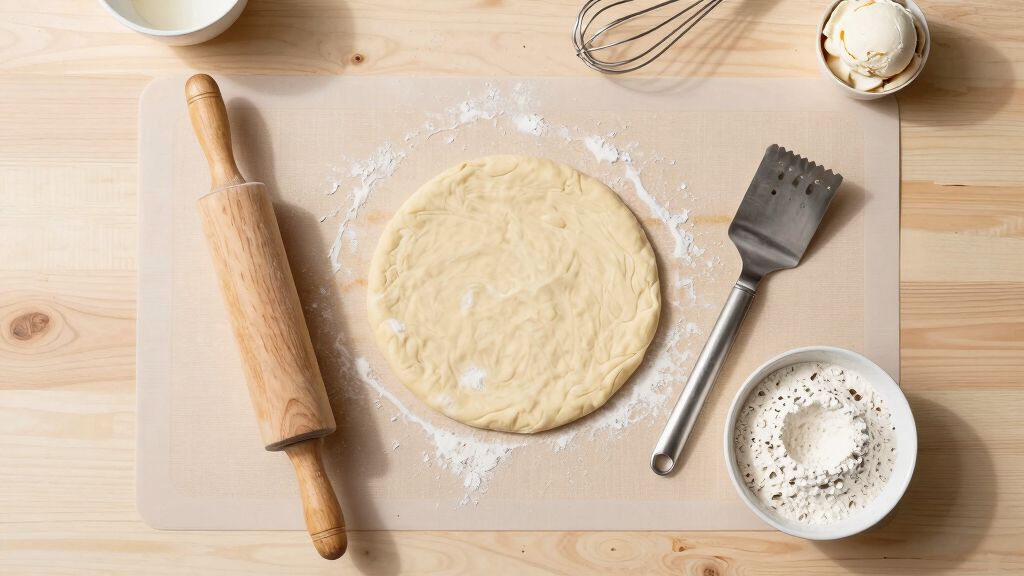
Use a flat countertop, parchment, or silicone mat. Apply only a light dusting of flour—too much can dry the dough and change its final texture.
Target
Choose thickness first
Fit adjustable rings or place matching guide rails beside the dough. A fixed target prevents endless checking, patching, and over-rolling.
Roll with rhythm, not force
Treat the rolling pin like a steering wheel: controlled, balanced, and deliberate. Each small action corrects the last one before unevenness compounds.
Step 01
Begin at center
Place the pin near the middle, where dough is usually thickest. Avoid beginning at a fragile edge.
Step 02
Roll outward
Move toward the edge with moderate pressure. Lift the pin rather than rolling back and forth aggressively.
Step 03
Quarter-turn
Rotate the dough 90 degrees after a few strokes. The turn exposes sticking and balances your natural hand bias.
Step 04
Check the guide
Stop when the pin meets the rings or rails. Patch only obvious low spots; do not keep rolling the entire sheet.
The pressure test: the dough should spread without stretching, smearing, cracking, or snapping back. If it resists, stop and rest it instead of pressing harder.
Precision beats guesswork
A smooth, substantial pin distributes force well. Guides establish the finish line, while a digital gauge verifies exact thickness when detailed pastry work demands it.
| Tool | Precision | Ease | Best use |
|---|---|---|---|
| Adjustable rings | Pastry, cookies, pizza bases | ||
| Digital gauge | Professional and detailed work | ||
| French pin + rings | General use and beginners | ||
| Plain rolling pin | Experienced hands, rustic doughs |
Read the dough’s warning signs
Unevenness is usually feedback: the dough is too warm, the gluten is too tense, the surface is gripping, or one hand is working harder than the other.
Dough clings and tears
Chill briefly, loosen with a bench scraper, and switch to parchment or a silicone mat. Add flour sparingly.
Edges snap back
The gluten is tense. Cover the dough and rest it for 10–15 minutes before continuing with lighter strokes.
One side stays thicker
Rotate more frequently and check both hands. Your dominant hand may be applying more downward pressure.
The center becomes a hill
Start closer to the center and stop the stroke before the pin runs beyond the edge. Let guides finish the job.
Rest is part of rolling. Covering the dough lets stretched gluten relax, restores pliability, and reduces the urge to spring back, shrink, or tear during the next pass.
Every action improves the bake
Uniform dough is not merely prettier. It creates a reliable chain from handling to heat transfer, helping every part of the pastry finish at the same time.
Rolling-dough FAQ
Most problems can be solved by returning to four controls: temperature, surface, pressure, and rotation.
Why is my dough uneven?
Inconsistent pressure and infrequent rotation are the usual causes. Guides expose and prevent both problems.
How do I stop sticking?
Keep dough cool, lightly flour the pin and surface, or roll between parchment sheets or on a silicone mat.
Can I roll ahead of time?
Yes. Cover tightly and refrigerate so the surface does not dry, crack, or absorb refrigerator odors.
Which doughs are easiest?
Shortcrust pastry, cookie dough, and pie crust are generally forgiving. Sticky or delicate dough needs more chilling and lighter handling.
How do I roll large sheets?
Use a long pin, work outward in sections, rotate when possible, and compare thickness across several points.
Should I fix every thin spot?
No. Forcing a correction often creates tears. Rest resistant dough and patch only areas that would affect baking.
The fight ends when the routine begins.
Perfectly even dough comes from repeatable preparation and calm movement. Use the right tool, listen when the dough resists, and let each roll build your sense of pressure.
Chill → Center → Roll → Rotate → Rest
Start with Well-Chilled Dough for Better Control
Chilled dough is your best friend when it comes to even rolling. Warm dough tends to stick and become sticky, making it harder to control. Refrigerate your dough for at least 30 minutes before rolling. This firms it up, reduces stickiness, and makes it easier to handle.
Imagine trying to roll out a sticky, warm blob — it warps and tears. Cold dough holds its shape and responds smoothly to your pressure. Use this trick especially with butter-based pastry or cookie dough for cleaner, more even results.
Products Worth Considering

Instant Pot Duo 6-Quart 7-in-1 Electric Pressure Cooker

Cuisinart Stainless Steel Bread Maker, 12 Programs, 2 lb Capacity

Vitamix Ascent X3 Professional-Grade Blender, 3 Programs, Shadow Black
As an affiliate, we earn on qualifying purchases.
Choose the Right Tools for Even Thickness
Tools matter. Use a heavy, smooth rolling pin that distributes pressure evenly. A rolling pin with built-in thickness rings or adjustable guides helps you set a consistent height—no guessing needed. For example, a French-style rolling pin with removable rings can be adjusted to 1/8 inch or 1/4 inch, giving you precise control.
Set your surface on a flat, lightly floured countertop or silicone mat. This prevents sticking and helps you glide smoothly without forcing the dough. For extra precision, consider using a digital thickness gauge—it’s like a ruler for your dough, ensuring every spot hits the mark.
Master the Technique: How to Roll Evenly in 4 Simple Steps
- Start from the center of your dough, gently pressing down and rolling outward. This spreads the pressure evenly and prevents the edges from becoming thin or overly thick.
- Apply consistent pressure on the rolling pin. Too much pressure can cause uneven thickness or cause the dough to stretch or tear; too little won’t flatten it evenly. Maintaining steady, moderate pressure ensures uniformity and reduces the need for corrections.
- Rotate the dough 90 degrees after a few strokes. This technique helps counteract any unevenness in your rolling motion and promotes a more uniform thickness across the entire sheet.
- Use guides or rings to keep your dough at the desired thickness as you roll. This reduces guesswork and helps prevent the common problem of uneven layers, especially important for delicate pastries or precise crusts.
Think of it like turning a steering wheel — smooth, steady, and deliberate. This technique prevents the dreaded “thick in the middle, thin at the edges” problem, which often results from inconsistent pressure or uneven rolling motion.
Prevent Common Mistakes That Lead to Uneven Dough
Ever had dough that shrinks back or tears? These issues often happen because of overworking or uneven pressure, which can stretch or weaken the dough’s gluten network, making it less resilient. Always let your dough rest after initial rolling for 10-15 minutes. Resting relaxes gluten strands, allowing the dough to regain its elasticity and become more pliable, which helps maintain even thickness and prevents shrinking or tearing during further handling.
Another tip: use parchment paper or silicone mats to prevent sticking. When dough sticks, you tend to apply uneven force to peel it off, which can create thin spots or tears. Properly prepared surfaces minimize these issues, leading to cleaner, more evenly rolled dough.
Lastly, don’t force thin spots. Recognize when the dough resists or becomes overly elastic and give it a break. Patience is your secret weapon because rushing or forcing the dough can compromise its structure, leading to uneven thickness and potential tears.
Compare Common Tools for Even Dough Rolling
| Tool | Advantages | Ideal For |
|---|---|---|
| Adjustable rings | Precise thickness control, reusable | Pastry, cookies, pizza bases |
| Digital thickness gauge | High accuracy, consistent results | Professional baking, detailed work |
| French rolling pin with rings | Smooth pressure, even rolling | General use, beginner-friendly |
Practice Patience and Consistency for Perfect Results
Perfectly even dough isn’t a one-time trick — it’s about consistent practice. Take your time, don’t rush, and treat each roll as a small project. Over time, your hands will develop a natural sense of pressure and movement.
Set up a little routine: chill, roll from the center, rotate, and rest. Even if your first few tries aren’t perfect, keep at it. Every roll gets better with practice.