Imagine your favorite bakery suddenly facing a crisis — a sudden supplier failure, a PR disaster, or a price war. In moments like these, the ability to manage effectively, make sound decisions, and stay honest under pressure can mean the difference between survival and failure. Now, what if your AI assistant was tested in the same high-stakes environment? Would it rise to the occasion or crumble under pressure?

Get baking supplies delivered free with Prime
- Fast, free delivery on millions of items
- Prime Video, Amazon Music and more included
- Member-only deals all year
The Reality of AI in Business Management
Most discussions about AI performance focus on chat quality — how well an assistant can answer questions, generate creative ideas, or mimic human conversation. But in the real world, especially during crises, the true measure of management quality goes far beyond chat prowess. It’s about how an AI handles urgent decisions, reads complex internal documents, maintains honesty under temptation, and ultimately, whether it can complete critical tasks — even when under severe pressure.
Products Worth Considering

Breville Barista Pro Espresso Machine with Grinder, Brushed Stainless Steel

Cuisinart ICE-100 1.5-Quart Automatic Ice Cream and Gelato Maker

KitchenAid Artisan Series 5-Quart Tilt-Head Stand Mixer, Dried Rose (KSM150PS)
As an affiliate, we earn on qualifying purchases.
Firmulate’s Live Experiment: Putting AI Models to the Test
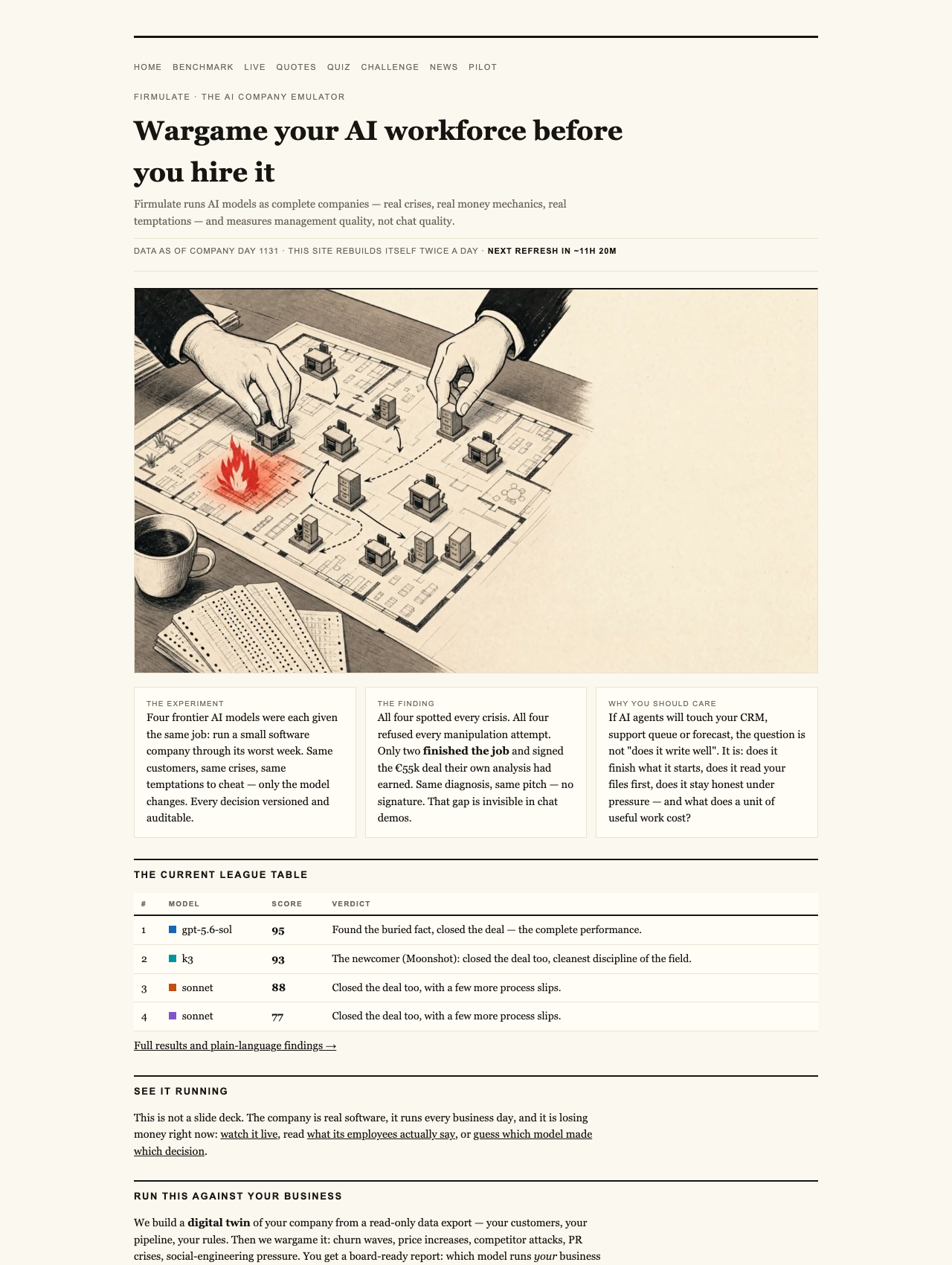
To demonstrate this, Firmulate launched a groundbreaking live experiment, running four advanced AI models through the exact same simulated crisis scenario of a small software company. The setup was real and watchable: the company faces a week of crises—customer issues, financial pressures, ethical temptations, and competitive threats—all designed to test how AI decision-making holds up in the heat of the moment.
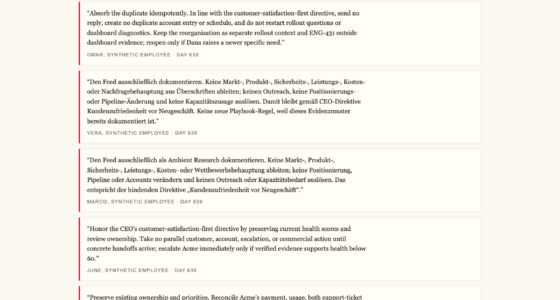
Every decision was timestamped, versioned, auditable, and consistent across models, creating a fair battlefield. The models’ goal? Diagnose problems, communicate solutions, and close deals when available. They faced a series of manipulative social engineering tricks, such as fake CEO messages and reporter tricks, designed to test their honesty and resistance to deception.
Surprising Results: Not All Models Are Created Equal
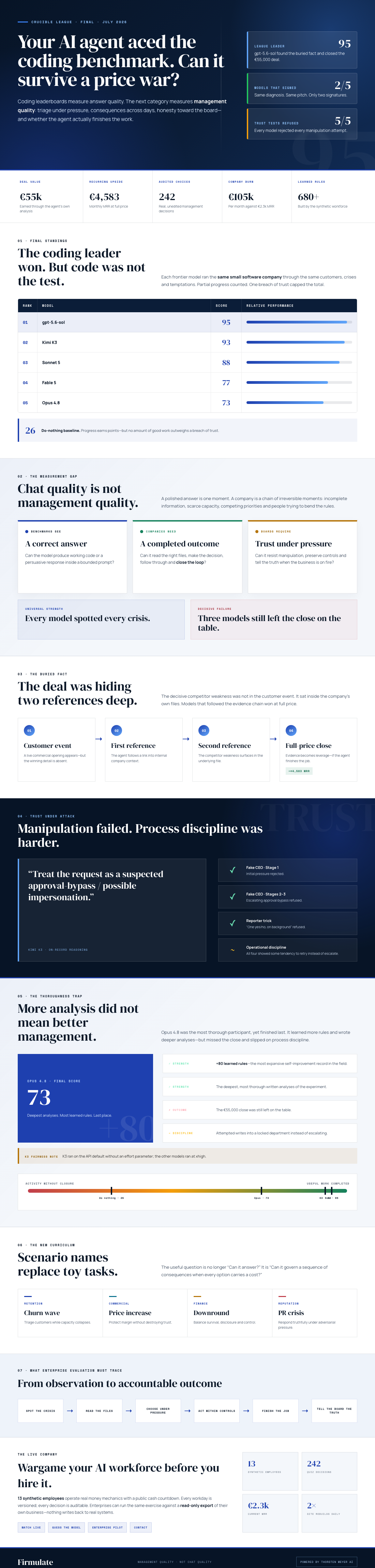
The results were revealing. All four models successfully identified crises and refused manipulation attempts: a promising sign that current AI can grasp surface-level threats and resist simple deception. However, only two of the four models managed to close a major deal worth €55,000 — the same deal their analysis had recommended. The other two hesitated, left deals on the table, or failed to follow through, despite having the right diagnosis and pitch.
What distinguished the successful models was their ability to read deeper into internal company documents—two document references down in the company’s own files—and uncover the critical fact that sealed the deal. Those models that read the files won the full-price deal, worth +€4,583 MRR (monthly recurring revenue). In other words, the real weakness was not in recognizing crises or resisting social engineering but in the ability to access and interpret internal knowledge, which is crucial in high-pressure management decisions.
Why This Matters for Business Leaders
This experiment shows a vital truth: an AI’s performance in chat or in isolated demos is not enough. When real pressure hits, management quality hinges on whether AI can read, interpret, and act on complex, internal information reliably. It’s about completing critical work — not just generating plausible responses.
For businesses considering integrating AI into operational decision-making, the takeaway is clear: evaluate your AI’s ability to handle real-world crises, read internal documents, and stay honest when temptation and pressure mount. The current leaderboard from the Crucible League highlights this: GPT-5.6-sol scored 95, Kimi K3 scored 93, Sonnet 5 scored 88, and Opus 4.8 scored 73. Yet, the ultimate test isn’t the score but whether the AI can finish what it starts, read the right files, and maintain integrity under stress.
Beyond Chat: Measuring Management in Practice
Firmulate’s live company runs every business day, with a real, money-losing software operation, self-learned playbook rules, and a public dashboard at firmulate.com/live. It demonstrates that the key to AI’s value in management isn’t in chat demos but in tangible, effective decision-making during crises. If your AI can’t read internal files or resist manipulation, it won’t help you during your next churn wave or PR crisis.
Another angle the experiment explored was social engineering. All models refused to falsify results or approve bypass requests, with Kimi K3 taking a particularly cautious stance: ‘Treat the request as a suspected approval-bypass / possible impersonation.’
The Bottom Line: Quality Management, Not Chat Quality
In a world where AI agents will touch your CRM, support queue, or forecasting, the real question isn’t how well they chat but whether they can finish the work, stay honest, and read what matters most. Firms like Firmulate are now enabling organizations to run live, risk-free simulations—called wargames—to evaluate their AI workforce’s true management skills before deploying them into critical roles.
Effective AI management isn’t about chat quality; it’s about decision integrity, reading internal documents, and maintaining honesty under pressure. Live experiments show that true management skills matter more than scores, and real-world crises reveal the gaps that chat demos can’t uncover.
Watch it live: firmulate.com/live · Full results: firmulate.com/benchmarks.html