
TL;DR

Get baking supplies delivered free with Prime
- Fast, free delivery on millions of items
- Prime Video, Amazon Music and more included
- Member-only deals all year
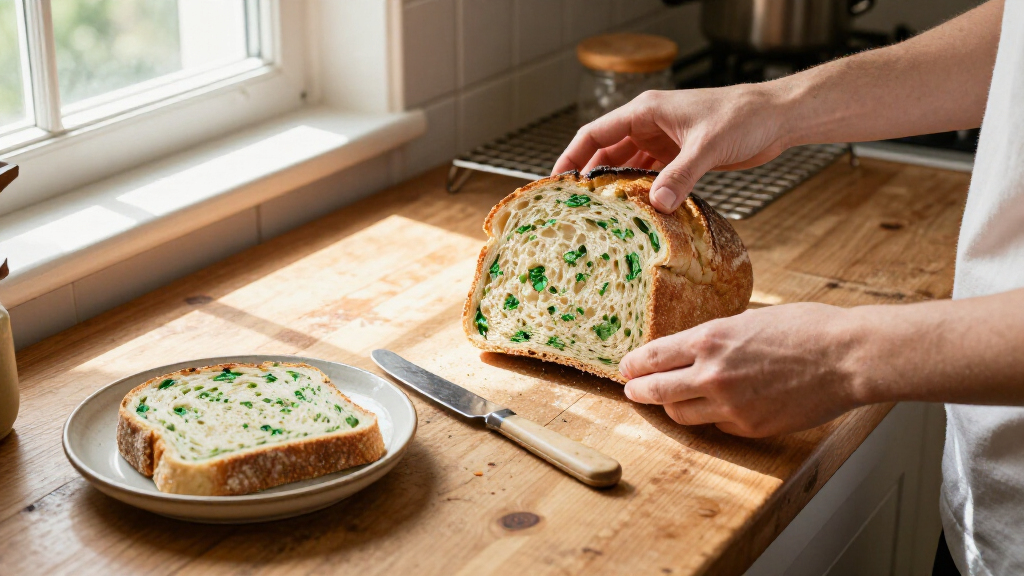
Food safety expert Darin Detwiler advises throwing away a loaf if any bread is visibly moldy, including pre-sliced bread. Mold can spread through soft bread below the surface, where it cannot be seen, so cutting away the spot does not reliably remove contamination.
If one slice of bread is visibly moldy, food safety expert Darin Detwiler advises discarding the entire loaf rather than cutting away the affected area. A Good Housekeeping report cites Detwiler’s warning that mold can extend through soft, porous bread beyond what is visible, making it difficult to know whether the remaining slices are free of contamination.
The visible fuzzy patches on bread may be green, gray or black, but the mold’s growth can extend beneath the surface. Detwiler, a food safety expert and professor emeritus of food regulatory affairs, says microscopic threads can travel through soft foods such as bread. Because those threads cannot be seen with the naked eye, removing the visibly affected part does not establish that the rest is safe.
The advice applies to sliced bread as well as unsliced loaves. If one slice has mold, the report says, mold may have spread to other slices. Detwiler’s recommendation is to put the whole loaf in the trash or compost rather than trying to salvage the unaffected-looking portions.
The report also describes possible health effects from consuming or inhaling mold, including nausea, vomiting and breathing problems. It says avoiding the risk is especially important for people who are immunocompromised. The supplied material does not establish that every mold exposure causes these symptoms; the practical recommendation is to avoid eating bread when mold is present.
Why One Moldy Slice Matters
The guidance matters because bread’s soft, porous texture makes the visible spot an unreliable boundary for deciding what to keep. On a hard food, people may sometimes remove mold with a margin around it; the report cautions against applying that approach to bread. Cutting off the patch cannot guarantee that microscopic growth has been removed.
For households, the recommendation means losing the rest of a loaf when just one area appears affected. That can be frustrating, but the report frames disposal as the safer choice than eating bread whose condition cannot be judged by sight. People who are immunocompromised have particular reason to avoid taking that gamble, according to Detwiler’s guidance as reported by Good Housekeeping.
The advice also offers a practical way to reduce waste before mold appears: keep bread dry, and store it in a breadbox or paper bag that allows air to circulate. For longer storage, the report identifies the freezer as a better option than the refrigerator.
Products Worth Considering

Cuisinart 6-Quart Basket Air Fryer with Viewing Window, Stainless Steel and Black (AIR-200NAS)

Ninja Foodi Air Fryer 10 Qt DualZone 6-in-1 Black DZ302

Cuisinart Stainless Steel Bread Maker, 12 Programs, 2 lb Capacity
As an affiliate, we earn on qualifying purchases.
How Bread Storage Affects Mold
The Good Housekeeping report focuses on a familiar decision: whether to trim a moldy portion or discard the loaf. Its answer rests on the difference between what can be seen on bread and what may be growing underneath. Detwiler compares visible mold to the tip of an iceberg, emphasizing that the surface patch may not show the full extent of growth.
For prevention, Detwiler recommends keeping bread as dry as possible. A breadbox or paper bag can allow air to circulate and help prevent moisture buildup, according to the report. It advises against storing bread in the refrigerator because bread can go stale more quickly there. The report says freezing is suitable for storing bread longer, particularly if it will be toasted later.
The source material provides no laboratory findings, test results or comparison of mold growth rates under different storage conditions. Its food-safety advice and storage recommendations are attributed to Detwiler through the Good Housekeeping report.
“If we see [mold], it’s like the tip-of-the-iceberg sort of thing.”
— Darin Detwiler, food safety expert and professor emeritus of food regulatory affairs, as quoted by Good Housekeeping
What the Visible Mold Cannot Show
The supplied report does not identify the mold species on any particular loaf, quantify how far growth may have spread, or say how quickly it moves through bread. That means readers cannot use the appearance or size of a patch to determine whether the remaining slices are uncontaminated. Detwiler’s advice is to discard the loaf rather than make that judgment by sight.
The report lists possible health effects but does not provide a specific risk estimate for an individual who has eaten a small amount of moldy bread. Anyone concerned about symptoms or a particular health vulnerability may need advice from a qualified medical professional. No additional official guidance or follow-up findings are included in the supplied source material.
Safer Storage for the Next Loaf
For a loaf that already has visible mold, the reported recommendation is straightforward: discard or compost the entire loaf, including the slices that look unaffected. Do not rely on trimming away the spot as proof that the rest is safe.
For the next loaf, keep it dry in a breadbox or paper bag, or freeze it if it needs to be stored longer. The report advises against refrigeration because it can make bread stale more quickly. The supplied material does not describe a new policy or scheduled public-health action; the next step for readers is to follow these storage and disposal precautions.
Key Questions
Should I throw away the whole loaf if one slice has mold?
Yes. The Good Housekeeping report cites food safety expert Darin Detwiler advising people to discard the entire loaf, including sliced bread, because mold may extend beyond the visible patch.
Can I cut off the moldy part and eat the rest?
Detwiler says cutting away the visible mold does not guarantee that contamination has been removed. Mold can grow through soft, porous bread in areas that cannot be seen.
Is the refrigerator a good place to store bread?
The report advises against refrigerating bread because it can become stale more quickly. It recommends keeping bread dry in a breadbox or paper bag, or freezing it for longer storage.
What symptoms can mold exposure cause?
The report lists nausea, vomiting and breathing problems as possible health effects from consuming or inhaling mold. It does not say that every exposure causes symptoms; people with health concerns should seek appropriate medical advice.
Source: rss