
TL;DR

Get baking supplies delivered free with Prime
- Fast, free delivery on millions of items
- Prime Video, Amazon Music and more included
- Member-only deals all year
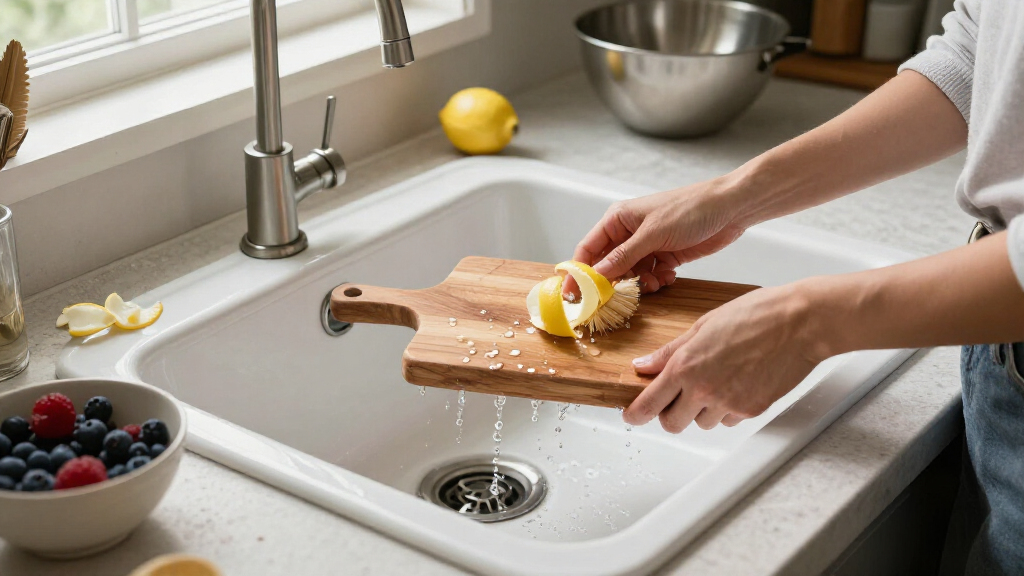
Good Housekeeping cleaning analyst Noah Pinsonnault advises washing wooden cutting boards by hand with warm water and dish soap, then drying them promptly. He warns that dishwasher heat, water exposure and detergent can warp or crack wood; after raw meat, wash and sanitize the board according to food-safety guidance.
Good Housekeeping cleaning analyst Noah Pinsonnault recommends washing wooden cutting boards by hand with warm water and dish soap, then drying them promptly rather than putting them in the dishwasher. The report says prolonged moisture, high temperatures and detergent can cause wood to swell, warp or crack, potentially shortening a board’s useful life.
Pinsonnault, a reviews analyst in the Good Housekeeping Institute’s Home Care & Cleaning Lab, says the dishwasher can also weaken the glue joints in boards assembled from multiple pieces of wood. The risk applies to edge-grain and end-grain boards, as well as bamboo, according to the report. The recommended routine is brief: wash with warm water and dish soap using a sponge or brush, avoid soaking the board, and dry it promptly.
For drying, the report recommends standing the board upright so air can circulate around both sides. Leaving it in standing water creates prolonged moisture exposure, which the report identifies as a source of damage. It does not give a specific drying time; the practical instruction is to let the board dry completely before storing it.
After preparing raw meat, the board should be washed thoroughly and then sanitized. The report says to use a food-contact-safe sanitizer according to its label directions. As another option, it cites USDA guidance to mix one tablespoon of unscented liquid chlorine bleach per gallon of water. Rinse the board thoroughly afterward and allow it to dry completely.
Protecting Boards and Food Safety
The advice addresses two everyday kitchen concerns: keeping wooden boards in usable condition and cleaning them safely after contact with raw meat. Avoiding the dishwasher may help prevent the swelling, warping, cracking and weakened glue joints described by Pinsonnault. Washing and sanitizing after raw meat, meanwhile, gives readers a clear cleaning sequence rather than relying on a rinse alone.
The distinction between washing and sanitizing matters. The report recommends washing the board first, then applying a food-safe sanitizer according to its directions—or using the cited diluted bleach method—and rinsing afterward. These steps do not mean every board can be treated identically: product instructions and the board manufacturer’s care guidance still apply.
Products Worth Considering

Ninja Professional XL 12-Cup Food Processor, NF701

Cuisinart DFP-14BCNY 14-Cup Food Processor

Cuisinart Brew Central 12-Cup Programmable Coffeemaker, Brushed Chrome
As an affiliate, we earn on qualifying purchases.
Which Boards Can Use Dishwashers
The report’s warning concerns wooden cutting boards generally, including bamboo, edge-grain and end-grain boards. It makes an exception for some wood-fiber composite boards that manufacturers design to be dishwasher-safe. Pinsonnault gives Epicurean boards as an example, while advising consumers to check the specific product’s care instructions.
That exception is limited: the source does not say that all composite boards, or all products made with wood fiber, are dishwasher-safe. The material and manufacturer’s instructions should determine care. The report also does not set out a full maintenance schedule, such as how often to oil a board or when to replace one.
Care Depends on Board Materials
The source does not identify every product that can safely go in a dishwasher, nor does it provide test results comparing different board materials or dishwasher settings. Whether a particular board is dishwasher-safe remains a question for its manufacturer’s care instructions. The report also does not specify a sanitizer contact time or give separate directions for boards with different finishes, so readers should follow the sanitizer label and product guidance.
Check Labels Before Washing
Before cleaning, identify the board material and check its care instructions. For a standard wooden or bamboo board, follow the report’s routine: wash by hand with warm water and dish soap, do not soak, and dry upright. After raw meat, wash thoroughly and sanitize using a food-contact-safe product as directed or the cited USDA bleach solution; rinse and let the board dry fully.
For a wood-fiber composite board, use the dishwasher only if its manufacturer says it is safe. The source provides no announced follow-up study or new policy; its guidance is a practical care recommendation based on the risks described by the cleaning analyst.
Key Questions
Can a wooden cutting board go in the dishwasher?
Most wooden boards should be hand-washed, according to Good Housekeeping analyst Noah Pinsonnault. Dishwasher water exposure, heat and detergent can cause swelling, warping or cracking and may weaken glue joints. Check the board’s care instructions for product-specific guidance.
What is the recommended way to wash a wooden board?
Wash it with warm water and dish soap using a sponge or brush. Do not leave it soaking or in standing water. Dry it promptly, ideally upright so air can circulate around both sides.
How should a board be cleaned after raw meat?
Wash it thoroughly, then sanitize it with a food-contact-safe sanitizer according to the label. The report also cites USDA guidance to mix one tablespoon of unscented liquid chlorine bleach per gallon of water. Rinse the board thoroughly and let it dry completely.
Are any wood-based boards dishwasher-safe?
Some wood-fiber composite boards are designed for dishwasher use, the report says. That does not apply to all composite products; check the manufacturer’s care instructions before washing one in the dishwasher.
Source: goodhousekeeping.com