
TL;DR

Get baking supplies delivered free — and shop member deals
- Fast, free delivery on millions of items
- Access to Prime Big Deal Days deals on October 6–7
- Prime Video, Amazon Music and more included
Starches come from many plants—potatoes, tapioca, rice, and more—and each has distinct qualities. They serve not only in cooking but also in industrial uses and health foods, offering versatile options for every purpose.
Most people think of cornstarch when they hear ‘starch.’ But in reality, starches are a diverse group of ingredients, each bringing its own flavor, texture, and purpose to the table.
From the silky smoothness of tapioca pudding to the sturdy structure of gluten-free baked goods, these starches open up a world of culinary possibilities. Plus, their industrial uses—from biodegradable plastics to better paper—are just as fascinating.
In this guide, you’ll learn about the different types of starches, what makes each unique, and practical ways to incorporate them into your kitchen and beyond.
Different starches have unique properties that influence their best culinary and industrial uses.
Choosing the right starch depends on the desired texture, clarity, and dietary needs.
Starches extend far beyond the kitchen, impacting industries like paper, textiles, and eco-friendly packaging.
Recent innovations focus on sustainability and health, with resistant and modified starches gaining popularity.
Always consider sourcing and dietary restrictions when selecting starches for cooking or manufacturing.
Why Different Starches Matter in Cooking
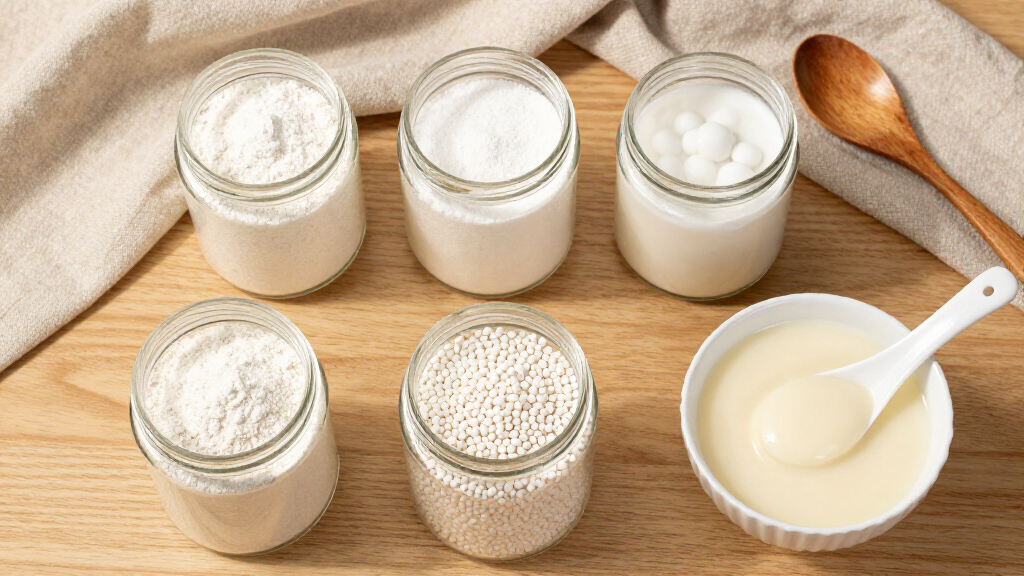
Not all starches behave the same way in recipes. Potato starch, for example, creates a glossy, clear sauce with a silky texture. Tapioca adds a chewy, elastic quality perfect for puddings and gluten-free bread.
Rice starch offers a fine, smooth consistency, making it ideal for delicate desserts or baby powders. Wheat starch provides structure and binding in baked goods, while arrowroot works gently, especially in acidic recipes.
Choosing the right starch depends on what you’re cooking and the texture you want. For instance, if you need a transparent glaze, potato or tapioca works best. Need a gentle thickener for a lemon curd? Arrowroot is your friend.
Understanding these differences is crucial because using the wrong starch can lead to undesirable textures or appearances, such as cloudiness, graininess, or lack of stability. For example, arrowroot is sensitive to heat and acid, which means it can break down if cooked too long or in overly acidic environments, leading to thinning or separation. Conversely, wheat starch can add opacity, which might be undesirable if transparency is desired. Recognizing these tradeoffs allows you to select the most suitable starch, ensuring your recipes turn out as intended and saving you time and ingredients in trial-and-error attempts.
gluten-free tapioca starch for baking
As an affiliate, we earn on qualifying purchases.
As an affiliate, we earn on qualifying purchases.
Compare Common Starches: Which One Fits Your Kitchen?
| Starch Type | Best Use | Properties | Gluten-Free? |
|---|---|---|---|
| Potato starch | Clear sauces, glazes | High thickening power, glossy finish | Yes |
| Tapioca starch | Puddings, pie fillings | Elastic, glossy, chewy texture | Yes |
| Rice starch | Delicate sauces, cosmetics | Fine, smooth, neutral | Yes |
| Wheat starch | Baked goods, binders | Strong binding, slightly opaque | No |
| Arrowroot | Acidic sauces, delicate dishes | Gently thickens, clear | Yes |
This table highlights the key features to match your recipe needs. But beyond just matching properties, understanding the implications of each starch’s behavior helps refine your choices. For example, choosing tapioca for a pudding not only provides chewiness but also ensures the final product remains elastic and glossy, which is visually appealing. Arrowroot’s gentle thickening makes it ideal for sauces that need to stay clear and delicate, but it can break down if overcooked or exposed to acidity. Selecting the right starch involves considering these functional tradeoffs—what you gain in clarity or texture, you might lose in stability or cook time. Use this table as a starting point, then think about the specific conditions of your recipe and desired outcome to make the best choice.
As an affiliate, we earn on qualifying purchases.
Beyond the Kitchen: Surprising Industrial Uses of Starches
Starches aren’t just for thickening sauces. They play a vital role in industries like paper-making, textiles, and biodegradable plastics. For instance, in papermaking, starch improves strength and surface quality, which affects the durability and appearance of the final product. In textiles, starches are used to stiffen fabrics or create coatings that impact how garments feel and perform.
In eco-friendly packaging, modified starches are replacing plastics, reducing environmental impact. These starch-based materials are biodegradable, offering a sustainable alternative that decomposes naturally, which is crucial given the plastic pollution crisis.
Even in biofuels, starches from crops like corn and cassava are converted into ethanol—an alternative energy source. This diversification highlights how starches are integral to creating more sustainable, eco-conscious industries. Recognizing these applications can inspire you to think about the broader impact of plant-based ingredients and their potential to revolutionize manufacturing, reduce waste, and promote sustainability.
arrowroot powder for acidic recipes
As an affiliate, we earn on qualifying purchases.
As an affiliate, we earn on qualifying purchases.
The Latest in Starch Innovation and Sustainability
Recent advances focus on making starches more sustainable and functional. Organic, non-GMO, and allergen-free options are gaining popularity. For example, companies now produce resistant starches that support gut health and are slow-digesting—great for high-fiber diets. These innovations are not just about health; they also reduce reliance on synthetic additives and improve supply chain sustainability.
Modified starches are engineered to resist heat or acidity, expanding their uses in processed foods. This means they can handle more extreme cooking conditions without breaking down, reducing waste and improving product consistency. Meanwhile, environmentally friendly extraction methods—such as cold-pressing or enzymatic processes—aim to reduce energy consumption and carbon footprints during production.
These innovations show that starches are evolving—becoming healthier, more sustainable, and more versatile. Understanding these trends can help you make more informed choices, whether selecting ingredients or advocating for eco-conscious manufacturing practices, ultimately contributing to a more sustainable food system and industry.
As an affiliate, we earn on qualifying purchases.
Choosing the Right Starch for Your Goals
Pick the wrong starch, and your recipe might turn out cloudy or gummy. Choosing wisely depends on your needs—whether it’s clarity, thickening power, or health benefits. For example, if you’re aiming for a glossy, transparent sauce, tapioca or potato starch are excellent choices because of their ability to produce clarity and shine. If you want a gentle thickener that won’t alter the flavor or appearance significantly, arrowroot is ideal, especially in acidic or delicate dishes.
For health-conscious cooking, understanding resistant and prebiotic starches can guide your choices toward ingredients that support gut health and slow digestion. This knowledge can influence your shopping habits, prompting you to seek out organic, non-GMO options or specialty resistant starches that align with your dietary goals.
Always consider sourcing—organic and non-GMO options are becoming more available and are worth seeking out, especially if you’re concerned about pesticides or genetic modification. By understanding the functional and health-related tradeoffs, you can select starches that not only meet your culinary needs but also align with your values and lifestyle, making your cooking more intentional and healthful.
Frequently Asked Questions
Can I substitute potato starch for cornstarch in recipes?
Yes, in many cases, potato starch can replace cornstarch. It has a higher thickening power, so use about 25% less. Keep in mind that potato starch creates a glossy, clear finish, making it ideal for sauces and glazes.Are all starches gluten-free?
Most plant-based starches like potato, tapioca, rice, and arrowroot are naturally gluten-free. However, always check labels if you have gluten sensitivities, as cross-contamination can occur in processing.What’s the best way to store starches?
Keep starches in an airtight container in a cool, dry place. Proper storage prevents moisture and pests, preserving their texture and thickening ability for months or even years.Are modified starches safe to eat?
Modified starches are generally considered safe, as they’re approved for food use. They’re engineered to withstand heat, acidity, or processing, expanding their functionality in various recipes.How do resistant starches support gut health?
Resistant starches resist digestion in the small intestine and ferment in the gut, feeding beneficial bacteria. This process can improve digestion, boost immunity, and even help regulate blood sugar.Conclusion
Starches are much more than just a thickening agent. They’re versatile ingredients with a broad range of uses—culinary, industrial, and health-related. Recognizing their differences unlocks smarter choices in the kitchen and beyond.
Next time you see a bag of starch, think of it as a plant-based powerhouse. Harness its potential for better baking, eco-friendly projects, or a healthier gut. After all, the simplest ingredients often hold the most surprising power.
Fall Picks
fall essentials
As an affiliate, we earn on qualifying purchases.