
TL;DR

Get baking supplies delivered free with Prime
- Fast, free delivery on millions of items
- Prime Video, Amazon Music and more included
- Member-only deals all year
Incorporating shredded zucchini or pumpkin into cake batter is a proven way to add moisture and tenderness. Proper drainage is key to prevent sogginess, and this trick suits healthier, gluten-free, and vegan baking. It’s a simple, nutritious upgrade for better cakes.
Ever baked a cake that turned out dense or dry no matter what? The secret might be lurking right in your fridge—vegetables like zucchini and pumpkin. These humble ingredients aren’t just for savory dishes. When incorporated into cake batter, they transform your baked goods into moist, tender wonders. And the best part? They pack in nutrients without adding calories or fat.
This guide shows you how to use shredded zucchini and pumpkin to make healthier, lighter cakes that stay moist longer. You’ll learn why this trick works, how to prep your vegetables, and tips to get perfect results every time. It’s a simple swap that can change your baking game—no fancy equipment or hard-to-find ingredients required.
Properly squeeze out excess moisture from shredded zucchini or pumpkin before mixing to prevent sogginess.
Use about 1 cup of shredded vegetable per standard cake recipe to boost moisture without diluting flavor.
This trick is especially effective in dense, moist cakes like zucchini bread or pumpkin spice cake.
Pair with spices, nuts, or chocolate to enhance flavor and texture.
It’s a simple, nutritious upgrade that reduces the need for extra fats and oils, making your baked goods healthier.
The Zucchini & Pumpkin Trick for Moist, Lighter Cakes
Shredded zucchini or pumpkin releases natural moisture during baking, keeping the crumb soft and tender—while cutting fat, boosting fiber, and adding vitamins. One simple swap, no fancy equipment required.
Why Adding Zucchini and Pumpkin Makes Your Cakes So Much Better
These humble vegetables aren’t just for savory dishes. When folded into batter, they transform baked goods into moist, tender wonders—with nutrients instead of extra fat and calories.
Natural Steam from Within
At roughly 90% water, shredded zucchini and pumpkin release moisture slowly during baking, keeping the crumb soft, tender, and fresh for days.
Less Fat, More Nutrition
Fiber, vitamins A and C, and subtle sweetness allow you to cut added oils and sugars—turning banana bread into a lighter, more nutritious version of itself.
The Balance to Master
Too much moisture weakens gluten and protein structure, causing a gummy crumb or a cake that falls flat. Proper preparation is everything.
How to Prepare Your Vegetables for Maximum Moisture
Follow these four steps and your batter will reward you with a perfectly tender crumb—never soggy, never dense.
Shred Evenly
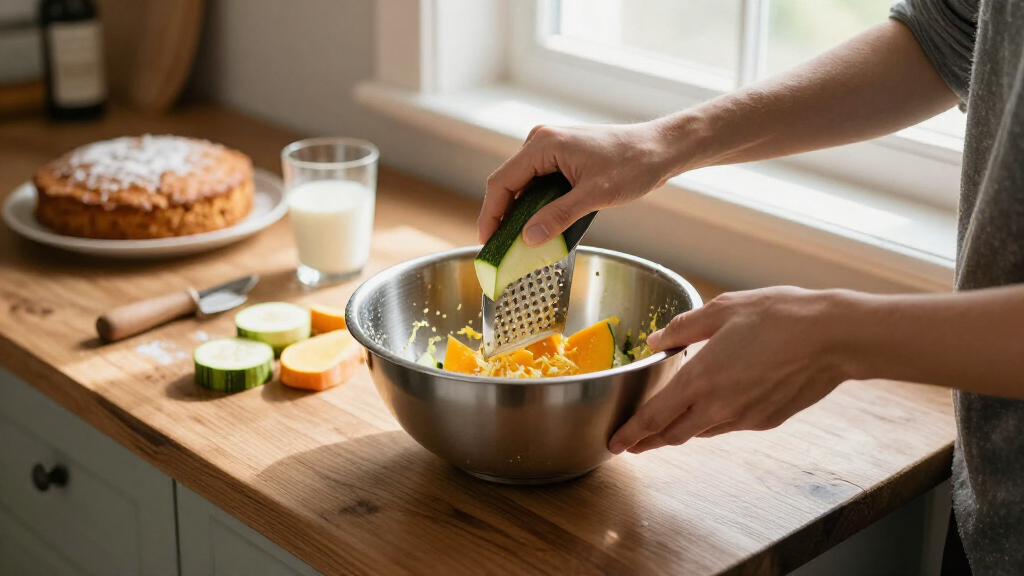
Use a box grater or food processor. Small, even shreds distribute moisture and flavor seamlessly through the batter.
Squeeze Out Water
Wrap shreds in a clean kitchen towel or cheesecloth and wring firmly. Excess water weakens structure—drainage is the make-or-break step.
Measure Carefully
1 cup per standard recipe. Too much dilutes flavor and risks sogginess; too little misses the moist, nutritious payoff.
Optional Pre-Cook
Lightly steam or roast—especially pumpkin—to deepen flavor and reduce water. Raw works too, if squeezed thoroughly.
The Best Recipes to Try This Trick In
This trick shines in moist, dense cakes, quick breads, muffins, and even pancakes. Delicate sponges need not apply.
| Type of Cake | Suitability | Notes |
|---|---|---|
| Zucchini bread | ✓ EXCELLENT | Classic use—very moist and tender crumb. |
| Pumpkin spice cake | ✓ EXCELLENT | Adds moisture plus seasonal flavor depth. |
| Vegan chocolate cake | ✓ GREAT | Boosts moisture without eggs or butter; softens crumb. |
| Carrot cake & muffins | ✓ GREAT | Pairs beautifully with cinnamon, nuts, and chocolate. |
| Vanilla sponge | ✗ LESS SUITABLE | Too delicate—may become soggy or collapse if overused. |
Tips for Perfectly Moist, Light Cakes Every Time
TIP 01Drain Thoroughly
Never skip squeezing. Excess moisture weakens structure and causes dense, gummy crumbs—or a cake that falls flat.
TIP 02Start with Less
Begin with ½ cup and add more only if the batter feels thick but scoopable. Incremental additions keep texture in your control.
TIP 03Adjust Baking Time
Extra moisture extends baking slightly. Watch for a golden crust and a clean toothpick—underbaking leaves wet spots, overbaking dries it out.
TIP 04Enhance & Pair
Cinnamon, nutmeg, and vanilla balance subtle veggie flavor. Nuts and chocolate add textural contrast plus healthy fats and protein.
Healthier Baking: Why This Trick Is a Game-Changer
Shredded zucchini and pumpkin naturally reduce the need for added fats, oils, and sugars—cutting calories while boosting nutrition. A decades-old technique, now renewed by health-conscious, gluten-free, and vegan baking trends.
Swap part of the oil for shredded veggie
Dietary fiber boosted in every slice
Essential vitamins delivered naturally
Works in gluten-free & vegan recipes
“I added shredded pumpkin to a carrot cake—drained well, balanced with cinnamon and walnuts. It stayed moist, wasn’t greasy, and the flavor was perfect.”
— Home Baker’s Field NoteWhy Adding Zucchini and Pumpkin Makes Your Cakes So Much Better
When you add shredded zucchini or pumpkin to your cake batter, you’re infusing it with natural moisture. These veggies are about 90% water, which gets released during baking, keeping the crumb soft and tender.
Imagine biting into a slice of carrot cake—moist, dense, but not heavy. That’s the effect you’re aiming for with zucchini or pumpkin. They also add fiber, vitamins, and a subtle sweetness without overpowering the flavor. Plus, they help cut down on added fats or oils, making your cake healthier.
For example, a standard banana bread can turn into a lighter, more nutritious version by swapping part of the oil with shredded zucchini. The result? Moist, fluffy, and packed with nutrients, with a fraction of the fat.
Beyond moisture, these vegetables influence the cake’s texture and shelf life. The high water content contributes to a tender crumb that stays moist longer, which is especially beneficial for those who bake ahead or need a cake that remains fresh for days. However, this moisture can be a double-edged sword; if not drained properly, it can lead to sogginess or a dense crumb. Understanding the balance between adding enough vegetable for moisture and avoiding excess water is vital. Too much moisture can weaken the structure, making the cake fall flat or become gummy, so proper preparation is key.
Products Worth Considering

Instant Pot Pro 8 Qt 10-in-1 Electric Pressure Cooker, Black

Breville Smart Grinder Pro Conical Burr Coffee Grinder, Brushed Stainless Steel

Ninja Artisan 5-in-1 Portable Electric Pizza Oven, Blue & Gold
As an affiliate, we earn on qualifying purchases.
How to Prepare Your Vegetables for Maximum Moisture and Perfect Texture
- Shred the zucchini or pumpkin using a box grater or food processor. Aim for small, even shreds that blend seamlessly into the batter, ensuring even distribution of moisture and flavor.
- Squeeze out excess moisture. Place the shredded veggies in a clean kitchen towel or cheesecloth, then press or wring to remove as much water as possible. This step is crucial because excess water can weaken the gluten or protein structure in your batter, leading to a dense or gummy texture after baking. Proper drainage ensures the vegetable’s moisture contributes to tenderness without compromising the cake’s structure.
- Measure carefully. Usually, 1 cup of shredded vegetable per standard cake recipe works well. Too much can dilute flavors and introduce excess moisture, risking a soggy crumb. Too little may not provide the desired moistness or nutritional boost. Adjusting the amount based on the recipe’s overall moisture content and the vegetable’s water-holding capacity is essential for balanced results.
- Optional pre-cooking. Lightly steaming or roasting the shredded veggies can enhance their flavor and reduce water content further. This is especially useful with pumpkin, which has a denser flesh. Pre-cooking can also mellow the vegetable’s flavor, making it more compatible with sweet baked goods. However, raw shredded vegetables are perfectly fine if you drain thoroughly—just be mindful that raw veggies retain more water, so squeezing out moisture becomes even more critical.
For instance, I once added shredded zucchini to my chocolate chip muffin batter. After squeezing out excess water, the muffins baked up moist and fluffy—no oily aftertaste or dense crumb. This preparation step made all the difference in achieving a perfect texture.
The Best Recipes to Try This Trick In
This vegetable trick shines in recipes like zucchini bread, pumpkin spice cake, or carrot cake—baked goods that benefit from moisture and fiber. It also works well in muffins, quick breads, and even some pancakes.
Here’s a quick comparison of common cake types and how well they suit this trick:
| Type of Cake | Suitability for Zucchini/Pumpkin | Notes |
|---|---|---|
| Zucchini bread | Excellent | Classic use, very moist and tender |
| Pumpkin spice cake | Excellent | Adds moisture and seasonal flavor |
| Vanilla sponge | Less suitable | Too delicate, may become soggy or collapse if overused |
| Vegan chocolate cake | Great | Boosts moisture without eggs or butter, improving crumb softness |
Experimenting with different vegetables and recipes is part of the fun. Just remember to drain excess moisture thoroughly and adjust baking times if needed. Recognizing the impact of moisture content on different cake structures helps you choose the right recipes and avoid pitfalls like sogginess or collapse.
Tips for Perfectly Moist, Light Cakes Every Time
- Drain thoroughly. Never skip squeezing out water. Excess moisture can weaken the cake’s structure, leading to a dense or gummy crumb, or even cause it to fall flat. Proper drainage ensures the vegetable’s moisture enhances tenderness without compromising stability.
- Start with less. Begin with ½ cup shredded veggie, then add more if the batter feels thick but scoopable. Adding too much at once can introduce excess water, making it harder to control the final texture. Incremental addition allows you to gauge the batter’s consistency and avoid sogginess.
- Adjust baking time. Extra moisture can extend baking time slightly. Keep an eye on the cake’s edges and top for visual cues of doneness—such as a golden crust or a toothpick coming out clean. Underbaking can leave residual moisture, while overbaking can dry out the cake.
- Enhance flavor. Add spices like cinnamon, nutmeg, or vanilla to balance the subtle vegetable taste. These flavorings can also elevate the overall aroma and appeal of your cake, making the vegetable addition less noticeable.
- Pair with nuts or chocolate. They complement the mild flavor and add textural contrast, making the cake more appealing and balanced. Nuts also contribute healthy fats and protein, enhancing the nutritional profile.
For example, I once added shredded pumpkin to a carrot cake recipe. After draining well, the cake stayed moist but wasn’t greasy, and the flavor was perfectly balanced with cinnamon and a handful of chopped walnuts. Proper preparation and attention to moisture levels make all the difference in achieving the ideal light, moist crumb.
Healthier Baking: Why This Trick Is a Game-Changer
Using shredded zucchini or pumpkin naturally reduces the need for added fats, oils, or sugars. These vegetables bring moisture and sweetness, cutting calories while boosting nutrition.
Research shows that incorporating vegetables into baked goods increases fiber intake and vitamins like Vitamin A and C, supporting overall health. Beyond that, it promotes better digestion, helps regulate blood sugar, and can contribute to weight management by enhancing satiety. The presence of fiber and water in these vegetables can slow down sugar absorption, leading to more stable blood glucose levels. Additionally, the subtle sweetness they impart can allow for reducing added sugars in recipes without sacrificing flavor.
In vegan or gluten-free baking, this trick becomes even more valuable. It compensates for the absence of eggs or butter, delivering a tender crumb and rich flavor without compromise. The water content in vegetables acts as a natural binder, mimicking some of the properties of eggs or fats, which is especially useful in recipes designed for special diets.
Imagine swapping half the oil in your banana bread with shredded zucchini. The result? A lighter slice that’s just as moist and satisfying, but with added fiber and fewer calories. This not only makes your baked goods healthier but also more satisfying and suitable for a broader range of dietary needs.
Frequently Asked Questions
How much shredded zucchini or pumpkin should I add to my cake recipe?
Typically, about 1 cup of shredded vegetable per standard cake recipe works well. Adjust based on how moist or dense you want the cake to be, but don’t go overboard—excess moisture can cause sogginess.Do I need to cook or pre-treat the zucchini or pumpkin before adding?
Raw shredded zucchini or pumpkin works perfectly, but you must squeeze out excess water thoroughly. Light steaming or roasting can enhance flavor but isn’t necessary if you drain well.Will adding vegetables change the flavor of my cake?
The flavor change is subtle. Usually, the vegetables add moisture, fiber, and nutrients without overpowering the other flavors—especially if you use spices or flavorings like vanilla or cinnamon.Can I use this trick in all types of cakes?
It works best in moist, dense cakes like zucchini bread, pumpkin spice, or carrot cake. Less suitable for delicate sponge cakes, which can become too soggy if overdone.Are there tips for preventing sogginess?
Yes. The key is to squeeze out as much moisture as possible from shredded vegetables before mixing. Also, consider slightly reducing liquids in your recipe if you add a lot of vegetables.Conclusion
Adding shredded zucchini or pumpkin isn’t just a baking hack; it’s a smart way to make your cakes moister, lighter, and more nutritious. It’s a simple swap that transforms your usual recipes into healthier treats without sacrificing flavor or texture.
Next time you bake, reach for that vegetable drawer—your cakes will thank you. And with a little prep, you’ll enjoy moist, tender slices that speak for themselves—deliciously healthy and irresistibly good.