TL;DR

Get baking supplies delivered free with Prime
- Fast, free delivery on millions of items
- Prime Video, Amazon Music and more included
- Member-only deals all year
The best mixing bowls match your cooking style, are made from durable, safe materials, and include features like non-slip bases or measurement markings. Knowing what to look for saves you time, money, and frustration in the kitchen.
Imagine reaching for a mixing bowl that feels like an extension of your hand—light, sturdy, and just right in size. Now picture the opposite: a clunky, slippery container that makes your baking less fun. The difference is huge. Choosing the right mixing bowls can transform your kitchen routine from frustrating to seamless.
This guide will walk you through the key factors to consider—material, size, shape, and more—so you can pick bowls that actually work for your cooking style. No fluff, just practical advice you can trust.
Match your bowl material to your specific cooking needs—stainless steel for durability, glass for visibility, silicone for flexibility.
Choose the right size and shape to match your typical recipes, making prep smoother and less messy.
Features like non-slip bases, measurement markings, and nesting design boost safety and convenience.
Stay updated with trends like eco-friendly options and multi-functionality for smarter, more stylish choices.
Always check if your bowls are microwave-safe and easy to clean to fit your lifestyle.
How to Choose Mixing Bowls That Actually Work
The best mixing bowls match your cooking style, are made from durable, safe materials, and include features like non-slip bases and measurement markings. Knowing what to look for saves you time, money, and frustration in the kitchen.
No Fluff — Just Practical AdviceProfessional chefs prefer stainless steel for its durability and versatility — the go-to for everyday cooking and baking.
Stainless steel, glass, plastic, ceramic, and silicone — each with distinct benefits and tradeoffs.
Pick the Right Material for Your Cooking Style
Material is the foundation of a good mixing bowl. Each type offers distinct benefits — and some caveats worth knowing before you buy.
Stainless Steel
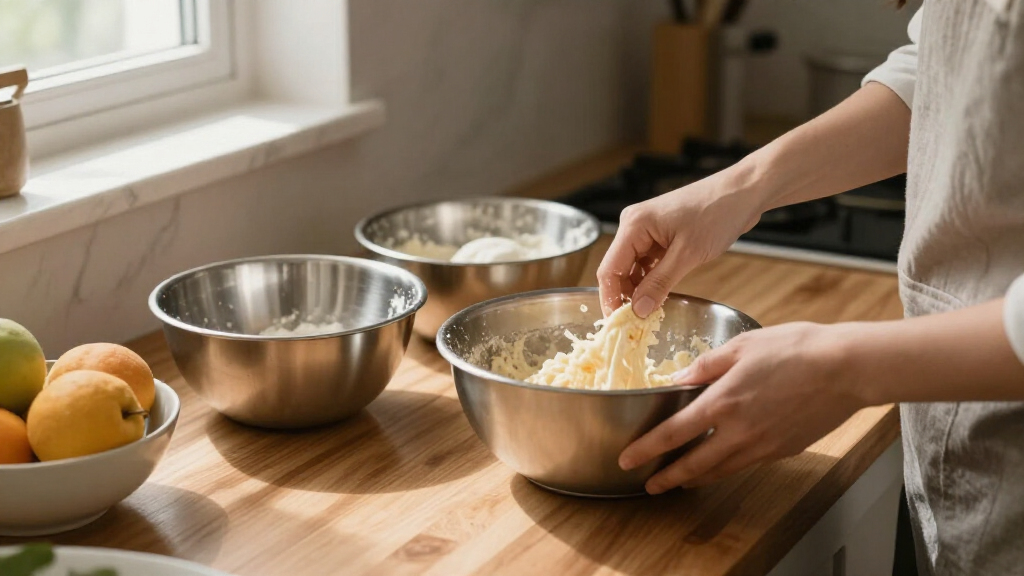
Incredibly durable, lightweight, and non-reactive. It won’t stain or retain odors and resists dents — perfect for whipping cream or mixing dough without worry.
Best for: DurabilityGlass
Transparent so you can monitor ingredients as they mix or melt — ideal for melting butter or microwaving. Non-reactive, but fragile and heavier if dropped.
Best for: VisibilityPlastic
Lightweight and inexpensive, great for quick, casual tasks. Tends to stain and absorb odors over time — choose BPA-free options for safer, non-toxic use.
Best for: Casual TasksCeramic
Aesthetically pleasing and microwave-safe, but fragility makes it less suitable for busy kitchens where drops happen. Prone to chipping over time.
Best for: ServingSilicone
Flexible, non-slip, and foldable — easy pouring and space-saving storage. Tradeoff: less rigidity can affect stability during vigorous mixing.
Best for: Small KitchensThe Safe Choice
For most home cooks, a nested set of stainless steel bowls plus one glass bowl for microwaving covers virtually every task — from whipping to melting to marinating.
Best for: Most KitchensWhy Size and Shape Matter More Than You Think
The right size directly impacts your efficiency and the quality of your results. Shape influences how comfortably — and safely — you work with ingredients.
Small Bowls
Handy for dressings, small mixes, or individual portions — but too limiting for larger tasks.
Medium Bowls
The balance point for most home cooks: cookie dough, pancake batter, or mixing salads without spilling.
Large Bowls
Essential for bread doughs or large batches — ample space to work without messy spills.
The Facts You Need Before Buying
A quick visual read on how the five main materials stack up on durability and everyday practicality.
| Material | Pros | Cons |
|---|---|---|
| Stainless Steel | ✓ Durable, lightweight, non-reactive, resists dents and stains | ✗ Noisy when mixing; cold to touch in winter |
| Glass | ✓ See-through for monitoring, microwave-safe, non-reactive | ✗ Fragile and heavier; risk of breakage |
| Plastic | ✓ Lightweight, inexpensive, versatile | ✗ Prone to staining and odors; less durable |
| Ceramic | ✓ Beautiful appearance, microwave-safe, non-reactive | ✗ Fragile, heavier, prone to chipping |
| Silicone | ✓ Flexible, non-slip, foldable, heat-resistant | ✗ Less rigid; can stain or retain odors |
Features That Make Mixing Easier and Safer
Thoughtfully chosen features streamline your cooking process and prevent the most common kitchen mishaps.
Non-Slip Base
Rubber or silicone bases keep the bowl planted while whisking or kneading — fewer spills, fewer accidents.
Measurement Markings
Inside or out, they eliminate the measuring cup and guarantee precise ratios with less cleanup.
Lids
Store leftovers or marinate directly in the bowl — a genuinely faster prep workflow.
Stackability
Nested bowls keep cabinets organized and accessible — a lifesaver in small kitchens.
Easy Cleaning
Dishwasher-safe, smooth surfaces; avoid textured designs that trap food and harbor residue.
Latest Trends and What’s New in Mixing Bowls
Recent innovations emphasize sustainability, multi-functionality, and style — smarter, more stylish choices for the modern kitchen.
Eco-Conscious Materials
BPA-free plastics, recycled stainless steel, and biodegradable materials align your kitchen tools with environmentally responsible practices.
Multi-Purpose Design
Measurement marks, pouring spouts, and integrated lids combine functions that used to require multiple separate tools.
Space-Saving & Style
Fold-flat silicone resists cracking and travels well; tempered glass resists thermal shock. Colorful bowls now double as kitchen decor.
Your Top Questions, Answered
What material is best for mixing bowls?
It depends on your needs. Stainless steel offers durability and easy cleaning, glass provides visibility and microwave safety, and silicone offers flexibility and space-saving advantages. Match the material to your typical tasks.
Are expensive bowls worth it?
Generally, yes. Higher-quality bowls last longer, resist staining and odors, and often include safety and convenience features — saving money and hassle in the long run.
Can I use mixing bowls in the microwave?
Only microwave-safe materials like glass or certain plastics. Metal bowls are unsafe — they can spark and damage your microwave. Always check the manufacturer’s instructions.
How do I clean my bowls?
Dishwasher-safe bowls are easiest. Delicate materials like glass or ceramic should be washed by hand with mild detergent. Avoid abrasive scrubbers to prevent scratching or chipping.
What size should I buy?
Match size to your recipes: small for dressings, medium for most baking, large for doughs and big salads. A nested set of multiple sizes offers the best versatility.
Pick the Right Material for Your Cooking Style
Material is the foundation of a good mixing bowl. Each type offers distinct benefits—and some caveats. Stainless steel is incredibly durable, lightweight, and non-reactive. It’s perfect for whipping cream or mixing dough without worry because it won’t stain or retain odors, and it’s resistant to dents. Glass bowls are transparent, allowing you to monitor your ingredients as they mix or melt, which is particularly useful for tasks like melting butter or heating ingredients in the microwave. Their non-reactive nature ensures no flavors transfer, but they are more fragile and can break if dropped.
On the flip side, plastic bowls are lightweight and inexpensive, making them great for quick, casual tasks. However, they tend to stain and absorb odors over time, which can affect taste and appearance. Choosing BPA-free plastics ensures safer, non-toxic options for your family. Ceramic or porcelain bowls are aesthetically pleasing and microwave-safe, but their fragility makes them less suitable for busy kitchens where drops happen. Silicone bowls are flexible, non-slip, and foldable. Their flexibility allows for easy pouring and mixing, and they are ideal for space-saving storage. The tradeoff is that they can sometimes be less rigid, which might affect stability during vigorous mixing.
Products Worth Considering

Breville Smart Grinder Pro Conical Burr Coffee Grinder, Brushed Stainless Steel

Cuisinart 6-Quart Basket Air Fryer with Viewing Window, Stainless Steel and Black (AIR-200NAS)

Breville Bambino Espresso Machine, Brushed Stainless Steel
As an affiliate, we earn on qualifying purchases.
Size and Shape: Why They Matter More Than You Think
Choosing the right size is crucial because it directly impacts your efficiency and the quality of your results. A small 1-2 quart bowl is handy for dressings, small mixes, or individual portions, but may be too limiting for larger tasks. A 3-4 quart bowl strikes a good balance for most home cooks, suitable for cookie dough, pancake batter, or mixing salads. Larger, 5+ quart bowls are essential for bread doughs or when preparing large batches of ingredients, giving you ample space to work without spilling.
Shape influences how comfortably and safely you can work with your ingredients. Deep bowls are ideal for whisking or whipping, as they contain splatters and help stabilize your hand during vigorous mixing. Conversely, wide, shallow bowls are better for folding delicate ingredients, tossing salads, or transferring ingredients from one bowl to another without spillage. For example, if you often make meringue or whipped cream, a deep bowl prevents splashes and helps maintain stability, which can be the difference between success and mess.
Features That Make Mixing Easier and Safer
Features can significantly enhance your experience, safety, and storage options. Non-slip bases—typically made of rubber or silicone—are crucial for stability, especially when whisking or kneading. They prevent the bowl from sliding around, reducing the risk of spills or accidents, which is particularly important when working with hot or heavy ingredients. Measurement markings—either inside or outside—save time by eliminating the need for a separate measuring cup, ensuring precise measurements and reducing cleanup. Lids allow you to store leftovers or marinate directly in the bowl, making your prep process more efficient. Stackability is a space-saver feature where bowls nest inside each other, keeping your storage organized and accessible, especially in small kitchens. These features, when chosen thoughtfully, can streamline your cooking process and prevent common mishaps.
Latest Trends and What’s New in Mixing Bowls
Recent innovations in mixing bowls emphasize sustainability, multi-functionality, and style. Eco-conscious choices include BPA-free plastics, recycled stainless steel, and biodegradable materials, aligning with environmentally responsible practices. Multi-purpose bowls now frequently feature measurement marks, pouring spouts, or integrated lids, which streamline your prep process by combining functions that used to require multiple tools. Additionally, the aesthetic aspect is gaining importance—stylish, colorful bowls that complement modern kitchens are becoming more popular, allowing you to coordinate your kitchen decor with your tools. Design innovations like tempered glass and silicone offer durability and versatility. For example, silicone bowls that fold flat save space and resist cracking, which is particularly advantageous in small kitchens or for travel.
The Facts You Need Before Buying
| Material | Pros | Cons |
|---|---|---|
| Stainless Steel | Durable, lightweight, non-reactive, resistant to dents and stains | Can be noisy when mixing, cold to touch which might be uncomfortable in winter |
| Glass | See-through for monitoring, microwave-safe, non-reactive | Fragile and heavier, risk of breakage |
| Plastic | Lightweight, inexpensive, versatile | Prone to staining, absorbing odors, less durable over time |
| Ceramic | Beautiful appearance, microwave-safe, non-reactive | Fragile, heavier, prone to chipping |
| Silicone | Flexible, non-slip, foldable, heat-resistant | Less rigid, can stain or retain odors over time |
Your Top Questions About Mixing Bowls Answered
What material is best for mixing bowls? It depends on your needs. Stainless steel offers durability and ease of cleaning, glass provides visibility and microwave safety, while silicone offers flexibility and space-saving advantages. Consider your typical tasks and environment to choose the most suitable type.
Are expensive bowls worth it? Generally, yes. Higher-quality bowls tend to last longer and maintain their appearance, resist staining and odors, and often include features that improve safety and convenience—saving you money and hassle in the long run.
Can I use mixing bowls in the microwave? Only if they’re made of microwave-safe materials like glass or certain plastics. Metal bowls are unsafe—they can cause sparks and damage your microwave, so always check the manufacturer’s instructions.
How do I clean my bowls? Dishwasher-safe bowls are easiest to clean, but delicate materials like glass or ceramic should be washed by hand with mild detergent. Avoid abrasive scrubbers to prevent scratching or chipping, which can compromise the bowl’s integrity and lifespan.
What size should I buy? Match the size to your typical recipes. Small bowls for dressings or individual ingredients, medium for most baking tasks, and large for doughs or big salads, ensuring you have the right capacity for your needs without unnecessary clutter.
Conclusion
The secret to choosing mixing bowls that actually work lies in understanding your kitchen habits and picking versatile, durable options. When you select the right material, size, and features, prepping becomes faster, safer, and more enjoyable.
Remember, the best bowl is the one that feels natural in your hand and helps you create delicious meals without fuss. So, pick wisely and let your new bowls elevate your cooking game—because good tools truly make all the difference.