TL;DR

Get baking supplies delivered free with Prime
- Fast, free delivery on millions of items
- Prime Video, Amazon Music and more included
- Member-only deals all year
Custard without the curdle is possible with gentle heat, constant stirring, and proper egg tempering. Using tools like a water bath or sous vide can make the process even foolproof. Prevention beats fixing—trust the science for silky results every time.
Control your heat precisely—use a thermometer and gentle simmer to avoid egg proteins coagulating too quickly.
Always temper eggs by slowly adding hot liquids while whisking to prevent curdling.
Use equipment like a double boiler or sous vide for consistent, foolproof results.
Strain your custard through a fine sieve for an ultra-smooth finish.
If your custard curdles, blending it can sometimes fix the texture, but prevention is better.
Why Temperature Control Is the Secret to Perfect Custard
Custard without the curdle starts with keeping the heat gentle. Egg proteins coagulate rapidly above 180°F, causing lumps and separation. Using a thermometer helps you stay within the ideal 160-180°F range, which is crucial because it ensures the eggs cook slowly and evenly, allowing the proteins to set gradually without curdling. If the heat is too high or uneven, the proteins can seize up suddenly, resulting in a grainy, lumpy texture. Using a water bath or bain-marie provides even, indirect heat—imagine a warm, soothing bath for your custard—reducing the risk of hot spots that can cause sudden curdling. This gentle approach allows the proteins to coagulate uniformly, preserving that silky consistency we all crave. Mastering temperature control is less about strict rules and more about understanding how heat affects egg structure, enabling you to make custard that’s smooth and luscious every time.
Products Worth Considering

Instant Pot Duo Crisp Ultimate 6.5-Quart 13-in-1 Pressure Cooker and Air Fryer

KitchenAid Go Cordless Citrus Juicer with Battery, KCJR161BM

Breville Bambino Espresso Machine, Brushed Stainless Steel
As an affiliate, we earn on qualifying purchases.
How to Temper Eggs and Incorporate Hot Liquids Without Curdling
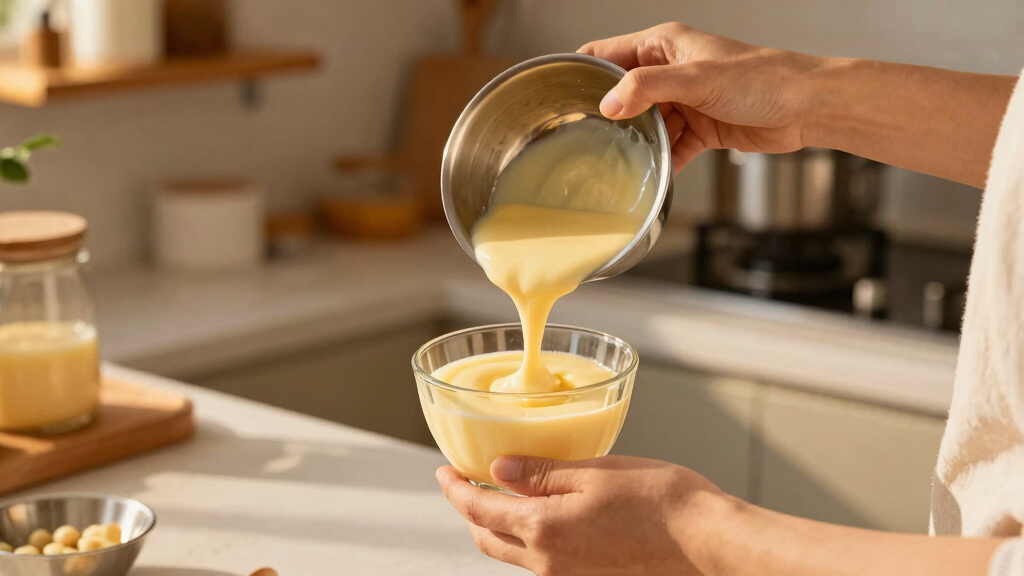
Tempering eggs is a fundamental technique to prevent curdling, especially when combining eggs with hot liquids. It’s about gradually raising the eggs’ temperature to match the hot mixture, which prevents the eggs from shocking and coagulating instantly. When done correctly, tempering ensures a smooth, uniform custard. The process involves warming your milk or cream to just steaming, then slowly adding a small amount into your beaten eggs while constantly whisking—this distributes the heat evenly. Repeating this process in stages allows the eggs to gently acclimate to the temperature, reducing the risk of curdling. Think of it as a dance: patience and gradual steps lead to harmony. Rushing this process—adding hot liquid too quickly or without whisking—can cause the eggs to seize up, resulting in lumps or a grainy texture. Proper tempering creates a seamless integration, leading to a silky, homogeneous custard that’s smooth from edge to edge. This technique is a tradeoff: it requires patience but rewards you with flawless results and a better understanding of heat transfer and egg behavior.
Using the Right Equipment to Keep Custard Smooth
Investing in the right tools isn’t just about convenience; it’s about precision and control. A double boiler or bain-marie ensures your custard heats evenly, which is vital because uneven heat can cause localized coagulation, leading to lumps. A thermometer provides real-time feedback, allowing you to monitor temperature closely and prevent exceeding the critical coagulation point. A fine sieve is essential for straining out any cooked egg bits or lumps that might have formed during cooking—this step is crucial because even the best technique can sometimes produce minor imperfections. Using these tools helps you maintain a steady, gentle heat and catch issues early, giving you the confidence to produce a consistently smooth custard. Skipping these can lead to overcooked spots or uneven texture, which may be difficult to fix later. Proper equipment empowers you to understand and control the process, turning what could be a delicate task into a reliable, foolproof method for silky results.
Comparison: Traditional Stovetop vs. Sous Vide Custard
| Method | Control | Ease | Results |
|---|---|---|---|
| Traditional Stovetop | Moderate, requires attention | Moderate, needs stirring and thermometer | Variable; risk of curdling if not careful |
| Sous Vide | Precise, set-and-forget | Easy, minimal stirring | Consistently silky, perfectly textured |
While traditional stovetop methods demand constant attention to prevent hot spots and uneven heating that can cause curdling, sous vide offers a more controlled environment. By setting a precise temperature and letting the water bath do the work, you minimize the risk of sudden temperature spikes that lead to coagulation. This gentle, consistent heat allows the eggs to coagulate uniformly, resulting in a custard that’s silky and smooth every time. The tradeoff is that sous vide equipment requires an initial investment and a bit of understanding, but it’s a game-changer for those seeking reliability and perfect texture without constant supervision. Think of sous vide as giving your custard a warm, steady hug—reliable, gentle, and foolproof, especially for beginners or busy cooks who want consistent results without the stress of stirring constantly.
How to Fix Curdled Custard — And When Not to Panic
If your custard curdles, don’t panic. Sometimes, blending the mixture with an immersion blender or whisk can smooth out the lumps, restoring creaminess. This works because the blades break down the coagulated proteins and disperse them evenly, re-emulsifying the custard. However, this is a salvage technique rather than a fix, and it’s often best to prevent curdling altogether through proper heat management. Prevention involves controlling the cooking temperature, stirring gently, and using the right equipment. When curdling occurs, it signals that the heat was too high or the eggs were added too quickly. Although blending can salvage some textures, it may also alter the intended silky consistency or introduce air bubbles, so it’s best used as a last resort. The key is understanding why curdling happens—overheating or rapid temperature changes—and adjusting your process accordingly. Ultimately, being attentive from the start is the most effective way to ensure your custard remains smooth and luscious.
Vegan and Plant-Based Custard Hacks That Won’t Curdle
Vegan custards can be just as silky with the right ingredients. Use plant-based milks like coconut or almond, which have different fat and protein contents that influence how they thicken and set. Incorporating thickening agents like cornstarch or agar-agar is crucial because they help stabilize the mixture and prevent separation or curdling during heating. For instance, simmer coconut milk with a tablespoon of cornstarch, whisking constantly until it reaches a thickened, custard-like consistency. This process mimics the coagulation of eggs but in a plant-based way, creating a smooth, cohesive texture. Baking the mixture in a water bath ensures gentle, even heat, reducing the risk of curdling. Balancing heat and stabilizers is key: too high a temperature can cause separation, while too little thickening can result in a runny custard. The tradeoff is that vegan recipes often require more precise control and patience but can yield equally rich, creamy results that are suitable for those avoiding animal products. With these tips, plant-based custards can stand toe-to-toe with traditional versions in both texture and flavor.