
TL;DR

Get baking supplies delivered free with Prime
- Fast, free delivery on millions of items
- Prime Video, Amazon Music and more included
- Member-only deals all year
Whole grain flours pack more nutrients and flavor but often need recipe tweaks. This guide covers types, storage, baking tips, and common questions to help you bake healthier, tastier treats.
Imagine biting into a slice of bread that’s not only hearty and flavorful but also packed with fiber and nutrients. That’s the magic of baking with whole grain flours. They’ve been around forever, but lately, they’re making a comeback among health-conscious bakers. Why? Because they offer a richer taste, more nutrition, and a sense of doing something good for your body.
But jumping into whole grain baking isn’t just swapping out white flour. It’s about understanding how these flours behave, how to adjust your recipes, and how to store them properly. This guide is your real, practical companion—no hype, just straightforward advice to help you bake healthier, tastier treats with whole grain flours.
Start small: substitute 25–50% of refined flour with whole grain flour and adjust liquids accordingly.
Store whole grain flours in airtight containers in cool, dark places or refrigerate for longer shelf life.
Experiment with different types of whole grain flours to discover new flavors and textures.
Use techniques like soaking, resting, and adding vital wheat gluten to improve rise and lightness.
Whole grain flours boost fiber, nutrients, and flavor—making your baked goods healthier and tastier.
Whole Grain Flours: A Real Guide to Baking With Them
TL;DR: Whole grain flours bring more nutrients, fiber, and flavor, but they behave differently than refined flour. Start with partial swaps, add a little more liquid, rest your dough or batter, and store flour carefully to keep its oils fresh.
Whole grain baking is not a one-for-one swap. It is flavor, structure, moisture, and storage working together.
What Whole Grain Flour Changes in the Bowl
Whole grain flour keeps the bran and germ, so you get deeper flavor and more nutrition, plus more water absorption, added texture, and a shorter freshness window.
More of the Kernel
Bran contributes fiber, while germ brings oils, B vitamins, magnesium, iron, and antioxidants that refined flour loses.
Denser but Richer
Expect a heartier crumb, more moisture, and occasional roughness unless you hydrate, blend, or strengthen the dough.
Nutty and Earthy
Whole wheat, spelt, rye, oat, buckwheat, and barley each add a distinct taste, from mild sweetness to tang.
The Hydration Reality Check
Bran and germ absorb more water than refined flour. A small liquid adjustment can turn heavy muffins or tight bread into something tender and lively.
Flavor Spectrum
Choose the Flour for the Job
Each flour has a different baking personality. Blend them when you want whole grain flavor without making the final bake too dense.
| Flour | Best Uses | Flavor | Rise | Beginner Friendly |
|---|---|---|---|---|
| Whole Wheat | Bread, muffins, pancakes | Nutty, hearty | ~ medium | ✓ yes |
| Spelt | Bread, cookies, quick breads | Mild, sweet, nutty | ✓ good | ✓ yes |
| Rye | Rye bread, crackers | Tangy, earthy | ~ dense | ~ with care |
| Oat | Muffins, pancakes, tender bakes | Mild, creamy, sweet | ✗ low gluten | ✓ easy |
| Buckwheat / Quinoa | Specialty and gluten-free blends | Bold, grassy, earthy | ✗ low structure | ~ blend first |
Five Tweaks for Lighter Whole Grain Bakes
Think in adjustments, not substitutions. These steps help whole grain flour hold moisture, rise better, and taste balanced.
Start Small
Swap 25-50% of refined flour before going fully whole grain.
Add Liquid
Increase liquids by 10-20% when the batter feels stiff or dry.
Rest It
Give dough or batter 10-15 minutes so bran can hydrate.
Strengthen
Add vital wheat gluten for lift in whole wheat or rye breads.
Mix Gently
Stop when combined to avoid toughness in muffins and cakes.
Storage Is Part of the Recipe
Because whole grain flour contains germ oils, freshness matters. Poor storage can flatten flavor and introduce rancid notes.
Air, heat, and light are the enemies.
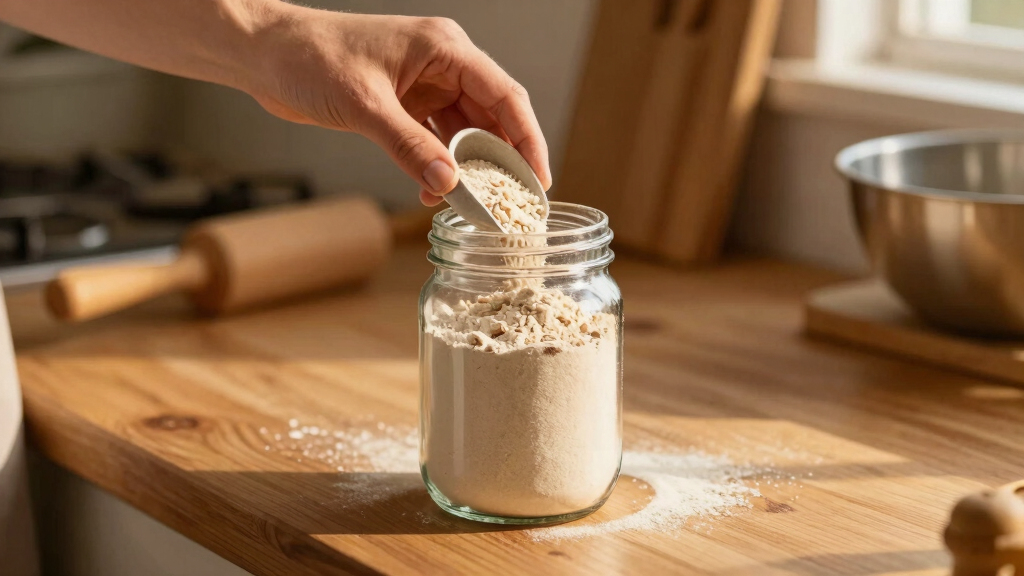
Use airtight containers, keep flour cool and dark, and refrigerate or freeze when buying in bulk or grinding at home.
Label the date: purchase date or grind date is your simplest quality control.
- Glass jars or sealed BPA-free containers reduce oxygen exposure.
- Pantry storage works for shorter use when the space is cool and dark.
- Refrigeration or freezing preserves germ oils for longer storage.
- Smell before baking; fresh flour should smell nutty, not stale or bitter.
Trace the Whole Grain Advantage
Better results come from connecting the grain’s structure to your baking choices, then adjusting with intention.
What Are Whole Grain Flours—and Why Do They Matter?
Whole grain flours are made from grinding the entire grain kernel—bran, germ, and endosperm—into flour. This means they keep all the nutrients and fiber, unlike refined flours that strip away the bran and germ during processing. For example, whole wheat flour retains nearly all the fiber and nutrients of the wheat berry, making your baked goods more nourishing.
Understanding why this matters is crucial: the presence of the bran and germ not only boosts nutritional content but also impacts how the flour behaves during baking. The bran adds fiber and a slight crunch, which can influence texture, while the germ contains oils that can make baked goods more moist but also more prone to spoilage if not stored properly. This means bakers need to balance these factors—using whole grain flours for health benefits while managing their effects on texture and shelf life.
Using whole grain flour means richer flavors—think nutty, earthy notes—and a denser texture. It’s like comparing a crisp apple to a hearty pear. Whole grain flours are especially appealing if you want to add depth to bread, muffins, or pancakes while boosting your intake of dietary fiber and antioxidants.
According to recent research, baked goods made with whole grain flours can contain up to 50% more fiber and retain essential nutrients like B vitamins and magnesium, making them a smarter choice for health-minded bakers.
Products Worth Considering

Cuisinart Stainless Steel Bread Maker, 12 Programs, 2 lb Capacity

Le Creuset Signature Enameled Cast Iron Round Dutch Oven, 5.5 qt, Deep Teal

Breville Bambino Espresso Machine, Brushed Stainless Steel
As an affiliate, we earn on qualifying purchases.
Meet the Common Types of Whole Grain Flours You Can Use
Not all whole grain flours are created equal—and each brings its own flavor and baking vibe. Here’s what you’re most likely to encounter:
- Whole Wheat Flour: The most common. Made from grinding whole wheat kernels. Great for bread, muffins, and pancakes.
- Spelt Flour: An ancient grain with a slightly nutty taste. Works well in bread and cookies.
- Rye Flour: Denser, with a tangy flavor. Perfect for rye bread or crackers.
- Oat Flour: Adds moisture and a mild sweetness. Good in muffins and pancakes.
- Other options: Buckwheat, quinoa, barley flours—more niche but excellent for specialty baking.
Each type of flour brings its own flavor profile and functional properties, which influence the final baked product. For instance, spelt flour has a slightly higher protein content than wheat, which can improve gluten development but also make the dough more delicate. Rye flour imparts a distinctive tang and denser crumb, which can be desirable in certain breads but challenging in others. Oat flour adds moisture and a subtle sweetness, making baked goods softer and more tender. Understanding these nuances allows bakers to select the right flour for their desired outcome and to experiment with blending flours for optimal flavor and texture.
Remember: the flavor, texture, and nutritional profile vary, so try mixing different flours for best results.
How to Make Your Whole Grain Baking Turn Out Perfect Every Time
Whole grain flours tend to produce denser, moister baked goods, but with the right tweaks, you can get light, fluffy results. Here’s a step-by-step guide:
- Adjust liquids: Whole grain flours absorb more water due to the presence of bran and germ. If you don’t adjust, baked goods can turn out dry or dense. Typically, adding 10–20% more liquids helps compensate for this absorption, resulting in a better crumb and mouthfeel.
- Use leavening wisely: The denser nature of whole grain baked goods may require slight increases in baking soda or baking powder or longer rising times to achieve proper lift. This ensures your bread or muffins aren’t flat or overly compact.
- Mix flours: Combining whole grain flours with lighter flours like white or spelt can improve the texture and rise. This blending balances the nutritional benefits with a more tender crumb, making your baked goods more appealing while still boosting their health profile.
- Rest the batter: Allowing your dough or batter to sit for 10–15 minutes before baking hydrates the flour thoroughly, which can improve gluten development and help with rising. This pause also helps break down some of the tougher fibers, resulting in a softer texture.
- Don’t overmix: Gentle mixing prevents the development of excess gluten, which can make baked goods tough or dense. Instead, mix just until ingredients are combined for a tender crumb.
For example, when baking whole wheat muffins, adding an extra tablespoon of milk and letting the batter sit for 10 minutes can significantly improve the crumb’s lightness and moisture. These small adjustments work together to counteract the natural density of whole grain flours, giving you a more satisfying final product.
Pro tip: Using vital wheat gluten can help strengthen the dough and improve rise, especially with denser flours like rye or whole wheat. It provides extra gluten, which enhances elasticity and lift, making your baked goods lighter without sacrificing nutrition.
Storage Secrets: Keep Your Whole Grain Flours Fresh and Nutritious
Whole grain flours contain oils in the germ that can turn rancid if left exposed. Proper storage keeps them fresh longer—and preserves their nutrition.
- Airtight containers: Use glass jars or BPA-free plastic to prevent exposure to air, which can accelerate spoilage and oxidation of the oils.
- Cool, dark place: Store in a pantry away from heat, light, and humidity. Excess heat speeds up rancidity, while light can degrade sensitive nutrients.
- Refrigeration or freezing: For longer storage—up to 6 months or more—refrigerate or freeze in airtight bags or containers. This slows oxidation and preserves the oils, especially if you buy in bulk or grind your own flour.
Imagine pulling out a bag of freshly ground oat flour from the fridge—its nutty aroma is vibrant, and the flour is still lively and free of rancidity. Proper storage not only extends shelf life but also maintains the vibrant flavor and nutritional quality of your whole grain flours, which can otherwise diminish quickly if mishandled.
Tip: Label your containers with purchase or grind date to keep track of freshness and avoid using stale flour that can negatively impact flavor and texture.
Why Whole Grain Flours Are Better for Your Baking—and Your Body
Switching to whole grain flours means more than just added fiber. Their nutrient density supports overall health, making your baked goods a smarter choice. You get more B vitamins, magnesium, and antioxidants—protective compounds linked to reduced inflammation and better heart health.
Understanding why this matters involves recognizing the broader implications: these nutrients contribute to long-term health benefits. For example, magnesium supports muscle function and blood sugar regulation, while antioxidants combat oxidative stress. Incorporating more whole grains into your diet through baking can help reduce the risk of chronic diseases like heart disease, diabetes, and certain cancers.
Plus, whole grain flours give baked goods a satisfying nuttiness that enhances flavor and texture. Think of it like upgrading your baking palette from plain to complex, richer, and more satisfying. This flavor depth can encourage healthier eating habits because the more complex taste profile makes healthy baked goods more enjoyable, reducing the temptation to indulge in less nutritious treats.
And yes, while they may alter the look and feel of your baked items, the health benefits often outweigh the extra effort. They’re a simple way to boost your diet with minimal fuss—adding nutritional value without sacrificing flavor.
According to an anonymous researcher, incorporating whole grains into your baking routine can increase dietary fiber intake by up to 50%, which is linked to improved digestion and blood sugar control. This substantial increase highlights how small changes in baking can have meaningful impacts on your health over time.
Common Questions — Your Whole Grain Flour FAQs Answered
Can I substitute whole grain flour for all-purpose flour? Yes, but expect denser baked goods. Adjust liquids and rising time accordingly. Start with replacing 25–50% and experiment from there. The tradeoff is that higher substitution levels may require more recipe adjustments to achieve the desired lightness and texture, as whole grain flours naturally produce denser results due to their fiber and protein content.
How should I store whole grain flours? Keep in airtight containers in the fridge or freezer for maximum freshness. Use within 3–6 months for best flavor. Proper storage minimizes the risk of rancidity caused by the oils in the germ and helps maintain nutrients, but it’s important to monitor for any off smells or flavors that indicate spoilage.
Are baked goods with whole grain flour healthier? Generally, yes—whole grain flours contain more fiber, vitamins, and minerals, making them a better choice for health-conscious baking. They contribute to better digestion, blood sugar control, and overall nutrient intake, which can support long-term health goals.
Will whole grain flour change the taste and texture? Expect nuttier flavor and denser crumb. Lightening the texture often involves mixing with lighter flours or using techniques like soaking or resting. These adjustments can help balance flavor and improve mouthfeel, making the baked goods more appealing without sacrificing their nutritional benefits.
Are gluten-free options available? Yes. Buckwheat, quinoa, millet, and amaranth are naturally gluten-free and suitable for gluten-sensitive baking. However, since they lack gluten, combining them with binding agents like xanthan gum or eggs is often necessary to achieve a desirable rise and structure.
How can I improve the rise of my whole grain baked goods? Use vital wheat gluten, incorporate natural leavening agents, and give your dough enough time to rise properly. These techniques compensate for the denser gluten network in whole grain flours, resulting in lighter, more airy baked goods.
Conclusion
Whole grain flours aren’t just a health trend—they’re a flavor and nutrition upgrade that fits into everyday baking. Yes, they may take a little more attention, but the payoff is rich, wholesome bread, muffins, and pancakes that nourish your body and delight your senses.
Next time you reach for flour, consider swapping some out for a whole grain variety. Your taste buds—and your body—will thank you. Happy baking!