
TL;DR

Get baking supplies delivered free — and shop member deals
- Fast, free delivery on millions of items
- Access to Prime Big Deal Days deals on October 6–7
- Prime Video, Amazon Music and more included
You can bake authentic baguettes in your home oven by focusing on high heat, steam, proper shaping, and fermentation. These simple tweaks produce that crisp crust and open crumb everyone loves.
Think you need a professional oven to make that perfect, crusty baguette? Think again. The secret lies in a few simple techniques that turn your home oven into a bakery-quality baking station. You’ll get a golden, crackling crust and an airy crumb—no fancy equipment required.
This guide breaks down the essential steps, from preheating to steaming, so you can nail that authentic baguette texture every time. Ready to impress yourself—and maybe your neighbors? Let’s get started.
Preheat your oven and baking surface thoroughly—at least 30 minutes—to mimic professional ovens.
Create steam during the first 10-15 minutes of baking for a glossy, crisp crust.
Use a sharp lame to score your dough—this controls expansion and enhances appearance.
Bake at 475°F to 500°F (245°C to 260°C) to develop that iconic crust.
Long, slow fermentation deepens flavor and improves crumb structure.
Why Your Home Oven Can Actually Make a Perfect Baguette
Your home oven can reach the high temperatures needed for a great baguette—up to 500°F (260°C). The challenge is not just heat but creating the right environment inside the oven. A hot oven with steam produces that crispy, shiny crust and chewy interior you crave.
Imagine the sound of crackling crust as you pull your baguette out—just like at a bakery. The key is preheating your oven and baking surface thoroughly, then trapping steam during the first phase of baking.
cast iron skillet for baking bread
As an affiliate, we earn on qualifying purchases.
As an affiliate, we earn on qualifying purchases.
Mastering the Art of Steam—Your Secret Weapon
Steam is the magic ingredient for that glossy, crisp crust. It keeps the crust moist during the first 10-15 minutes of baking, allowing the dough to expand fully before setting.
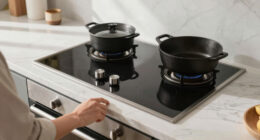
In a home oven, you don’t need fancy equipment. Use a sturdy metal pan or cast-iron skillet—place it in the oven while preheating. When ready to bake, add hot water—careful, it’s hot!—to generate steam.
For example, a common trick is to pour a cup of boiling water into a preheated cast-iron skillet right before sliding in the dough. The steam fills the oven, giving your baguette that bakery finish. This method matters because it affects the oven spring—the rapid rise of the dough in the initial baking phase—which directly influences the final texture. Insufficient steam results in a dull, thick crust and less expansion, while optimal steam creates that thin, crackly crust and open crumb structure.
As an affiliate, we earn on qualifying purchases.
How to Shape and Score Your Baguette for Perfect Results
Shaping your dough correctly ensures it maintains its form and develops that iconic long, slender shape. Use a bench scraper to fold and tighten the dough, then roll it gently into a baguette shape.
Scoring is equally important. Use a sharp lame or knife to make quick, decisive cuts—about ¼ inch deep—across the top. This controls expansion and creates those beautiful ridges.
For example, if your dough is slightly sticky, dust it with flour before shaping. When scoring, aim for 3-4 cuts, each about ¼ inch deep, to encourage a controlled expansion and a professional look. Proper shaping and scoring are crucial because they influence how the bread expands during baking. Incorrect shaping can lead to uneven oven spring or a misshapen loaf, while poor scoring can cause uncontrolled splits, affecting both appearance and texture. Mastering these techniques allows you to achieve bakery-quality aesthetics and consistent results, making your baguette look as professional as it tastes.
As an affiliate, we earn on qualifying purchases.
Temperature and Timing—Baking Like a Pro
Baking at 475°F to 500°F (245°C to 260°C) is essential for a crisp crust. Always preheat your oven and baking surface for at least 30 minutes—this ensures even heat distribution.
Bake your baguette for 20-25 minutes, until deep golden brown. Use an oven thermometer to verify your oven hits the right temp. Remember, every oven is different, so adjust as needed.
Imagine the aroma filling your kitchen—hot, toasty, and inviting. That’s the scent of a perfect baguette just coming out of the oven. Proper timing and temperature are critical because they influence the Maillard reaction—the chemical browning process that gives the crust its color and flavor. Baking at too low a temperature results in a pale crust and underdeveloped flavor, while too high can burn the crust before the interior is fully baked. Achieving the right balance ensures a beautifully caramelized crust with a tender crumb inside, reflecting professional baking standards.
As an affiliate, we earn on qualifying purchases.
The Top 3 Tools You Need for Home Baguette Success
- Baking stone or steel: Preheated in the oven to mimic a professional oven’s heat and promote oven spring. This high, even heat helps the bread expand rapidly in the oven’s initial moments, creating that desirable open crumb and crust.
- Lame or sharp knife: For scoring, giving your baguette that signature look. Proper scoring allows controlled expansion, reducing the risk of uncontrolled splits that can ruin the appearance and texture.
- Oven thermometer: Ensures your oven temperature stays consistent, which is key for baking success. Many home ovens have inaccurate temperature settings; an oven thermometer provides the accuracy needed for precise baking conditions.
For example, a baking steel can be heated for 45 minutes before baking, providing even heat and helping develop that crispy crust. Using these tools ensures you replicate bakery conditions as closely as possible, giving your baguette the best chance to turn out perfect every time.
Simple Steps to Bake Your First Bakery-Quality Baguette
- Mix and ferment: Combine flour, water, salt, and a tiny bit of yeast. Let it ferment for 12-16 hours in the fridge or at room temperature.
- Shape and proof: Shape into a long baguette. Let it proof until nearly doubled—about 1-2 hours.
- Preheat: Oven and baking surface to 500°F (260°C), with a pan of water inside.
- Score: Make quick cuts with a lame.
- Bake: Slide in the dough, add water to the pan, and bake for 20-25 minutes.
Voila! A crusty, airy baguette, straight from your oven.
Why Longer Fermentation Makes Your Baguette Better
Long fermentation—sometimes overnight—allows flavors to deepen and gluten to develop fully. It also helps create that open, airy crumb we associate with authentic baguettes.
For instance, a dough fermented for 16 hours at cool temperatures will taste richer and produce a more complex texture than a quick, 2-hour proofing. This extended fermentation allows enzymes to break down starches and proteins more thoroughly, enhancing flavor and digestibility. It also improves gluten structure, which supports better oven spring and crumb openness. The tradeoff is time—longer fermentation requires planning ahead—but the flavor complexity and texture payoff are well worth it. Patience here results in bread with a depth of flavor and a light, airy interior that can’t be matched by quick methods.
How to Achieve That Crusty, Golden Finish Every Time
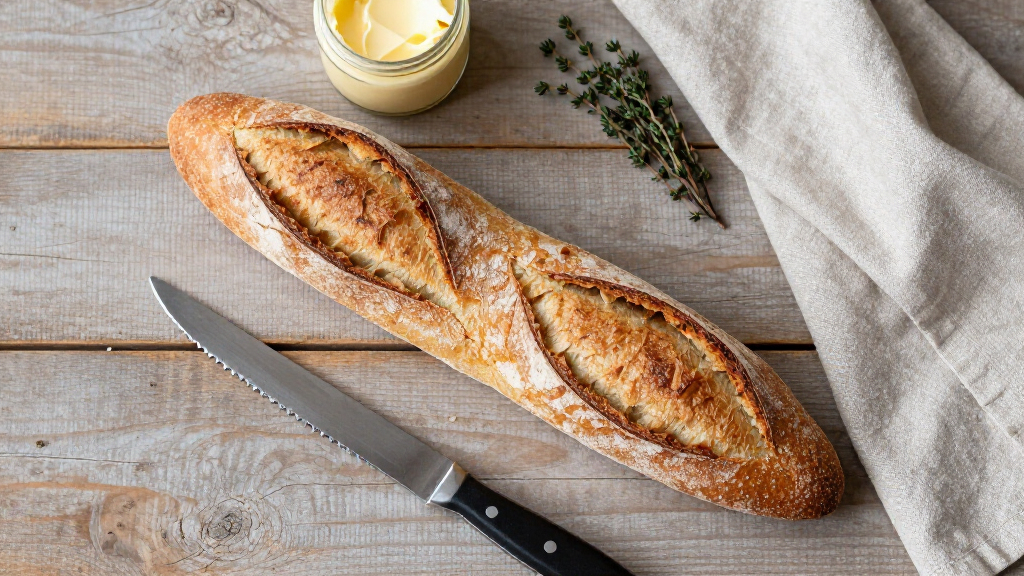
The secret is high heat, steam, and baking until the crust is deep amber. Use a baking stone or steel, preheated to maximum temperature, and bake until your baguette sounds hollow when tapped.
Visual cues like a deep golden color and a crackly surface tell you it’s done. Remember, every oven varies—adjust baking time as needed. The color indicates caramelization of sugars and Maillard reactions, which develop flavor and color. The crackly surface is a sign of proper crust formation—moisture evaporates during baking, leaving a thin, crisp layer. Achieving this finish consistently involves balancing temperature, steam, and baking time, which can be adjusted based on your specific oven. This process ensures a visually appealing and flavorful crust that complements the airy interior, making each loaf a bakery-quality masterpiece.
Frequently Asked Questions
Can I make authentic baguettes in a standard home oven?
Absolutely. Focus on high heat, proper shaping, and creating steam. These steps make a big difference in achieving that crusty, airy baguette you see in bakeries.How do I generate steam without special equipment?
Place a metal pan or cast-iron skillet in the oven while preheating. When ready, pour hot water into it—careful—just before baking. This creates the steam needed for a glossy crust.What is the best temperature for baking baguettes at home?
Aim for 475°F to 500°F (245°C to 260°C). Always preheat your oven and baking surface for at least 30 minutes to ensure consistent heat.How long should I proof my baguette dough?
Typically 1-2 hours at room temperature or longer if cold fermenting. The dough should nearly double in size and feel puffy.What tools will help me get professional results?
A baking stone or steel, a sharp lame or knife for scoring, and an oven thermometer are the essentials. They help mimic bakery conditions and improve your results.Conclusion
Making bakery-quality baguettes at home isn’t just a pipe dream. With a few simple, practical adjustments—high heat, steam, shaping, and patience—you can produce bread that looks, tastes, and feels like it came from a professional bakery.
Next time you step into your kitchen, remember: it’s the small things that make all the difference. Crusty, golden, and utterly satisfying—your perfect baguette is just a few tweaks away.
Fall Picks
fall essentials
As an affiliate, we earn on qualifying purchases.