
TL;DR
Tempering eggs involves slowly raising their temperature by gradually adding hot liquid while whisking. This prevents scrambling and results in silky custards. Using precise tools and techniques makes the process foolproof.
Gradually raise the eggs’ temperature by adding hot liquid in small, whisked increments.
Use a reliable thermometer and gentle heat sources like double boilers or sous vide for best control.
Constant whisking during the process prevents hot spots and curdling.
Avoid rushing hot liquids into eggs—patience keeps your custard silky.
If custard curdles, gentle reheating and whisking can sometimes save it, but prevention is best.
What is tempering eggs and why does it matter?
Tempering eggs is a gentle cooking technique that gradually raises the eggs’ temperature without curdling them. It’s essential in recipes like custards, hollandaise, and delicate sauces. If you add hot liquid too quickly or skip this step, your eggs will scramble, leaving you with a chunky mess instead of silky smoothness.
Imagine trying to make a custard and suddenly seeing small curds form—disappointing, right? Proper tempering prevents this by controlling heat transfer. It’s like giving your eggs a warm bath, slowly coaxing them to the right temperature.
Understanding why tempering matters goes beyond just avoiding lumps. When eggs are heated too rapidly, the proteins denature quickly and coagulate into solid clumps. This not only ruins the texture but can also alter the flavor, making the custard taste cooked and grainy. Properly tempered eggs ensure smoothness, a delicate mouthfeel, and a professional finish. The tradeoff is patience; rushing the process risks ruining the entire batch. But with the right technique, you get a silky, evenly cooked custard with a velvety texture that elevates your desserts to restaurant quality.
digital kitchen thermometer for custards
As an affiliate, we earn on qualifying purchases.
As an affiliate, we earn on qualifying purchases.
The foolproof step-by-step way to temper eggs
Follow this simple sequence to tame your eggs every time:
- Prepare your ingredients: Whisk eggs in a heatproof bowl or saucepan. Have your hot liquid (milk, cream, or broth) ready, warmed but not boiling.
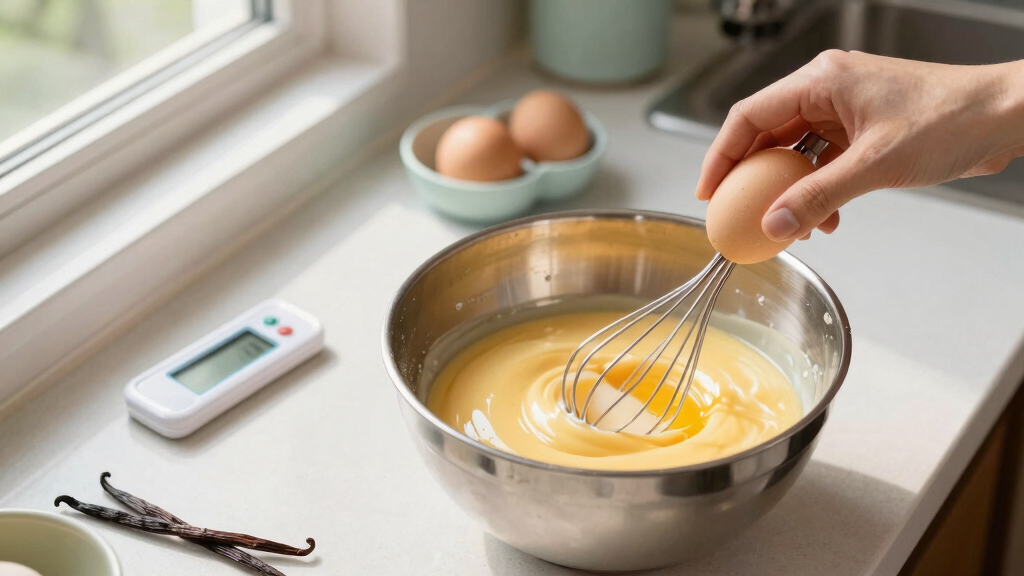
- Start slow: Begin adding a few drops of hot liquid to the eggs, whisking constantly. This initial step raises the eggs’ temperature gradually, preventing sudden shock that causes curdling.
- Increase gradually: Slowly pour in more hot liquid in a thin stream, whisking all the while. This controlled addition allows heat to distribute evenly, giving the proteins time to coagulate gently rather than suddenly.
- Check the temperature: Use a thermometer to monitor. Aim for about 160°F (71°C). Once reached, your eggs are safely tempered and ready to combine.
- Finish your recipe: Pour the tempered eggs into the remaining hot liquid, stirring gently. Cook gently until thickened, avoiding boiling. This final step ensures a smooth, cohesive custard without overcooking the eggs.
Why is this important? The gradual increase in temperature allows the egg proteins to denature slowly, forming a stable network that thickens the mixture without curdling. This approach balances heat transfer, minimizes hot spots, and maintains the delicate texture you desire. The tradeoff? It takes a few extra minutes of attention, but the result is a perfectly smooth custard that rivals professional standards.
AmazonAs an affiliate, we earn on qualifying purchases.
Tools that make tempering eggs easier and more reliable
Using the right tools can make all the difference. Here’s what you need:
- Whisk: Keeps the mixture smooth and prevents hot spots that cause scrambling. A balloon whisk is ideal for quick, even mixing.
- Heatproof bowl or saucepan: Ensures safe, even heating and easy handling during the process.
- Digital thermometer: Provides precise temperature readings, especially crucial for beginners. Accurate temps help prevent over- or under-heating.
- Double boiler or sous vide setup: Offers controlled, gentle heat for foolproof results. These methods minimize hot spots and allow for very precise temperature control, reducing the risk of scrambling.
- Heavy-bottomed pan: Distributes heat evenly, reducing hot spots and uneven cooking. This is essential when heating liquids to exact temperatures.
For instance, a heavy-bottomed pan with a good thermometer can prevent overheated spots that cause curdling. Some chefs swear by sous vide for its precision—set the water bath to a specific temperature, and your eggs stay perfectly in the safe zone without fuss. These tools help you control the process, making tempering more forgiving and consistent, especially if you’re new to it.
AmazonAs an affiliate, we earn on qualifying purchases.
Common mistakes that ruin your custard and how to avoid them
Ever wondered why your custard sometimes turns lumpy? The culprit is usually one of these mistakes:
- Adding hot liquid too fast: This shocks the eggs, causing them to scramble instantly. The quick temperature change causes proteins to coagulate prematurely, resulting in lumps instead of a smooth texture.
- Not whisking enough: Without constant movement, hot spots form, leading to curdling. Proper whisking distributes heat evenly and prevents localized overheating.
- Heating too quickly: Rapid temperature rises don’t give eggs time to gently coagulate. This can cause sudden curdling and graininess.
- Using a low-quality thermometer: Inaccurate readings can lead to over- or under-heating. Precise temperature control is essential for delicate eggs.
- Ignoring temperature: Skipping a thermometer means guessing—risky with delicate eggs. Without monitoring, it’s easy to go beyond the ideal temperature, causing scrambling.
For example, rushing hot liquid into eggs can turn that silky custard into scrambled bits in seconds. The fix? Take your time, keep whisking, and monitor the temperature closely. Recognizing these mistakes helps you develop a feel for the process, so you can adjust your technique on the fly and consistently produce smooth, luscious custards.
AmazonAs an affiliate, we earn on qualifying purchases.
How modern tech makes tempering eggs foolproof
Thanks to new gadgets, tempering eggs has become much easier. Digital thermometers now give instant, accurate readings. Induction stoves heat evenly, preventing hot spots. Some chefs even use sous vide machines to keep eggs at a precise temperature—set it and forget it.
For example, cooking custard in a sous vide bath at exactly 160°F ensures even, gentle heating, virtually eliminating the risk of scrambling. This precision turns a tricky task into a simple step in your kitchen routine. By controlling the environment precisely, you minimize the chance of sudden temperature spikes, making the entire process more forgiving and accessible even for beginners.
What to do if your custard curdles and how to fix it
If your custard curdles, don’t panic. Sometimes, gently reheating and whisking can smooth it out. But often, curdled custard is best started fresh. The key is to prevent this in the first place by controlling heat and whisking constantly.
For instance, if you notice tiny lumps forming, remove from heat immediately and whisk vigorously. Using a double boiler or sous vide can help avoid this problem altogether. If curdling occurs, rapid cooling and vigorous whisking may help re-emulsify the mixture temporarily, but it’s not always guaranteed. Prevention—by controlling temperature carefully—is the most reliable strategy to keep your custard smooth and luscious.
Frequently Asked Questions
Can I temper eggs without a thermometer?
Yes, but it’s riskier. Pay close attention to the mixture’s warmth—look for a slight warmth on your finger or a gentle steam. Still, a thermometer provides peace of mind and more consistent results.How long does tempering usually take?
It typically takes about 3-5 minutes, depending on the temperature of your hot liquid and how quickly you whisk. Patience is key to avoid scrambling.What if I accidentally scramble the eggs?
Once eggs scramble, they’re hard to fix. The best move is to start fresh. To prevent this, always add hot liquid slowly and keep whisking vigorously.Is there an easier method for beginners?
Using a double boiler or sous vide can make tempering nearly foolproof. These methods offer more control over temperature and reduce the risk of scrambling.Conclusion
Mastering how to temper eggs transforms your dessert game. With patience, the right tools, and a gentle touch, you’ll turn a potential disaster into a silky, perfect custard every time. Think of it as giving your eggs a warm hug—slow, steady, and comforting.