
TL;DR
Using high-fat cream, chilling everything, and adding stabilizers help whipped cream hold peaks for hours. Proper technique prevents deflation and graininess, ensuring your dessert looks perfect long after preparation.
Imagine a beautifully piped cake topping that stays pristine for hours, untouched and perfectly firm. That’s the power of knowing how to whip cream that holds its shape. Whether you’re decorating a cake, serving a fancy dessert, or prepping ahead for a party, stable whipped cream is a game-changer.
Getting it right isn’t magic — it’s a combination of choosing the right ingredients, mastering your technique, and sometimes adding a little help in the form of stabilizers. This guide walks you through every step to keep your whipped cream looking fresh, fluffy, and firm for hours.
Use cream with at least 36% fat for the best stability.
Chill your cream, bowl, and tools for at least 15 minutes before whipping.
Add stabilizers like gelatin or commercial products to extend peak hold time.
Stop whipping at glossy, stiff peaks — avoid over-whipping into butter.
Store whipped cream in the fridge and re-whip briefly if needed before serving.
Kitchen Technique / Stable Whipped Cream
How to Whip Cream That Holds Its Shape for Hours
Use high-fat cream, chill every tool, whip with restraint, and add the right stabilizer when the dessert needs to wait. The result is glossy, firm cream that pipes cleanly, resists weeping, and stays photo-ready long after prep.
Heavy cream or heavy whipping cream builds the strongest butterfat network for long-lasting peaks.
Cold cream, bowl, and whisk trap air more effectively and slow structural breakdown.
Stabilized high-fat whipped cream can hold defined peaks for 4-6 hours or longer when refrigerated and protected from heat.
Build Stability Before You Whip
Firm whipped cream starts before the mixer turns on. The right fat content, temperature, and sugar timing create a foam that can support piping, layering, and party-table delays.
Choose 36% fat cream
Higher butterfat creates a denser structure around air bubbles, so peaks resist gravity longer. Lower-fat whipping cream feels lighter but collapses faster.
Chill cream and tools
Cold fat stays firmer and traps air better. Refrigerate the cream, metal bowl, and beaters for at least 15 minutes before whipping.
Add sugar carefully
Sweeten once the cream begins to thicken. Adding sugar too early can slightly weaken the forming structure, especially in warm kitchens.

Amazon Grocery, Heavy Whipping Cream, Ultra-Pasteurized, 32 Fl Oz
One 32 fluid ounce carton of Heavy Whipping Cream, Ultra-Pasteurized
As an affiliate, we earn on qualifying purchases.
As an affiliate, we earn on qualifying purchases.
The Peak-Control Method
The mixer speed matters. Gentle air incorporation first, then faster thickening, gives the cream volume without pushing it into grainy butter territory.
Start Cold
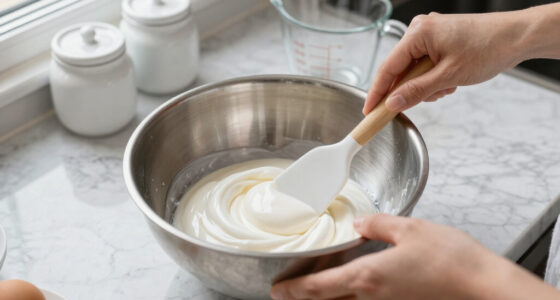
Pour chilled heavy cream into a chilled bowl so the fat network begins firm.
Medium Speed
Whip gently at first to incorporate small, even air bubbles without splashing.
Soft Peaks
Add sugar or dissolved stabilizer once the cream is thick but still flexible.
Stiff Peaks
Increase speed briefly until peaks stand tall and the surface looks glossy.
Stop Early
Quit before the texture turns dull, clumpy, greasy, or grainy.

Dr. Oetker Whipped Cream Stabilizer, 0.35 Ounce (Pack of 2)
Ingredients: Dextrose, modified corn starch, phosphate
As an affiliate, we earn on qualifying purchases.
As an affiliate, we earn on qualifying purchases.
Stabilizer Comparison
Stabilizers reinforce whipped cream by holding moisture, strengthening the foam, or adding a gentle gel network. Choose based on hold time, dietary needs, and desired texture.
| Stabilizer | Method | Best For | Long Hold | Texture Risk |
|---|---|---|---|---|
| Gelatin | Dissolve in hot water, cool, then stream or fold in near soft peaks. | Cakes, piping, displays, events lasting 6+ hours. | ✓ | ~ |
| Commercial Stabilizer | Follow package instructions and add during whipping. | Reliable results with minimal technique adjustment. | ✓ | ✓ |
| Cornstarch | Mix with sugar or add lightly during whipping. | Quick fixes and basic short-term stability. | ~ | ~ |
| Agar-Agar | Hydrate and cool carefully before blending in. | Vegetarian stabilizing when gelatin is not preferred. | ✓ | ~ |
| Aquafaba | Whip chickpea liquid separately and fold into dairy-free cream. | Vegan or dairy-free toppings. | ~ | ✗ |
Dr. Oetker Whipped Cream Stabilizer, 0.35 Ounce (Pack of 2)
Ingredients: Dextrose, modified corn starch, phosphate
As an affiliate, we earn on qualifying purchases.
As an affiliate, we earn on qualifying purchases.
What Makes Peaks Last
Think of stability as a stack of small advantages. Fat content does the heavy lifting, cold equipment protects the foam, and stabilizers extend the serving window.
Texture Sweet Spot

Winco , 8-Quart, Stainless Steel (MXB-800Q)
Stainless steel durable construction for years of work
As an affiliate, we earn on qualifying purchases.
As an affiliate, we earn on qualifying purchases.
Failure Points to Avoid
Most whipped cream problems come from heat, weak cream, or whipping past the point of peak stability. Watch the texture more than the timer.
Over-whipping
Fat clumps together, liquid separates, and the cream turns dull, greasy, and grainy. Stop as soon as peaks stand and shine.
Warm kitchen
Heat softens the butterfat network. Keep the bowl cold, refrigerate finished cream, and avoid direct sun or hot counters.
Low-fat cream
Cream below 36% fat can whip up beautifully at first but lacks the structure needed for firm, long-lasting decoration.
Traceability: From Bowl to Beautiful Cake
For make-ahead desserts, connect every choice to the final presentation. Stable whipped cream is not one trick; it is a controlled chain.
Choose the Right Cream for Long-Lasting Peaks
The secret starts with the cream. Use heavy cream or heavy whipping cream with at least 36% fat. That’s because higher fat content creates a more stable structure, resisting gravity longer. High-fat cream contains more butterfat, which forms a denser network when whipped, giving it better elasticity and resistance to collapsing. This means your peaks stay firm longer, especially under heat or during prolonged display. Conversely, lower-fat creams produce a lighter, airier texture but are more prone to deflation and graininess over time. Choosing the right cream is a tradeoff: higher fat yields more stability but may be richer; lower fat can be softer but less durable. For long-lasting decorations, prioritize high-fat options to ensure your whipped cream maintains its shape and appeal for hours.
Chill Everything — Cream, Bowls, and Whisks
Cold ingredients are essential because they slow down the breakdown of the whipped structure. When cream is cold, its fat molecules are more solid and can trap air more effectively, creating a stable foam. Additionally, chilling your mixing bowls and beaters prevents the warmth from melting the whipped cream once formed, which can cause peaks to soften or collapse. This is especially critical in warm environments or when making large quantities. The difference can be stark: warm cream whipped quickly may look perfect initially but will soften within an hour. In contrast, cold, well-chilled equipment ensures the peaks are firm and resilient. For the best results, refrigerate your tools and ingredients at least 15 minutes before whipping, and consider using a metal bowl that retains cold temperature longer. This simple step significantly extends the time your whipped cream stays fluffy and stable.
The Best Technique for Firm, Fluffy Peaks
- Begin on medium speed to incorporate air gently without deflating the cream.
- Gradually increase to high speed once soft peaks form, allowing the cream to become glossy and thickened.
- Monitor closely and stop whipping just before the peaks turn buttery or grainy. Over-whipping causes the fat to separate, resulting in a greasy, curdled texture that quickly deflates.
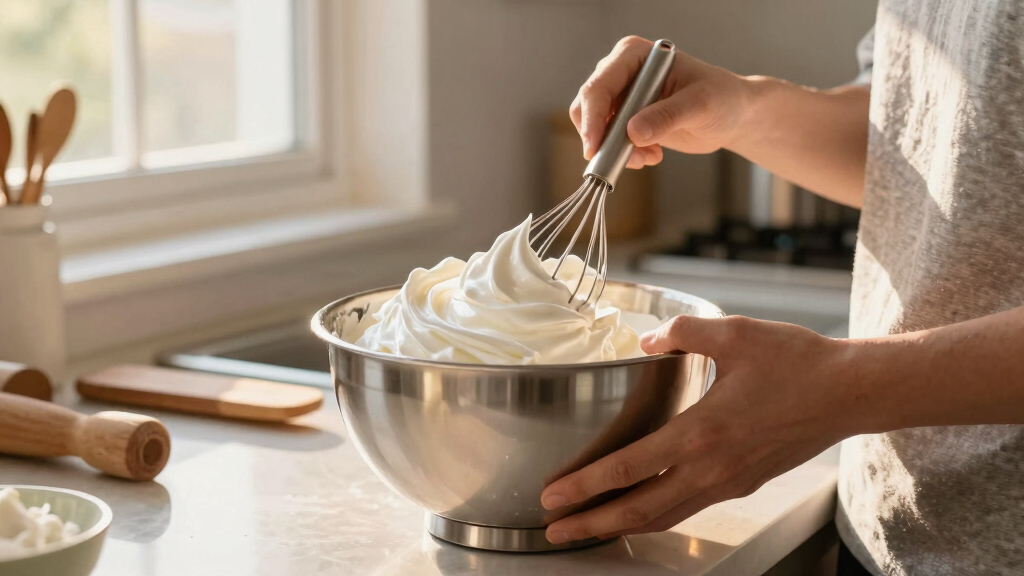
Timing and observation are key. Typically, 3-4 minutes on high speed with a stand mixer suffices, but this varies based on cream temperature and equipment. The goal is a firm, shiny peak that holds its shape when lifted. This stage indicates optimal air incorporation and fat stability. Over-whipping beyond this point fractures the fat structure, leading to a breakdown of the foam. Achieving the perfect peak is about understanding the texture: it should be firm but not greasy, and hold its shape without collapsing. Practicing this technique helps you develop an intuitive sense of when to stop, ensuring your whipped cream remains stable and fluffy for hours.
Add Stabilizers to Keep It Firm All Day
Stabilizers work by reinforcing the whipped cream’s structure, preventing it from collapsing or weeping over time. They create a more resilient foam that can withstand temperature fluctuations and prolonged display. Gelatin, for example, forms a gel-like network that traps air and moisture, providing a sturdy framework. Proper dissolving and cooling of gelatin are crucial to avoid clumping or uneven texture. Commercial stabilizers are formulated for consistency and ease of use; they often contain gelling agents or stabilizing powders that blend seamlessly when added during the final whipping stages. Cornstarch, a more accessible option, thickens and stabilizes by absorbing moisture, but it may slightly alter the texture and flavor if overused. Understanding the implications: stabilizers improve longevity but can affect mouthfeel and appearance. For delicate presentations, a well-balanced stabilizer ensures your whipped cream remains pristine for hours, maintaining its volume, texture, and visual appeal without becoming grainy or deflated prematurely.
Comparison: Stabilizers for Long-Lasting Whipped Cream
| Stabilizer | Method | Best For |
|---|---|---|
| Gelatin | Dissolved in hot water, cooled, folded in | Events lasting 6+ hours, cakes, displays |
| Commercial Stabilizer | Follow package instructions | Consistent results, easy to use |
| Cornstarch | Mixed with sugar or added during whipping | Basic stability, quick fix |
| Aquafaba | Whipped chickpea water, folded in | Vegan, dairy-free |
Avoid Common Pitfalls That Ruin Your Whipped Cream
Ever whipped cream into a grainy, butter-like mess? Here’s what to watch out for:
- Over-whipping: Turns cream into butter. Keep an eye on texture, and stop at glossy, stiff peaks.
- Warm environment: Whip in a warm kitchen? Your peaks will soften fast. Keep everything cool.
- Low-fat cream: Less than 36% fat can’t hold peaks long, so stick with the high-fat varieties.
Over-whipping causes the fat molecules to clump together and separate from the liquid, creating a greasy, grainy texture that resembles butter. This not only ruins the appearance but also drastically reduces stability, making it impossible to hold peaks for any length of time. Using warm utensils or a warm environment accelerates this process because heat weakens the fat network. Similarly, low-fat creams lack the necessary butterfat to form a sturdy foam, leading to quick collapse. To avoid these pitfalls, ensure your equipment is chilled, monitor the texture carefully, and stop whipping at the right moment. Recognizing the signs of over-whipping is key—your peaks should be glossy, stiff, and hold their shape without turning buttery or grainy.
Make-Ahead Tips for Perfectly Stable Whipped Cream
Yes, you can whip cream in advance — if you stabilize it properly. After whipping, store it in a sealed container in the fridge. To maintain its firmness, consider adding a touch of stabilizer before storing or re-whipping briefly before serving. This approach ensures your whipped cream remains fluffy and stable over several hours or even overnight. For example, piping the whipped cream onto a cake the day before an event and refrigerating it covered can save time and reduce last-minute stress. Just be aware that even stabilized whipped cream can soften slightly over time; a quick re-whip or fold-in of stabilizer can restore its volume and firmness just before presentation. Proper storage and stabilization techniques allow you to prepare ahead without sacrificing texture or appearance, ensuring your desserts look professional and inviting long after the initial preparation.
Frequently Asked Questions
How can I make whipped cream that stays firm for hours?
Use high-fat cream (over 36%), chill all your equipment, and add a stabilizer like gelatin or a commercial stabilizer. These steps help the peaks last longer without softening.What stabilizers work best for long-lasting whipped cream?
Gelatin, commercial stabilizers, and cornstarch are most effective. Vegan options include aquafaba or agar-agar, which can also produce stable peaks.Can I make whipped cream in advance?
Absolutely. Stabilized whipped cream can be refrigerated for several hours. If it softens, give it a quick re-whip or fold in a bit more stabilizer before serving.Why does my whipped cream deflate quickly?
It often happens due to insufficient chilling, over-whipping, or using cream with too low fat content. Maintaining cold temperatures and stopping at the right peak stage prevents this.Are vegan stabilizers effective for holding whipped cream?
Yes. Aquafaba and commercial vegan stabilizers can produce firm, stable whipped toppings suitable for long display times.Conclusion
Perfectly whipped cream that stays firm for hours isn’t just a dream — it’s about choosing the right ingredients, keeping everything cold, and adding a stabilizer if needed. With these tips, your desserts will look flawless from the first slice to the last.
Remember, a little prep goes a long way. Next time you want that professional, bakery-quality finish, think of your tools and stabilizers as your secret weapons. Your guests will marvel at how fresh and beautiful your creations stay.