
TL;DR
Storing flour correctly involves using airtight containers, keeping it in a cool, dark place, and refrigerating or freezing for long-term storage. Regular inspection prevents spoilage and pests, ensuring your flour stays fresh for months or even years.
Always store flour in airtight containers to prevent moisture and pests.
Refrigeration and freezing significantly extend flour’s shelf life, especially for whole grain and nut flours.
Check flour regularly for signs of spoilage—rancid smell, discoloration, pests—and discard if needed.
Natural pest deterrents like bay leaves and dried herbs are effective and chemical-free.
Label storage containers with dates and rotate stock to avoid waste and ensure freshness.
Why Your Flour Goes Bad — And How to Stop It
Flour, especially whole grain types, contains natural oils that are prone to oxidation and spoilage over time. When exposed to heat, light, and air, these oils can turn rancid, imparting an unpleasant flavor and smell that makes baked goods taste off. Moisture is another culprit; it can lead to mold growth or create an environment where pests thrive. Understanding these factors highlights why proper storage isn’t just about keeping flour dry—it’s about controlling the environment to slow chemical reactions and microbial growth. For instance, storing flour in a warm, humid kitchen accelerates spoilage, whereas cool, dry conditions slow it down significantly. The tradeoff is convenience versus longevity: storing in the fridge or freezer extends shelf life but requires extra steps to bring flour back to room temperature, which might slightly affect baking performance. Recognizing these implications helps you choose the best storage method based on your baking frequency and available space.
As an affiliate, we earn on qualifying purchases.
Choose the Best Containers for Fresh Flour
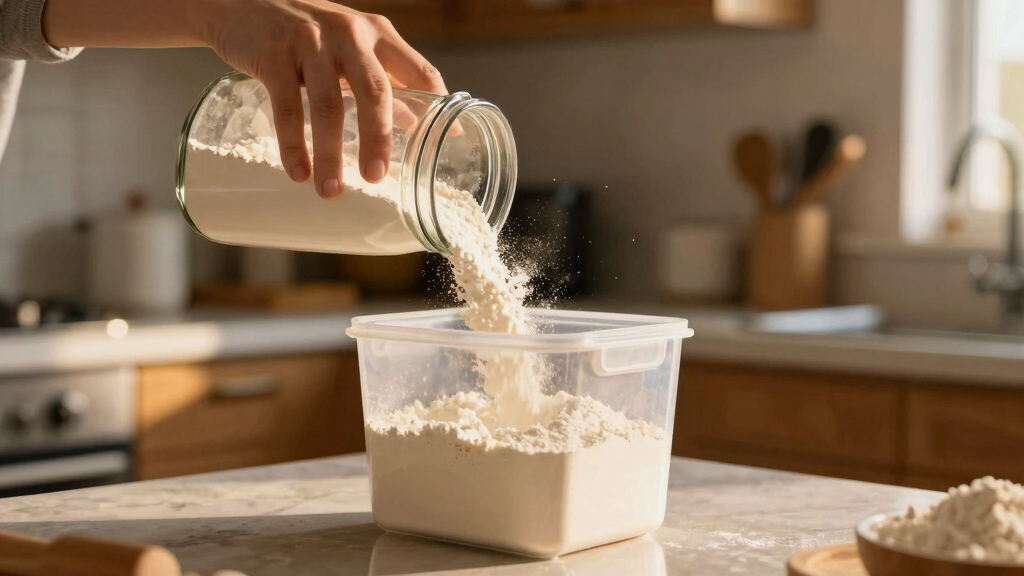
Selecting the right containers is fundamental because they serve as the first line of defense against spoilage and pests. Airtight jars or plastic bins with secure lids prevent moisture from seeping in, which could cause clumping or mold, and block pests from entering. Glass jars are particularly advantageous—they are non-porous, easy to clean, and transparent, allowing you to monitor the flour’s condition at a glance. Vacuum-sealing is an advanced technique that removes oxygen, which is crucial because pests and mold require oxygen to thrive; this method significantly prolongs shelf life, especially when combined with freezing. However, vacuum-sealed flour in the freezer can be stored for up to two years, but it requires special equipment and careful handling. The tradeoff with these options involves cost, convenience, and storage space, but investing in high-quality containers ultimately preserves the flour’s quality and safety for longer periods.
As an affiliate, we earn on qualifying purchases.
Where and How to Store Flour for Maximum Freshness
The environment in which you store flour directly impacts its longevity. The optimal location is a cool, dark, and dry area—such as a basement shelf or an interior pantry away from heat sources like ovens or direct sunlight. Fluctuations in temperature and humidity can accelerate spoilage by increasing the rate of oil oxidation and microbial growth. For example, storing flour near a stove or in a sunlit cabinet exposes it to heat and light, which can cause it to go rancid faster and lose nutritional quality. When buying in bulk or aiming for long-term storage, refrigeration or freezing becomes essential. Seal the flour tightly in an airtight container, label it with the date, and store it in the coldest part of your fridge or freezer. Bringing it to room temperature before baking ensures optimal texture and rising. The tradeoff involves space and convenience—refrigeration may require more organization, but it preserves freshness significantly longer.
As an affiliate, we earn on qualifying purchases.
How to Store Different Types of Flours (With a Comparison Table)
| Type of Flour | Room Temp Shelf Life | Refrigeration Shelf Life | Freezing Shelf Life |
|---|---|---|---|
| All-purpose | 6-8 months | Up to 1 year | 1-2 years |
| Whole wheat | 3-6 months | Up to 1 year | 1 year or more |
| Almond or nut flour | 1-3 months | Up to 6 months | Up to 1 year |
Oils in nut and whole grain flours are more susceptible to oxidation, which speeds spoilage. Refrigeration or freezing slows this process, preserving flavor, nutritional value, and safety. For example, storing almond flour in the freezer prevents it from becoming rancid quickly, maintaining its delicate texture and taste for longer. The tradeoff involves the need to thaw or bring flour to room temperature before baking, but the benefit is significantly extended usability and freshness.
As an affiliate, we earn on qualifying purchases.
How to Tell When Flour Has Gone Bad (and What to Do About It)
Fresh flour typically has a neutral or slightly nutty aroma. When it develops a sour, rancid smell, it indicates oxidation of the oils within, signaling spoilage. Discoloration, clumping, or the presence of mold are also clear signs that the flour is no longer safe to use. Tiny bugs or web-like threads point to pest infestation, which can compromise both safety and flavor. It’s essential to perform visual and smell checks before baking. If the flour smells off or shows signs of pests, discard it immediately to prevent contamination. For added certainty, do a small test bake: if the baked product tastes or smells off, the flour has spoiled and should be replaced. Recognizing these signs early prevents waste and potential health risks, especially with nutrient-rich whole grain or nut flours that spoil faster.
Natural Ways to Keep Pests Out of Your Flour
Pests are attracted to warm, stored flour, especially in humid environments. Using natural deterrents like bay leaves inside containers creates a strong scent barrier that pests dislike, effectively preventing infestations without chemicals. Dried herbs such as rosemary, thyme, or mint can also be placed in or near storage containers to repel bugs. Diatomaceous earth, a food-grade powder, works by damaging pests’ exoskeletons, leading to dehydration and death, providing a chemical-free pest control method. These natural methods are effective but require regular replacement or reapplication to maintain their protective barrier. For example, a baker kept her pantry pest-free by placing bay leaves in her flour jars and replacing them every few months. Consistent inspection and natural deterrents work together to keep your flour safe without introducing harmful substances.
Storage Tips That Will Save You Time and Waste
Implementing simple storage habits can significantly reduce waste and save time. Label your containers with purchase or storage dates, and adopt the FIFO (First-In, First-Out) method to ensure older flour is used before newer stock. Regularly inspect stored flour for signs of spoilage or pests, catching issues early. Keep your storage area tidy, dry, and free of clutter to minimize contamination risks. Using a moisture meter can help detect humidity levels that could lead to spoilage, especially for long-term storage. For busy bakers, pre-measured, sealed portions of flour in small containers streamline baking workflows, reducing waste caused by over-measuring or spoilage. These habits ensure you always have high-quality flour ready for use, saving money and preventing unnecessary waste.
Frequently Asked Questions
How long does flour stay good in the pantry?
All-purpose flour lasts about 6-8 months at room temperature. Whole grain or nut flours tend to spoil faster—around 3-6 months—due to higher oil content. For longer storage, refrigeration or freezing is recommended.
Can I store flour in the fridge or freezer?
Yes, refrigeration extends shelf life—especially for whole grain and nut flours—up to a year. Freezing offers even longer storage, up to two years, if properly sealed. Just bring it to room temperature before baking for best results.
How do I know if flour has gone bad?
Look for a sour or rancid smell, discoloration, clumping, or signs of bugs. If it smells off or shows any pests, discard it. Always do a quick smell and visual check before using stored flour.
What’s the best container for storing flour?
Use airtight, moisture-proof containers like glass jars, plastic bins, or vacuum-sealed bags. Proper containers keep out air, moisture, and pests, preserving flour’s freshness.
Are there natural ways to prevent pests in stored flour?
Yes, placing bay leaves or dried herbs like rosemary in your flour containers can naturally deter pests. Diatomaceous earth is another safe option to keep bugs at bay without chemicals.