
TL;DR
Adding fiber to baked goods is easier than you think. Use small amounts of mild fibers like flaxseed or oat bran, adjust moisture, and balance flavors to bake healthier treats that everyone will enjoy without noticing the change.
Imagine biting into your favorite muffin or bread, and secretly knowing it’s packed with fiber—without any gritty texture or strange taste. That’s the magic of smart additions in baking. Adding fiber without anyone noticing is about subtlety, balance, and knowing which ingredients blend seamlessly. If you’ve ever felt your baked goods are too dense or dry after trying to boost fiber, you’re not alone. But with a few tricks, you can make your treats healthier and just as delicious—no one will be the wiser.
This guide walks you through practical tips, ingredient choices, and creative ideas to slip extra fiber into your baking arsenal. Whether you want to support digestion, control blood sugar, or just eat more plants, these techniques are your new secret weapon.
Start small—1-2 tablespoons of ground flaxseed or oat bran per recipe usually works well without affecting taste.
Balance fiber with moisture—add extra liquids like yogurt or applesauce to keep baked goods tender.
Choose mild-tasting fibers like flaxseed, oat bran, or wheat germ to avoid changing flavor profiles.
Adjust baking times and temperatures slightly to prevent overly dense or dry results when adding fiber.
Be cautious of exceeding 3 tablespoons of added fiber in a recipe to maintain good texture and avoid discomfort.
How to Add Fiber to Your Baking Without Anyone Noticing
The quiet upgrade: start with mild fibers, protect moisture, and make tiny recipe adjustments so muffins, breads, pancakes, and cookies stay tender, familiar, and delicious.
Subtlety beats volume.
Most recipes tolerate 1-2 tablespoons of ground flaxseed or oat bran with minimal impact on flavor or texture when moisture is adjusted.
The Invisible Fiber Toolkit
Choose ingredients that disappear into the crumb. Soluble fibers help retain moisture and tenderness; insoluble fibers add bulk but can dry or densify a bake when overused.
Ground flaxseed
Mild, faintly nutty, and easy to hide in muffins, quick breads, pancakes, and chocolate batters.
Oat bran
Very mild with a slight sweetness. Replace a small portion of flour and add a splash of moisture.
Chia seeds
Soak or grind first. Their gel helps binding and moisture, especially in bars, breads, and egg-light bakes.

Badia Organic Ground Flax Seed, 16 oz – Fiber & Omega-3 Non-GMO Superfood
Certified Organic & Non-GMO: Enjoy premium quality ground flax seed that is USDA Certified Organic and no additives
As an affiliate, we earn on qualifying purchases.
As an affiliate, we earn on qualifying purchases.
The No-One-Notices Method
Think of fiber as a small engineering change: absorbency rises, structure shifts, and browning can speed up. These steps keep the original eating experience intact.
Start small
Use 1 tablespoon first, then scale toward 2 tablespoons if the texture stays tender.
Blend dry
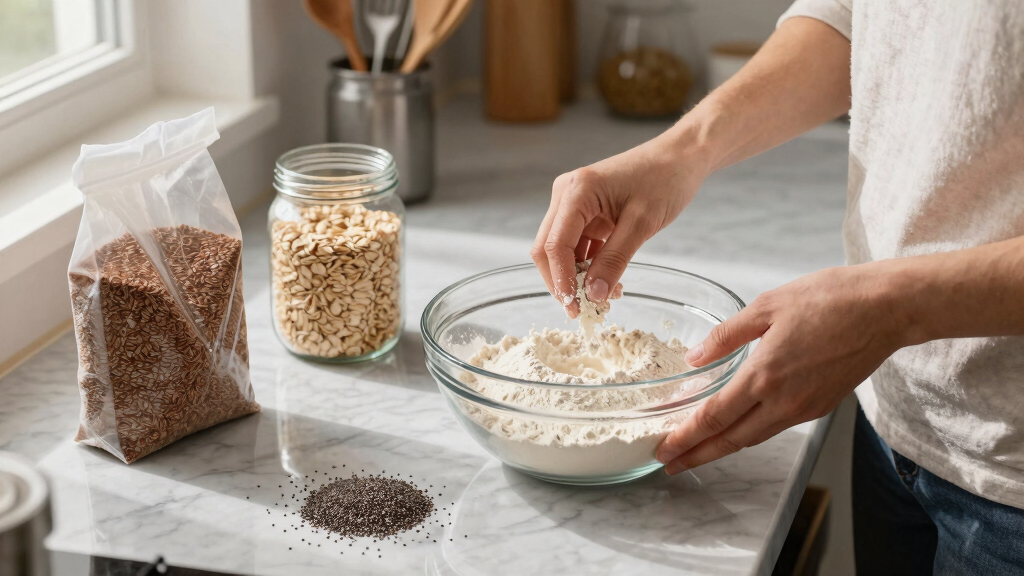
Whisk fiber into flour, cocoa, or spices so it disperses evenly without gritty pockets.
Add moisture
Use yogurt, applesauce, milk, or water to offset absorbency and protect softness.
Support rise
Add a tiny pinch more baking powder or soda when the batter looks heavy.
Watch heat
Lower the oven by 10-15°F if edges brown before the center sets.

NOW Foods, Organic Oat Bran, Source of Fiber and Protein, USA Grown, Non-GMO Project Verified, 14-Ounce (Packaging May Vary)
GOOD SOURCE OF FIBER AND PROTEIN: Organic Oat Bran is a great addition to most baked goods and…
As an affiliate, we earn on qualifying purchases.
As an affiliate, we earn on qualifying purchases.
Common Fiber Sources Compared
The best choice depends on what you are baking. Mild flavor, fine texture, and moisture behavior matter more than the biggest possible fiber number.
| Fiber type | Best for | Flavor impact | Invisible score | Usage tip |
|---|---|---|---|---|
| Ground flaxseed | Breads, muffins, pancakes | Nutty, mild | ✓ High | Use 1-2 tbsp and add extra liquid. |
| Oat bran | Cakes, cookies, muffins | Very mild, slightly sweet | ✓ High | Replace 10-15% of flour. |
| Chia seeds | Bread, energy bars | Very mild, nutty | ~ Medium | Soak or grind before adding. |
| Wheat germ | Quick breads, muffins | Noticeably nutty | ~ Medium | Add late and avoid overmixing. |
| Vegetable puree | Banana bread, muffins | Depends on vegetable | ✓ High | Blend smooth and replace some fat or sugar. |
| Too much bran | Dense rustic loaves | Earthy, coarse | ✗ Low | Use carefully; it can dry the crumb fast. |

It's Just! – Psyllium Husk Powder, GLP-1 Friendly, Easy Mixing Dietary Fiber, Cleanse Your Digestive System, Finely Ground Powder, Ideal for Keto Baking, Non-GMO (Unflavored, 10oz (Pack of 1))
Psyllium Husk Powder // Naturally sourced, hand selected husk, delicately milled to perfection. Inherently about 70% soluble fiber…
As an affiliate, we earn on qualifying purchases.
As an affiliate, we earn on qualifying purchases.
Moisture Is the Secret
Fiber pulls water into the batter. The goal is not simply adding fiber; it is adding fiber while keeping the crumb plush, the rise light, and the flavor familiar.
The texture risk zone
At 1-2 tablespoons, fiber usually blends in. Past 3 tablespoons, dryness, density, crumbling, or digestive discomfort become more likely.
Quick formula
For every meaningful fiber boost: reduce flour slightly, add 1-2 tablespoons extra liquid per cup of dry ingredients, and check doneness a few minutes early.

Healthy Baking Substitutions: Smarter Ingredient Swaps for Better-For-You Baked Goods (Smart Substitutions Series)
As an affiliate, we earn on qualifying purchases.
As an affiliate, we earn on qualifying purchases.
Recipe Adjustments That Work
Use these small moves when a batter seems thick, a loaf turns dense, or edges brown before the center is done.
When the bake feels dry
- Add yogurt, applesauce, milk, or water one tablespoon at a time.
- Use soaked chia instead of dry chia for better moisture retention.
- Pair fiber with naturally moist recipes like banana bread or zucchini muffins.
When the bake feels heavy
- Keep added fiber near 1-2 tablespoons until the recipe is proven.
- Add a small pinch of extra baking powder or baking soda.
- Avoid replacing all-purpose flour completely; partial swaps are more reliable.
What types of fiber are best for baking and why
When adding fiber to baking, not all fibers are created equal. Soluble fibers dissolve in water, forming gels that improve moisture and texture—think oats, flaxseed, and psyllium husk. Insoluble fibers add bulk and help digestion—like wheat bran, seeds, and nuts.
Choosing the right type depends on your goal. Soluble fibers are excellent for moist, tender baked goods, as they help retain moisture and create a desirable crumb. Insoluble fibers, on the other hand, add volume and help regulate digestion, but can sometimes make baked goods denser or drier if used excessively. For sneaking fiber into sweets, mild-tasting options like flaxseed meal and oat bran are your best friends because they blend well without overpowering flavors. The key is understanding that each fiber type influences the final product differently, so balancing them according to your recipe’s needs is essential for maintaining texture and flavor.
Easy ways to sneak fiber into your recipes without changing the flavor
Start small. Incorporating 1-2 tablespoons of ground flaxseed or oat bran per batch is typically enough to boost fiber without noticeably affecting taste or texture. Mixing these into the dry ingredients—like flour or cocoa powder—allows them to integrate seamlessly, maintaining the original flavor profile. Using ingredients such as chia seeds and wheat germ, which have mild, nutty flavors, can enhance the overall taste subtly without overpowering the baked good.
Beyond flavor, consider the moisture balance. Fiber ingredients like flaxseed and oat bran can absorb water, potentially making baked goods drier or denser if not countered. To prevent this, slightly increasing the liquid content—adding an extra tablespoon of yogurt, applesauce, or milk—can compensate for the extra absorbency, ensuring a tender crumb. This approach maintains the moist, soft texture that people expect from their baked favorites while adding nutritional value. The tradeoff here is that more moisture can slightly alter baking times or browning, so keep an eye on your treats as they bake.
Here’s a quick list of sneaky fiber additions:
- Ground flaxseed or flaxseed meal
- Oat bran
- Chia seeds (soaked or ground)
- Wheat germ
- Pureed vegetables (like zucchini or carrots)
Each of these ingredients brings its own subtle flavor and moisture properties, so experimenting with small batches helps you find the perfect balance for your recipes.
How to adjust your recipes when adding more fiber
Adding fiber can influence the moisture content, structure, and rise of your baked goods. Understanding these effects allows you to make precise adjustments that preserve the desirable qualities of your treats. For instance, since fiber ingredients like oat bran and flaxseed absorb water, they can make baked goods denser or drier if used excessively. To counteract this, reduce the amount of flour slightly—about 10-15%—when adding a significant fiber boost. Additionally, increasing the liquids—by an extra tablespoon or two of water, milk, or yogurt per cup of dry ingredients—ensures the batter remains moist and tender.
Leavening adjustments are also important. Fiber-rich ingredients can interfere with the rise, so adding a pinch more baking soda or baking powder can help maintain lightness. Keep in mind that fiber can cause baked goods to brown faster; lowering the oven temperature slightly or extending baking time by a few minutes can prevent overbrowning or drying out. For example, if you’re making banana muffins with added oat bran, adding a splash of milk and lowering the oven temperature by 10-15°F can help maintain a fluffy, moist crumb.
These adjustments involve some trial and error, but understanding the interactions between fiber and moisture helps you create consistently good results, turning what could be a dry, dense baked good into a nourishing, fluffy treat.
Comparison table: common fiber sources for baking
| Fiber Type | Best For | Flavor Impact | Usage Tips |
|---|---|---|---|
| Flaxseed (ground) | Breads, muffins, pancakes | Nutty, mild | Use 1-2 tbsp per recipe; add extra liquids to compensate for absorbency |
| Oat bran | Cakes, cookies, muffins | Very mild, slightly sweet | Replace 10-15% of flour; increase moisture slightly |
| Chia seeds | Bread, energy bars | Very mild, nutty | Soak before adding; use 1-2 tbsp; they form a gel that can help with binding and moisture |
| Wheat germ | Quick breads, muffins | Nutty | Add at the end of mixing; do not overmix to preserve texture |
| Vegetable purees | Banana bread, muffins | Depends on vegetable; naturally sweet | Replace part of fat or sugar for best results; blend smoothly into batter |
Choosing the right fiber source involves understanding how each affects taste, texture, and nutritional value. For example, flaxseed provides omega-3s and a nutty flavor but can make baked goods denser if overused. Oat bran adds fiber with minimal flavor change but absorbs moisture, requiring adjustments in liquids. Chia seeds can improve moisture retention and act as an egg substitute when soaked, offering both functional and nutritional benefits. By considering these tradeoffs, you can select the best fiber source tailored to your recipe’s needs, ensuring a delicious, healthful outcome.
What to watch out for when sneaking fiber into baked goods
While adding fiber offers many health benefits, overdoing it can lead to undesirable results like dryness, density, or even digestive discomfort such as bloating or gas. Research indicates that exceeding about 3 tablespoons of added fiber per recipe can significantly alter the texture—making baked goods crumbly, dry, or overly dense. These changes occur because fiber absorbs water and can interfere with gluten development, which is crucial for structure and chewiness.
Therefore, balance is essential. Start with small amounts—perhaps 1 tablespoon—and gradually increase while monitoring the outcome. This cautious approach helps prevent negative effects and allows you to taste-test and adjust accordingly. Increasing liquids proportionally is vital; otherwise, baked goods may become dry or tough. Additionally, be aware of allergenic or dietary considerations—wheat germ and wheat bran contain gluten, which is problematic for those with gluten sensitivities or celiac disease. Proper storage is also important: wrapping baked goods tightly and storing at room temperature for a few days or freezing can preserve freshness and prevent spoilage, especially when fiber content increases moisture retention or alters shelf life.
Why your baked goods will thank you for adding fiber
Baking with fiber isn’t just about health; it enhances the overall eating experience by improving moisture retention and texture. Fiber acts like a natural humectant, helping baked goods stay moist longer, which results in a chewier bread or a tender muffin. It also adds a subtle nutty flavor and a satisfying density that can make treats more filling and satisfying, encouraging better portion control and sustained energy release.
Beyond texture, fiber contributes to improved digestion and blood sugar regulation. Incorporating fiber-rich ingredients means your baked goods aren’t just indulgent—they’re nourishing. For example, a slice of banana bread with added flaxseed not only tastes richer but also supports gut health and stabilizes blood sugar levels, making your treats more balanced. The key is to integrate fiber thoughtfully—using mild-tasting options and balancing moisture—so that the health benefits complement the sensory qualities. This way, your baked goods become more than just desserts—they become nourishing, satisfying, and beneficial to overall wellness.
And the best part? You can do this without turning your baking into a science experiment. Small tweaks, quality ingredients, and taste testing are all it takes to elevate your baking game while supporting your health goals.
Frequently Asked Questions
How much fiber can I add without ruining my baked goods?
Generally, 1-3 tablespoons of ground flaxseed or oat bran per recipe is safe. Start small and adjust based on texture and flavor preferences to keep your baked goods tender and tasty.Will adding fiber change the taste of my baked treats?
Most mild fibers like flaxseed or oat bran won’t alter flavor much, but stronger fibers or large amounts may add a nutty or grainy taste. Mask these with sweeteners or spices if needed.Can I replace all the flour with fiber-rich ingredients?
Not usually. Replacing more than 50% of the flour can impact structure and rise. Partial substitutions—up to half—work best, combined with recipe adjustments.Are fiber supplements safe for baking?
Yes, but choose high-quality, food-grade fiber powders and start with small amounts. Always follow package directions and watch for texture changes.What’s the best way to prevent my baked goods from becoming dry or dense?
Increase moisture by adding yogurt, applesauce, or extra liquids. Also, adjust baking times and temperatures to keep your treats soft and fluffy.Conclusion
Incorporating fiber into your baking is a simple, sneaky way to boost your health without sacrificing flavor or texture. Small ingredient swaps and minor recipe tweaks make it easy to turn your favorite treats into more nourishing options.
Next time you bake, think about adding a tablespoon of flaxseed or oat bran—your digestion will thank you, and no one will notice a thing. Good baking is about balance, and with these tips, you’re well on your way to healthier, tastier treats that everyone will love.