
TL;DR

Get baking supplies delivered free with Prime
- Fast, free delivery on millions of items
- Prime Video, Amazon Music and more included
- Member-only deals all year
Vegan baking can match traditional results with the right substitutes. Use flaxseed for eggs, coconut oil for butter, and plant milks for moisture. Recent innovations make vegan baking easier and more satisfying.
Switching to vegan baking might seem intimidating at first. But once you understand the role of each traditional ingredient—eggs, butter, milk—you can replace them with plant-based options that work just as well. No guesswork, no sacrifice on taste or texture.
Imagine biting into a fluffy vegan muffin or a rich, tender cake—without dairy or eggs. That’s entirely possible with the right ingredients, some experimentation, and a little know-how. This guide walks you through the most reliable swaps, recent innovations, and practical tips to make your vegan baking both delicious and foolproof.
Using flaxseed or chia seed gel as an egg replacer offers reliable structure and leavening, mimicking eggs well in most baked goods.
Coconut oil and vegan margarine are excellent butter substitutes, providing similar fat content and texture, with flavor adjustments as needed.
Plant-based milks like oat, almond, or cashew milk can replace dairy in almost any recipe, with selection depending on flavor and richness goals.
Recent innovations like improved commercial egg replacers and realistic vegan butters make vegan baking more consistent and satisfying.
Experimentation remains key—adjust recipes by adding baking powder, reducing sugar, or tweaking liquids to perfect your vegan treats.
Replacing Eggs, Butter, and Milk That Actually Works
Vegan baking can match traditional results when each swap replaces the job of the original ingredient. Think function first: eggs bind and lift, butter tenderizes, and milk hydrates while helping leavening agents activate.
Swap by role, not by habit.
Flax gel, aquafaba, vegan butter, coconut oil, and creamy plant milks each solve a different baking problem. The reliable result comes from matching the substitute to the texture you want.
Start With the Function
Reliable vegan baking starts by asking what the recipe needs most: structure, tenderness, moisture, rise, richness, or neutral flavor.
Bind, lift, and hydrate
Use flaxseed or chia seed gel for muffins, pancakes, quick breads, and cookies. Choose aquafaba or commercial egg replacers when airiness or precise structure matters.
Tender crumb, rich bite
Coconut oil and vegan margarine mimic fat and melt behavior. Nut butters add density and flavor, while applesauce or avocado increase moisture with less fat.
Moisture and activation
Oat, almond, soy, cashew, coconut, and rice milks all work. Unsweetened varieties give the most control over sweetness, browning, and final flavor.
Fluff Without Eggs
Egg substitutes perform best when they are chosen for the baked good, not treated as one universal answer.
The dependable flax or chia gel
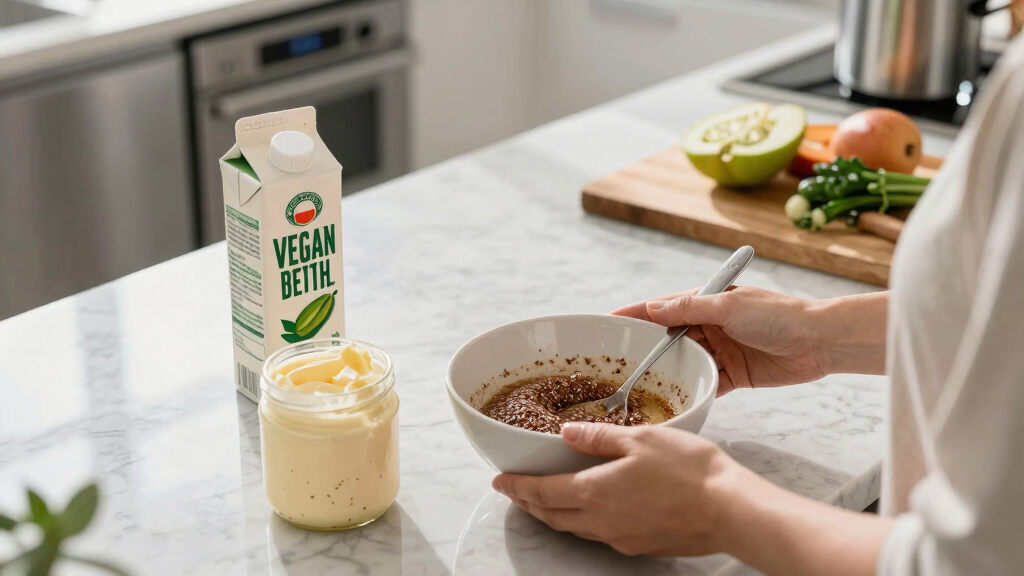
Mix ground flaxseed or chia seeds with water, then wait until the mixture thickens into a gel. It binds batter, holds moisture, and helps create structure.
Choose the Right Swap
Use this table as a quick decision tool for texture, flavor, and recipe fit.
| Traditional role | Best vegan swap | Binding | Fluff | Flavor impact | Best for |
|---|---|---|---|---|---|
| Eggs | Flax or chia gel | ✓ Strong | ~ Moderate | ~ Slight nutty note | Muffins, pancakes, quick breads |
| Egg whites | Aquafaba | ~ Light | ✓ Excellent | ✓ Neutral when baked | Meringues, airy cakes, mousses |
| Butter | Vegan butter or margarine | ✓ Reliable | ✓ Reliable | ✓ Close to dairy butter | Cookies, cakes, pastry |
| Butter | Refined coconut oil | ~ Depends on recipe | ~ Solid when cool | ✓ More neutral refined | Cookies, crusts, dense cakes |
| Milk | Oat, soy, cashew, almond | ~ Hydrates batter | ✓ Activates leavening | ✓ Easy to control | Almost all batters and doughs |
| All-purpose lift | Egg replacer plus baking powder | ✓ Consistent | ✓ Strong | ✓ Predictable | Cakes, cupcakes, structured bakes |
From Recipe to Vegan Result
Small adjustments protect texture. Add lift when needed, control sweetness, and choose the plant milk thickness that matches the original batter.
Identify
Find what eggs, butter, and milk are doing in this recipe.
Match
Select the substitute that performs the same main job.
Adjust
Add baking powder, thin a rich milk, or reduce sugar.
Watch
Monitor baking time, browning, and center set closely.
Repeat
Record the best ratios for your oven and ingredients.
Control Richness and Crumb
The wrong swap can still taste good, but the right swap gives you the crumb you meant to bake.
Oat milk
Ideal for cakes, cookies, and muffins where smooth texture matters. It provides moisture without dominating the flavor profile.
Almond or rice milk
Useful for pancakes, sponge cakes, and lighter batters. Choose unsweetened versions to keep the recipe balanced.
Cashew or coconut milk
Best for cheesecakes, creamy fillings, brownies, and tender cakes that benefit from extra body and fat.
More Reliable Than Ever
Newer products and techniques have made vegan baking more predictable, especially for recipes that once depended heavily on eggs or dairy fat.
Reliability spectrum
Commercial egg replacers, realistic vegan butters, aquafaba techniques, and fortified plant milks all reduce guesswork for home bakers.
Improved egg replacers
Plant protein blends and stabilizers create more consistent structure for cakes, quiches, and denser bakes.
Realistic vegan butters
Modern formulas melt and bake more like dairy butter, improving cookies, frostings, crusts, and cakes.
Expanded aquafaba use
Once mostly used for meringues, aquafaba now supports airy cakes, cookies, mousses, and whipped toppings.
Fortified plant milks
Added protein, calcium, and vitamins improve nutrition while supporting better baking performance.
What Makes the Bake Work
Follow the practical chain from ingredient role to finished texture.
For fluffy cakes
Use aquafaba or a commercial egg replacer, then support the rise with a small boost of baking powder when the recipe needs it.
For tender cookies
Choose vegan butter for familiar spread and flavor. Coconut oil works well when you want a firmer bite or crisp edge.
For balanced flavor
Use unsweetened plant milk, refined coconut oil, and neutral egg replacers when you do not want the substitute to announce itself.
How to Replace Eggs Without Losing Fluff or Structure
Eggs are the glue in baking—providing moisture, binding, and leavening. The best vegan alternatives mimic these roles. Flaxseed and chia seed gel are among the most trusted options, turning into a gel that holds everything together.
To make flax or chia gel: Mix 1 tablespoon of ground flaxseed or chia seeds with 3 tablespoons of water. Let it sit for 5 minutes until it creates a thick, mucilaginous gel. This gel acts as a binder and leavening agent, helping to trap air and moisture, which are essential for fluffiness and structure. For example, in muffins or pancakes, this gel provides the necessary cohesion without eggs.
In recipes requiring extra rise, adding a teaspoon of baking powder or baking soda can compensate for the slight difference in leavening power. Commercial egg replacers like JUST Egg are designed to replicate eggs’ function precisely, offering consistent results and flavor. Aquafaba, the viscous liquid from cooked chickpeas, can be whipped into a foam similar to egg whites, ideal for meringues or airy cakes where lightness is crucial. Understanding these options allows you to choose the best substitute based on the desired texture and flavor profile, ensuring your baked goods turn out perfect every time.
Deeply understanding why these substitutes work is essential. Flax and chia gels not only mimic the binding properties of eggs but also add omega-3 fatty acids and fiber, which can boost the nutritional profile of your baked goods. However, they can impart a slight nutty flavor and may make baked goods denser if not used carefully. Aquafaba, on the other hand, provides a light, airy structure similar to egg whites, but it requires whipping and can be more sensitive to overwhipping or underwhipping. The choice of substitute affects not just texture but also flavor, appearance, and nutritional content—so selecting the right one depends on your recipe’s specific needs and your dietary priorities.
Products Worth Considering

De'Longhi Stilosa Compact Manual Espresso Machine with Milk Frother

KitchenAid Artisan 5-Quart Tilt-Head Stand Mixer, KSM150PS, Almond Cream

Le Creuset Signature Enameled Cast Iron Round Dutch Oven, 5.5 qt, Deep Teal
As an affiliate, we earn on qualifying purchases.
Replacing Butter with Plant-Based Fats That Keep Flavor and Texture
Butter adds rich flavor and tender crumb to baked goods. Luckily, vegan options can do the same. Coconut oil is popular because it melts just like butter and adds a subtle sweetness, which can enhance baked goods like cookies and cakes. Vegan margarine is formulated to mimic dairy butter’s baking properties, providing similar fat content and melting behavior.
When choosing substitutes, it’s important to consider the impact on flavor and texture. For example, coconut oil imparts a slight coconut aroma, which may or may not suit your recipe. Nut butters, such as almond or cashew, add creaminess and a nutty flavor, making them excellent for dense cookies or brownies. Applesauce or mashed avocado are perfect for moist, dense baked goods like muffins or brownies, reducing fat content while maintaining moisture. These options can also influence the final texture—applesauce makes baked goods softer, while avocado adds richness.
Using refined coconut oil or specialty vegan butters designed for baking can help you achieve a neutral flavor and consistent melting point, ensuring your baked goods turn out tender and flavorful without unwanted coconut aroma or flavor. Understanding how each fat interacts with other ingredients helps you tailor your recipes for specific textures, whether you want a flaky crust, tender crumb, or moist center. This depth of knowledge allows for better flavor balancing and texture control, which are crucial for professional-quality vegan baked goods.
Choosing the Right Plant-Based Milk for Every Baking Need
Plant-based milks like almond, soy, oat, and cashew each bring unique qualities that influence the final baked product. For most baked goods, the goal is to provide moisture, activate leavening agents, and add flavor. Oat milk is especially creamy and neutral, making it ideal for cakes and cookies where a smooth texture is desired. Almond milk is lighter and slightly nutty, perfect for pancakes and muffins where a delicate crumb is preferred.
If you seek a richer, more custardy texture, coconut milk or cashew milk are excellent choices—they add creaminess and moisture, enhancing desserts like cheesecakes or creamy fillings. Rice milk, being thinner and milder, is suitable for light, airy treats like sponge cakes or light muffins. Fortified versions with added calcium and protein can improve the nutritional profile, supporting a balanced diet without sacrificing baking performance.
Choosing unsweetened varieties is crucial to control sweetness and flavor. Thicker milks like cashew or coconut can be thinned with a splash of water if needed to match the consistency of other liquids in your recipe. Understanding these nuances helps you select the best milk for each baked good, ensuring optimal texture and flavor. Additionally, considering how each milk interacts with other ingredients can influence the overall moisture and richness, directly affecting crumb and mouthfeel. Recognizing these details allows for more precise adjustments, resulting in consistently successful vegan baked goods.
Recent Innovations Making Vegan Baking Easier & More Reliable
Vegan baking has surged forward with new products and techniques that address common challenges like achieving the right texture and flavor. Commercial egg replacers such as JUST Egg now mimic eggs more closely in both texture and flavor, making the transition easier. These products often contain a blend of plant proteins and stabilizers that create a more egg-like consistency, which is crucial for recipes like quiches or dense cakes.
Aquafaba, once a niche ingredient, now has a broader presence and is used in a variety of baked goods—from fluffy cakes that require aeration to crispy meringues. Its ability to whip into a stiff foam makes it a versatile, cost-effective substitute for egg whites.
Plant-based butters are more realistic than ever, with many brands offering products that melt and bake similarly to traditional butter, providing consistency and flavor. Fortified plant milks with added protein, vitamins, and minerals enhance the nutritional profile of vegan baked goods, making them more comparable to their dairy counterparts.
Moreover, the expansion of gluten-free and allergen-friendly options ensures vegan baking is accessible to more people with dietary restrictions. Combined with the trend toward organic, minimally processed ingredients, these innovations mean vegan baking is now more reliable, convenient, and satisfying than ever before.
Quick Comparison Table: Best Vegan Substitutes for Baking
| Ingredient Role | Best Vegan Substitute | Notes |
|---|---|---|
| Eggs (binding/leavening) | Flaxseed/Chia Gel | Provides structure and lift; works well in muffins, pancakes, and quick breads. Slightly denser than eggs but effective for most recipes. |
| Butter (fat/tenderness) | Coconut Oil / Vegan Margarine | Melts similarly to dairy butter; coconut oil adds a subtle flavor, while margarine offers a neutral taste. Consider the flavor impact when choosing. |
| Milk (moisture/flavor) | Oat Milk / Almond Milk / Cashew Milk | Pick based on desired richness and flavor profile. Thinner milks like almond are lighter, while cashew adds creaminess. |
Frequently Asked Questions
Can I replace eggs in baking with just applesauce or bananas?
Yes, applesauce and mashed bananas work well as egg substitutes for moisture and binding. However, they can add flavor and slightly alter the texture—bananas make baked goods denser and sweeter, while applesauce keeps things light and moist. These substitutions are particularly useful when you want to boost moisture and natural sweetness without adding fats or eggs. For example, banana bread benefits from mashed bananas, which enhance flavor and provide natural sweetness, but in delicate sponge cakes, applesauce offers moisture without overpowering the subtle crumb. Recognizing these tradeoffs helps you choose the best substitute for your specific recipe and desired outcome, balancing flavor, texture, and dietary needs.
What is the best egg substitute for a fluffy cake?
Aquafaba or commercial egg replacers are optimal for creating a fluffy, light texture in cakes. Whipped aquafaba traps air effectively, producing a foam that mimics egg whites, which is crucial for airy cakes like chiffon or sponge varieties. Commercial egg replacers often contain proteins and stabilizers that provide consistent leavening and structure, making them reliable for soft, fluffy textures. The choice depends on your recipe’s needs: aquafaba offers a natural, whole-food option that whips into a stiff foam, while commercial replacers provide convenience and predictability. Understanding the chemistry—how these substitutes trap air and support rising—helps you select the best option to achieve that perfect airy crumb.
How do I substitute butter in cookies or cakes?
Coconut oil or vegan margarine are excellent for cookies and cakes, delivering the necessary fat for tenderness and flavor. For instance, coconut oil can produce cookies with a tender, melt-in-your-mouth texture and a hint of coconut aroma, which can be desirable or mitigated with refined versions. Vegan margarine, especially when formulated for baking, provides a similar melting point and fat content, making it suitable as a one-to-one substitute. For dense, moist baked goods like brownies, applesauce or mashed avocado can reduce fat while maintaining moisture, but they may lead to a different mouthfeel or flavor profile. Recognizing the effects of each substitute on texture and flavor allows for better recipe adjustments, ensuring your baked goods meet your expectations for taste and consistency.
Are plant-based milks suitable for all baking recipes?
Most plant-based milks are versatile, but their performance varies depending on the recipe. Richer options like coconut or cashew milk add creaminess and are excellent for custards, creamy fillings, or dense cakes. Lighter milks such as almond or rice milk are better suited for delicate sponge cakes or muffins where moisture is needed without overwhelming the texture. The fat content and flavor profile influence how the milk interacts with other ingredients—coconut milk imparts richness, while almond milk offers a lighter, nutty flavor. Adjusting for thickness is also key; thicker milks can be thinned with water to match the recipe’s requirements. Understanding these nuances ensures you select the right milk, leading to better mouthfeel, crumb, and flavor in your baked goods.
Do vegan substitutes affect baking times or temperatures?
Yes, they can. Substituting ingredients like applesauce or mashed avocado for fats or eggs alters moisture levels and batter consistency, which can influence baking time and temperature. For example, baked goods with higher moisture content from these substitutes may bake faster or require a lower temperature to prevent over-browning. Additionally, vegan fats like coconut oil melt differently, affecting heat conduction and browning. To ensure optimal results, monitor your baked goods closely, especially when trying a new substitution, and adjust baking times or temperatures accordingly. These modifications help achieve the desired texture and doneness, ensuring your vegan treats come out just as perfect as traditional recipes.
Conclusion
Replacing eggs, butter, and milk in baking isn’t about sacrificing flavor or texture anymore. With the right ingredients and a bit of practice, your vegan baked goods can be just as fluffy, rich, and moist as their traditional counterparts. The secret lies in understanding each ingredient’s role and choosing the best plant-based swap for the job.
Next time you bake, think of it as a science experiment—careful tweaks lead to delicious results. Your vegan baking journey is just beginning, and the options are more exciting than ever. Now, go create something delicious, guilt-free, and totally plant-powered!