
TL;DR

Get baking supplies delivered free with Prime
- Fast, free delivery on millions of items
- Prime Video, Amazon Music and more included
- Member-only deals all year
Whole grain flours include all parts of the grain, boosting nutrition but changing texture and flavor. With simple adjustments, you can bake delicious, wholesome treats. Blends and proper storage make all the difference.
Imagine biting into a slice of bread that’s rich, nutty, and satisfying — and knowing it’s packed with fiber and nutrients. That’s the promise of whole grain flours. But they can also seem intimidating, with their denser texture and stronger flavor.
This guide cuts through the hype, offering practical, real-world advice on how to bake with these wholesome ingredients. Whether you’re aiming to boost your family’s nutrition or just want healthier baked goods, understanding the ins and outs of whole grain flours can transform your baking game.
Start with blending whole grain and refined flours to balance flavor and texture.
Adjust liquids and resting times to compensate for higher water absorption and density.
Store whole grain flours in airtight containers and refrigerate for freshness.
Begin with simple recipes like pancakes or muffins for easy success.
Experiment with different grains to discover your favorites and enhance variety.
What Are Whole Grain Flours — And Why Do They Matter?
Whole grain flours are made by grinding entire grains — bran, germ, and endosperm — into a fine powder. Unlike white flour, which strips away the bran and germ, whole grain versions retain all the nutrients and fiber.
Think of it like a complete package: you get the full flavor, texture, and nutritional punch of the grain. This means more vitamins, minerals, and antioxidants in every bite. But it also means your baked goods will have a denser, nuttier profile that can change how they rise and feel.
Products Worth Considering

Cuisinart Stainless Steel Bread Maker, 12 Programs, 2 lb Capacity

KitchenAid Classic Series 4.5-Quart Tilt-Head Stand Mixer, Onyx Black

Vitamix Propel Series 750 Professional-Grade Blender, 4 Programs, Black
As an affiliate, we earn on qualifying purchases.
How Whole Grain Flours Change Your Baking — And How to Adapt
Whole grain flours absorb more water and can weigh down baked goods if you don’t adjust your recipes. For example, a standard loaf made with white flour might turn dense and heavy when you swap in 100% whole wheat.
To keep your baked goods light and fluffy, consider these tips:
- Use a blend of whole grain and refined flour — start with 50/50 and adjust as you go.
- Increase liquid content by 10-20% to compensate for higher absorption.
- Allow extra resting or proofing time to develop gluten and improve rise.
- Choose recipes with a sturdy structure, like bread or muffins, which handle the denser flour better.
Compare Popular Whole Grain Flours — What’s the Difference?
| Flour Type | Flavor & Texture | Best Uses | Notes |
|---|---|---|---|
| Whole Wheat | Nuttier, denser | Breads, muffins, pancakes | Most common; can be somewhat gritty if not milled finely |
| Spelt | Mild, slightly sweet | Breads, cookies, crackers | Has more gluten than wheat, easier to digest for some |
| Rye | Robust, earthy | Rye bread, crackers | Low gluten; best combined with wheat for rise |
| Oat | Sweet, mild | Muffins, cookies, pancakes | Can make baked goods more tender and chewy |
| Barley | Sweet, nutty | Breads, muffins, hearty loaves | Lower gluten; adds moisture and flavor |
The Best Way to Store Whole Grain Flours — Keep Them Fresh!
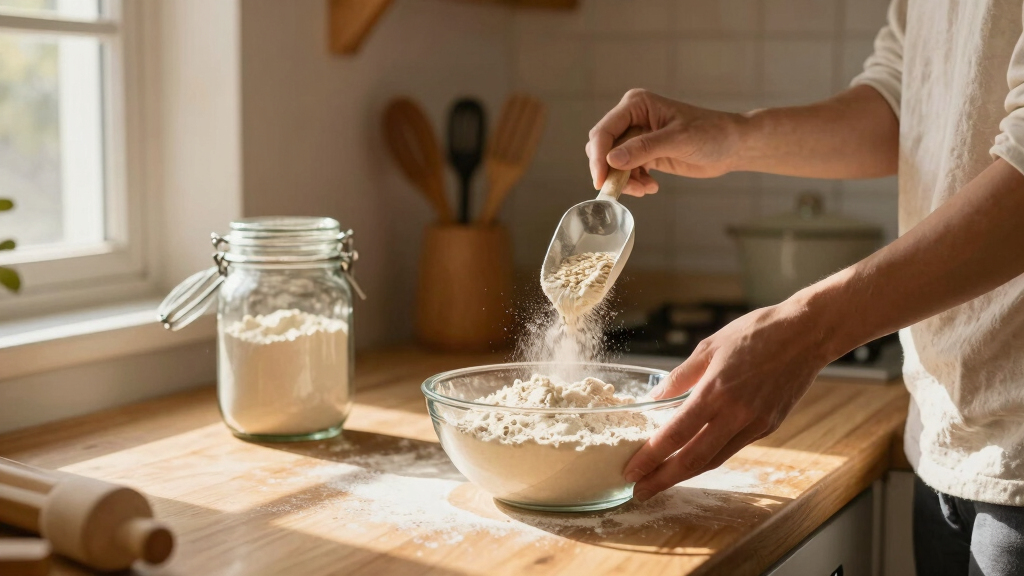
Whole grain flours are more prone to spoilage because of the oils in the germ. To keep them fresh, store in airtight containers in a cool, dark place. For longer shelf life, refrigeration or freezing works wonders.
For example, a jar of whole wheat flour can last 1-2 months at room temperature but up to 6 months in the fridge. Always smell before use; a rancid or sour smell signals it’s time to toss.
Start Simple: Easy Whole Grain Baking Recipes for Beginners
If you’re new to whole grain baking, start with recipes that are forgiving and taste great with whole flour. Think banana muffins, whole wheat pancakes, or a basic multigrain bread. These recipes let the flavor shine without complicated techniques.
For example, a simple whole wheat pancake recipe can be made with just whole wheat flour, baking powder, milk, eggs, and a touch of honey. The result? Nutty, hearty pancakes that pack a nutritional punch.
Why Blending Flours Makes Your Baking Better
Blending whole grain with refined flours often yields better texture and flavor while keeping nutrition high. For instance, a bread made with 75% whole wheat and 25% white flour can be lighter and milder-tasting.
This approach is popular among bakers because it balances health benefits with a more appealing crumb. You can experiment with ratios until you find what works best for your palate and recipe.
Real-World Tips to Incorporate Whole Grain Flours Into Your Baking
Incorporate whole grain flours gradually. Swap out 25% of your usual flour for whole wheat or spelt in recipes like muffins or cookies. Over time, increase the ratio as you get used to the taste and texture.
Use warm liquids to help hydrate the bran and germ, making the dough more manageable. And don’t forget to give your dough extra resting time — this helps gluten develop and improves the crumb.
Frequently Asked Questions
Can I use whole grain flour in my favorite cake recipe?
Yes, but expect a denser crumb and a richer flavor. Start by replacing 25-50% of the usual flour and gradually increase as you get comfortable with the texture.
How do I know when whole grain flour has gone bad?
Check for a sour or rancid smell and look for any discoloration or mold. Keep it in a cool, dark place or refrigerated to prolong freshness.
Are all whole grain flours gluten-free?
No, many — like whole wheat, spelt, and rye — contain gluten. For gluten-free baking, choose alternatives like oat, millet, or buckwheat flours.
How long does it take to get used to baking with whole grain flours?
It varies, but most bakers find it takes about 3-4 recipes to adjust to the different texture and flavor. Patience and experimentation are key.
Conclusion
Whole grain flours are a simple switch that can make your baked goods healthier and more satisfying. The key is to start small, experiment with blending, and adjust your techniques.
Imagine a loaf of bread with a golden crust and a rich, nutty aroma — now you’re baking with purpose. Your taste buds and body will thank you for it.