TL;DR

Get baking supplies delivered free with Prime
- Fast, free delivery on millions of items
- Prime Video, Amazon Music and more included
- Member-only deals all year
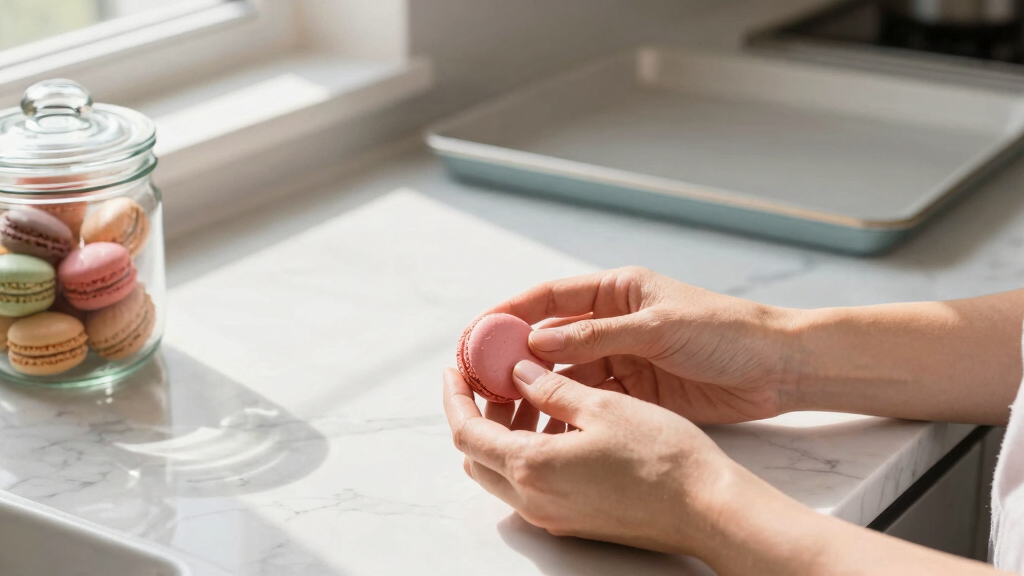
Macarons are known for being tough, but they aren’t impossible. Success depends on technique, environment, and practice—use these tips to improve your chances and enjoy the process.
Think making perfect macarons is a secret only a pastry chef can crack? Think again. The myth that macarons are impossibly hard to master keeps many home bakers from even trying. But here’s the truth: they’re tricky, yes, but not impossible. With a few practical tricks and a dash of patience, you can turn out beautiful, crisp shells with that irresistible chewy interior.
In this guide, you’ll learn why macarons are so challenging, what common pitfalls trip up bakers, and how to conquer them step-by-step. No hype, just real advice to help you win at this delicate art.
Macarons are challenging but manageable with control over environment and technique.
Fix common mistakes like batter overmixing and inadequate drying to improve success.
Using a stable oven temperature and quality ingredients makes a big difference.
Starting with forgiving methods like French meringue can build confidence.
Patience and practice are your best tools—don’t rush perfection.
Why Macarons Seem Impossible and What’s Really Going On
Macarons get a reputation for being hard because they demand precise technique and a stable environment. From cracked shells to hollow centers, many bakers face setbacks. But most failures come down to small, manageable issues—like batter consistency or oven temp—that can be fixed with practice.
For example, I once watched a friend spend hours on her first batch, only to have all shells crack. Turns out, her kitchen’s humidity was over 70%, soaking up moisture from the air. Once she dried her shells longer and adjusted her oven, success arrived quickly.
Understanding these common issues helps you see that making macarons isn’t about luck or innate skill — it’s about controlling the little things.
Products Worth Considering

Le Creuset Signature Enameled Cast Iron Round Dutch Oven, 5.5 qt, Deep Teal

KitchenAid Artisan 5-Quart Tilt-Head Stand Mixer, Almond Cream

Le Creuset Enamemed Cast Iron Oval Dutch Oven, 5 qt., White/Crucible
As an affiliate, we earn on qualifying purchases.
The Top 4 Mistakes That Ruin Your Macarons (And How to Fix Them)
- Overmixing or undermixing batter: Too much folding deflates the batter, causing runny shells. Not enough prevents proper spreading. The fix: fold until the batter flows like lava but still holds a shape.
- Not drying shells enough: Freshly piped shells need to sit until a skin forms. Otherwise, cracks appear. Fix this by letting shells dry for 20-30 minutes until they’re matte and no longer sticky.
- Incorrect oven temperature: Too hot or too cold ruins texture. Invest in an oven thermometer and bake at 300°F (150°C) for even heat.
- Using poor-quality ingredients: Skimpy almond flour or low-quality sugar makes shells dull or uneven. Use finely ground almond flour and powdered sugar, sifted together.
Fixing these issues dramatically improves your success rate.
For example, I once failed 3 batches in a row because of inconsistent oven temp. Once I got a thermometer, my shells baked evenly, and my success shot up.
The Secret Weapon: The Right Technique and Environment
Macarons need a stable environment—low humidity, moderate temperature—to turn out perfect. Your kitchen’s humidity can make or break your batch. During humid days, shells take longer to dry, increasing cracking risk.
Technique matters too. Using a Swiss meringue instead of French can give you more control over stability. Also, piping with a consistent pressure creates uniform shells, making the final product look pro.
Imagine piping a batch on a cool, dry morning—batter flows smoothly, shells dry evenly, and your success chances soar.
Tools like a silicone baking mat, a digital oven thermometer, and a steady piping bag can make all the difference.
A Step-by-Step Action Plan to Nail Your First (or Next) Batch
- Gather your ingredients and tools: Sift almond flour and powdered sugar, prepare your piping bag, and check your oven temperature.
- Make your meringue: Use fresh egg whites, a pinch of cream of tartar, and beat until stiff peaks form.
- Fold in dry ingredients: Carefully fold in the almond-sugar mixture until batter flows like melted lava and holds a thick ribbon.
- Pipe and dry: Pipe small rounds onto a silicone mat. Let sit until shells form a matte skin—about 20-30 minutes.
- Bake and cool: Bake at 300°F (150°C) for 15-18 minutes. Cool completely before filling.
Following these steps takes the guesswork out and boosts your success. Think of it as a baking dance—once you get the rhythm, macarons become manageable.
Compare Your Options: Easy vs. Advanced Macaron Techniques
| Feature | Easy Method | Advanced Method |
|---|---|---|
| Type of meringue | French meringue (beaten egg whites + sugar) | Italian meringue (hot sugar syrup + whipped egg whites) |
| Drying time | Longer, 30-60 minutes | Shorter, 15-20 minutes |
| Success rate | Higher for beginners | Lower but more forgiving with technique |
| Texture control | Less control, more prone to cracks | Better control, more stable shells |
For most home bakers, starting with French meringue is simpler. Once comfortable, switching to Italian meringue offers more control and fewer cracks, especially on humid days.
Frequently Asked Questions
Are macarons really that hard to make at home?
While they are technically demanding, macarons are absolutely doable with proper technique, patience, and attention to detail. Many home bakers find that their first few attempts are learning experiences, but success comes quickly once you get the hang of it.What’s the biggest mistake that ruins macarons?
The most common mistake is batter that’s either overmixed or undermixed. Both lead to cracks or hollow shells. Additionally, not letting shells dry enough before baking can cause cracks, so patience in drying is key.Can I make macarons without fancy equipment?
Absolutely. Basic tools like a piping bag, a silicone mat, and an oven thermometer are enough. Focus on precise measurements and controlled baking—those make more difference than high-end gadgets.How do I fix cracked or hollow shells?
Check your batter’s consistency, ensure shells dry thoroughly before baking, and keep your oven temp stable. Adjusting these factors often solves the most common issues.Are there shortcuts or easier recipes?
Some recipes use Italian meringue for more forgiving results, or pre-ground almond flour to save time. These methods can boost your success rate, especially if you’re just starting out.Conclusion
Mastering macarons isn’t about innate talent—it’s about understanding the small details that matter. With patience, practice, and a clear plan, you’ll find that these delicate treats are well within your reach. Remember, even the most experienced bakers had their first flop.
Next time you see a perfect macaron, think of it as a small victory, not a miracle. Your success begins with trying—and learning from every batch. Keep baking, and celebrate every crack-free shell as a step forward.