
TL;DR
Whipped cream that lasts for hours starts with high-fat cream and cold equipment. Adding stabilizers like gelatin or powders extends its shape, making it perfect for long events or decorations. Proper technique and temperature control are key to success.
Imagine a beautifully piped cake topping that stays pristine, untouched, hours after you’ve finished decorating. Achieving whipped cream that holds its shape for hours isn’t just about whipping fast — it’s about technique, ingredients, and a touch of science. Whether you’re preparing for a wedding, a fancy brunch, or just want your desserts to look perfect, mastering this skill makes all the difference.
In this guide, you’ll learn the proven tricks that turn fluffy, soft whipped cream into a sturdy, beautiful crown that lasts. No more worrying about it melting or collapsing before your guests arrive. Let’s get into the details and make your next dessert truly stand out.
Choose heavy cream with at least 36% fat for the best stability.
Always chill your cream, bowl, and beaters before whipping.
Adding stabilizers like gelatin or commercial powders extends the shape hold for hours.
Stop whipping at stiff peaks to prevent turning cream into butter.
Keep whipped cream cool and covered until serving for maximum firmness.
How to Whip Cream That Holds Its Shape for Hours
Whipped cream that lasts starts with high-fat cream, cold equipment, smart stabilizers, and a precise stop at stiff peaks. The goal is a smooth, pipeable foam that stays pristine through brunch, cake decorating, or a long dessert table.
Stable whipped cream is not about speed. It is about fat, temperature, structure, and restraint.
Heavy cream builds the strongest air-trapping fat network.
Stabilized cream can hold shape for multi-hour displays.
Cold bowl, beaters, and cream whip tighter.
Unstabilized cream begins to soften quickly.
Stop when peaks stand upright and glossy.
Best for cakes, piping, and longer events.
The Stability Formula
Long-lasting whipped cream is a small system: enough fat to trap air, cold enough tools to keep the foam tight, and a stabilizer when the cream needs to survive time, warmth, or decoration.
Choose heavy cream
Look for at least 36% fat. Lower-fat whipping cream can work for immediate serving, but it softens faster and pipes less cleanly.
Chill everything
Refrigerate the cream, bowl, and beaters for at least 30 minutes. Cold fat forms a more stable network and gives you better control.
Add support
Gelatin, powdered sugar, cream of tartar, mascarpone, or commercial powders reinforce the foam so it holds its shape longer.

Amazon Grocery, Heavy Whipping Cream, Ultra-Pasteurized, 32 Fl Oz
One 32 fluid ounce carton of Heavy Whipping Cream, Ultra-Pasteurized
As an affiliate, we earn on qualifying purchases.
As an affiliate, we earn on qualifying purchases.
The Whipping Sequence
Technique matters because the window between soft, perfect, and grainy is small. Add stabilizers after soft peaks so they disperse evenly before the final structure sets.
Chill tools
Cold equipment keeps fat firm and foam stable.
Medium speed
Build small bubbles before increasing power.
Add support
Stream in dissolved gelatin or chosen stabilizer.
Stiff peaks
Stop when peaks stand upright and look glossy.
Keep cool
Cover and refrigerate until serving or piping.

Dr. Oetker Whipped Cream Stabilizer, 0.35 Ounce (Pack of 2)
Ingredients: Dextrose, modified corn starch, phosphate
As an affiliate, we earn on qualifying purchases.
As an affiliate, we earn on qualifying purchases.
Stabilizer Matchup
Different stabilizers solve different problems. Gelatin gives the firmest long hold, while powdered sugar is convenient when you only need moderate support.
| Stabilizer | Best Use | Hold Strength | Texture Impact | Ease |
|---|---|---|---|---|
| Gelatin | Piped cakes, long events, warm rooms | ✓ Strong | ~ Slightly firmer | ~ Dissolve first |
| Commercial powder | Decorating, catering, make-ahead desserts | ✓ Strong | ✓ Usually smooth | ✓ Easy |
| Powdered sugar | Simple toppings and short holds | ~ Moderate | ✓ Soft and sweet | ✓ Very easy |
| Cream of tartar | Quick natural support | ~ Moderate | ✓ Light | ✓ Easy |
| No stabilizer | Immediate serving only | ✗ Short | ✓ Classic | ✓ Easy |

9PCS Large Piping Tips Set, Stainless Steel Cake Decorating Tips, Pastry Cake Decorating Tips Baking Tools for Baking Cupcakes, Cake Decorating
Unique Decorating Piping Tip Set : This Large decorating piping tip set includes a variety of cake decorating…
As an affiliate, we earn on qualifying purchases.
As an affiliate, we earn on qualifying purchases.
Risk Zone: Soft Peaks to Butter
As whipping continues, fat droplets link together around air bubbles. Stop too early and the cream droops; go too far and the fat clumps, liquid leaks out, and the texture turns grainy.
The texture spectrum
The sweet spot for decorating is stiff peaks: upright, smooth, glossy, and pipeable. If the cream starts looking clumpy or matte, it has moved past the ideal window.

WEPSEN Hand Mixer Electric Mixing Bowls Set, 5 Speeds Handheld Mixer with 4 Nesting Stainless Steel Mixing Bowl, Measuring Cups Spoons 200W Kitchen Blender Whisk Beater Baking Supplies For Beginner
Since its launch, it has been recognized by over 100,000 users! It's the best choice for a family…
As an affiliate, we earn on qualifying purchases.
As an affiliate, we earn on qualifying purchases.
Storage Rules for a Clean Finish
Even stable whipped cream performs best when protected from warmth and airflow. Keep it covered, chilled, and handled as little as possible before the dessert is presented.
Cool, cover, then pipe
For decorated cakes, pipe close to presentation time when possible. On warm days, refrigerate the finished dessert for 10–15 minutes before serving to firm the surface again.
- 1Use heavy cream with at least 36% fat for the most resilient foam.
- 2Add stabilizer at soft peaks so it blends evenly without deflating the cream.
- 3Stop at stiff peaks before the cream turns grainy or buttery.
- 4Keep whipped cream covered and refrigerated until it is time to serve.
Traceability Chain
Each choice reinforces the next. When the chain is complete, whipped cream moves from delicate topping to dependable decoration.
High-fat cream
Cold tools
Soft peak stage
Stabilizer added
Stiff peaks
Longer hold
Choose the Right Cream — Why Heavy Cream Is Your Best Bet
The first step to whipped cream that holds its shape? Pick the right cream. Heavy cream or heavy whipping cream contains at least 36% fat, which is essential for stability. The higher the fat content, the more resistant your whipped topping will be to melting or deflating.
For example, a standard store-bought heavy cream will whip into a firm peak and stay that way longer than lighter options. If you use regular whipping cream with 30-35% fat, expect it to soften faster. So, always check the label — your perfect finish depends on it.
Why does fat content matter so much? Fat molecules create a stable network during whipping, trapping air and forming a foam. The more fat, the more robust this network, which directly translates into a longer-lasting, resilient whipped cream. Choosing a cream with lower fat can result in a lighter, more delicate foam that quickly deflates, especially in warm environments. Therefore, investing in high-fat cream is a foundational step to ensuring your whipped topping remains firm over time, especially when stability is critical for presentation or prolonged serving.
Chill Everything — The Cold Trick That Makes a Difference
Cold is your best friend when whipping cream. Before you start, refrigerate your cream, mixing bowl, and beaters for at least 30 minutes. Cold ingredients whip better, creating a tighter, more stable foam. Think of it like icing a cake — cold tools help keep everything firm and manageable.
Picture this: you whip room-temperature cream, and it quickly turns runny. Now, try again with everything chilled — the difference is night and day. The rich, dense texture you see in professional pastry shops often starts with this simple step. Cold temperature reduces the mobility of fat molecules, enabling them to better trap air and form a more stable foam. This results in a cream that not only whips up faster but also maintains its structure longer. Additionally, starting cold minimizes the risk of over-whipping, which can lead to butter formation. In essence, keeping everything cold enhances control, improves stability, and extends the life of your whipped cream, especially important if you need it to last for hours.
Use Stabilizers — The Secret Weapon for Long-Lasting Whipped Cream
Stabilizers are what turn fleeting whipped cream into something that lasts hours. Gelatin, cream of tartar, powdered sugar, or commercial stabilizer powders all help lock in moisture and structure.
Why do stabilizers matter? During whipping, the foam’s stability depends on the network formed by proteins, fats, and air. Stabilizers reinforce this network, preventing it from collapsing under heat or time. For example, gelatin, when dissolved and cooled, forms a gel-like matrix that binds the air bubbles, making the foam more resistant to melting or deflation. Similarly, cream of tartar increases the acidity, strengthening the protein network, while powdered sugar adds a slight thickening effect due to cornstarch content. The tradeoff is that some stabilizers can alter the texture slightly; gelatin may add a subtle firmness, while excess sugar can soften the foam. Choosing the right stabilizer depends on your needs: gelatin offers the strongest long-term stability, ideal for multi-hour displays; cream of tartar provides a natural, quick option; and powdered sugar offers convenience with moderate effect. Incorporating stabilizers thoughtfully ensures your whipped cream maintains its shape and aesthetic appeal during extended periods, even in warm conditions.
Perfect Your Technique — How to Whip for Best Results
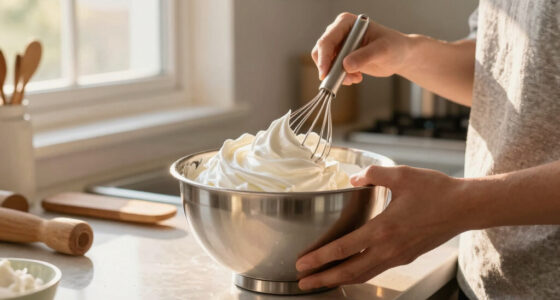
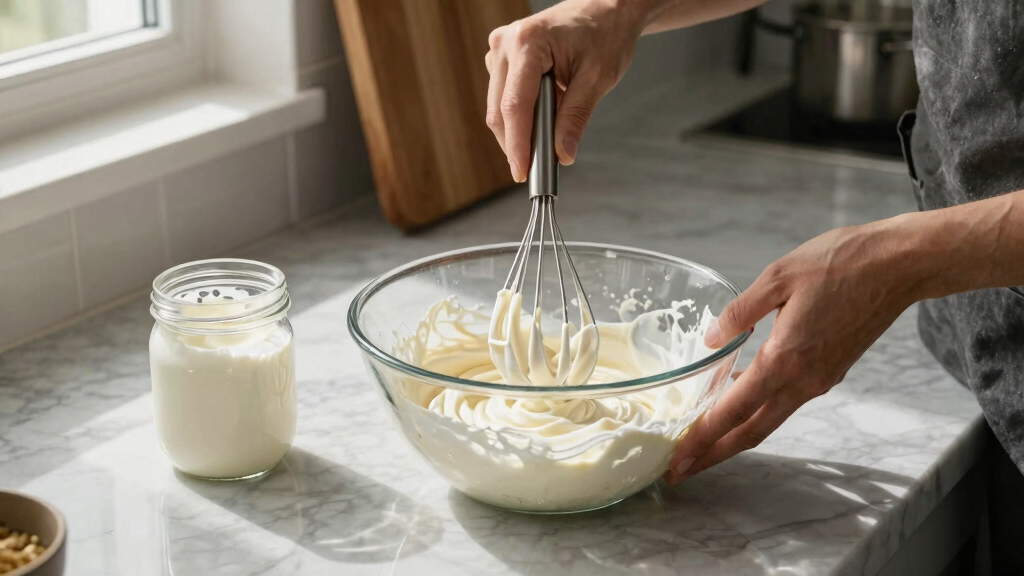
Whipping cream to the right stiffness is a balancing act. Start on medium speed, then increase to high once bubbles form. Continue until you see firm peaks that hold their shape when you lift the whisk. Over-whipping quickly turns cream into butter — so watch closely.
For example, if you’re piping a cake, aim for stiff peaks, but stop before the cream starts to clump or look grainy. Remember, patience and practice make perfect. The key is to recognize the signs of optimal stiffness: when the cream forms peaks that stand upright without drooping, and the surface is smooth and glossy. Over-whipping causes the fat molecules to clump together, releasing liquid and turning the foam grainy or buttery. This not only ruins the appearance but also reduces stability. If you’re using stabilizers, add them during the soft peak stage, as this allows the stabilizer to integrate evenly, providing a stronger structure as whipping continues. Mastering this technique ensures a smooth, stable, and aesthetically pleasing whipped cream that can last for hours without collapsing.
Pro tip: use a chilled bowl and beaters, and monitor your progress closely — patience is essential. Proper technique minimizes waste and guarantees a professional finish every time.
Keep It Cool—Storage Tips to Maintain Your Whipped Cream’s Shape
Once whipped, keep your cream chilled and covered. Use a pastry bag with a tight-fitting tip or a covered bowl to protect it from warm air. When serving, place the dessert in a cool spot or briefly refrigerate before presentation.
For example, on a summer day, set your decorated cake in the fridge for 10-15 minutes before serving. That quick chill firms everything up again, giving you a picture-perfect finish.
Remember, whipped cream begins to deflate after about 1-2 hours at room temperature, so always plan to serve it as fresh as possible. If you need it to last longer, keep it in a cool, shaded area or in the fridge, but be aware that prolonged refrigeration can sometimes cause slight weeping or moisture buildup, which can affect the appearance. For best results, add a stabilizer beforehand to extend its freshness and firmness during storage. When ready to serve, re-whip briefly if necessary to restore peak texture. Proper storage and handling are essential for maintaining the whipped cream’s structure, especially for elaborate presentations or multi-hour events.
Real-World Tips for Perfect, Long-Lasting Whipped Cream
Here are some practical tips that make a real difference:
- Always start with super cold ingredients and tools.
- Add stabilizers after soft peaks form for best stability.
- Don’t over-whip — stop at stiff peaks to avoid turning cream into butter.
- Refrigerate or keep in a cool place until serving.
- For decorated cakes, pipe the whipped cream just before presentation.
This approach saves stress and ensures your dessert looks as good as it tastes.
Frequently Asked Questions
How can I make whipped cream that stays firm for a long time?
Use high-fat heavy cream (at least 36%), ensure all your tools and ingredients are thoroughly chilled before whipping, and incorporate a stabilizer like gelatin or commercial stabilizer powders. These steps help create a resilient foam that resists melting and collapsing, giving you hours of lasting shape.Can I whip cream in advance for a party?
Yes, especially if you add stabilizers. Prepare and whip the cream well in advance, then refrigerate it covered. This prevents it from losing volume and firmness, making it convenient for last-minute decoration or serving while maintaining a fresh, stable appearance.What’s the best stabilizer for long-lasting whipped cream?
Gelatin is generally regarded as the most effective for extended stability because it creates a firm, gel-like network that can hold shape for many hours. Commercial stabilizer powders are also highly effective and easy to incorporate, providing consistent results. Cream of tartar offers a natural alternative but may not last as long under warm conditions.Does adding sugar affect the stability?
Slightly. Powdered sugar contains cornstarch, which can help stabilize the foam, but excessive sugar may soften the whipped cream or cause it to collapse faster. Balancing sugar with stabilizers can optimize both sweetness and stability.Can plant-based creams be stabilized to hold shape?
Absolutely. Many vegan whipped creams, such as those from coconut or soy, benefit from stabilizers like agar-agar or commercial stabilizer powders. These additives enhance foam structure, especially in warm environments, ensuring a longer-lasting, visually appealing finish.Conclusion
Perfect whipped cream that lasts for hours isn’t magic — it’s technique and the right ingredients working together. Focus on cold tools, high-fat cream, and a stabilizer or two, and you’ll get stunning, long-lasting results.
Next time you want that flawless finishing touch, remember: patience, prep, and a touch of science turn fluffy into forever.