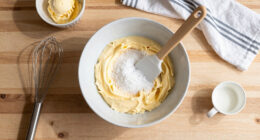
TL;DR
Butter temperature shapes the outcome of your baking. Softened butter creates airy cakes, cold butter makes flaky pastries, and melted butter alters density—getting it right boosts your success.
Ever notice how some cookies turn out tender and fluffy, while others are dense or greasy? The secret often lies in one simple thing: butter temperature.
It might seem small, but whether your butter is cold, softened, or melted makes a huge difference. In this guide, you’ll learn exactly why that is—and how to master butter temperature for consistent, delicious results every time.
Always match your butter temperature to the recipe’s needs: cold for flaky pastries, softened for tender cakes.
Use finger pressure to gauge butter doneness—aim for a consistent, moldable state, not greasy or stiff.
Small temperature shifts—just 5°F—can drastically change your baked goods’ texture and appearance.
Grating cold butter or short microwave bursts can quickly bring it to the perfect softness.
Understanding butter’s role helps you troubleshoot baking mishaps and achieve professional results at home.
Why Your Butter Temperature Decides the Whole Recipe
TL;DR: Butter temperature shapes the outcome of your baking. Softened butter creates airy cakes, cold butter makes flaky pastries, and melted butter changes density. Get the state right, and your recipe suddenly behaves.
Stays solid in dough, then melts into steam pockets for flaky pastry layers.
Creams with sugar, traps air, and builds the tender rise cakes and cookies need.
Disperses fat evenly for dense, moist crumbs in brownies, muffins, and quick breads.
Useful states: cold, softened, and melted.
A small change can alter spread, rise, and texture.
Typical room-temperature wait for small butter pieces.
Texture can shift dramatically when butter moves from cold to room temp.
Butter’s job changes with every degree.
Butter is not just flavor. Its physical state controls how fat coats flour, how air gets trapped, how steam forms, and whether the final bake reads flaky, tender, fudgy, greasy, or dense.
Cold butter builds layers.
Firm butter resists blending into flour. During baking, it melts into steam pockets that lift dough into flaky, separated layers.
Softened butter traps air.
At 65-70°F, butter is moldable enough to cream smoothly while still structured enough to hold tiny air pockets.
Melted butter densifies.
Liquid fat disperses evenly, limiting aeration and creating a moist, compact crumb suited to fudgy bakes.
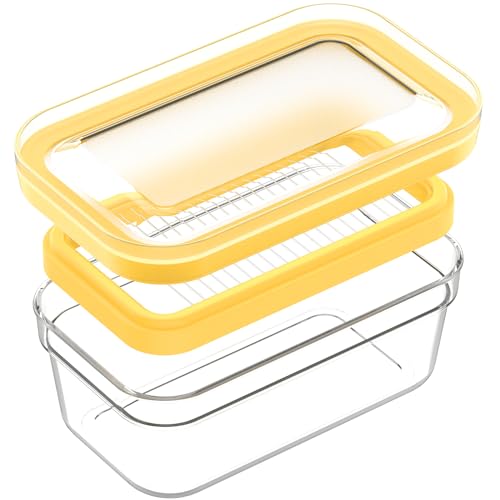
UNIVIVO 280g Butter Slicer Cutter and Airtight Container for Fridge, 2-in-1 PC Butter Dish with Stainless Steel Wires for Easy Portion Control, Slices After 15-20 Mins Softening, Clear Butter Keeper
[2-IN-1 CUTTER & KEEPER] Simplify your kitchen routine with this innovative butter dish that cuts and stores butter…
As an affiliate, we earn on qualifying purchases.
As an affiliate, we earn on qualifying purchases.
Get butter to the right texture before mixing.
Think of temperature control like seasoning: the timing is small, but the result is everywhere. Test, adjust, then commit to the recipe’s intended butter state.
Press it.
Softened butter should take a finger imprint without feeling greasy, sticky, or slumped.
Speed it up.
Cube or grate cold butter to increase surface area. Use microwave bursts of about 5 seconds only if needed.
Correct it.
Re-chill pastry butter if it softens. Warm cake butter slightly if it is stiff and refuses to cream.
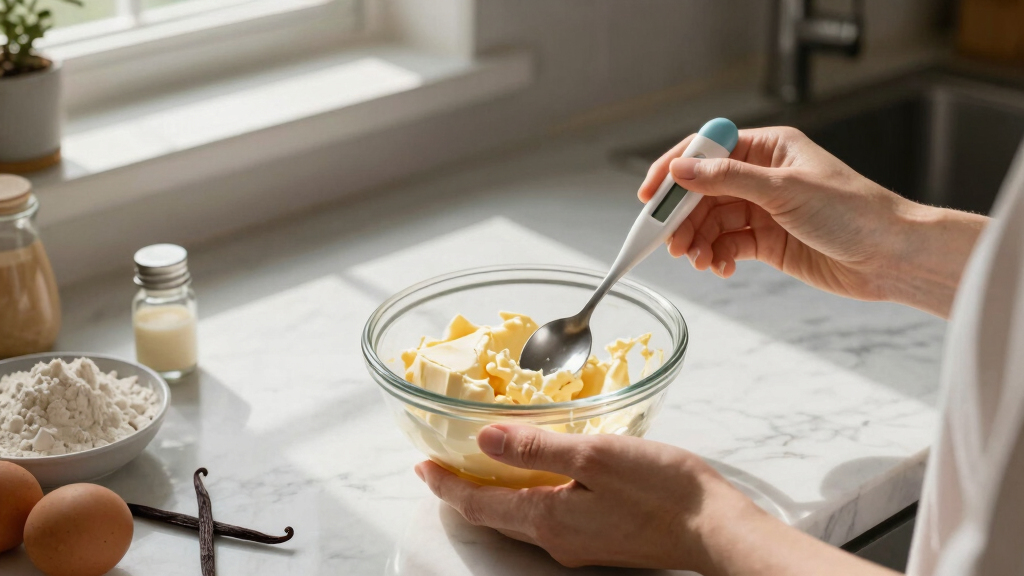
digital butter temperature thermometer
As an affiliate, we earn on qualifying purchases.
As an affiliate, we earn on qualifying purchases.
Match the temperature to the recipe goal.
The “right” butter temperature depends on the structure you want. Swapping one state for another usually changes the whole architecture of the bake.
| Recipe type | Ideal butter temp | Primary effect | Substitution risk | Signal |
|---|---|---|---|---|
| Pie crust / pastry | Below 60°F | Creates flaky layers by preventing fat from fully blending with flour. | ✗ Warm butter smears and weakens layer formation. | ✓ Visible cold pieces in dough. |
| Cookies / cakes | 65-70°F | Incorporates air efficiently for rise, tenderness, and a delicate crumb. | ~ Too cold limits creaming; too warm causes spread. | ✓ Finger imprint, no shine. |
| Brownies / muffins | Above 80°F | Disperses fat evenly for a denser, moist, fudgy structure. | ~ Works when the recipe is designed for liquid fat. | ✓ Smooth liquid or very soft texture. |
butter grater for baking
As an affiliate, we earn on qualifying purchases.
As an affiliate, we earn on qualifying purchases.
Small temperature changes create big texture swings.
Butter that is just a little too warm can make cookies spread, cakes deflate, and doughs feel greasy. Butter that is too cold can block aeration and make crumb structures heavy.
Texture impact by butter state
Butter temperature spectrum
Key insight: Moving butter from cold to room temperature can change the way ingredients interact enough to make the same formula bake like a different recipe.
microwave butter softening device
As an affiliate, we earn on qualifying purchases.
As an affiliate, we earn on qualifying purchases.
From butter state to final bite.
When a bake goes wrong, trace the result backward. Texture is usually a trail: temperature affects mixing, mixing affects structure, and structure controls the bite.
Dense or greasy cake?
The butter was likely too soft or melted, so the batter lost its ability to trap air and rise properly.
Flat, tough cookies?
Butter may have been too cold to cream well, or too warm and spread-prone before the structure set.
Can melted replace softened?
Usually no. Melted butter changes texture, spread, and crumb unless the recipe was built for liquid fat.
Best quick softening method?
Slice, cube, or grate butter first. If microwaving, use short 5-second bursts and check constantly.
How Butter’s State Changes Your Baking Results
Butter’s physical state—solid, soft, or melted—dictates how it interacts with other ingredients and influences the final texture and structure of baked goods. For instance, in pie crusts, cold butter remains solid during mixing, which prevents the fat from fully blending into the flour. As it melts during baking, it creates steam pockets that lift the layers, resulting in a flaky crust. This process is crucial because the separation of fat and flour forms the delicate layers characteristic of a perfect pastry.
In contrast, softened butter incorporates more readily with sugar, trapping air as you cream it. This aeration is essential for the rise and lightness of cakes, providing a tender crumb. However, if the butter is too warm or melted, it loses its ability to trap air effectively, leading to denser, less airy baked goods.
Melted butter, often used in recipes like brownies or quick breads, results in a different structural outcome. It produces a denser, moister crumb because the fat is evenly dispersed and fully integrated, reducing the formation of air pockets. Recognizing these differences allows bakers to select the appropriate butter state for each recipe, balancing texture, rise, and flavor. The tradeoff is that using the wrong butter state can compromise the intended structure—flaky, tender, or dense—so understanding these mechanics is key to mastering baking results.
Getting Your Butter to the Perfect Temp: 3 Easy Steps
- Check the consistency: Press your finger into the butter. It should leave a slight imprint but not be greasy or sticky. Aim for 65°F to 70°F (18°C to 21°C). This range ensures the butter is soft enough to cream smoothly without losing its structure, which is critical for aeration in cakes or controlled flakiness in pastries.
- Quick methods to soften: Slice cold butter into small cubes or grate it to increase surface area, facilitating more even and faster softening. Use short bursts in the microwave—around 5 seconds at a time—checking frequently to prevent melting. This approach allows you to reach the optimal consistency quickly without risking the structural integrity needed for certain recipes.
- Chill or warm as needed: For flaky pastries, keep the butter cold to prevent it from melting during mixing. For cakes and cookies, use softened butter to promote proper creaming and aeration. Adjust your approach based on the specific needs of the recipe, understanding that the timing of softening directly impacts the texture and rise of your final baked goods. Proper control of butter temperature ensures you can tailor the process to achieve the perfect crumb and layers.
Think of it like seasoning your dish—timing and temperature control make all the difference. The ability to quickly and accurately adjust butter consistency allows you to adapt to different recipes and desired textures, giving you greater control over your baking results.
Compare Butter Temperatures: Flaky Pastry vs. Creamed Cookies
| Recipe Type | Ideal Butter Temp | Result |
|---|---|---|
| Pie crust / Pastry | Below 60°F (15°C) | Creates flaky, layered texture by preventing fat from fully blending with flour, allowing layers to form during baking. |
| Cookies / Cakes | 65°F to 70°F (18°C to 21°C) | Incorporates air efficiently, leading to a light, tender crumb with proper rise and a delicate texture. |
| Brownies / Muffins | Above 80°F (27°C) | Disperses fat evenly, resulting in a denser, moist crumb with less air incorporation, suitable for fudgy textures. |
Understanding these temperature ranges helps you tailor your approach for each baked good, ensuring the desired structure, crumb, and mouthfeel. For example, using cold butter in a pie crust preserves flakiness, while softened butter in cakes promotes a tender, airy crumb. Recognizing the tradeoffs—such as density versus flakiness—guides you in making smarter choices based on the recipe’s goal.
Why Small Changes in Butter Temp Matter Big Time
According to an anonymous researcher at Aromas Healthy Bake, shifting butter from cold to room temp can change your recipe’s outcome by over 50%. This isn’t just a minor tweak; it fundamentally alters how ingredients interact and how the final product develops. For example, a slight increase in butter temperature can cause cookies to spread excessively, resulting in a flat, greasy surface instead of a thick, chewy one. Conversely, keeping butter too cold can prevent proper creaming, leading to dense, tough baked goods.
This sensitivity highlights the importance of precision. Small temperature adjustments—just 5°F—can mean the difference between a beautifully layered cake and a dense, flat one. The tradeoff is that overly soft butter may compromise the structure, while too cold butter hampers aeration. Understanding these nuances allows bakers to fine-tune their process, achieving consistent, professional-quality results. Recognizing the delicate balance helps you troubleshoot issues more effectively, leading to a deeper mastery of baking techniques.
Troubleshooting: What Your Butter Woes Say About Your Recipe
If your cake turns out dense or greasy, chances are you used melted or overly soft butter instead of the right consistency. This can cause the batter to lose its ability to trap air and rise properly, resulting in a heavier texture. Conversely, if you used butter that was too cold, it might not cream properly, leading to poor aeration and a flat or dense result.
For example, in sponge cakes, overly warm butter can blend too quickly into the batter, deflating the rise and producing a dense crumb. In cookies, cold butter hinders creaming, causing flat, tough treats. Recognizing these signs helps identify whether the butter temperature was the culprit and guides necessary adjustments.
Adjust your butter beforehand—test its softness by pressing with a finger, and if needed, re-cool or warm it slightly to reach the proper consistency. Small tweaks, like a few minutes in the fridge or microwave, can correct your method and prevent recurring issues. Mastering this control allows you to troubleshoot effectively and consistently produce baked goods with the desired texture and appearance.
Frequently Asked Questions
Why does my cake turn out dense or greasy?
This often happens when butter is too soft or melted instead of at the correct creaming consistency. Adjust your butter temperature to match the recipe—use softened but not greasy or melted butter.How can I tell if my butter is at the right temperature?
Press your finger into the butter. It should leave a slight imprint but not feel greasy, sticky, or melting. For most recipes, aim for 65°F to 70°F (18°C to 21°C).Can I substitute melted butter for softened butter?
Not usually. Melting changes the texture and structure of baked goods, often making them denser or greasier. Some recipes may allow it, but results vary—it’s safest to match your butter to the recipe’s needs.What’s the quickest way to soften butter?
Cut it into small cubes, grate it, or microwave briefly in short bursts—around 5 seconds at a time—until it’s just soft enough without melting.Does butter temperature affect flavor?
Indirectly, yes. Properly tempered butter blends better, ensuring even flavor distribution. Overly warm butter might cause uneven mixing, impacting taste.Conclusion
Mastering butter temperature isn’t just a minor detail—it’s a game-changer for your baking. A little extra attention in the prep stage yields consistent, delicious results that impress every time.
Next time you bake, take that extra moment to check your butter. Your taste buds—and your confidence—will thank you.