
TL;DR
Many beginners pretend to know baking terms, but understanding them is key to better results. This guide explains essential terms, recent trends, and common pitfalls, so you can bake smarter and more confidently.
Master the basics like creaming, folding, and kneading — they’re the foundation of good baking.
Understanding the difference between baking soda and baking powder prevents common mistakes.
Preheating your oven is non-negotiable for evenly baked goods.
Avoid overmixing muffin batter; gentle folding keeps baked goods tender.
Use visual cues and toothpick tests to determine when your baked goods are perfectly done.
The Baking Terms Every Beginner Pretends to Understand
TL;DR: Baking sounds like a secret language until the verbs click. Cream, fold, knead, proof, preheat, and test are not fancy words; they are instructions that change texture, rise, browning, and confidence.
Butter and sugar turn pale, fluffy, and air-filled enough to help cookies and cakes rise.
A fully heated oven gives batters the immediate lift and even browning they expect.
Baking is both art and science: precise measurements, technique, and temperature all show up in the final crumb.
Minutes of proper creaming for light, chewy structure.
Minutes to preheat before the pan goes in.
Approximate hand-kneading minutes for many loaves.
Typical bake minutes at 350°F, confirmed by testing.
Baking soda and baking powder lift differently.
The words are really texture controls.
These are the terms beginners often nod through. Each one tells you how much air to keep, how much gluten to build, or how precisely to control heat.
Creaming
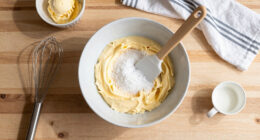
Beat softened butter and sugar until pale, shiny, and fluffy. This traps air for tender cakes and cookies.
Folding
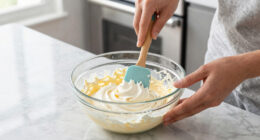
Lift and turn gently with a spatula so whipped cream, egg whites, or delicate batters do not deflate.
Kneading
Stretch and fold dough to develop gluten. Stop when dough is smooth, tacky, and springs back.
Proofing
Let yeast dough rise so it builds flavor, volume, and the texture that separates bread from a brick.
Sifting
Pass dry ingredients through a sieve to break up clumps and lightly aerate flour, cocoa, or powdered sugar.
Preheating
Bring the oven to temperature first so batters rise evenly and crusts brown at the right speed.

16PCS Measuring Cups and Spoons Set, Measuring Spoon Set with Metric and US Measurements, Fits for Measuring Dry and Liquid (Pink)
16PCS SET: Including multiple sizes, including 1cup, 1/2cup, 1/3cup, 1/4cup, 1/8cup, 30ml, 20ml, 15ml, 10ml, 5ml, 1tbsp, 1/2tbsp,…
As an affiliate, we earn on qualifying purchases.
As an affiliate, we earn on qualifying purchases.
The beginner workflow, decoded.
Most baking problems trace back to one of five moments: measuring, mixing, resting, heating, or testing. Follow the chain and the recipe starts making sense.
Measure precisely
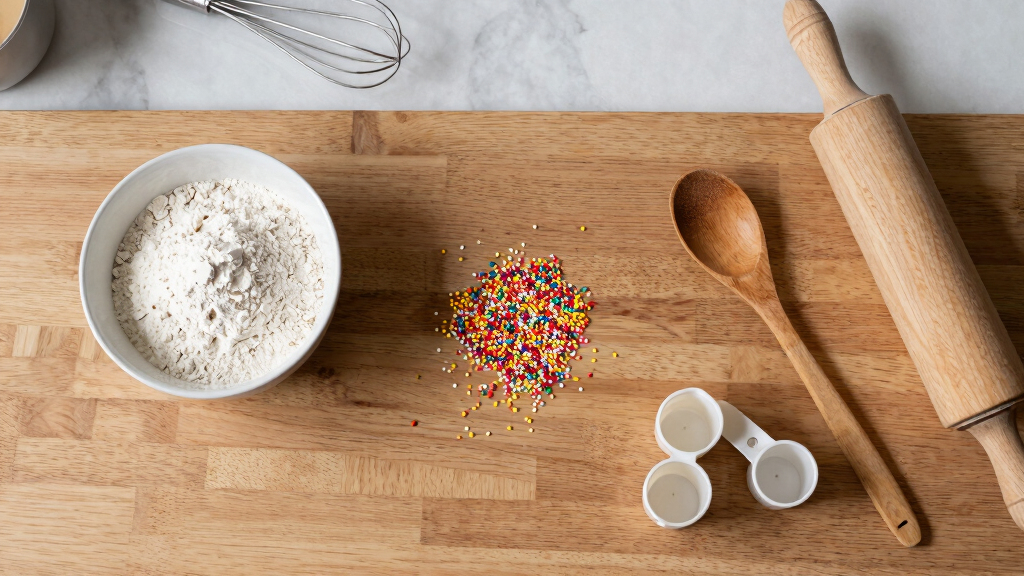
Use grams when possible, or scoop and sweep flour without packing it down.
Choose the mix
Cream for air, fold to preserve air, stir muffins only until combined.
Rest or proof
Let dough relax, rise, and develop flavor before heat locks structure in place.
Bake in real heat
Preheat fully and use an oven thermometer if bakes are uneven.
Test doneness
Look for color, spring, aroma, and a clean toothpick with moist crumbs.
Common pitfall risk
Dense, flat, or tough results usually come from overmixing, wrong leavener choice, skipped preheating, or trusting the timer alone.
Recent baking trends
Beginner recipes now meet sourdough curiosity, gluten-free flours, plant-based swaps, smart thermometers, and lower-waste kitchen habits.

Glad Mixing Bowls with Pour Spout, Set of 3 Nesting Design Saves Space Non-Slip, BPA Free, Dishwasher Safe Plastic Kitchen Cooking and Baking Supplies, Blue
3 PIECE MIXING BOWL SET – These nesting mixing bowls include three different sizes for a variety of…
As an affiliate, we earn on qualifying purchases.
As an affiliate, we earn on qualifying purchases.
Baking soda and baking powder are not interchangeable twins.
Both create lift, but they activate differently. Choosing the wrong one can leave bakes flat, bitter, or oddly textured.
| Feature | Baking Soda | Baking Powder | Beginner Watchout |
|---|---|---|---|
| Needs acid? | ✓ Yes, such as buttermilk, lemon, or vinegar | ✗ No, acid is already included | Missing acid can mean poor rise and soapy flavor. |
| Reaction timing | ~ Quick reaction when wet acid is added | ✓ Often double action: wet first, heat second | Do not let soda batters sit too long before baking. |
| Best uses | Lemon cakes, cocoa batters, buttermilk muffins | Quick breads, pancakes, biscuits | Follow the recipe unless you understand the acid balance. |
| Too much tastes like | ✗ Bitter, metallic, or soapy | ~ Bitter or powdery | Measure level teaspoons, not rounded guesses. |
- Use softened butter for creaming. Cold butter will not trap air well; melted butter changes spread.
- Stop folding when streaks disappear. A few small lumps are safer than a deflated batter.
- Check muffins gently. Overmixing activates gluten and turns tender crumb chewy.
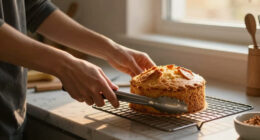
- Trust visual cues. Golden edges, spring, aroma, and toothpick crumbs beat time alone.
The muffin mixing sweet spot
The goal is “just combined”: no dry flour streaks, but visible small lumps are fine. The danger zone starts when you keep stirring for smoothness.

AcuRite 00620A2 Stainless Steel Oven Thermometer (150°F to 600°F)
Oven and grill safe for leave-in use while cooking
As an affiliate, we earn on qualifying purchases.
As an affiliate, we earn on qualifying purchases.
What to check when the recipe gets vague.
Baking confidence grows when you know what the bowl, dough, and oven are supposed to look like at each stage.
How can I tell if I’m creaming enough?
Look for a light, fluffy, pale mixture that takes about 3-5 minutes on medium speed and looks almost mousse-like.
Is folding the same as mixing?
No. Folding is slower and gentler because it preserves air in whipped ingredients. Mixing is usually more direct and vigorous.
Can I skip preheating my oven?
No. Skipping preheat can cause uneven rise, pale color, and dense texture. Give the oven time to reach the recipe temperature.
What is the best way to measure flour?
Use a kitchen scale for best accuracy. With cups, spoon flour in, then level it with a knife instead of packing it down.
Common causes include too much butter, too little flour, warm dough, or an oven running hotter than the dial says.
How do I know when baked goods are done?
Use multiple signals: deep golden color, set center, springy touch, and a toothpick that comes out clean or with moist crumbs.
silicone spatula for folding and mixing
As an affiliate, we earn on qualifying purchases.
As an affiliate, we earn on qualifying purchases.
What Does ‘Creaming’ Actually Mean and Why Does It Matter?
’Creaming’ is simply beating butter and sugar together until the mixture turns light, fluffy, and almost mousse-like. It’s a crucial step because it traps air, helping baked goods rise and become tender. Imagine whipping butter and sugar with a mixer until it’s pale and silky—that’s creaming in action. For example, in classic chocolate chip cookies, creaming butter and sugar for 3-5 minutes creates the soft, chewy texture everyone loves.
If you skip or rush this step, your cookies might turn out dense or flat. The key is to use softened butter and beat it with sugar until the mixture is shiny and light in color—think of a smooth, buttery cloud.
How to Gently Fold Ingredients Without Losing Air
’Folding’ is a gentle mixing technique that keeps air in delicate ingredients like whipped egg whites or whipped cream. To fold, use a spatula or large spoon and gently lift and turn the batter over itself. Imagine folding a delicate piece of paper without tearing it—slow and gentle is the key.
For example, when making a fluffy soufflé or sponge cake, folding helps maintain that airy structure. A common mistake? Overmixing, which deflates the batter and results in dense baked goods.
Pro tip: start from the bottom of the bowl and lift the mixture over the top, rotating the bowl as you go. Repeat until just combined.
What Does ‘Kneading’ Do to Dough and When Is It Too Much?
Kneading is working dough with your hands or a mixer to develop gluten, giving bread its chewy structure. Picture stretching and folding dough repeatedly—this builds strength and elasticity. For a perfect loaf, knead until the dough is smooth, slightly tacky, and springs back when poked.
For example, making sourdough or whole wheat bread requires kneading for about 10 minutes by hand or 5 with a stand mixer. Overkneading, especially with dense dough, can make bread tough and dry, so keep an eye on texture.
Tip: a good test is to press your finger into the dough—if it springs back quickly, it’s ready.
Preheat: Why Your Oven Needs It and How to Do It Right
Preheating means heating your oven to the recipe’s specified temperature before baking. It’s like warming up before a workout—crucial for even rising and perfect browning. If you skip this step, baked goods might turn out uneven or dense.
How to do it? Turn on the oven 15-20 minutes before you start baking, and use an oven thermometer to double-check the temp, because many ovens run hot or cold. For example, a cake baked at 350°F needs a fully preheated oven to rise evenly and develop that golden crust.
Baking Powder vs. Baking Soda: What’s the Difference?
Baking soda and baking powder are both leavening agents, but they work differently. Baking soda is pure sodium bicarbonate and needs an acid (like buttermilk or vinegar) to activate. Baking powder contains both an acid and a base, so it reacts when wet and again when heated.
For example, if a pancake recipe calls for baking soda, adding buttermilk will activate it and give lift. If it uses baking powder, just mixing ingredients is enough. Using the wrong one can cause flat or bitter-tasting baked goods.
In a side-by-side comparison:
| Feature | Baking Soda | Baking Powder |
|---|---|---|
| Needs acid? | Yes | No (contains acid) |
| Reaction | Quick, when combined with acid | Double action: when wet and when heated |
| Use in recipes | Lemon cakes, muffins with buttermilk | Quick breads, pancakes, biscuits |
Why Overmixing Can Ruin Your Muffins and How to Avoid It
Overmixing is a sneaky culprit behind dense, tough muffins. When you stir muffin batter too much, you activate gluten and create a chewy texture instead of tender crumb. Think of it like kneading bread—too much, and it gets tough.
To prevent this, mix the wet and dry ingredients until just combined—lumps are okay. For example, after adding the dry ingredients to wet, fold gently with a spatula until no streaks remain, but don’t beat it like a cake batter.
Tip: Use a light hand, and remember, some lumps in muffin batter are normal.
How to Know When Your Baked Goods Are Perfectly Done
The best way to tell if baked goods are done? Visual cues and a simple toothpick test. Look for a deep golden-brown crust, and insert a toothpick into the center. If it comes out clean or with a few moist crumbs, your treat is ready.
For example, a loaf of banana bread baked at 350°F typically takes 50-60 minutes. Check around the 50-minute mark to avoid overbaking or underbaking.
Tip: Relying solely on time can be risky—always look and test.