
TL;DR
Many baking terms sound more complicated than they are. Learning their true meanings and how they apply in real baking situations helps you succeed and enjoy the process more.
Ever read a baking recipe and feel like everyone’s speaking a secret language? You’re not alone. Baking terms can seem like a jumble of fancy words, but most have straightforward meanings once you see them in action. This guide breaks down those confusing terms, with real-world examples, so you can finally keep up in the kitchen.
Whether you’re tackling your first loaf or perfecting a batch of cookies, knowing what each term really means helps you follow recipes more confidently. Let’s turn baking jargon into your new best friend—no more pretending to understand how to fold or proof.
Understanding key baking terms like folding, proofing, and autolyse turns confusion into confidence.
Using a comparison table helps clarify differences between baking soda and baking powder, preventing common mistakes.
Preheating your oven and measuring ingredients accurately are simple habits with big results.
Knowing what each term really does allows you to troubleshoot and improve your baking outcomes.
Staying updated on new baking terms ensures you keep pace with evolving techniques and recipes.
The Baking Terms Every Beginner Pretends to Understand
Many baking terms sound more complicated than they are. Once you know what folding, proofing, autolyse, leavening, and preheating actually do, recipes stop feeling like a secret language and start reading like a plan.
Understanding baking terms and correct usage can boost kitchen success rates by up to 30% in efficiency-focused studies.
Baking soda and baking powder both create lift, but they activate differently and cannot always be swapped.
Learn the language, protect the texture, measure precisely, and bake with more confidence.
Gentle lifting and turning to preserve trapped air.
Time for yeast or starter to create gas and flavor.
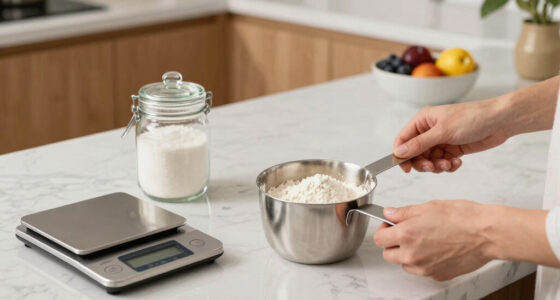
A practical flour benchmark for one measured cup.
Start baking only once the oven reaches temperature.
Water-to-flour ratio, especially in bread formulas.
The Words That Change the Outcome
Baking terminology is practical, not decorative. Each term tells you how to protect structure, control rise, manage moisture, or avoid common texture problems.
Folding
Meaning: gently lift batter from the bottom and turn it over the top. Use it when whipped egg whites or cream provide the rise.
Creaming
Meaning: beat butter and sugar until lighter and fluffy. This builds tiny air pockets before flour enters the bowl.
Kneading
Meaning: stretch and fold dough until gluten forms a strong network that can trap gas during baking.
Proofing
Meaning: let dough rise while yeast ferments. Skip it and bread often turns dense, heavy, and tight.
Autolyse
Meaning: rest flour and water before kneading. This improves extensibility, oven spring, and crumb openness.
Sifting
Meaning: aerate dry ingredients and break up clumps so cocoa, flour, sugar, and leaveners disperse evenly.
Whip
Create air bubbles in egg whites, cream, or butter-sugar mixtures.
Fold
Combine gently so those bubbles stay alive inside the batter.
Bake
Heat expands the trapped air and sets the structure.
Texture
The reward is a lighter chiffon, souffle, sponge, or mousse cake.

TILUCK Stainless Steel Measuring Cups & Spoons Set, Cups and Spoons,Kitchen Gadgets for Cooking & Baking (10)
[Multiple Sizes]: Including 4 Measuring cups ( 1/4, 1/3, 1/2, 1 cup), 6 Measuring spoons (1/8, 1/4, 1/2…
As an affiliate, we earn on qualifying purchases.
As an affiliate, we earn on qualifying purchases.
Baking Soda vs. Baking Powder
These two leaveners both make carbon dioxide, but the recipe context decides which one works. The fastest way to ruin a batch is treating them like twins.
| Feature | Baking Soda | Baking Powder | Beginner Risk |
|---|---|---|---|
| What It Is | Pure sodium bicarbonate. | Contains baking soda, an acid such as cream of tartar or citric acid, and a stabilizer. | ~Similar names invite accidental swaps. |
| Activation | Needs acid in the recipe to produce gas. | Reacts with moisture and heat without requiring another acidic ingredient. | ✓Correct match gives reliable lift. |
| Timing | Reacts quickly once wet and acidic, so batter should bake promptly. | Double-acting versions release some gas while mixing and more during baking. | ~Delay can flatten soda-heavy batters. |
| Best Use | Lemon cookies, buttermilk pancakes, chocolate cake with acidic dairy. | Biscuits, muffins, quick breads, and recipes without strong acidic ingredients. | ✓Ingredient context tells you the choice. |
| Wrong Use | Can taste metallic, bitter, or soapy without enough acid. | Can rise too quickly or collapse if overused. | ✗Flavor and structure both suffer. |
Soda needs a partner.
Think of baking soda as a fast lift that only works cleanly when the recipe already includes acid, such as buttermilk, lemon, yogurt, vinegar, molasses, or natural cocoa.
Powder brings its own acid.
Baking powder is more flexible because it carries both base and acid. That makes it friendlier in recipes where the batter has no obvious acidic ingredient.

Sourdough Proofing Basket Gift Set, 9" Round and 10" Oval Banneton Bread Baking Supplies, Sourdough Baskets with Bread Lame, Danish Whish, Bowl Scraper, Sourdough Scraper, and Linen Liner
What You Get: 1 9-inch round banneton bread proofing basket , 1 10-inch oval proofing basket, 2 liners,…
As an affiliate, we earn on qualifying purchases.
As an affiliate, we earn on qualifying purchases.
Precision Beats Guesswork
Modern beginner baking is shifting toward digital scales, smart ovens, and clearer temperature language. These habits are simple, but they solve a surprising number of failed bakes.
Beginner Confidence Scale
Use a digital scale when possible, especially for flour.
Preheat fully before trays or pans go into the oven.
Match leaveners to the acid and moisture in the recipe.
Fold gently when air is part of the structure.
Learn new terms like levain, hydration, lamination, and starter.
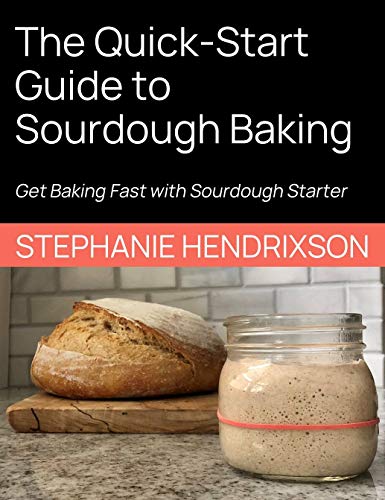
The Quick-Start Guide to Sourdough Baking: Get Baking Fast with Sourdough Starter
As an affiliate, we earn on qualifying purchases.
As an affiliate, we earn on qualifying purchases.
Trace the Recipe Language
A confusing recipe becomes readable when you connect each term to the job it performs. The chain is simple: action, science, result, adjustment, confidence.
Term
Fold, proof, sift, autolyse, cream, knead.
Action
Mix gently, rest dough, aerate dry goods, build gluten.
Science
Air, gas, hydration, gluten, heat, and structure.
Result
Fluffy crumb, crisp crust, tender bite, open structure.
Fix
Adjust timing, mixing, leavener, weight, or temperature.

Etekcity Food Kitchen Scale, Digital Grams and Ounces for Weight Loss, Baking, Cooking, Keto and Meal Prep, LCD Display, Medium, 304 Stainless Steel
𝗘𝗳𝗳𝗼𝗿𝘁𝗹𝗲𝘀𝘀 𝗪𝗲𝗶𝗴𝗵𝗶𝗻𝗴: Supports 5 units (oz/lb:oz/fl'oz/g/mL), tare function, and includes 2 AAA batteries for hassle-free operation
As an affiliate, we earn on qualifying purchases.
As an affiliate, we earn on qualifying purchases.
Beginner Questions, Plain Answers
These are the terms people often nod along to while secretly hoping the recipe explains itself. Here is the practical version.
How do I know if I’m folding correctly?
Use a spatula to lift batter from the bottom and fold it over the top. Stop once the mixture is combined, before the air disappears.
Can I skip proofing in bread baking?
Usually, no. Proofing gives yeast time to produce gas, which creates the lighter structure that separates bread from a dense brick.
What’s the best way to measure flour?
Use a digital kitchen scale. If measuring by cup, fluff the flour first and spoon it gently so it does not compact.
Is autolyse necessary for bread?
Not always, but it helps flour hydrate and improves dough extensibility, oven spring, and crumb structure.
What Does ‘Folding’ Actually Mean — And Why Do You Do It?
Folding is a gentle way to mix ingredients without knocking out air. Imagine softly lifting and turning batter with a spatula, like folding a delicate fabric. This technique matters because it preserves the air bubbles that give baked goods their rise and lightness. Overmixing can deflate these bubbles, leading to denser, less tender baked items. Therefore, mastering folding is about balancing incorporation with preservation of texture.
For example, when making a chiffon cake, you whip egg whites until stiff peaks form—these are critical for a fluffy texture. Carefully folding them into the batter ensures the cake remains airy and light, which is the hallmark of a successful chiffon. If you overmix during folding, you risk deflating the whites, resulting in a heavy, flat cake. Conversely, underfolding might leave streaks of egg whites, affecting uniformity. Understanding when and how to fold helps you control the final texture, making your baked goods consistently better.
Additionally, the technique of folding is crucial in recipes where a delicate balance of ingredients determines the final outcome. It allows bakers to incorporate ingredients gently, maintaining the integrity of whipped components like egg whites or whipped cream, which are essential for achieving specific textures. Proper folding can mean the difference between a light, airy souffle and a dense, flat one. Recognizing the importance of timing and technique in folding helps you understand why some recipes require patience and gentle handling — it’s about respecting the science behind the process.
Baking Soda vs. Baking Powder — What’s the Real Difference?
| Feature | Baking Soda | Baking Powder |
|---|---|---|
| What it is | Pure sodium bicarbonate | Contains baking soda + an acid (like cream of tartar or citric acid) + a stabilizer (like cornstarch) |
| Activation | Needs an acid component present in the recipe to produce carbon dioxide gas | Reacts with moisture and heat, releasing gas without needing additional acids |
| Usage example | Lemon cookies, chocolate cake with buttermilk | |
| Leavening power | Strong, quick rise but can cause bitterness if used excessively |
Think of baking soda as a quick burst of lift that needs an acid to work—it’s ideal when your recipe already contains acidic ingredients. Baking powder, on the other hand, contains its own acid, so it can produce lift even without additional acidic components. Using the wrong one can result in flat baked goods or a bitter aftertaste. For instance, if you use baking soda in a recipe without enough acid, you might end up with a metallic or soapy flavor. Conversely, using baking powder where only baking soda is needed can cause your baked item to rise too quickly and then collapse. Understanding these differences allows you to troubleshoot recipes effectively and ensures your baked goods have the right texture and flavor.
Beyond the basic definitions, understanding the chemistry behind these leavening agents reveals their trade-offs. Baking soda reacts almost immediately once it encounters an acid, which means your batter must be baked promptly to maximize rise. Baking powder, especially double-acting varieties, releases some gas during mixing and more during baking, offering a bit more flexibility. This knowledge helps you decide which to use based on your recipe’s timing and ingredient composition, ultimately giving you control over the final texture and appearance of your baked goods.
Frequently Asked Questions
How do I know if I’m folding correctly?
Gently lift the batter from the bottom and fold it over the top, repeating in a gentle motion. The goal is to combine ingredients without deflating the air you’ve whipped in. Practice with a spatula until it feels natural.
Can I skip proofing in bread baking?
Skipping proofing usually results in dense, heavy bread. Proofing allows the yeast to produce gas, creating that light, airy structure. No matter how tempting, giving your dough time to rise is a step worth respecting.
What’s the best way to measure flour?
Use a digital kitchen scale to weigh flour—about 120 grams per cup—for accuracy. Fluff the flour first, then gently spoon it into your measuring cup or directly onto the scale. This helps you avoid compacted flour which can make baked goods dry.
Is autolyse necessary for bread?
Not always, but autolyse improves dough extensibility and bread structure. It’s a simple step that can lead to better oven spring and a more open crumb. For best results, try incorporating it into your bread-making routine.
Conclusion
Getting comfortable with baking terms takes practice, but it’s worth it. Each word you understand helps turn a confusing recipe into a straightforward plan. Baking is part science, part art—knowing the language makes you a better artist in the kitchen.
Next time you see a new term, don’t hesitate. Break it down, try it out, and watch your baking confidence grow. Your perfect loaf or cake is just a few words away.