
TL;DR

Get baking supplies delivered free with Prime
- Fast, free delivery on millions of items
- Prime Video, Amazon Music and more included
- Member-only deals all year
Swiss Meringue Buttercream can be perfectly smooth if you control the temperature, add butter gradually, and whip patiently. Proper technique prevents curdling and results in a silky frosting.
Nothing beats the silky feel of a perfectly smooth Swiss Meringue Buttercream (SMB) spreading over a cake. Yet, many bakers face the frustration of it curdling—grainy, separated, and unusable. The secret? It’s all about mastering temperature, timing, and technique. Once you get those right, you’ll enjoy a frosting that’s as beautiful as it is delicious.
In this guide, I’ll walk you through real-world tips, recent insights, and simple tricks to keep your SMB silky smooth every single time. Whether you’re a home baker or a pastry enthusiast, you’ll learn how to troubleshoot, fix, and perfect your buttercream—no more grainy surprises.
Control the temperature carefully: heat egg whites and sugar to 160°F, and keep the environment cool.
Add softened butter slowly—tablespoon by tablespoon—to prevent graininess and separation.
Whip the meringue until stiff, glossy peaks form, ensuring a stable base for butter.
If curdling occurs, chill briefly and re-whip—patience is essential.
Use high-quality ingredients and reliable tools like accurate thermometers for best results.
How to Make a Swiss Meringue Buttercream That Never Curdles
Silky Swiss Meringue Buttercream comes down to one controlled emulsion: heat precisely, build a glossy meringue, add softened butter slowly, and give the mixer time to bring everything together.
Heat egg whites and sugar until fully dissolved for safety and stability.
A cool, dry kitchen keeps butter pliable without letting it melt.
Tablespoon-sized additions protect the delicate fat-and-water emulsion.
Four controlled stages to a silky finish
Each stage prepares the structure for the next. Rushing heat, whipping, cooling, or butter addition can destabilize the emulsion.
Heat
Whisk egg whites and sugar over a double boiler until the sugar dissolves and the mixture reaches 160°F.
Whip
Beat until the meringue is glossy, holds stiff peaks, and the bowl has cooled to room temperature.
Emulsify
Add softened butter one tablespoon at a time while mixing at a steady, moderate speed.
Refine
Keep whipping until smooth, then mix briefly on low speed to reduce large air bubbles.
The six details that prevent curdling
Curdling is usually a temperature mismatch—not a ruined batch. Control these variables and the frosting stays cohesive.
Dissolve every crystal
Rub a little heated mixture between clean fingers. It should feel completely smooth before whipping begins.
Build resilient peaks
Stiff, glossy peaks create a stable network of fine bubbles that can accept and hold dispersed butterfat.
Check the bowl
The meringue must no longer feel warm. Residual heat can melt butter and produce a loose, greasy mixture.
Soft, never oily
Use pliable butter that yields to pressure but still holds its shape. Cold chunks resist emulsification.
Add tablespoon by tablespoon
Wait until each piece is mostly incorporated before adding the next. Slow dispersion keeps fat and water united.
Keep the kitchen cool
A steady 65–70°F room reduces unexpected melting, re-solidifying, separation, and greasy texture.
The temperature window matters most
Temperature determines whether butterfat is too firm, perfectly dispersible, or melting out of the emulsion. Use an instant-read thermometer and your senses together.
Control dashboard
Fully dissolves sugar and creates a stable, food-safe meringue base.
Cool enough to protect the emulsion, warm enough for workable butter.
A short reset firms overly warm fat without hardening the whole batch.
Read the mixture
What the bowl is telling you
Match appearance and temperature before choosing a fix. The wrong intervention can push the mixture farther out of balance.
| What you see | Likely cause | Best action | Avoid | Outlook |
|---|---|---|---|---|
| Grainy or cottage-cheese texture | Temporary fat-and-water separation | Keep whipping; chill briefly if warm | Discarding the batch | ✓ Highly fixable |
| Loose, shiny, or soupy | Butter or meringue is too warm | Chill 10–15 minutes, then re-whip | Adding more warm butter | ✓ Usually fixable |
| Hard lumps that will not blend | Butter is too cold | Warm bowl gently and continue mixing | Direct high heat | ✓ Usually fixable |
| Dry, dull meringue | Foam was over-whipped | Add butter slowly and monitor closely | More high-speed whipping | ~ Proceed carefully |
| Cooked flecks in the whites | Uneven or excessive heating | Strain before whipping if minor | Scraping cooked bits into the bowl | ✗ May need restarting |
Curdled does not mean ruined.
A broken emulsion often looks worst just before it comes back together. Diagnose the temperature, make one small correction, and give the mixer time.
The smooth-buttercream chain
Why Proper Heating of Egg Whites and Sugar Is Your Secret Weapon
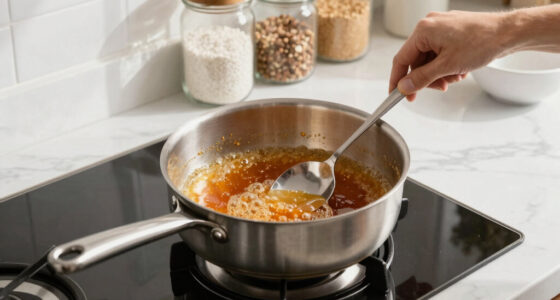
The foundation of a smooth Swiss Meringue Buttercream is a perfectly heated egg white and sugar mixture. Use a clean, heatproof bowl and a reliable thermometer. Gently heat over a double boiler until the sugar dissolves completely and the mixture hits about 160°F (71°C). This ensures food safety and creates a stable meringue that won’t collapse or curdle later.
Imagine whisking egg whites and sugar, watching the syrup turn from cloudy to clear, and feeling the gentle warmth. That’s when you know you’ve hit the sweet spot. Rushing this step risks uneven heating, which can cause the meringue to be unstable—a common culprit behind curdling.
Achieving precise temperature control at this stage is crucial because it influences the structure of your meringue. If the mixture is underheated, the sugar may not fully dissolve, leading to a weak meringue that can collapse or separate when butter is added. Overheating, on the other hand, can cook the egg whites, resulting in a grainy, cooked texture that won’t whip into a glossy foam. The tradeoff is clear: you need to balance heat carefully to ensure safety, stability, and a smooth texture in your final frosting.
Products Worth Considering

KitchenAid Artisan 5-Quart Tilt-Head Stand Mixer, Almond Cream

KitchenAid Artisan Series 5-Quart Tilt-Head Stand Mixer, Dried Rose (KSM150PS)

Cuisinart SM-50R 5.5-Quart Stand Mixer, Ruby Red
As an affiliate, we earn on qualifying purchases.
How to Whip a Fluffy, Stable Meringue (And Why It Matters)
Whipping the heated egg whites and sugar until stiff, glossy peaks form is critical. Once you see firm peaks that stand tall when lifted, the meringue is ready. Proper whipping traps air and creates a resilient foam that holds the butter and prevents curdling later on.
Picture the meringue as a cloud—light, shiny, and firm. If you don’t whip it enough, it’s runny; too much, and it’s dry. Achieving the right consistency is your first step toward a buttercream that stays smooth.
Deeply, the whipping process develops the meringue’s internal structure. Properly whipped meringue contains a network of fine, stable bubbles that can incorporate butter smoothly, creating an emulsion that resists curdling. Under-whipped meringue lacks this structure, making it prone to collapsing when fats are added. Over-whipping can damage the foam’s delicate structure, leading to a dry, grainy texture. The tradeoff lies in timing: whip enough to develop stability but stop before the foam becomes dry or starts to break down. This balance ensures the final buttercream remains silky and resilient.
Adding Butter Gradually — The Key to Preventing Curds
When it’s time to add butter, use softened, room-temperature sticks. Add it in *small* pieces—about a tablespoon at a time—and keep beating. This slow process encourages emulsification, where fat and water merge smoothly, avoiding graininess or separation.
Imagine gently blending butter into the meringue as if folding in delicate layers. If you dump in a big chunk, the mixture can seize up or curdle. Patience here makes all the difference.
From a deeper perspective, the slow addition of butter allows the fat molecules to disperse evenly into the meringue’s protein and water matrix. This gradual process minimizes the risk of breaking the emulsion, which is essential for a silky, stable buttercream. If the butter is added too quickly or at too cold a temperature, the fats can solidify or cause the mixture to split, resulting in a grainy or curdled texture. The tradeoff is patience versus speed; taking your time ensures a smooth, cohesive frosting that resists separation and curdling.
Keep Your Environment Cool and Consistent for Best Results
Temperature swings are silent killers of smooth SMB. Work in a cool, dry space—ideally between 65-70°F (18-21°C). Avoid hot kitchens or humid days that can cause the butter to melt prematurely, leading to separation.
Imagine your kitchen as a controlled environment where the butter and meringue can mingle peacefully. If your room is too warm, the butter becomes runny, and the buttercream can break apart. A fan or air conditioning can help keep things steady.
Beyond comfort, this stable environment helps maintain the delicate balance needed for the butter to incorporate smoothly. Fluctuations in temperature can cause fats to melt or re-solidify unexpectedly, disrupting the emulsion. This can lead to curdling, separation, or a greasy texture. Maintaining a consistent, cool environment minimizes these risks, ensuring your buttercream remains silky. The tradeoff is that a cooler space may slow down the mixing process slightly but results in a far more stable and smooth final product.
Troubleshooting: What to Do When Your Buttercream Goes Grainy
If your SMB curdles or looks grainy, don’t panic. Chill the mixture for 10-15 minutes in the fridge, then re-whip at medium speed. Often, this fixes the separation by allowing the ingredients to re-emulsify.
For stubborn cases, warm the bowl gently over a warm water bath, then whip again. Sometimes, a tiny splash of milk or heavy cream during re-whipping can help restore smoothness. Remember, patience and gentle handling save the day.
Deeply, this graininess indicates that the emulsion has broken—fat and water have separated. Chilling helps by slowing down the movement of fats and water, allowing the mixture to re-establish its structure when re-whipped. Gently warming the mixture can help re-emulsify the fats, but it must be done carefully to avoid cooking the egg whites. Adding a small amount of milk or cream introduces additional liquid that can help re-balance the emulsion, but use sparingly to avoid thinning the frosting too much. Patience and gentle reprocessing are key to restoring a silky texture, as aggressive handling risks further breakage or graininess.
Latest Tips and Tools to Keep Your Buttercream Smooth Every Time
Newer thermometers with quick readings and immersion circulators offer precise temperature control, reducing the risk of curdling. Using high-quality, fresh ingredients also helps—less chance of unstable fats or watery eggs causing issues.
Some bakers add a pinch of cream of tartar or cornstarch to stabilize the meringue, especially in humid environments. These small tricks can make a big difference, ensuring your SMB stays silky and stable.
Recent innovations like digital immersion circulators allow for extremely precise temperature regulation, which is vital because even small fluctuations can cause fats to separate or eggs to cook unevenly. Using fresh ingredients minimizes the risk of introducing unstable fats or watery eggs that can destabilize your meringue. Stabilizers like cream of tartar or cornstarch can be useful, but they also introduce tradeoffs: they may slightly alter the texture or flavor. The key is understanding that these tools and ingredients help maintain a consistent environment, reducing the likelihood of curdling and ensuring your buttercream remains luxuriously smooth every time.
Frequently Asked Questions
Why did my Swiss meringue buttercream curdle even though I followed all steps?
Curdling often results from adding butter too quickly, uneven heating, or working in a warm environment. Ensuring gradual butter addition, precise temperature control, and a cool workspace can prevent this.How do I fix curdled buttercream that already looks grainy?
Chill the buttercream for 10-15 minutes, then re-whip at medium speed. Warming slightly over a warm water bath or adding a splash of milk can help re-emulsify and smooth out the mixture.Can I prepare SMB in advance without risking curdling?
Yes, but it’s best to re-whip the buttercream right before use to restore its fluffy, silky texture. Store it in a cool place or refrigerate if needed, then bring to room temperature and re-whip.What’s the safest temperature to heat egg whites for SMB?
Heating to 160°F (71°C) ensures the eggs are safe from bacteria like salmonella and creates a stable meringue. Use a reliable thermometer to monitor this step precisely.Are there egg-free options for Swiss Meringue Buttercream?
Egg-free versions exist—such as Italian or French meringues with egg replacers. However, they may alter the texture and stability, so expect slight differences in the final product.Conclusion
Perfect Swiss Meringue Buttercream isn’t a mystery—it’s a matter of patience, temperature, and technique. Once you master those, your frosting will stay smooth, glossy, and irresistibly silky every time. Remember: good things take time, and a steady hand makes all the difference.
Next time you feel frustrated by curdling, think of it as a sign to slow down, check your tools, and be gentle. Your cake deserves that kind of care—and so do you.