
TL;DR

Get baking supplies delivered free — and shop member deals
- Fast, free delivery on millions of items
- Access to Prime Big Deal Days deals on October 6–7
- Prime Video, Amazon Music and more included
Honey, maple syrup, and agave are each unique in flavor and moisture content, impacting baking outcomes. Knowing how they behave helps you adjust recipes for perfect results every time.
Ever wonder why your cookies turn out differently when you swap sugar for honey or maple syrup? Liquid sweeteners aren’t just about flavor—they change the whole game in baking. From moisture to browning, their effects shape your baked goods in unexpected ways.
In this guide, you’ll learn how honey, maple, and agave behave during baking, with practical tips to tweak your recipes for better flavor, texture, and healthfulness. Let’s get into the details that turn simple baking into an artful science.
Liquid sweeteners add moisture and influence browning, so recipe adjustments are crucial.
Honey’s enzymes boost browning and flavor complexity, but can make baked goods denser if overused.
Maple syrup’s distinct caramel notes deepen flavor and extend shelf life, but affect texture.
Agave nectar’s neutral sweetness and low glycemic index make it versatile, but high fructose content warrants moderation.
Always tweak baking temperature and time when swapping in liquid sweeteners to avoid over-browning or soggy textures.
What makes honey, maple, and agave so different in flavor and texture?
Honey offers a rich, floral sweetness with complex caramel undertones. Its thick, sticky consistency and distinctive aroma make it a favorite for adding depth. The presence of enzymes and moisture influences not only flavor but also how baked goods develop their structure—sometimes resulting in a denser crumb if overused. The enzymes in honey can also break down gluten proteins, which might weaken the structure if used excessively, leading to a denser or flatter crumb. This means that while honey can add a moist, tender crumb and a nuanced flavor, balancing its use is crucial to avoid undesirable texture changes.
Maple syrup carries earthy, woody notes with a smooth caramel flavor. Its gradations—from light to dark—affect the intensity of its taste, but beyond flavor, the varying sugar compositions influence browning and moisture retention. Darker syrups contain more caramelized sugars, which promote deeper crusts and richer flavors but also introduce more moisture, potentially affecting the crumb and shelf life. This means that choosing the right grade of maple syrup depends on whether you prioritize flavor depth or a lighter, more delicate sweetness.
Agave nectar is mild, with a neutral sweetness and a slight caramel hint. Its thinner consistency allows it to blend seamlessly into recipes, but its high fructose content can influence how quickly baked goods set and their moisture retention. The high fructose levels tend to attract water, which can lead to softer textures and longer shelf life, but may also cause baked goods to be overly moist or sticky if not balanced with other ingredients. Understanding these nuances helps in selecting the appropriate sweetener for your desired flavor profile and texture.
As an affiliate, we earn on qualifying purchases.
How do liquid sweeteners change baking chemistry?
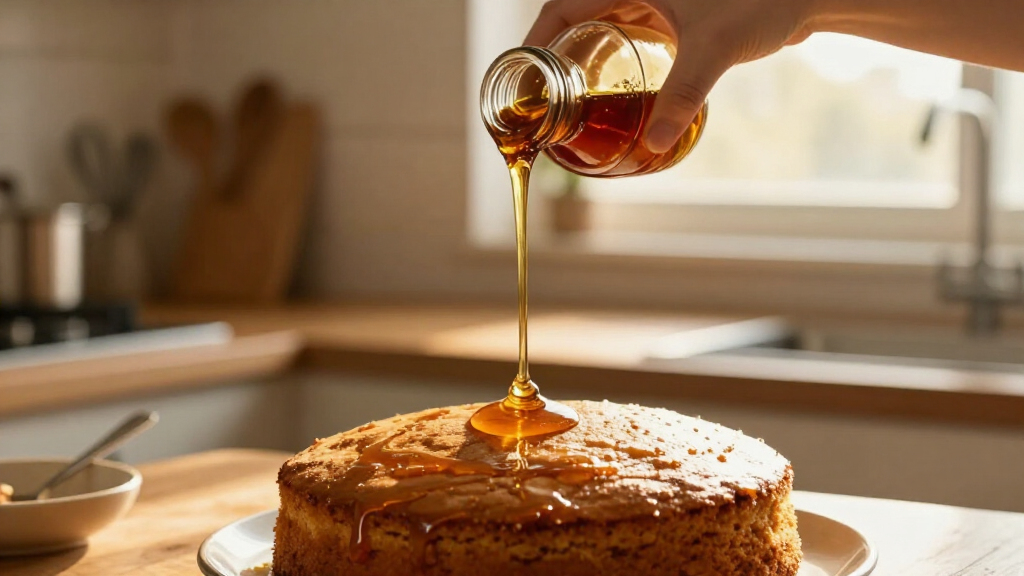
Liquid sweeteners like honey, maple, and agave introduce moisture into your batter, which directly impacts the chemical reactions during baking. For example, honey’s viscous nature not only adds moisture but also promotes a richer browning through caramelization and Maillard reactions, which develop complex flavors and attractive crusts. These reactions are sensitive to temperature and moisture levels; too much moisture can hinder gluten formation, resulting in a denser crumb. Conversely, the sugars in honey facilitate browning but can also cause over-browning if oven temperatures aren’t adjusted accordingly.
Maple syrup’s sugars promote even browning, but their moisture content can extend baking times or cause sogginess if not balanced with dry ingredients. The caramelization of these sugars is key to developing flavor and crust coloration, but excessive moisture can interfere with gluten development, affecting the structure.
Agave nectar, with its high fructose content, tends to accelerate browning and moisture retention, which can result in softer, moister baked goods. Its influence on fermentation—by providing readily available sugars—can also impact leavening, sometimes causing quicker rise but potentially leading to over-expansion or collapse if not carefully managed. Recognizing these chemical shifts allows bakers to adjust oven temperatures, baking times, and ingredient ratios, ensuring the final product has the desired texture and flavor without sacrificing structure or appearance.
honey maple agave syrup for baking
As an affiliate, we earn on qualifying purchases.
As an affiliate, we earn on qualifying purchases.
Compare honey, maple, and agave: which works best where?
| Sweetener | Flavor Profile | Best Uses | Impact on Texture |
|---|---|---|---|
| Honey | Rich, floral, complex | Quick breads, muffins, drizzles | Creates tender, moist crumb; can add density if overused due to enzymes and moisture |
| Maple syrup | Caramel, woody notes | Pancakes, cookies, caramelization | Extends shelf life and moisture; promotes even browning, but may require adjustments to avoid sogginess |
| Agave nectar | Mild, neutral, caramel undertone | Sauces, moist cakes, dressings | Softens textures, enhances moistness; its high fructose level can affect setting and crumb structure |
natural liquid sweeteners for cookies
As an affiliate, we earn on qualifying purchases.
As an affiliate, we earn on qualifying purchases.
Adjust your baking when using these liquid sweeteners
- Reduce added liquids slightly—about 1-2 tablespoons per cup of flour—since these sweeteners add moisture that can alter batter consistency and baking time. Overly moist batter may result in dense or gummy textures.
- Decrease oven temperature by around 25°F to counteract the increased browning potential from caramelization, ensuring your baked goods don’t over-brown or burn before fully cooking through.
- Shorten baking time by 5-10 minutes and monitor closely; the added sugars accelerate browning, so keep an eye on the color and doneness to prevent over-drying or burning.
- Consider adding a bit more flour if the batter feels too runny or wet, helping to restore the proper gluten structure and crumb development.
- Always test and tweak: since ingredient ratios and oven variation matter, small adjustments can make a big difference in achieving the perfect bake.
As an affiliate, we earn on qualifying purchases.
Health benefits and considerations of liquid sweeteners
Honey contains trace enzymes and antioxidants, which may offer minor health perks such as antimicrobial properties and flavonoids that combat oxidative stress. However, these benefits are minimal unless consumed in raw, unprocessed forms. The enzymes can also aid digestion slightly, but their impact is limited. The key consideration is moderation—excessive honey intake can still contribute to calorie overload and blood sugar spikes.
Maple syrup supplies minerals like manganese and zinc, which support bone health and immune function, but these are present in small amounts. The primary health concern is its high sugar content, which can contribute to insulin resistance and weight gain if overused. It’s best viewed as a flavor enhancer rather than a health supplement.
Agave nectar has a lower glycemic index, making it appealing for blood sugar control, but its high fructose content can strain the liver and promote insulin resistance when consumed excessively. Fructose is processed primarily in the liver, and overconsumption may lead to metabolic issues over time. While it appears to be a healthier alternative, the metabolic tradeoffs mean that moderation is essential.
Remember, these are still sugars—using them sparingly maximizes flavor and nutritional benefits without sacrificing health goals.
Frequently Asked Questions
Can I replace sugar with honey, maple, or agave in any recipe?
Not always. Because these sweeteners add moisture and flavor, some recipes may need adjustments—like reducing liquids or baking time—to turn out perfectly. Testing small batches helps identify how each sweetener affects the overall structure and flavor, allowing you to fine-tune your approach for consistent results.
How do liquid sweeteners affect the shelf life of baked goods?
They tend to keep baked goods moister and can extend freshness, especially in quick breads and muffins. However, increased moisture can also create a breeding ground for mold if not stored properly, which means airtight packaging is essential. The extra moisture may also cause baked goods to spoil faster if not balanced with preservatives or drying agents. Understanding how each sweetener interacts with other ingredients can help you optimize shelf life while maintaining quality.
Are these sweeteners healthier than refined sugar?
They contain trace nutrients and antioxidants, which can provide minor health benefits, but they are still sugars that impact blood sugar levels. Using them sparingly can enhance flavor and nutritional value slightly, but overuse negates these benefits. The key is moderation and balancing flavor with health considerations.
Should I lower oven temperature when baking with honey or maple syrup?
Yes, decreasing oven temperature by about 25°F helps prevent over-browning due to the caramelization of sugars in these syrups. Because these liquids brown more quickly than refined sugar, careful monitoring is needed to avoid burning. Adjusting temperature ensures that baked goods cook evenly without sacrificing appearance or flavor.
Which liquid sweetener is best for cookies?
Maple syrup adds a nuanced caramel flavor that complements spices and nuts, making it ideal for flavor-rich cookies. Honey offers a deep, floral sweetness that enhances quick bread-like cookies. Agave is versatile in moist, dense cookies and sauces, providing sweetness without overpowering other flavors. Consider the desired flavor profile and texture when selecting the sweetener to achieve the perfect cookie.
Conclusion
Understanding how honey, maple, and agave behave in baking allows you to craft treats that taste better and stay fresher longer. The key is knowing their moisture levels, sweetness, and flavor profiles—and adjusting your recipes accordingly.
Next time you reach for a bottle of syrup, think about how it’ll influence your batter. With a few simple tweaks, your baked goods will turn out just the way you want—moist, flavorful, and beautifully golden.
Fall Picks
fall essentials
As an affiliate, we earn on qualifying purchases.