
TL;DR

Get baking supplies delivered free with Prime
- Fast, free delivery on millions of items
- Prime Video, Amazon Music and more included
- Member-only deals all year
Energy bites are usually round snacks made by mixing a dry base such as oats with a sticky binder such as nut butter or softened dates, plus optional seeds, fruit, or flavorings. Chilling the mixture for 20–30 minutes can make it easier to shape because cold firms many binders. If a squeezed portion still crumbles, add binder a little at a time; if it clings to your hands, add dry ingredients gradually. Ingredient swaps can change both texture and nutrition, and storage life depends on the recipe, so check labels and refrigerate recipes that need it.
A bowl of oats, a spoonful of nut butter, and a few sticky dates can become a snack without turning on your oven. The trick is getting the mixture to hold together: too dry, and it crumbles across the cutting board; too wet, and it clings to your palms like soft dough. That balance matters because the same ingredients that make bites cohesive also shape how rich, sweet, or filling they feel.
This guide shows you how to make energy bites and other no-bake healthy treats with a flexible formula, practical fixes, and flavor ideas you can adapt to your pantry. You’ll learn how to balance the ingredients, shape bites or bars, account for allergies and portions, and store the finished batch safely. Understanding what each ingredient does makes it easier to adjust a recipe without guessing when a swap changes the texture.
Energy bites can offer fiber, protein, and unsaturated fats, depending on what you put in them. They are not automatically low in sugar or calories, though: nut butter, dried fruit, coconut, and chocolate all add up. Their small size can make it easy to eat several without noticing, so think of them as a convenient homemade treat and choose ingredients and serving sizes that suit your day.
Build bites from a dry base, a sticky binder, and optional flavorings or mix-ins; test whether a squeezed portion holds before shaping.
Chill difficult mixtures for 20–30 minutes, then add binder gradually if crumbly or dry ingredients gradually if sticky.
Use seed butter or other suitable swaps for nut-free versions, and check labels and cross-contact warnings on every ingredient.
Treat portion size as part of the recipe: energy-dense ingredients can add up even when the bites are small.
Follow recipe storage guidance, refrigerate when needed, and discard treats that develop unexpected changes in smell, look, or texture.
A flexible no-bake kitchen guide
How to Make Energy Bites and No-Bake Healthy Treats
Start with a dry base, add a sticky binder, then tune the texture with small adjustments. Roll, press, chill, and enjoy a homemade treat shaped around your pantry.
The key insight
“Squeeze first. Shape second.”
A 20–30 minute chill often firms the mixture and makes shaping easier.
Build the bite from three simple parts
Each ingredient has a job. Understanding the formula makes it easier to adapt a recipe without guessing when a swap changes the texture.
Dry base
Rolled oats give a chewy frame. Puffed grains, coconut, or finely ground seeds can work as other bases.
Sticky binder
Nut butter, seed butter, or softened dates help the pieces cling. Add gradually to avoid a greasy or overly sticky mix.
Mix-ins & flavor
Try raisins, chia, flax, hemp, cocoa, cinnamon, citrus zest, vanilla, or a modest amount of chopped chocolate.
Make a batch that rolls, cuts, or packs easily
Aim for soft, slightly tacky dough—not loose cereal or pourable batter. Stir dry ingredients first so small additions are evenly distributed.
- Combine the dry ingredients. Mix oats, seeds, and flavorings such as cocoa or cinnamon.
- Work in the binder. Stir until no dry pockets remain, then squeeze a small portion.
- Adjust in small steps. Add binder by the teaspoon if crumbly; add oats or ground flax if sticky.
- Chill if difficult to handle. Refrigerate for 20–30 minutes to firm fats and let moisture spread.
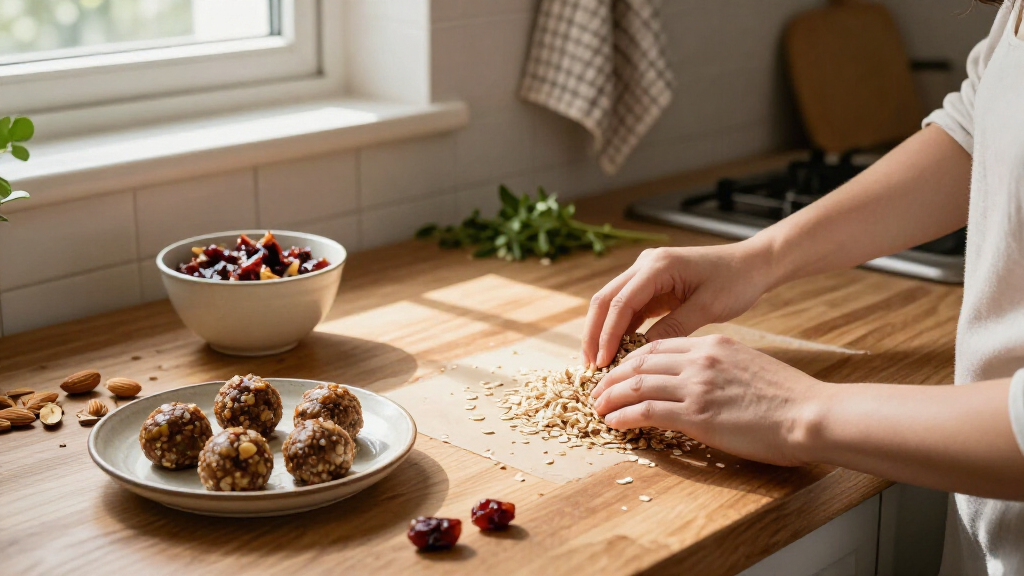
- Shape and store. Roll portions or press firmly into a lined pan and cut into squares.
Quick fixes for the two common texture problems
Make one small change, mix thoroughly, and test again. Gradual adjustments protect the balance of the whole batch.
Add cohesion
Mix in a little nut or seed butter, softened dates, or another recipe-suitable binder. Chill and retest before adding more.
Add structure
Stir in oats, ground flaxseed, or shredded coconut a little at a time. A brief chill can also firm the mixture.
From bowl to snack box
A simple no-bake flow
Taste and adjust before shaping: salt can sharpen sweetness, while spice or citrus adds contrast without much moisture.
Small bites still add up
Energy bites can provide fiber, protein, and unsaturated fats, depending on the ingredients. Nut butter, dried fruit, coconut, and chocolate can also be energy-dense. Choose a portion that suits your day; “healthy” does not automatically mean low in sugar or calories.
Swap thoughtfully. Store safely.
Ingredient changes affect both flavor and texture. Check product labels, recipe instructions, and packaging warnings to suit dietary needs.
Match the texture
Sunflower-seed butter can suit nut-free versions; tahini pairs well with dates and cocoa. Puffed grains or coconut may replace oats, with binder adjusted as needed.
Check every label
Choose certified gluten-free oats when needed. Review mix-ins and packaging for allergens and cross-contact warnings.
Follow the recipe
Refrigerate recipes that need it, especially those with perishable ingredients. Airtight refrigeration or freezing can extend storage; discard treats with unexpected changes in smell, appearance, or texture.
Build Energy Bites from Three Simple Parts
Energy bites are small, usually round snacks made by mixing a dry base, a sticky binder, and optional flavorings or mix-ins. The base gives the mixture its structure and chew; the binder coats those pieces and holds them together. Rolled oats provide a substantial, chewy foundation, while nut butter, seed butter, or softened dates help the ingredients cling. This division of jobs is useful when adapting a recipe: if a squeezed handful falls apart, the mixture needs more cohesion; if it feels pasty, it may need more structure.
Start with a bowl of oats, then add a thick binder such as peanut butter. Stir in raisins, chia seeds, cinnamon, or finely chopped chocolate. Press a spoonful between your fingers to test it. If it stays together, there is enough binder for the current mix; if oats spill away, add binder a spoonful at a time. Gradual changes matter because a small excess of nut butter or syrup can turn a rollable mixture greasy or sticky, while too little leaves loose crumbs.
There is a useful balance here: the dry base is the frame, and the binder is the glue. Dried fruit can contribute flavor and moisture, but its effect depends on how soft it is and how finely it is chopped. Chopping or blending softened dates helps distribute their stickiness throughout the mixture; leaving large pieces can produce pockets that hold while the surrounding oats remain crumbly.
Optional ingredients change more than taste. Chia, flax, or hemp seeds add texture and absorb some moisture; cocoa and cinnamon bring flavor without relying only on extra sweetener. Protein powder can add protein, but its fine particles may absorb liquid and make the mixture dry or chalky. Add it gradually and retest the texture, since the amount of binder needed depends on the powder and the other ingredients.
- Dry base: rolled oats, puffed grains, shredded coconut, or finely ground seeds.
- Binder: nut butter, seed butter, softened dates, or another thick ingredient suited to the recipe.
- Mix-ins: chopped dried fruit, seeds, cocoa, citrus zest, or a modest amount of chocolate.
Products Worth Considering

Cuisinart Stand Mixer, 12 Speed, 5.5 Quart Stainless Steel Bowl, Chef’s Whisk, Mixing Paddle, Dough Hook, Splash Guard w/ Pour Spout, Ruby R

Instant Pot InstantChill Ice Cream Maker with Rolled Ice Cream, No Pre-Freezing, 2-Pint

Vitamix 5200 Professional-Grade Blender, 64 oz. Container, Black
As an affiliate, we earn on qualifying purchases.
Make a Batch That Rolls, Cuts, or Packs Easily
To make energy bites, mix the dry ingredients with the binder until a squeezed portion holds together, chill if needed, then shape and refrigerate according to your recipe. The mixture should feel like soft, slightly tacky dough rather than loose cereal or pourable batter. A squeeze test is more dependable than judging by appearance alone: seeds, cocoa, or fruit can make a mixture look moist while the oats inside still need more binder. You can roll it into bites or press it into a lined pan for neat squares.
- Stir the dry ingredients together first, including oats, seeds, and flavorings such as cinnamon or cocoa. This distributes small ingredients evenly before the binder makes the mixture harder to stir.
- Mix in the binder until no dry pockets remain, then squeeze a small portion to check whether it holds.
- Adjust slowly: add binder a teaspoon at a time if crumbly, or oats, ground flaxseed, or coconut if too sticky. Small additions preserve the balance better than trying to correct an overadjusted batch.
- Chill for 20–30 minutes if the mixture is difficult to handle. Cold firms the fats and gives moisture time to spread through the dry ingredients, so a mixture that seemed loose may become easier to shape.
- Shape and store as directed by the recipe. Pressing the mixture firmly into a lined pan can be faster than rolling every bite and produces portions that are easy to cut and pack.
For example, if you’re making a quick batch before a school pickup, press it into a small lined container, chill it, and cut it into squares later. That skips the sticky-palms stage and gives you portions that stack easily. Rolled bites offer a more portable shape but take longer to form. If you do roll them, dampen your hands lightly between a few portions rather than adding water to the whole bowl, where it could soften the mixture unevenly.
Taste before shaping. A pinch of salt can sharpen sweetness, while orange zest or vanilla can make a basic oat-and-date mixture feel more finished. If the mixture tastes too sweet, adding oats can soften the sweetness but also make the texture drier; use a small amount and retest. If it tastes flat, spice or citrus can add contrast without substantially changing the mixture’s moisture.
Choose Ingredients That Fit Your Pantry and Needs
You can adapt energy bites by swapping the base, binder, and mix-ins, as long as the finished mixture still holds together. For a nut-free version, sunflower-seed butter may work in place of peanut or almond butter. For a different flavor, tahini brings a gentle bitterness that pairs well with dates and cocoa, while puffed grains can replace oats when their texture suits the recipe. These swaps can change more than taste: a thinner seed butter may loosen the mix, while a lighter, airy base may need a different amount of binder.
Dietary swaps need label checks. If gluten is a concern, choose oats labeled certified gluten-free, and check the packaging on chocolate, dried fruit, seeds, and other mix-ins for allergen and cross-contact statements. A swap that looks simple in the bowl may not meet someone’s needs if the ingredient label tells another story. Checking every component is important because even a small add-in can introduce an allergen or gluten exposure.
Texture shifts with each change. Sunflower-seed butter can behave differently from peanut butter; a dry protein powder can soak up moisture; dates vary in softness. If you replace a moist ingredient with a drier one, expect to add binder gradually. If the dates feel firm, soaking them in warm water briefly and draining them well can make them easier to blend into a cohesive paste. Draining well matters: extra soaking water can make the mixture wet without contributing the richness or binding that nut or seed butter provides.
Imagine making one batch for a household with different preferences. Set aside part of the oat mixture before adding nuts, then use seed butter and dried cranberries in that portion. This lets each version keep a similar base while avoiding an ingredient someone dislikes. Keep utensils and surfaces separate where allergy management requires it, and follow the relevant product labels and household safety practices.
- For a nut-free option: try seed butter and verify the label and cross-contact information.
- For an oat-free option: consider puffed grains, coconut, or finely ground seeds, then reassess the binder.
- For less added sweetness: lean on spices, citrus zest, or cocoa for flavor and use dried fruit thoughtfully.
Fix Crumbly or Sticky Mixtures Without Starting Over
A crumbly mixture needs a little more binder, while a sticky mixture needs more dry ingredients or a brief chill. Change one thing at a time, mix thoroughly, and test another squeezed spoonful before making a larger adjustment. This makes it easier to see what corrected the texture, and it reduces the risk of swinging from dry to greasy or sticky to dusty.
If your oat mixture falls apart as you roll it, stir in a teaspoon of nut butter, seed butter, or softened date paste. Mix again and squeeze a small portion. Repeat only if needed. A rushed pour of syrup can make the outside tacky while leaving dry pockets inside, so take the slower spoonful approach. A thicker binder usually adds more cohesion per spoonful, while syrup can add sweetness and moisture without contributing the same texture.
If the mixture clings to your fingers, first cover the bowl and chill it for 20–30 minutes. Cold often firms the binder, which can improve handling without changing the ingredient balance. If it still sticks, work in oats, ground flaxseed, or finely shredded coconut a little at a time. These absorb moisture, but too much can make the bites dry or tough, so stop when a squeezed portion releases cleanly and still holds together. For instance, adding a couple of tablespoons of oats to a small batch can change it from smear-prone to easy-to-roll, but the right amount depends on how wet the original mixture was.
When a recipe includes protein powder, expect a moving target: different powders absorb liquid differently. Add the powder in stages, then wait briefly before judging the texture. The mixture may thicken as the oats and seeds absorb moisture, much like a sponge settling into a puddle. Waiting before another adjustment helps prevent overcorrecting as that absorption continues.
Texture check: squeeze a small portion before you shape the whole batch. It should hold together without leaving a wet coating on your hand.
Keep No-Bake Treats Tasty and Portions Manageable
Energy bites can be a convenient snack, but their nutrition depends on the ingredients and how many you eat. Oats, seeds, and nut or seed butter can contribute fiber, protein, and unsaturated fats; dried fruit, chocolate, coconut, and nut butter can also make a small bite energy-dense. The same ingredient can bring both useful nutrients and concentrated energy, so the balance depends on the recipe and portion. A homemade label does not automatically mean low sugar or a particular nutritional profile.
Size makes a practical difference. If you roll a whole batch into 10 large balls, each one will contain more of the mixture than if you shape 20 smaller ones. The total ingredients have not changed, but the amount in each serving has. When you want a quick snack between errands, a modest portion may be easier to enjoy than eating directly from a container of bars cut into uneven chunks; cutting evenly also makes it easier to know what one portion contains.
Compare ingredients with your needs rather than chasing trend additions. Chia, flax, hemp, freeze-dried fruit, and protein powder appear in many contemporary recipes, but adding them does not guarantee a healthier result. Check the full ingredient list, serving size, and product claims; a heavily sweetened powder or generous chocolate addition can change the overall balance. If a particular nutrient matters to you, the ingredient label and portion tell you more than a wellness claim on the front of a package.
Flavor can come from more than sweeteners. A little cinnamon, cocoa, vanilla, citrus zest, or salt can make the oats and dates taste fuller. For example, orange zest and cocoa give a date-based bite a rich, almost truffle-like feel, while a small pinch of salt can keep a peanut-butter version from tasting one-note. Building flavor this way can make a batch satisfying without relying on extra syrup, though dried fruit and other ingredients still contribute sweetness.
Store Each Batch Safely and Make It Last
Refrigerate energy bites when the recipe calls for it, especially when they contain ingredients that need refrigeration, and follow the recipe’s storage guidance. Many recipes keep for several days in an airtight container in the fridge, while freezing can extend storage. The exact window varies with ingredients and preparation, so don’t assume every no-bake treat keeps for the same length of time. Moisture, handling, and ingredients that spoil more readily all affect how long a batch stays suitable to eat.
Pack bites in a clean, sealed container and keep them chilled between servings. If you’re taking a few to work, a small insulated lunch bag with a cold pack helps them stay cool until snack time. Avoid leaving perishable ingredients at room temperature longer than the recipe or food-safety guidance allows. A container protects the bites from drying out and contamination, while keeping them cold supports safe storage.
Many energy bites freeze well. Arrange them in a single layer until firm, then transfer them to an airtight container so they don’t freeze into one solid clump. Thaw a portion in the refrigerator or briefly at room temperature, following the recipe’s guidance. Freezing lets you keep only the portions you need in rotation, but it does not make a poorly handled batch safe; start with clean preparation and follow the recipe’s storage directions.
Before eating stored treats, check for changes in appearance, smell, or texture. Discard them if anything seems unexpectedly off. For children, consider both ingredients and texture: whole nuts, hard pieces, or other choking hazards may not suit young children, and allergies need careful attention.
Frequently Asked Questions
Do energy bites need to be refrigerated?
Often, yes. Follow the recipe’s instructions, especially if it includes ingredients that need refrigeration. Store them in an airtight container and keep them chilled as directed.
Why won’t my energy bites stick together?
The mixture may need more binder or finer, more cohesive ingredients. Add a little nut or seed butter, suitable syrup, or softened date paste, mix well, and test another squeezed portion before adding more.
How do I fix energy bites that are too sticky?
Chill the mixture for 20–30 minutes first; that often makes it easier to handle. If it still sticks, mix in oats, ground flaxseed, or shredded coconut a little at a time.
Can I make energy bites without oats or nut butter?
Often, yes. You can try puffed grains, coconut, or finely ground seeds as a base, and tahini or seed butter as a binder. Check labels for allergy and cross-contact information, then adjust the mixture until a squeezed portion holds.
Are energy bites healthy, and can I add protein powder?
They can be a convenient snack, but “healthy” depends on the ingredients, portion, and your needs; they are not automatically low in sugar or calories. Protein powder can work, though it may make the mixture dry, so add it gradually and adjust the binder.
Can I freeze energy bites?
Many recipes freeze well in an airtight container. Freeze them in a single layer first if you want to keep them separate, then thaw a portion in the refrigerator or briefly at room temperature according to the recipe.
Conclusion
Remember the simple rhythm: mix, squeeze, adjust, chill, and shape. Start with ingredients you enjoy, change the texture in small steps, and choose portions and storage that fit your routine.
Next time the oven stays dark and your snack drawer looks bare, a chilled container of homemade bites can be waiting in the fridge—small, chewy, and ready when you are.