TL;DR

Get baking supplies delivered free with Prime
- Fast, free delivery on millions of items
- Prime Video, Amazon Music and more included
- Member-only deals all year
For most home baking, a smooth wooden straight or tapered rolling pin is a practical first choice because it gives you direct control and works across many doughs. Match the pin’s shape, material, weight, and length to what you bake: adjustable guides help with uniform cookies and crackers, while a cool stone or metal pin can suit butter-rich pastry if you find it comfortable to handle.
A rolling pin can make a pie crust smooth as satin—or leave you wrestling a lopsided slab of dough. The difference often comes down to a simple match: the pin should suit your hands, your work surface, and the dough you bake most.
This guide walks you through the main pin styles, materials, length, weight, and care. You’ll see why a simple wooden pin is a dependable starting point, when thickness guides can help, and how to choose without buying features you won’t use. The goal is practical: more even dough, less awkward rolling, and a tool you’ll reach for again.
For an all-purpose first pin, choose a smooth wooden straight or tapered style that feels comfortable in your hands.
A tapered pin is easy to maneuver for round pastry; a handled pin may suit you if you prefer a familiar grip.
Cool stone or metal can suit butter-rich pastry, but consider the pin’s weight and how easily you can steer it.
Adjustable guides help with repeatable cookie or cracker thickness; patterned pins are best for decorative jobs.
Use flour sparingly, turn dough as you roll, and follow the maker’s care instructions for cleaning and storage.
The home baker’s field guide · Tool selection
How to Choose a Rolling Pin That Suits Your Baking
The right pin should feel comfortable in your hands, move easily across your counter, and suit the dough you bake most. Start with a smooth, versatile design, then add specialty features only when they solve a regular baking need.
Key insight
Let the pin’s weight do some of the work.
A heavier pin can flatten dough with less downward pressure. A lighter one may feel easier to steer and less tiring over several batches.01 / Choose your control
Start with the way you like to roll
No style wins for every baker. Think about whether you want to guide the dough directly, hold a familiar grip, or repeat a precise thickness.
Straight pin
A smooth cylinder without handles. Your palms steer pressure and help you sense thick or thin spots.
Good for: pastry, pie crust, and everyday dough.Tapered pin
Narrowed ends make it nimble to turn and guide in different directions as the dough spreads.
Good for: round pastry and delicate dough.Handled pin
A turning barrel between two handles can feel reassuring, though rotation may make thickness harder to sense.
Good for: bakers who prefer holding handles.Adjustable pin
Removable rings or guides help keep a sheet of dough at a consistent thickness.
Good for: uniform cookies, crackers, and pastry.Patterned pin
Textured barrels stamp designs into the dough for a distinctive surface.
Good for: specialty dough and decorative cookies.Keep one smooth
A patterned barrel is less useful for daily rolling, so pair it with a smooth pin if you bake often.
Buying cue: choose for your regular recipes first.02 / Match material to dough
Four surfaces, different tradeoffs
Choose a material you can handle comfortably and care for consistently. A coating may reduce sticking, but good dough handling still matters.
Wood
Familiar, slightly grippy feel for general baking. Brush off flour, wipe with a damp cloth, and dry promptly.
Keep dry · Never soakStone
Stays cool and can suit butter-rich pastry, especially when the kitchen is warm.
Cool surface · Often heavyStainless steel
Durable and easy to clean. Some models can be chilled before working pastry dough.
Easy care · Check weightNonstick or silicone
May help sticky dough release. A light dusting of flour can still be useful.
Less sticking · Use flour sparingly03 / Quick comparison
Buy for the job you do most
Specialized pins can make a recurring technique easier. For occasional decorative baking, keep a versatile smooth pin as your everyday tool.
| Pin type | Good fit | Tradeoff to consider |
|---|---|---|
| Straight wooden | Pastry, pie crust, general dough | Needs hand cleaning and prompt drying |
| Tapered | Round pastry and frequent turning | May take practice to steer evenly |
| Handled | A familiar grip and turning barrel | Barrel rotation can hide thickness changes |
| Cool stone or metal | Butter-rich pastry and warm kitchens | Weight may reduce comfort or control |
| Adjustable | Uniform cookies, crackers, or pastry | Extra parts need cleaning and storage |
| Patterned | Decorative cookies and specialty dough | Less useful for everyday rolling |
Use guides thoughtfully: repeatable thickness helps dough bake evenly, but the recipe still determines how thin or thick the dough should be.
04 / Fit your kitchen
Check length, weight, and grip
The right pin should move comfortably across your dough and work surface. Try to hold one before buying if you can.
Measure the space
A longer pin can cover broad batches on a wide counter. A shorter one is easier to manage in a compact kitchen.
Check: counter width, backsplash, and storage spot.Balance force and ease
More weight may flatten dough with less downward pressure; less weight can feel nimble and less tiring.
Try: lift and steer it as you would while baking.Trust your hands
Check that you can roll from the center toward the edges without awkward wrist or shoulder movement.
Choose: the grip and feel that stay comfortable over several batches.05 / A simple rolling routine
Even dough comes from small habits
Use a light touch and check the dough as you work. A steady routine can matter more than extra features.
Keep dough workable
Start when it is cool enough to handle and not overly sticky.
Dust lightly
Add only a little flour if needed; too much can change the dough’s texture.
Roll and turn
Use steady passes and turn the dough as you work to help it spread evenly.
Clean and dry
Follow maker instructions. Keep wood dry and store removable parts together.
A dependable first choice
One smooth pin can do a lot
For most home baking, begin with a comfortable wooden straight or tapered pin. Add cool metal or stone for butter-rich pastry, guides for repeatable thickness, or a patterned pin when decorative rolling becomes a regular job.
Start with the pin style that gives you the control you want
To choose a rolling pin, start with how you want to guide the dough: a straight or tapered pin gives you direct hand control, while a handled pin offers a familiar grip and a turning barrel. No style wins for every baker. If you roll pastry often and like to feel changes in resistance, a pin you guide directly may feel natural; if you prefer holding handles, the traditional barrel can be comfortable.
A straight pin is a smooth cylinder without handles. You press and steer it with your palms, which helps you sense where dough is thick or thin. A tapered pin narrows at the ends, making it easier to pivot and roll in different directions. That can help when you are coaxing a round pie crust out from the center, much like turning a steering wheel in small adjustments.
A handled pin has a barrel that rotates between two handles. It may feel reassuring if you learned to bake with one, though the rolling barrel can make thickness changes harder to feel. For example, if your cookie dough is thicker on one side, you may need to stop and check it rather than relying on your hands alone.
Textured pins stamp patterns into dough, while adjustable pins use rings or guides to control thickness. These are useful for particular jobs, but a patterned barrel is less versatile for everyday rolling. If you bake decorated cookies once a year, use a patterned pin alongside a smooth one rather than expecting it to do every job.
Products Worth Considering

Cuisinart Stand Mixer, 12 Speed, 5.5 Quart Stainless Steel Bowl, Chef’s Whisk, Mixing Paddle, Dough Hook, Splash Guard w/ Pour Spout, Ruby R

Instant Pot InstantChill Ice Cream Maker with Rolled Ice Cream, No Pre-Freezing, 2-Pint

Breville Smart Grinder Pro Conical Burr Coffee Grinder, Brushed Stainless Steel
As an affiliate, we earn on qualifying purchases.
Pick a material that works with your dough and cleaning habits
Choose a rolling pin material based on the dough you make and how you prefer to clean up: wood is a reliable all-purpose option, while stone or chilled metal can suit butter-rich pastry. Nonstick surfaces may reduce sticking, but no coating can replace sensible dough handling. The useful question is not which material sounds fanciest; it’s which one you can use comfortably and care for consistently.
Wood has a familiar, slightly grippy feel that works well for general baking. It can help you guide flour-dusted pastry without the slickness some bakers dislike. Keep a wooden pin clean and thoroughly dry; don’t soak it or put it in the dishwasher. After rolling a batch of biscuits, brush off loose flour, wipe the surface with a damp cloth, then dry it promptly.
Marble and other stone stay cool, which can help when you’re working with dough that contains plenty of butter. The tradeoff is weight: a heavy stone pin may flatten dough with little pressure, but it can be tiring to lift, steer, or store. Stainless steel is durable and easy to clean, and some pins can be chilled before use. If you make a flaky tart on a warm day, a cool pin may be appealing, provided you can handle its weight comfortably.
Silicone-coated or nonstick pins can help sticky dough release, though a light dusting of flour may still be needed. Start with a small amount; adding heaps can change the dough’s texture. A smooth wood pin may suit a baker who likes a little grip, while a coated surface may feel easier to wipe clean after rolling a tacky dough.
Use this quick comparison to match a pin to your baking
The best rolling pin is the one that fits your regular recipes, so match the design to the task before you shop. A smooth, comfortable pin handles the widest range of jobs; specialized pins make sense when you repeat a particular technique. If you bake pie crust every month and decorative biscuits only at the holidays, buy for the pie crust first.
| Pin type | Good fit | Tradeoff |
|---|---|---|
| Straight wooden | Pastry, pie crust, and general dough | Needs hand cleaning and prompt drying |
| Tapered | Round pastry and dough that needs frequent turning | May take a little practice to steer evenly |
| Handled | Bakers who like a familiar grip | Barrel rotation can make thickness harder to sense |
| Cool stone or metal | Butter-rich pastry and warm kitchens | Weight may reduce comfort or control |
| Adjustable | Uniform cookies, crackers, or pastry | Extra parts need cleaning and storage |
| Patterned | Decorative cookies and specialty dough | Less useful for everyday rolling |
For example, an adjustable pin can help when you want a tray of crackers at a consistent thickness so they bake at a similar pace. But if you mostly roll a free-form galette, you may prefer the nimble feel of a tapered pin. Buy for your common task, then add a specialty tool only when it solves a recurring problem.
Thickness guides can help you repeat a result, but recipes still matter. Follow the recipe’s thickness instructions, since a thin cracker and a sturdy pie base need different handling. Uniformity is useful; the right thickness depends on what you’re making.
Check length, weight, and grip before you bring one home
A rolling pin should fit your work surface and feel easy to move across dough. Longer pins suit larger batches and broad counters, while shorter pins are easier to manage in a compact kitchen. Weight affects effort: a heavier pin may flatten dough with less downward pressure, but a lighter one can feel more nimble and less tiring during a long baking session.
Imagine rolling a big sheet of gingerbread dough on a narrow counter. A very long pin may bump into the backsplash or run into a mixing bowl, even though its reach sounds useful. On a wide island, that same length may help you cover more dough with each pass. Measure your counter space and storage spot before choosing a size.
If you can handle a pin before buying, hold it as you would while baking. Check whether you can move it comfortably from the center of a dough round toward the edges, and whether its weight feels manageable when lifted. A grip that feels fine for one pass may become uncomfortable when you’re rolling several batches of sugar cookies for a school event.
Hand comfort matters more than a claim that one weight is universally better. If you like a heavier pin, let its weight do some of the flattening instead of pressing hard. If you prefer a lighter tool, use steady passes and turn the dough as you work. A good rolling pin helps you shape dough evenly because you can control it, not because it does the whole job by itself.
Roll dough evenly with a simple routine
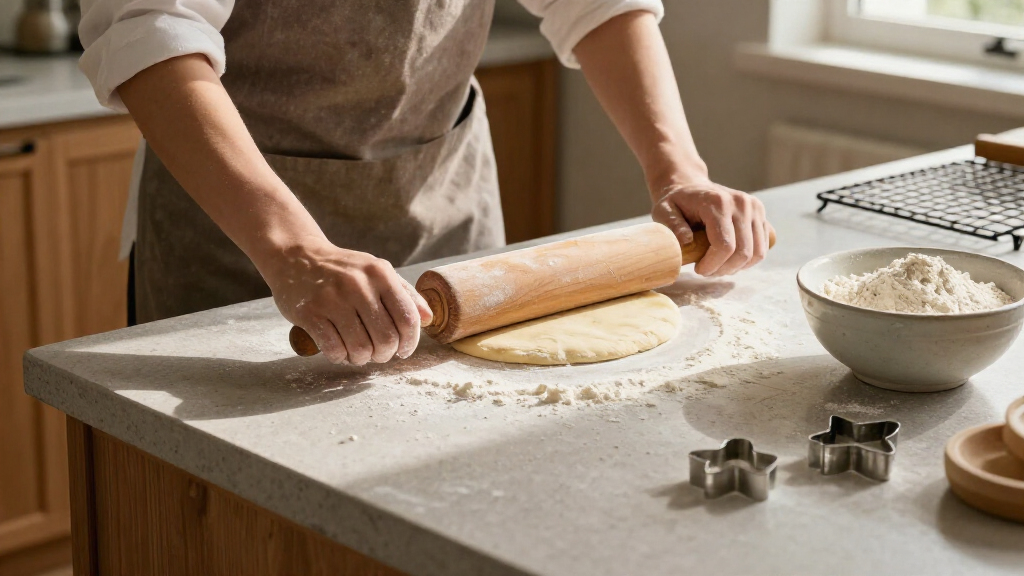
To roll dough evenly, keep it cool enough to handle, use only a light dusting of flour if it sticks, and turn it as you work. A pin can help you shape dough evenly, but even pressure and regular checks matter just as much. Start in the middle and roll outward, then rotate the dough instead of repeatedly stretching one direction.
- Set up your surface. Clear a space large enough for the dough to expand. Add a light dusting of flour, or use parchment or a silicone mat if you want less mess.
- Position the pin. Set it near the center of the dough and roll outward with steady pressure. Avoid pressing hard at the edge, which can thin it too quickly.
- Turn the dough. Rotate it a quarter turn after a few passes. This keeps you from building a long oval when you need a round crust.
- Check thickness. Compare the center and edges, or use guides for cookies and crackers when uniformity matters.
- Pause if it sticks or softens. Dust lightly, or chill the dough briefly if it has become warm and difficult to handle.
Suppose you’re rolling pie dough and the pin starts dragging. Rather than dumping flour over the dough, lift it gently, dust the counter sparingly, turn the dough, and continue. Too much flour can dry out dough or alter its texture. Chilling or resting sticky dough may solve the problem better than adding more flour.
For easier transfer, roll between sheets of parchment or on a silicone mat. That can help when moving a thin round of pastry into a pie plate. Follow the recipe’s target thickness, and treat thickness rings as a guide rather than a substitute for the recipe.
Choose features you’ll actually use and can clean
Extra features are worth choosing when they make a regular baking task easier and remain simple enough to clean. Adjustable rings can help you repeat a thickness for cookies or crackers; a patterned pin can quickly stamp designs into dough. But each extra part adds something to store and wash, so the benefit should match how often you bake that way.
Consider a home baker who makes crackers every Sunday. Thickness guides could help the sheets bake more evenly, because pieces cut from a consistent layer are more alike. Another baker may make a batch of decorative biscuits once a year; for them, a patterned pin might be a fun addition, while a smooth pin still handles the weekly pie crust and pizza dough.
Ease of cleaning varies by design. A smooth pin is generally simpler to wipe than a deeply patterned barrel, where flour and small dough bits can lodge in the grooves. Removable guides may need a separate rinse and thorough drying. Follow the maker’s care instructions, especially for wood, stone, and pins with removable pieces.
Before buying, ask yourself whether the feature solves a real annoyance. If sticky dough is your main frustration, parchment or a silicone mat might help more than a new coating. If your cookies come out uneven, a guide could be useful. Good tools make a repeated task easier; they don’t replace technique or guarantee a particular result.
Keep your rolling pin ready for the next batch
Care for a rolling pin according to its material and the maker’s instructions, then let it dry fully before storing it. This keeps flour and dough residue from building up and helps the tool stay ready for your next recipe. Wood usually needs hand cleaning, while other materials may tolerate different routines, so don’t assume every pin belongs in the dishwasher.
After rolling shortcrust pastry, brush off dry flour first. Wipe a wooden pin with a damp cloth, then dry it straight away; don’t leave it soaking in the sink. A dishwasher’s heat and prolonged moisture can be unsuitable for wood. For stone, metal, coated, or adjustable designs, follow the specific care directions and clean removable parts as instructed.
Storage matters, too. A long pin balanced on a crowded counter can roll onto the floor, while a heavy stone pin tucked on a high shelf may be awkward to lift. Choose a drawer or low shelf where the pin can rest without getting bumped. If your kitchen is small, a shorter pin may be the one that gets used simply because it fits.
For instance, after a Saturday pie session, a quick brush, wipe, and dry takes little time and prevents crumbs from waiting for the next bake. Simple, consistent care beats a complicated cleaning routine. A pin that is easy to reach and clean is more likely to become part of your regular baking rhythm.
Frequently Asked Questions
Is a French-style rolling pin better than a handled pin?
Neither style is best for everyone. A French-style pin gives you direct control and can be easy to maneuver, while a handled pin may feel more familiar and comfortable. If possible, hold each before buying and see which one you can guide without straining.
What rolling pin works well for pie crust?
A smooth pin that you can control comfortably works well for pie crust. Many bakers like a tapered wooden pin because it’s easy to steer; a chilled stone or metal pin may also suit butter-rich dough if you’re comfortable with its weight.
Should I flour the rolling pin?
Use flour sparingly on the pin or work surface if the dough sticks. Too much flour can dry out dough or change its texture. Turning the dough, chilling it briefly, or rolling between parchment may help without adding much extra flour.
How do I stop dough from sticking?
Keep the dough cool, use a lightly floured surface, and turn it as you roll. A silicone mat or parchment can also reduce sticking and make thin dough easier to transfer. If the dough has become warm and tacky, a short chill may help.
Can I put a wooden rolling pin in the dishwasher?
Usually not. Follow the maker’s directions, and clean wood by brushing off loose flour, wiping with a damp cloth, and drying promptly. Avoid soaking it or leaving it wet in the sink.
Do I need more than one rolling pin?
Most home bakers can manage with one smooth, comfortable pin. A second pin may make sense if you regularly bake both everyday pastry and patterned cookies, or if thickness guides would help with frequent batches of crackers.
Conclusion
Choose your rolling pin by starting with the dough you make most, then check that the pin feels comfortable, fits your counter, and is easy to care for. A smooth wooden straight or tapered pin is a sensible first choice for many home bakers; add guides, cool materials, or patterns when they solve a task you repeat.
When you roll your next crust, aim for steady pressure and turn the dough as you go. The best tool is the one that leaves you with an even round—and still feels good in your hands when the kitchen smells like warm pastry.