
TL;DR

Get baking supplies delivered free with Prime
- Fast, free delivery on millions of items
- Prime Video, Amazon Music and more included
- Member-only deals all year
Chia seeds contribute nutrition and structure to baked goods through their gel-forming soluble fiber. When hydrated properly, they enhance moisture retention, reduce crumbling, and can replace eggs in some recipes. Balance moisture carefully to avoid dense or gummy results.
Imagine biting into a muffin that feels moist, holds together well, and sneaks in extra nutrients. That’s the power of chia seeds in baking. These tiny seeds aren’t just a health trend—they’re a secret weapon for texture and nutrition. You can add them whole for a subtle crunch or grind them for a smoother, more uniform binder. The real magic happens when they’re hydrated into a gel, transforming how your baked goods hold together.
In this guide, you’ll learn how to harness chia seeds’ unique properties. From replacing eggs to boosting fiber, I’ll walk you through practical tips, common pitfalls, and creative ideas. Whether you’re gluten-free baking or aiming to add plant-based omega-3s, chia can be your best friend in the kitchen. Let’s turn those tiny seeds into big results.
Hydrating chia seeds into a gel creates a reliable binder that can replace eggs in many baked goods.
Balancing moisture is critical; too much chia or not enough liquid leads to dense, gummy, or dry results.
Grinding chia improves dispersion, texture, and nutrient accessibility, but whole seeds add visual interest and crunch.
Chia’s soluble fiber forms a gel that enhances moisture retention and reduces crumbling in gluten-free and traditional baking.
Start small—1–2 tablespoons of chia per batch—and adjust liquids accordingly for best results.
How to Bake With Chia Seeds for Texture and Nutrition
Tiny seeds, serious structure. Hydrated chia traps water, binds batter, reduces crumbling, and adds fiber plus plant-based omega-3s. The secret is choosing the right form—and keeping moisture in balance.
Whole, ground, or soaked?
Each form changes crumb, appearance, and binding differently. Match the form to the result you want before adjusting the recipe.
Whole chia
Adds speckled visual texture and a mild crunch. It absorbs liquid gradually, so pre-soaking helps prevent grittiness.
Ground chia
Blends evenly into dough and batter, strengthens binding, and makes nutrients easier to access during digestion.
Chia gel
Forms a water-holding network before it enters the batter. This is the most reliable option for moisture and egg replacement.
Water becomes part of the crumb
Chia’s soluble fiber behaves like a natural hydrocolloid. Its gel holds water inside the batter, helping baked goods stay cohesive and moist.
Chia is commonly described as absorbing up to about twelve times its weight in liquid. Actual hydration varies with form, resting time, and recipe conditions.
What chia changes
Add, rest, assess, adjust
Small test batches reveal more than a large substitution. Let chia hydrate before deciding whether the batter truly needs more liquid.
Choose
Use whole for crunch, ground for smooth binding, or gel for predictable moisture.
Hydrate
Add appropriate liquid or prepare the gel separately and wait until thickened.
Assess
Rest the batter briefly. Look for moist, scoopable consistency without heaviness.
Fine-tune
Add liquid gradually. Record the final ratio before scaling the recipe.
| Bake | Whole chia | Ground chia | Chia gel | Primary watch-out |
|---|---|---|---|---|
| Muffins | ~Visible crunch | ✓Smooth support | ✓Moist binding | Dense tops if overused |
| Cookies | ✓Good texture | ✓Less crumble | ~Softer spread | Sticky or cakey centers |
| Quick breads | ~Rustic crumb | ✓Even structure | ✓Longer softness | Heavy loaf from excess gel |
| Gluten-free cakes | ✗May feel gritty | ✓Reduces crumble | ✓Adds cohesion | Gray color or dense crumb |
| Crackers | ✓Crisp texture | ~Dense finish | ✗Less crisp | Uneven drying |
| Meringue or soufflé | ✗No aeration | ✗No aeration | ✗No aeration | Chia cannot whip like egg white |
More than a binder
Baking preserves chia’s fiber, protein, and minerals, while heat and storage can affect its more sensitive fats.
What chia contributes
The chia effect, from seed to slice
How Whole, Ground, and Soaked Chia Seeds Behave Differently in Baking
Understanding the different forms of chia is key to using them effectively. Whole chia seeds add a subtle crunch and visual interest, slowly absorbing moisture during mixing and baking. This gradual hydration means they can contribute texture but may not bind as effectively unless they soften or break down. The tradeoff is that whole seeds can sometimes leave a gritty texture if not fully hydrated, which may be undesirable in delicate baked goods.
Ground chia disperses more evenly throughout the batter, creating a smoother, more cohesive texture. This uniformity enhances the binding properties, making it easier to achieve consistent results, especially in recipes that require a fine crumb or a uniform appearance. Additionally, grinding breaks down the seed’s outer shell, making nutrients more bioavailable, which is beneficial for nutritional absorption. However, this increased dispersibility can lead to a denser texture if not balanced with sufficient moisture.
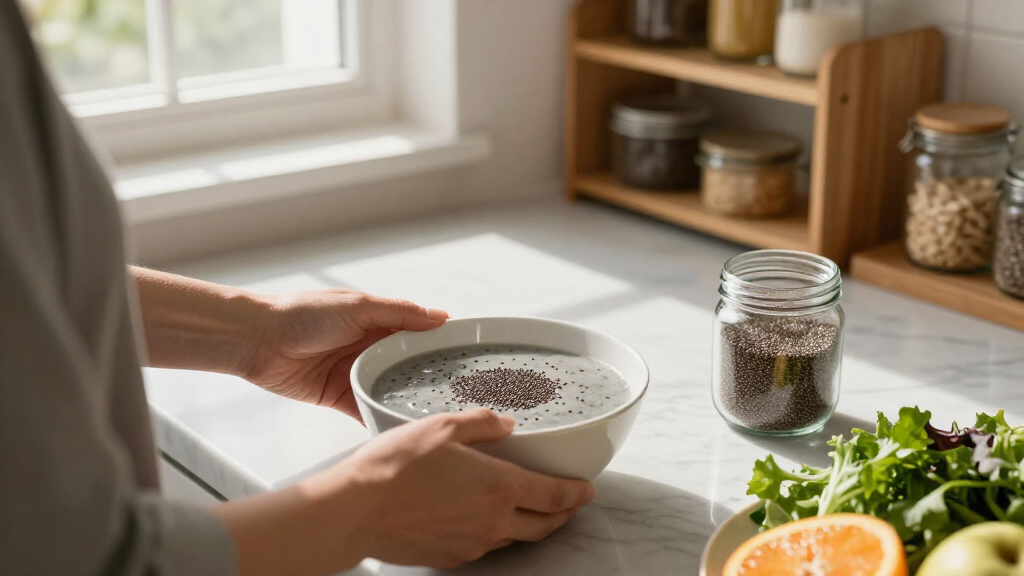
Chia gel is the most predictable form for hydration. When mixed with water, the mucilaginous coating of the seed swells, forming a jelly-like consistency that acts as a natural binder. This gel can mimic the role of eggs in many recipes, providing moisture and structure without added gums. The choice between using whole, ground, or soaked chia depends on the desired texture, appearance, and nutritional goals of your baked goods. For example, a vegan muffin might rely on gel for moisture and binding, while a bread recipe may benefit from ground chia for better crumb structure. Understanding these behaviors allows bakers to tailor their approach for optimal results.
Products Worth Considering

Cuisinart ICE-100 1.5-Quart Automatic Ice Cream and Gelato Maker

Instant Pot InstantChill Ice Cream Maker with Rolled Ice Cream Cold Plate, 2-Pint

Cuisinart ICE-70P1 2-Quart Ice Cream Maker with Countdown Timer
As an affiliate, we earn on qualifying purchases.
How Chia Changes Moisture and Structure — What You Need to Know
Chia’s remarkable ability to absorb up to 12 times its weight in liquid isn’t just a fun fact—it’s a game-changer for baking. This high absorbency means chia acts like a natural hydrocolloid, thickening batters and helping baked goods maintain their shape and moisture content. When chia forms a gel, it creates a network that traps water within the batter, resulting in a cohesive, moist crumb. This is especially valuable in gluten-free baking, where the absence of gluten’s structural properties makes baked goods prone to crumbling or dryness.
But why does this matter for bakers? Because the moisture-retention properties of chia can significantly extend the freshness and shelf life of baked goods. A loaf with chia gel can stay softer longer, reducing waste. However, this benefit comes with a tradeoff: too much chia or insufficient liquid can lead to a gummy or overly dense texture that detracts from the final product. It’s essential to understand the balance—adding enough chia to improve moisture and structure without overwhelming the batter’s liquid content.
Applying this knowledge means adjusting your recipe’s liquids when adding chia. For instance, if you incorporate a significant amount of chia gel, reduce other liquids slightly to prevent overhydration. Similarly, in recipes like muffins or cookies, using too much chia can result in a sticky or heavy crumb. The key is to experiment with small batches, observe how the batter behaves, and adapt accordingly. By mastering this balance, you can create baked goods that are moist, tender, and have a desirable crumb, all while benefiting from the nutritional boost chia provides.
Applying Chia in Your Baking for Optimal Results
Once you understand how chia behaves, the next step is applying this knowledge to your recipes. Start by experimenting with small quantities—begin with 1 tablespoon of chia seeds per cup of flour—and observe how the batter changes. Use soaked chia gel when you want to replace eggs or add moisture, especially in vegan recipes. Grind chia for a finer texture that blends seamlessly into doughs and batters, ideal for delicate baked goods like cakes or muffins.
Adjust your liquids accordingly—if you add ground chia, you might need to slightly increase the liquid content to compensate for its absorbent nature. When using whole seeds, consider soaking them first to soften and maximize their binding potential. Remember, the goal is to achieve a batter that feels moist but not overly sticky or dense. With practice, you’ll learn the perfect balance for different recipes, whether you’re baking bread, muffins, or cookies.
Incorporate chia at different stages—mix into dry ingredients, or hydrate beforehand to create a gel that can be stirred into wet components. This flexibility allows you to experiment and tailor your baked goods for texture, nutrition, and appearance. Over time, you’ll develop an intuition for how much chia to use and how to adjust your recipe’s liquids, leading to consistently successful results that are moist, tender, and nutritious.
Conclusion
Chia seeds are a simple yet powerful addition to your baking arsenal. When hydrated properly, they transform recipes, boosting both texture and nutrition with minimal effort. Think of them as tiny helpers that can make your baked goods moister, sturdier, and more nourishing—no complicated tricks required.
Next time you mix up batter, consider tossing in a spoonful of chia gel or ground seeds. Your taste buds—and your body—will thank you for it. Baking with chia isn’t just a trend; it’s a practical way to add plant-based power to everyday treats. Why not try it today?