TL;DR

Get baking supplies delivered free with Prime
- Fast, free delivery on millions of items
- Prime Video, Amazon Music and more included
- Member-only deals all year
Overmixing activates too much gluten in the batter, making baked goods dense and chewy instead of light and tender. Gentle mixing until just combined keeps your treats fluffy and soft. Knowing when to stop is key to bakery-quality results.
Ever pulled out a muffin or cake and wondered why it’s heavier or tougher than expected? The culprit is often right in the instructions: ‘Do not overmix.’ That simple phrase packs a punch in your baking process. It’s not just a suggestion but a crucial step to keep your baked goods light, fluffy, and tender.
Understanding what overmixing does, why it happens, and how to avoid it can transform your baking results from hit-or-miss to reliably perfect. Whether you’re making a quick bread or pancakes, this guide breaks down the science and shares practical tips so you can bake with confidence.
Always stop mixing as soon as ingredients are just combined; lumps are okay.
Overmixing develops too much gluten, making baked goods dense and chewy.
Use gentle folding techniques with a spatula for tender results.
Pay attention to visual cues rather than stirring until batter is perfectly smooth.
Practicing mindful mixing saves you from dense, flat treats.
What exactly does ‘overmix’ do to your batter?
‘Overmixing’ means stirring your batter past the point where ingredients are just combined. It’s like stirring cookie dough until it’s smooth—sounds harmless, but it’s a recipe for dense, chewy baked goods. When you overmix, you activate gluten, the protein in flour that gives bread its elasticity. But in delicate treats like muffins or pancakes, too much gluten makes the crumb tough and rubbery.
Why does this matter? Because gluten development influences the final texture. If you develop too much gluten in quick breads or pancakes, the structure becomes overly elastic, leading to a dense, chewy outcome rather than a light, airy one. The tradeoff is clear: too little mixing might result in uneven distribution of ingredients, but too much causes toughness. Striking the right balance is essential for achieving the perfect crumb and mouthfeel.
Imagine trying to fold a delicate fabric; overworking it causes it to lose its softness and drape. Similarly, overmixing in baking strips away the tender qualities you aim for, turning what should be a soft crumb into a rubbery or tough one. Recognizing this helps bakers make smarter choices during mixing, ensuring the final product retains its intended lightness and texture.
Products Worth Considering

KitchenAid Artisan Series 5-Quart Tilt-Head Stand Mixer, Dried Rose (KSM150PS)

De'Longhi Linea Classic Espresso Machine with Adjustable Milk Frother

Le Creuset Enameled Cast Iron Round Dutch Oven, 5.5 Qt, Flame
As an affiliate, we earn on qualifying purchases.
Why does overmixing make baked goods dense and chewy?
When you overmix, you develop a network of gluten strands that trap air and water, which initially helps with rise and structure. However, excessive gluten formation results in a dense, rubbery texture because the protein network becomes too elastic and tight, limiting expansion during baking. This means your baked goods won’t rise as well, and their crumb becomes tight and chewy instead of light and tender.
For example, a muffin batter that’s been mixed too vigorously develops a strong gluten network that resists expansion, leading to a compact, heavy muffin instead of a fluffy one. Similarly, pancakes that are overmixed tend to be flat and chewy, sacrificing the airy texture that makes them enjoyable. The science here is that gluten’s elasticity, when overdeveloped, constrains the batter’s ability to expand properly in the oven, thus compromising the final texture.
Research indicates that overmixing can increase gluten formation by up to 50%, which directly correlates with the deterioration in crumb quality. This highlights why gentle mixing is crucial—it’s a tradeoff between ensuring ingredients are combined and maintaining the delicate balance that yields tender baked goods. Recognizing the science behind gluten’s role allows bakers to make informed decisions, avoiding overly elastic doughs and batters that turn out tough.
How to tell when you’re done mixing without overdoing it
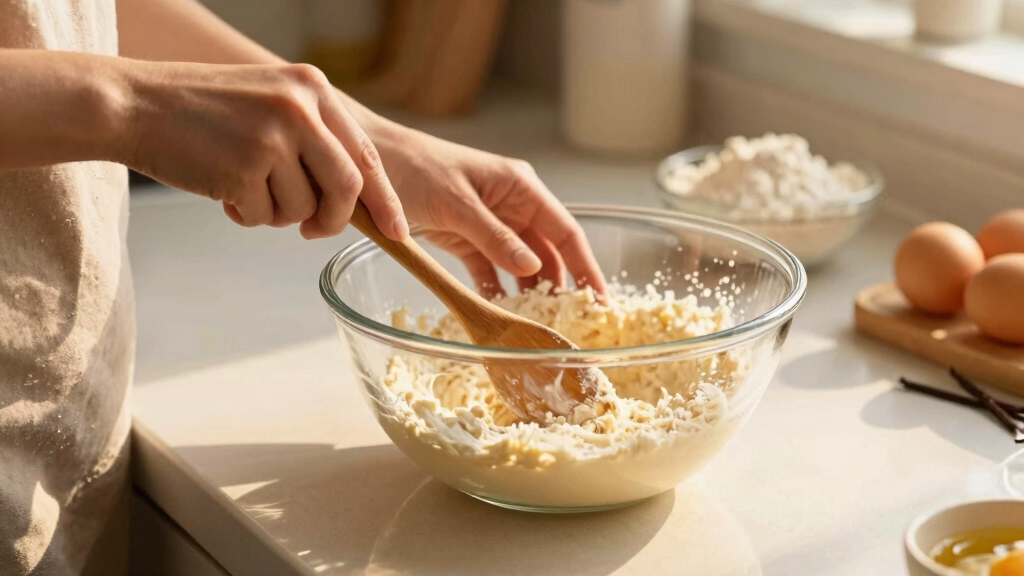
The trick is to stop mixing as soon as the ingredients are just combined. Look for a batter that’s slightly lumpy, with streaks of flour still visible. This indicates that the gluten hasn’t been overdeveloped, preserving the tender crumb. Overmixing often results in a perfectly smooth, glossy batter—an indicator that gluten has been overactivated and the dough is heading toward toughness.
For example, when making pancakes, stopping once you see a few small lumps prevents the batter from becoming dense and chewy after cooking. It’s tempting to mix until smooth, but that’s when the gluten network becomes too strong. The goal is to recognize visual cues: a slightly lumpy batter with no dry flour—this balance ensures your baked goods stay light and fluffy.
Here’s a simple checklist:
- Ingredients are just combined; no streaks of flour remain.
- Some lumps are okay—don’t aim for a perfectly smooth batter.
- Use a gentle folding motion instead of vigorous stirring.
Practicing patience and observation during mixing helps prevent overworking the batter and ensures a tender final product. Remember, in baking, less is often more—less mixing leads to more tender, better-risen treats.
Frequently Asked Questions
Can I overmix with a hand whisk or spoon?
Yes, overmixing can happen with any utensil. The key is to stir gently and stop once ingredients are mostly combined. Using a spatula for folding helps control the process better than vigorous stirring with a spoon or whisk.
Does the type of flour matter in overmixing?
Absolutely. Cake flour, which has less gluten, is more forgiving and less prone to toughness if overmixed. Bread flour, with higher gluten content, develops more structure and can become dense quickly if overmixed. Follow recipe instructions carefully for best results.
Is overmixing only a problem in quick breads and muffins?
Not at all. Overmixing can impact nearly all baked goods, especially cakes, pancakes, and waffles. For yeast breads, a different process—kneading—is involved, but the principle of avoiding overworking the dough still applies.
How long should I mix my batter for pancakes?
Typically, 15-20 seconds of gentle folding or stirring until ingredients are just combined is enough. Remember, a few lumps are okay and help keep the pancake light and fluffy.
What’s a quick way to tell I’ve overmixed?
If your batter looks smooth and glossy, it’s probably overmixed. Instead, look for a slightly lumpy batter that’s just coming together—this ensures a tender, airy crumb.
Conclusion
Next time you’re tempted to keep stirring, remember: less is more. Gently mixing until just combined unlocks the secret to soft, fluffy baked goods. It’s a small step that makes a big difference—your baked treats will thank you.
Think of your batter as a delicate fabric; don’t tug too hard or you’ll ruin its softness. Keep it light, keep it tender, and enjoy baking success in every batch.