
TL;DR

Get baking supplies delivered free with Prime
- Fast, free delivery on millions of items
- Prime Video, Amazon Music and more included
- Member-only deals all year
You can achieve a crackly bread crust at home by using high heat, generating steam, and preheating your baking vessel. Simple tools like Dutch ovens and pizza stones make a big difference. It’s all about mimicking professional conditions with what you have.
Think you need a fancy, professional oven to make bread with a crackly, irresistible crust? Think again. The secret isn’t just in the oven—it’s in how you bake, hydrate, and steam—using tools you already have at home.
Today, you’ll learn practical tricks to turn your standard home oven into a crust-cracking powerhouse. No special equipment? No problem. Just a few simple steps and a little know-how can give you that bakery-quality crunch on your next loaf.
Preheat your baking vessel—Dutch oven or stone—at least 30 minutes before baking for the best crust.
Generate steam early in the bake—spray water or add hot water in a pan—to delay crust setting and promote crunch.
Bake at the highest temperature your oven allows—around 450°F to 500°F—for optimal browning and crackliness.
Use dough with high hydration (75-85%) and allow for long fermentation to develop flavor and crust texture.
Avoid common mistakes: low heat, skipping steam, or overproofing—these kill that satisfying crackle.
Why Your Oven’s Limitations Don’t Stop You from Achieving a Crackly Crust
Home ovens typically max out at around 450°F, which is lower than many professional ovens. But that doesn’t mean you can’t get a crispy, crackly crust. It’s all about how you use that heat and the environment inside your oven.
High heat is essential because it quickly browns and crisps the crust through caramelization and the Maillard reaction. Adding steam during the first few minutes keeps the crust moist enough to expand, then dries out to form that crackly exterior.
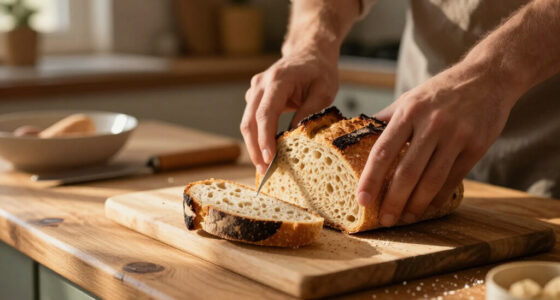
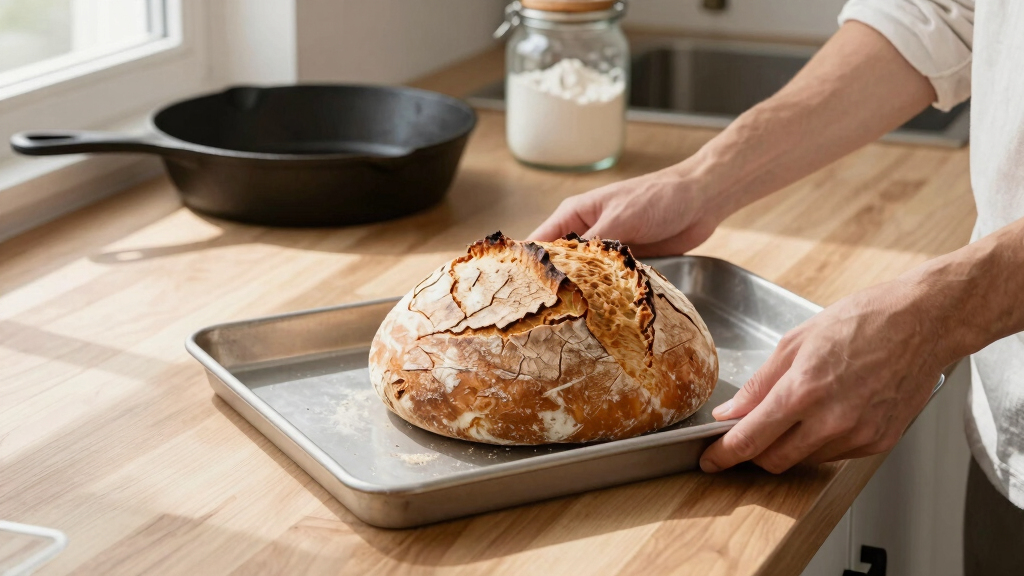
For example, baking a sourdough loaf at 500°F in a Dutch oven traps steam, creating a glossy, crackly finish that’s hard to beat in a professional setting.
Products Worth Considering

Le Creuset Enameled Cast Iron Round Dutch Oven, 5.5 Qt, Flame

Le Creuset Signature Enameled Cast Iron Round Dutch Oven, 5.5 qt, Deep Teal

Le Creuset Enamemed Cast Iron Oval Dutch Oven, 5 qt., White/Crucible
As an affiliate, we earn on qualifying purchases.
3 Simple Tools That Mimic Professional Ovens in Your Kitchen
You don’t need fancy equipment—just some household items that produce similar results. Here are three game-changers:
- Dutch oven or cloche: Traps steam naturally, creating that luscious crust. This environment allows the bread to expand fully while developing a deeply caramelized crust, mimicking the conditions of professional steam-injected ovens. Without this, you risk a denser crumb and a less crackly crust.
- Pizza stone or baking steel: Provides intense, even heat that promotes uniform crust development. The direct contact with a hot surface accelerates browning, but it also requires careful preheating to avoid cold spots that can lead to uneven crusts.
- Metal pan or lava rocks: Generate steam when water is added during baking. These options create localized humidity, crucial for allowing the dough to expand and develop a crackly surface. The tradeoff is that they require more active management during baking, but they offer flexibility when other tools aren’t available.
Imagine preheating your Dutch oven in the oven, then sliding your dough inside—your kitchen fills with that familiar crackly aroma. Or placing a hot pizza stone directly on the rack for uniform heat transfer. These simple swaps make a world of difference, but understanding why they work helps you optimize each step for the best crust.
How to Use Steam and High Heat to Crackle Your Bread
Follow these steps to maximize your crust’s crispiness:
- Preheat your oven to at least 450°F. Place your baking stone or Dutch oven inside to heat thoroughly—at least 30 minutes. This high temperature ensures rapid browning and crust formation, but it also means your oven must be well-preheated to avoid temperature drops that can result in a softer crust.
- Shape your dough and let it proof until just ready. A well-developed gluten network is critical because it provides the structure needed to trap steam and support oven spring, which directly influences crust crackliness.
- Score your loaf to control expansion and create aesthetic appeal. Proper scoring allows gases to escape in controlled ways, preventing uncontrolled bursting that can damage the crust’s crackling potential.
- Place your dough into the hot vessel or onto the hot stone. If using a Dutch oven, cover it immediately to trap steam. For stones, slide the dough onto the hot surface quickly to maintain temperature and start the crust development process from the moment baking begins.
- Generate steam during the first 10-15 minutes by spraying water into the oven or adding water to a hot pan at the bottom. The steam keeps the crust moist during initial oven spring, allowing it to expand fully before drying and cracking, which results in that desirable crackly exterior.
- Bake at high heat for 20-30 minutes. Remove the cover or steam source halfway through for maximum crust development. This balance ensures the crust is both deeply caramelized and crackly, without burning or underdeveloping.
For example, spraying water into a preheated pan creates instant steam that keeps the dough moist, allowing for better oven spring and a crackly finish. Managing steam and heat carefully is a tradeoff—too much moisture can delay crust formation, while too little prevents cracking. Finding that sweet spot is key to consistent results.
The Role of Dough Hydration and Fermentation in a Perfect Crackly Crust
Hydration levels of 75-85% are key for a crust that’s both chewy and crispy. Higher hydration produces more steam inside the dough during baking, which creates a more expansive oven spring and a thinner, more delicate crust that cracks easily. The tradeoff is that very high hydration can make handling the dough more challenging, requiring more skill to shape properly.
Longer fermentation develops complex flavors and strengthens gluten, which is essential for trapping gases and supporting the expansion needed for a crackly crust. Without proper fermentation, the crust may be dense or lack the desired crackle because the gluten network isn’t sufficiently developed to support the rapid expansion and crust formation.
Think of it like giving your dough time to build strength—this translates into a crust that’s crisp on the outside and tender inside. Skimping on fermentation or using low hydration often results in a softer, less crackly crust with less flavor complexity. Balancing these factors involves understanding your dough’s behavior and adjusting fermentation time and hydration accordingly for optimal results.
Common Mistakes That Keep Your Crust from Being Crackly
Few things kill crust texture faster than baking at too low a temperature or skipping steam. For instance, baking a loaf at 425°F without steam often results in a dull, soft crust instead of that satisfying snap. The lower heat prevents Maillard browning and caramelization from reaching their full potential, while missing steam reduces oven spring and crust expansion.
Other common pitfalls:
- Not preheating your baking vessel enough, which causes uneven heat transfer and a softer crust.
- Overproofing the dough, which weakens gluten structure and reduces oven spring, leading to a less crackly crust.
- Using too little water in your dough, resulting in less steam during baking and a denser crust.
- Failing to generate enough steam during initial baking, which prevents the crust from expanding properly and developing that characteristic crackle.
Imagine a loaf that’s dense and pale—these are clear signs you missed critical steps in the process. Fixing these issues by maintaining high oven temperatures, ensuring proper proofing, and actively managing steam creates a dramatic difference, turning a dull loaf into a bakery-quality masterpiece with a satisfying crackle.
Quick Comparison: Home Tools vs. Professional Ovens for Cracking a Crust
| Feature | Home Tools | Professional Ovens |
|---|---|---|
| Maximum temperature | 450°F–500°F | 500°F+ |
| Steam generation | Using water in pans, Dutch ovens, or spray bottles | Built-in steam injection systems |
| Heat distribution | Preheated stones or steels | Advanced heating elements for even heat |
| Crust quality | High with proper technique | Consistently excellent |
While home tools can’t match the sheer power of a professional oven, smart use of preheated stones, Dutch ovens, and steam tricks can produce a crust that’s nearly indistinguishable. Understanding the underlying principles—like the importance of high heat, steam, and even heat distribution—helps you make the most of your equipment and close the gap between home and professional results.
Frequently Asked Questions
Can I get a crackly crust without a Dutch oven?
Absolutely. You can place your dough on a preheated pizza stone or steel, then generate steam with a hot pan or spray bottle. These methods trap heat and moisture, mimicking professional results.
How do I generate enough steam in a home oven?
Place a metal pan or lava rocks on the bottom rack while preheating. When ready, add boiling water to the pan or spray water into the oven during the first 10-15 minutes of baking. This creates a humid environment that helps form a crackly crust.
Does dough hydration really matter for crust texture?
Yes. Higher hydration levels—around 75-85%—produce more steam and a more open crumb, leading to a crisper, more crackly crust. Lower hydration results in a denser, softer crust.
What’s the biggest mistake home bakers make with crusts?
Most common is not baking hot enough or skipping steam. Both are critical. Also, overproofing can weaken gluten, preventing the crust from cracking properly.
Can I improve my crust without changing my oven?
Definitely. Focus on preheating your baking vessel, using high hydration dough, and adding steam early in baking. These tweaks make all the difference.
Conclusion
Achieving that crackly, bakery-style crust doesn’t require fancy equipment—just a handful of simple techniques used consistently. Preheat your baking vessel, generate steam, and bake hot. Your loaf will thank you with a glossy, crispy exterior that’s impossible to resist.
Next time you bake, think of your oven as a mini bakery. With these tricks, you’re not just baking bread—you’re creating a crust that’s worth every bite.