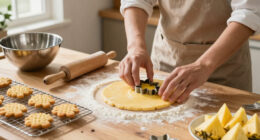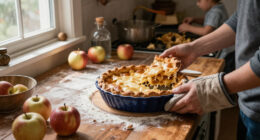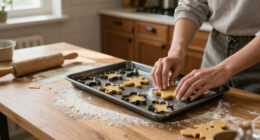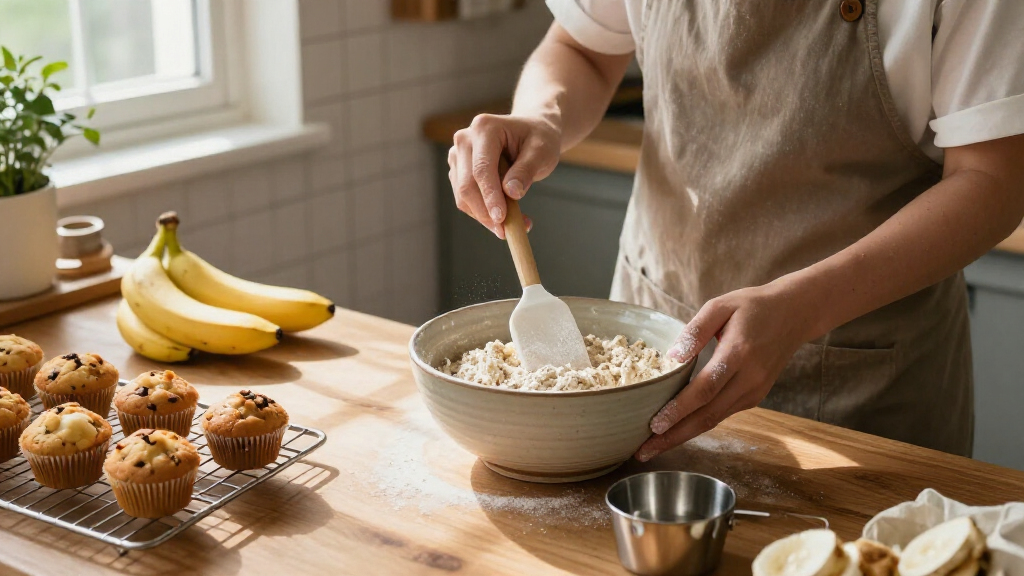

Choosing healthy baking tools is less about a label that promises a healthier result and more about what touches your food, how the material handles heat, and whether the pan suits the recipe. Glass bakeware and food-grade silicone are common alternatives to conventional metal pans, but they solve different problems. Glass is rigid, nonporous, and useful for casseroles, breads, and dishes that move from oven to table. Silicone is flexible and often releases muffins or shaped treats with little effort, though it can be harder to handle when filled and its quality varies by product.

Get baking supplies delivered free with Prime
- Fast, free delivery on millions of items
- Prime Video, Amazon Music and more included
- Member-only deals all year

Amazon Basics Silicone Rectangular Baking Mat, Non-Stick, Reusable, Dishwasher Safe, 16.5" x 11.6", Beige/Gray, 2-Pack
- ✔ Brand: Amazon Basics
- ✔ Pack size: 2 mats
- ✔ Material: BPA-free silicone

13-Inch Danish Dough Whisk with Long Wooden Handle
- ✔ Brand: COOKSURE
- ✔ Tool type: Danish dough whisk
- ✔ Length: 13 inches

Silicone Jar Spatula Set – Long Handle Sourdough Scraper, Skinny Spatulas for Jars, Bottles, and Containers
- ✔ Brand: GZLT
- ✔ Set size: 4 spatulas
- ✔ Material: Food-grade, BPA-free silicone
The main tradeoff is stability and durability versus flexibility and release. Choose glass if you want a sturdy pan for everyday oven dishes and favor a simple, nonreactive surface. Choose silicone if easy release and compact storage matter more, and you are willing to buy a clearly labeled, reputable product and use a tray underneath. Neither material makes a recipe nutritious by itself; ingredients, portion size, and cooking method matter far more.
At a Glance
| Criteria | Glass bakeware | Food-grade silicone bakeware | Winner |
|---|---|---|---|
| Food contact surface | Nonporous glass surface; check that the dish is rated for oven use | Food-grade silicone varies by product; follow its stated temperature limits and care instructions | Depends |
| Heat behavior | Heats more slowly than metal and retains heat; follow recipe-specific temperature guidance | Flexible and generally slower to heat than metal; results can vary by mold and recipe | Depends |
| Release and greasing | Usually benefits from greasing or parchment for sticky foods | Often releases foods readily, sometimes with less greasing | B |
| Handling and stability | Rigid and stable, but heavy; avoid sudden temperature changes | Light and flexible; a filled mold is easier to move when placed on a baking sheet | A |
| Cleaning and storage | Dishwasher-friendly for many products; takes more cabinet space | Usually easy to clean and nests or folds for storage; check dishwasher guidance | B |
| Durability and breakage | Can last for years with careful handling, but may chip or shatter | Resists shattering but can tear, stain, or retain odors over time | Depends |
| Recipe versatility | Strong for casseroles, brownies, quick breads, and oven-to-table dishes | Useful for muffins, small cakes, and shaped items; less suited to dishes needing firm support | Depends |
| Value | Often a good long-term buy if handled carefully | Worth the added cost when release and storage are frequent priorities | Depends |
Amazon Basics Silicone Rectangular Baking Mat, Non-Stick, Reusable, Dishwasher Safe, 16.5" x 11.6", Beige/Gray, 2-Pack
For a buyer choosing one tool to change everyday baking habits, the Amazon Basics Silicone Baking Mats are the most broadly useful option here. Their nonstick surface is designed to let us bake cookies, pastries, and roasted vegetables without relying on added oil, cooking spray, or parchment for the surface. That makes their healthy-baking connection more direct than the dough whisk’s, which helps with preparation but does not affect what goes on the tray.The two-mat set also supports repeated use, and the stated 480°F oven limit covers many standard baking and roasting tasks. Compared with the GZLT spatulas, these mats have a more consequential role in how food meets the pan; compared with the COOKSURE whisk, they serve a wider range of finished foods. The main limitation is setup: each mat must sit on a baking tray, so it is not a liner for a bare oven rack. Buyers should also follow the stated temperature limit and the product’s care guidance. Choose this set if reusable nonstick baking surfaces are your priority; skip it if you need help mixing dough or scraping ingredients from jars.
Pros:
- Nonstick surface can reduce the need for oil, cooking spray, or parchment on the baking surface.
- Two reusable mats support repeated baking sessions.
- Dishwasher-safe design simplifies cleanup.
- Flexible mats can be rolled or stored flat.
Cons:
- Must be placed on a baking tray; it is not intended for direct use on an oven rack.
- The 480°F maximum calls for attention to recipe temperatures and use instructions.
- Does not help mix or transfer ingredients.
Best for: Home bakers who want a reusable nonstick surface for cookies, pastries, and vegetables, and want to reduce reliance on added oil or parchment.
Not ideal for: Anyone seeking a dough-mixing tool, a flexible scraper, or a mat that can be used directly on an oven rack.
Bottom line: Choose these mats when reusable, lower-oil baking surfaces are the most useful change you want to make in your kitchen.
“Choose these mats when reusable, lower-oil baking surfaces are the most useful change you want to make in your kitchen.”
13-Inch Danish Dough Whisk with Long Wooden Handle
When our baking starts with a dense mixture, the COOKSURE Danish Dough Whisk fills a gap the top-ranked mats cannot: it is designed to bring thick sourdough, bread, and pizza dough together. Its stainless steel coil offers a simpler, less bulky shape than a balloon whisk, while the 13-inch wooden handle gives us reach in deeper bowls. This makes it the lineup’s clearest specialist for dough preparation.That specialization is also its tradeoff. The long handle may feel unwieldy in a small bowl, and the wood needs sensible care around moisture. Compared with the GZLT spatulas, the whisk is better suited to combining ingredients than scraping every last bit from a container. Compared with the baking mats, it supports the mixing stage but does not help reduce oil or disposable liners at the oven stage. Choose it if thick dough is a regular part of your baking; for general-purpose stirring or small-batch mixing, a shorter tool may fit better.
Pros:
- Coil head is designed for thick doughs such as sourdough and pizza dough.
- 304 stainless steel head is described as resistant to rust and corrosion.
- Long handle reaches into deeper mixing bowls.
- Compact coil design is less bulky than a balloon whisk.
Cons:
- Thirteen inches can be cumbersome in smaller bowls or compact workspaces.
- Wooden handle can absorb moisture if not properly cared for.
- Its focused dough role offers less versatility for scraping and baking-surface tasks.
Best for: Bakers who regularly mix sourdough, bread, or pizza dough in medium or deep bowls and want a dedicated mixing tool.
Not ideal for: People who mostly use small bowls, need a spatula for scraping, or want a tool that directly replaces baking liners.
Bottom line: Pick this whisk when mixing heavy dough is the bottleneck in your baking routine, rather than reducing oil or parchment at the tray.
“Pick this whisk when mixing heavy dough is the bottleneck in your baking routine, rather than reducing oil or parchment at the tray.”
Silicone Jar Spatula Set – Long Handle Sourdough Scraper, Skinny Spatulas for Jars, Bottles, and Containers
The GZLT Silicone Jar Spatula Set is the supporting player in this lineup: its four narrow, flexible tools are meant to reach into jars, bottles, and containers, helping us scrape out batters, spreads, and other ingredients. The food-grade, BPA-free silicone heads are paired with stainless steel cores, so they are designed to retain strength while flexing at the tip. Long handles and non-slip grips can make that reach more manageable than with a short scraper.Unlike the baking mats, these spatulas do not create a nonstick oven surface, and unlike the COOKSURE whisk, they are not shaped to mix thick dough efficiently. Their value is in ingredient handling and reducing what gets left behind in containers. The set is listed as heat-resistant, but the supplied description gives conflicting limits of 445°F and 600°F; we would not rely on the higher figure without checking the product’s own instructions. Choose this set for narrow-container scraping and transfer. Skip it if your main need is oven baking or heavy mixing.
Pros:
- Four narrow spatulas suit jars, bottles, and containers.
- Food-grade silicone is described as BPA-free.
- Stainless steel cores add support while the tips remain flexible.
- Seamless construction is dishwasher safe and designed to resist stains and odors.
Cons:
- The description gives inconsistent heat limits of 445°F and 600°F.
- Narrow scraper design is less suited to mixing large batches of thick dough.
- Color choices may not suit every kitchen.
Best for: Bakers who often use jars or narrow containers for ingredients and want flexible tools for scraping and transferring mixtures.
Not ideal for: Anyone looking primarily for a reusable baking surface, a dedicated dough mixer, or a single-purpose tool with an unambiguous heat limit.
Bottom line: Choose this set to scrape and transfer ingredients from narrow containers, while treating its stated heat limit cautiously until confirmed.
“Choose this set to scrape and transfer ingredients from narrow containers, while treating its stated heat limit cautiously until confirmed.”
As an Amazon Associate we earn from qualifying purchases.
Key Differences
For a kitchen focused on everyday baking and oven meals, glass is the more dependable all-purpose choice. Its rigid shape supports batters and heavier foods, and its nonporous surface is straightforward to clean. It also holds heat after leaving the oven, which can keep a dish warm at the table. That same heat retention means cooks should follow the recipe’s temperature and timing guidance rather than assume a glass pan behaves exactly like a metal one.
Silicone earns its place when release and storage are recurring annoyances. Flexible molds can make muffins and shaped bakes easier to remove, and they take up less space when stored. The tradeoff is less support: a full silicone mold can wobble, so it is best placed on a firm baking sheet before filling or moving. Silicone also comes in varied formulations and quality levels, making product labeling and care instructions more relevant than with a plain glass dish.
For health, neither material is a shortcut to better food. Glass is a simple choice for people who want to minimize uncertainty about coatings, while food-grade silicone from a reputable maker can be useful within its stated temperature range. The sensible decision is to match the tool to the recipe, avoid thermal shock with glass, and replace damaged or poorly labeled bakeware.
Detailed Comparison
Food contact surface (Glass bakeware wins — moderate)
Glass wins for simplicity, with a nonporous surface that does not need a coating to release food. The advantage is moderate for shoppers who prefer a plainly specified material and straightforward care. Food-grade silicone remains a practical option when the manufacturer identifies it clearly and provides temperature and care limits; product quality varies more across the category.
Heat behavior (moderate difference)
This is a recipe-dependent tie. Glass retains heat and warms more slowly than metal, while silicone is flexible and also tends to heat differently from rigid pans. Baking times and browning can vary with pan shape, recipe, and oven. For predictable results, follow the recipe’s guidance for the specific material and check doneness rather than relying only on the clock.
Release and greasing (Food-grade silicone bakeware wins — moderate)
Silicone wins by a moderate margin for muffins, molded cakes, and other items that tend to stick. Its flexibility helps loosen the sides and base, and some foods need less greasing. Glass is reliable for many dishes but often needs butter, oil, or parchment for clean release, especially with sticky batters.
Handling and stability (Glass bakeware wins — major)
Glass wins by a major margin when a pan must stay level while carrying liquid batter or a heavy meal. Its rigid sides make filling and transferring straightforward. Silicone is lighter, but a filled mold can bend or spill; setting it on a baking sheet before filling largely solves the problem, at the cost of an extra step.
Cleaning and storage (Food-grade silicone bakeware wins — minor)
Silicone has a minor edge for compact kitchens because flexible molds can nest or fold and are generally easy to wash. Glass is also easy to clean and many dishes are dishwasher-safe, but it is bulky and heavier to put away. Check the manufacturer’s dishwasher directions for either material.
Durability and breakage (moderate difference)
Neither wins for every household. Glass can serve for years but may chip or shatter if dropped or exposed to abrupt temperature changes. Silicone will not shatter, yet it can tear, stain, or pick up odors. The better fit depends on whether accidental breakage or gradual wear is the more likely problem in your kitchen.
Recipe versatility (moderate difference)
Glass wins for mixed use across baking and oven meals, while silicone wins for shaped small bakes. This is a moderate, use-dependent difference: glass handles casseroles, brownies, and quick breads well; silicone molds suit muffins and intricate shapes but are less useful when the dish needs a firm base or must go directly from oven to table.
Value (moderate difference)
Glass is usually the stronger value for a basic, frequently used pan because it is durable and serves more than one baking task. Paying more for silicone makes sense when easier release, lighter weight, or compact storage solves a regular problem. Buying a whole silicone set for occasional use is harder to justify.
Glass bakeware: Pros and Cons
Pros:
- Nonporous surface with no release coating
- Rigid, stable support for batters and heavy dishes
- Works for baking and oven-to-table meals
- Often a durable long-term purchase
Cons:
- Heavy and can chip or shatter
- Needs care to avoid sudden temperature changes
- May require greasing or parchment for release
- Bulky to store
Food-grade silicone bakeware: Pros and Cons
Pros:
- Flexible molds often release baked goods easily
- Lightweight and space-efficient
- Does not shatter if dropped
- Useful for muffins and shaped bakes
Cons:
- Filled molds need firm support during transport
- Quality and stated heat limits vary by product
- Can stain, tear, or retain odors
- Less suitable for heavy dishes or oven-to-table serving
Who Should Choose What
Choose Glass bakeware if:
- You want one sturdy pan for brownies, quick breads, casseroles, and serving.
- You prefer a nonporous surface and do not mind careful handling.
- Your kitchen has room for heavier, rigid dishes.
Choose Food-grade silicone bakeware if:
- You bake muffins or molded treats often and easy release saves time.
- Cabinet space is limited or you want lighter bakeware.
- You can choose a clearly labeled food-grade product and follow its heat limits.
Skip both if: If a recipe depends on quick, even browning or a crisp crust, a suitable metal pan may fit better; choose one rated for your recipe and follow its care instructions.
Value for Money
For most households buying a first versatile pan, glass is the better value: one well-made dish can handle baked desserts and savory oven meals for years if it is not dropped or exposed to sudden temperature changes. Silicone’s higher price is worth paying when its release advantage solves a frequent frustration, when shaped molds are central to your baking, or when storage space is tight. If you make molded treats only a few times a year, a silicone set is unlikely to earn its cost. Compare product quality and care instructions rather than paying extra for broad health claims.
Final Verdict
Choose glass as the default if you want a stable, versatile bakeware piece for regular use. It is the better fit for casseroles, brownies, quick breads, and cooks who prefer a plainly specified food-contact surface. Choose silicone if you bake small shaped items often, value easy release and compact storage, and are comfortable supporting the mold on a tray. The biggest deciding factor is the recipe: glass for rigid support and broad use, silicone for flexible release. For crusts and browning that neither handles especially well, choose an appropriate metal pan instead.
Frequently Asked Questions
Which is healthier, glass or silicone bakeware?
Neither material makes food healthier by itself. Glass offers a nonporous surface without a release coating. Food-grade silicone is another option when it is clearly labeled and used within the manufacturer’s temperature limits. Ingredients and preparation have a much larger effect on nutrition.
Can silicone bakeware go directly on the oven rack?
Check the product instructions. Because a flexible mold can bend when full, placing it on a firm baking sheet before adding batter makes it easier to move safely and keep level.
Does glass bakeware need a different baking temperature?
Follow the recipe and the bakeware maker’s directions. Glass retains heat differently from metal, so timing and browning can change. Check the food for doneness and avoid moving a hot glass dish onto a cold or wet surface.
Is paying extra for silicone worth it?
It can be if you regularly bake muffins or shaped treats that stick, or need bakeware that stores compactly. For occasional baking or a general-purpose oven dish, glass is usually the more useful purchase.