
TL;DR

Get baking supplies delivered free — and shop member deals
- Fast, free delivery on millions of items
- Access to Prime Big Deal Days deals on October 6–7
- Prime Video, Amazon Music and more included
Docking involves pricking dough with a fork or tool to release steam, preventing puffing and ensuring a flat, even crust. Proper technique and tools make a big difference in pastry results.
Ever pulled a pie from the oven only to find it puffed up like a balloon? Frustrating, right? That puffing isn’t just an aesthetic issue — it can throw off the texture and shape of your pastry. The secret to controlling this? A simple technique called docking. It’s a quick, effective way to let steam escape and keep your crust flat and crisp.
In this guide, I’ll show you exactly how docking works, the best tools to use, and some insider tips to master this technique. Whether you’re baking a tart, pie crust, or puff pastry, understanding how to dock properly can turn your baking results from uneven to perfectly flat every time.
Dock your pastry with a fork, wheel, or roller to allow steam to escape during baking.
Pierce the dough evenly, about 1/4 inch apart, to prevent puffing and create a flat crust.
Use tools suited to your pastry size — a fork for small jobs, a docking wheel for larger surfaces.
Chill your dough thoroughly before docking and baking to minimize puffing.
Combine docking with chilling, weights, or temperature control for the best results.
What is docking, and why does it stop your pastry from puffing?
Docking is the process of pricking or piercing the surface of your dough before baking. It creates tiny holes that act like vents for steam. Without these holes, steam gets trapped inside, pushing the dough apart and causing it to puff up uncontrollably.
Imagine trying to blow up a balloon inside a box. If there’s no escape for the air, it pushes outward until the balloon bursts or the box flexes. Docking gives your pastry a controlled outlet, keeping it flat and even. This trick is especially crucial for tart shells, shortcrust bases, or any flaky pastry that tends to puff during baking.
Understanding why puffing occurs helps clarify the importance of docking. When your pastry heats, moisture turns into steam. If the steam has nowhere to escape, it expands rapidly, lifting the dough. By creating small holes, docking provides a safe escape route, reducing internal pressure. This not only prevents uncontrolled puffing but also results in a more uniform, professional-looking crust. The tradeoff is that over-docking can weaken the structure or cause tiny tears, so precision matters. Proper docking balances steam release with dough integrity, ensuring your pastry remains flat and crisp without compromising its strength.
As an affiliate, we earn on qualifying purchases.
How to dock like a pro: step-by-step guide
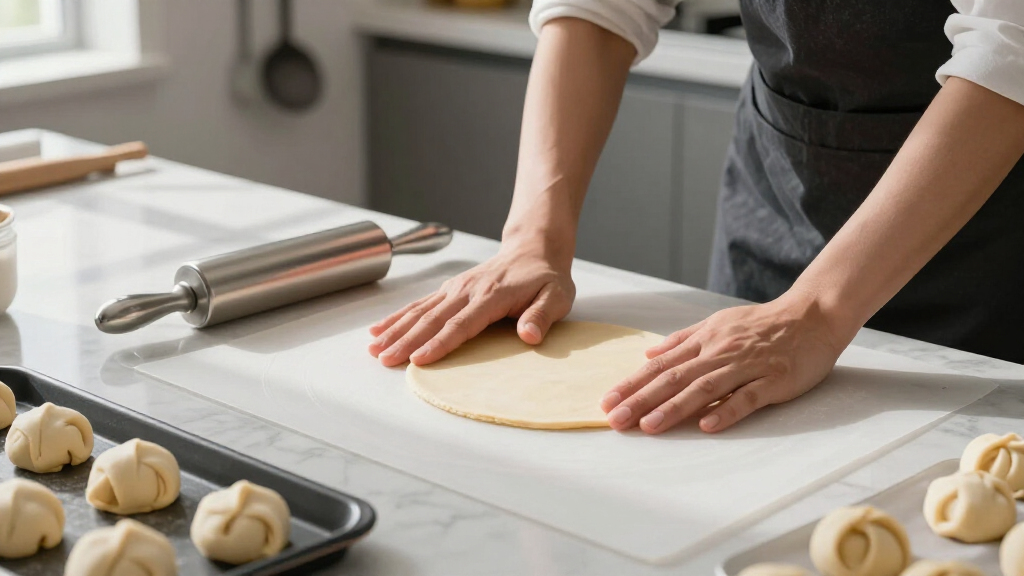
- Prepare your dough as usual, then chill it thoroughly—cold dough is easier to handle and puffs less. This step also helps tighten the gluten structure, making the dough less prone to puffing even with docking.
- Choose your tool: a fork, a docking wheel, or a patterned roller. For even results, a docking wheel or roller is ideal because they produce consistent holes, which helps in even steam release. Inconsistent piercing can lead to uneven puffing or weak spots.
- Prick the dough evenly across the surface. For a standard tart shell, space the holes about 1/4 inch apart. Press gently but firmly enough to pierce through the dough without tearing it. Consistency in hole size and spacing ensures uniform steam escape, reducing the risk of uneven puffing or cracks.
- If you’re blind baking or pre-baking a crust, dock before adding any weights or filling. Docking after adding weights can trap air and cause the crust to lift or deform.
- Finish by chilling the docked dough again if needed, to minimize puffing during baking. This extra chill helps set the dough and reduces the likelihood of the holes closing up or the crust puffing unevenly.
Think of docking as creating tiny escape valves — a few seconds of effort lead to a crust that bakes flat and uniform. Proper technique here directly influences the final texture and appearance of your pastry, making it worth the extra attention to detail.
As an affiliate, we earn on qualifying purchases.
Tools that make docking easier and more consistent
| Tool | Advantages |
|---|---|
| Fork | Common, accessible, easy to control, good for small areas or delicate doughs. However, it can be inconsistent in hole size and spacing, which may lead to uneven puffing if not used carefully. It’s best for casual or quick baking where precision isn’t critical. |
| Docking wheel | Creates uniform holes quickly, ensuring consistent steam release across large surfaces like tart shells or quiches. Its design helps maintain even pressure, reducing the chance of tears or weak spots. Investing in a good quality wheel can significantly improve your results. |
| Patterned roller | Adds decorative patterns while piercing, which can be both functional and aesthetic. It saves time and ensures consistent patterning, but may require a bit more effort to press evenly, especially on thicker doughs. |
| Perforated baking mat | Prevents sticking, simplifies docking, and reduces cleanup. While not a direct piercing tool, it can help in maintaining even pressure and uniformity when rolling out dough with perforations integrated into the surface. |
Using the right tool is essential. For small or delicate pastries, a fork might suffice, but for larger or more uniform crusts, a docking wheel or patterned roller provides more consistent results. The tradeoff is that investing in specialized tools can improve efficiency and precision, leading to better puff control and a more professional appearance.
As an affiliate, we earn on qualifying purchases.
When and where to dock your pastry for the best results
Timing is key. Dock your dough right before baking, especially if you’re pre-baking or blind baking a crust. This ensures the holes are fresh and open, providing the most effective steam escape during the initial baking phase. Docking too early can allow the holes to close or fill with flour or other ingredients, reducing effectiveness.
For pies or tarts, dock the dough after shaping but before chilling or blind baking. This sequence helps maintain the shape and prevents shrinkage or deformation during chilling. For flaky pastries like croissants or puff pastry, docking is generally unnecessary because these are designed to puff up intentionally, and piercing could interfere with their layered structure.
Think of docking as a targeted step to control puffing where flatness is desired. It’s especially useful in recipes where a uniform, flat crust is critical, such as in quiches, fruit tarts, or shortcrust bases. Proper timing ensures the holes are effective, and the crust remains structurally sound for the final bake.
As an affiliate, we earn on qualifying purchases.
Common mistakes that ruin your docking game
Over-docking: Piercing too many holes or pressing too hard can weaken your dough, causing tears or uneven baking. It can also lead to excessive dryness or cracking in the crust if the dough’s gluten network is compromised. Using gentle, even pricks preserves structural integrity while still allowing steam to escape effectively.
Skipping chilling: Docking on warm or soft dough can cause deformation, tears, or uneven puffing because the dough is more prone to stretching or tearing. Properly chilling your dough helps maintain its shape and firmness, making docking more precise and less likely to damage the crust.
Using the wrong tools: A fork may be inconsistent for larger surfaces, leading to uneven puffing or weak spots. Switching to a docking wheel or patterned roller provides more uniform holes, reducing the risk of uncontrolled puffing or structural defects. The right tool enhances both efficiency and consistency, which are crucial for professional-looking results.
Ignoring dough thickness: Thinner dough requires less piercing. Over-docking can weaken the structure and cause cracks or shrinkage. Adjust your technique based on dough thickness—less is more on delicate, thin crusts. Recognizing these nuances helps prevent common pitfalls that compromise the final product.
Remember: Practice makes perfect. Even small adjustments, like spacing or pressure, can significantly improve your results over time. Being aware of these mistakes and correcting them helps develop a more refined technique, leading to consistently flat, even pastries.
Beyond docking: other tricks to prevent puffing
Docking is powerful, but combine it with other techniques for best results. Chilling your dough reduces puffing by tightening the gluten structure, making it less prone to expansion. Using pie weights or parchment paper with weights during blind baking keeps the crust flat and prevents bubbles, which can cause uneven puffing or deformation.
For flaky pastries, a quick chill in the freezer before baking helps set the layers and minimizes uncontrolled puffing. Some bakers brush the dough with egg wash to create a barrier that helps control how much the pastry puffs during baking, especially in layered or laminated doughs. Controlling oven temperature is also critical: starting at a slightly lower temperature initially can slow rapid puffing, then increasing heat to crisp the crust ensures a controlled, even bake.
These supplementary techniques, when used alongside docking, provide a comprehensive approach to achieving flat, uniform pastries. Understanding the tradeoffs—like the need for extra chilling time or the risk of overworking dough—is key to mastering this multi-layered process for perfect results.
Frequently Asked Questions
Can I skip docking if I want my pastry to puff up?
Yes, if you’re making flaky pastries like croissants or puff pastry, puffing is part of the design. Docking is mainly for controlling puffing in crusts and tarts.How deep should I pierce my dough?
Pierce about 1/8 to 1/4 inch deep — just enough to create small holes without tearing the dough or weakening its structure.What if my dough tears while docking?
Chill your dough thoroughly beforehand. Use gentle, even pricks and switch to a softer or more flexible tool if needed. Practice helps perfect your technique.Can I reuse the scraps I docked?
Yes, as long as they’re kept cold and handled gently. Re-rolling is fine, but avoid overworking the dough to maintain its flaky texture.Are there health or safety tips for docking?
Always use clean tools, and avoid piercing dough with excessive force. Keep your workspace tidy to prevent contamination and ensure consistent, safe results.Conclusion
Docking might seem simple, but it’s a game-changer in pastry baking. It turns unpredictable puffing into a controlled, flat crust — giving your baked goods that professional look and feel. Practice with different tools and techniques, and soon it’ll become second nature.
Next time you roll out dough for a tart or pie, remember: tiny pricks can make a big difference. Your pastry will thank you with perfect, even baking and that satisfying crunch.
Fall Picks
fall essentials
As an affiliate, we earn on qualifying purchases.