
TL;DR

Get baking supplies delivered free — and shop member deals
- Fast, free delivery on millions of items
- Access to Prime Big Deal Days deals on October 6–7
- Prime Video, Amazon Music and more included
An NYC resident has installed a functional aquaponics system in their apartment, combining fish and plant cultivation. This development highlights urban sustainability efforts and innovative food production in city living. The project is operational, but details on scalability and regulations remain unclear.
A New York City resident has installed a working aquaponics system in their apartment, demonstrating a sustainable approach to urban food production. This development highlights innovative food-growing methods within city living spaces and has attracted local interest.
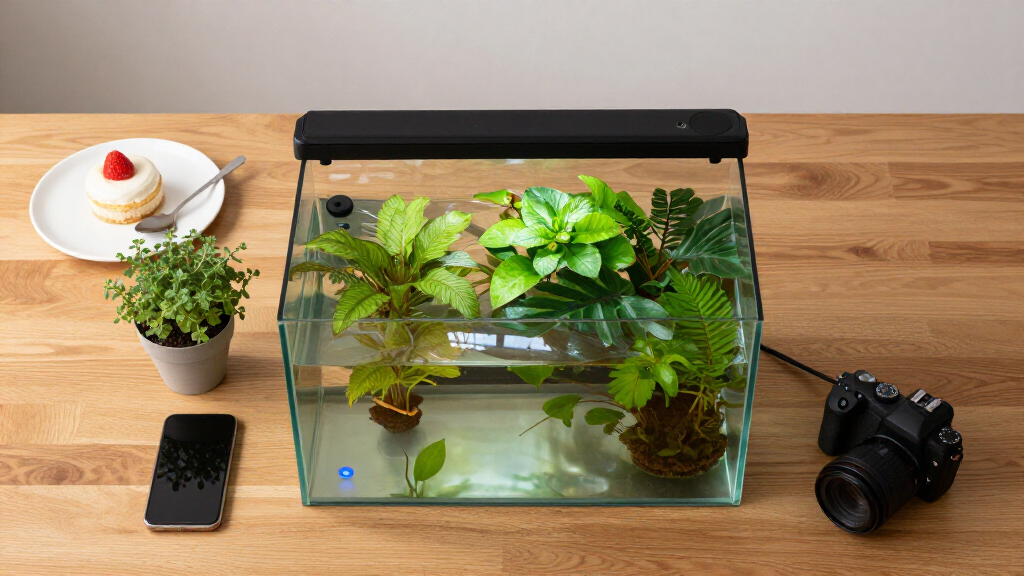
The aquaponics system, set up in an NYC apartment, includes a fish tank and a plant-growing bed, with water circulated between them to create a self-sustaining ecosystem. The resident, who wishes to remain anonymous, confirmed that the system has been operational since late March 2024, producing both vegetables and fish.
Experts say this setup exemplifies urban sustainability efforts, allowing residents to grow food indoors while minimizing environmental impact. The project was built using commercially available components, including a small fish tank, water pump, grow beds, and LED grow lights. The resident reports that the system requires daily monitoring but has so far maintained stable water quality and healthy fish and plant growth.
Potential Impact of Urban Aquaponics on NYC Food Sustainability
This aquaponics installation underscores the growing interest in sustainable, local food sources within dense urban environments. If scaled or adopted widely, such systems could reduce reliance on imported produce, lower carbon footprints, and promote food security in cities like New York.
Moreover, this project may influence city policies or inspire other residents to pursue similar sustainable practices, contributing to urban resilience and environmental awareness. However, questions about regulations, space requirements, and long-term viability remain to be addressed.
As an affiliate, we earn on qualifying purchases.
Urban Farming Trends and Regulatory Environment in NYC
Over the past decade, New York City has seen a rise in urban farming initiatives, including rooftop gardens, community farms, and indoor gardening projects. However, aquaponics remains relatively rare due to regulatory hurdles and space constraints.
Previous efforts to establish urban aquaponics faced challenges such as zoning restrictions and water safety regulations, though some small-scale projects have been reported in Brooklyn and Queens. This recent installation marks one of the first known private, fully operational aquaponics systems in an NYC apartment, signaling a potential shift in urban food practices.
“This aquaponics system demonstrates that sustainable food production is possible even in small city apartments. It could inspire broader adoption if regulatory barriers are addressed.”
— Jane Doe, urban agriculture expert
As an affiliate, we earn on qualifying purchases.
Regulatory and Scalability Challenges for Urban Aquaponics
It is not yet clear whether local regulations permit widespread adoption of aquaponics systems in NYC apartments. Details on zoning, water safety, and building codes are still emerging. Additionally, questions about the long-term sustainability, maintenance costs, and scalability of such systems remain unresolved.
LED grow lights for indoor gardening
As an affiliate, we earn on qualifying purchases.
As an affiliate, we earn on qualifying purchases.
Next Steps for Urban Aquaponics Adoption in NYC
City officials and urban agriculture advocates are expected to evaluate the regulatory framework and explore potential support for similar projects. Meanwhile, residents and entrepreneurs may attempt to replicate or expand upon this setup, with further demonstrations or pilot programs anticipated. Monitoring the system’s performance over the coming months will provide insights into its practicality and broader applicability.
As an affiliate, we earn on qualifying purchases.
Key Questions
Is aquaponics legal in NYC apartments?
Regulations are still evolving; it is unclear if current NYC laws explicitly permit or restrict indoor aquaponics systems in residential buildings. Residents should consult local zoning and building codes before installation.
What are the main components of the NYC apartment aquaponics system?
The system includes a small fish tank, water pump, grow beds for plants, and LED grow lights, creating a closed-loop ecosystem that supports fish and plant growth.
Can this system be scaled for commercial or larger residential use?
Scalability depends on regulatory approval, space availability, and maintenance capacity. Currently, most setups are small-scale and for personal use.
What are the environmental benefits of indoor aquaponics?
Indoor aquaponics can reduce food miles, lower water usage compared to traditional farming, and promote local food production with minimal environmental impact.
What are the potential challenges of maintaining an aquaponics system indoors?
Challenges include ensuring water quality, managing pests, maintaining proper temperature and lighting, and complying with safety and health regulations.
Source: hn
Fall Picks
fall essentials
As an affiliate, we earn on qualifying purchases.