TL;DR
A kitchen scale offers unmatched accuracy for measuring ingredients, leading to consistent and better baked goods. Switching from cups to weight measurement is a game-changer that scales will make effortless.
Ever had a baking recipe turn out different every time? Measuring ingredients by volume often causes that inconsistency. A simple shift to a kitchen scale transforms your baking overnight, making results predictable and professional-looking.
With a scale, you get precise weights, not vague spoonfuls or cups. That means fewer surprises, better texture, and perfect rises. Ready to see how this tiny device changes everything? Let’s unpack why a kitchen scale is your new best friend in the kitchen.
Switch from volume to weight measurements for consistent, professional results.
A kitchen scale speeds up your baking process and reduces clean-up time.
Choose a durable, easy-to-use scale with tare and multiple unit options.
Precise measurements dramatically improve baking outcomes — expect fluffier cakes and better rises.
Investing in a scale is a game-changer, making your baking more predictable and enjoyable.
Measure by Weight. Bake Like the Recipe Finally Listens.
A kitchen scale replaces vague cups and packed spoonfuls with exact grams, giving cakes better lift, cookies better texture, and bread a more reliable rise. The overnight change is simple: fewer guesses, fewer dishes, and repeatable results.
A cup of flour can swing dramatically depending on scooping, settling, and packing.
Better measurement control can reduce common baking errors and improve consistency.
Professional bakers rely on scales because texture, rise, and flavor depend on ratios.
Volume Measures Ingredients. Weight Measures Reality.
Measuring cups depend on density, moisture, and how firmly ingredients are packed. A scale removes that ambiguity. If a recipe calls for 150 grams of flour, you can hit 150 grams every time, which means your cookies, cakes, and breads start behaving predictably.
Fewer Dense Bakes
Over-measured flour makes bread heavy and cakes tight. Weight helps protect the balance of the recipe.
Repeat the Win
Once a bake works, weighing lets you recreate the same texture, rise, and flavor without guesswork.
One Bowl, Less Mess
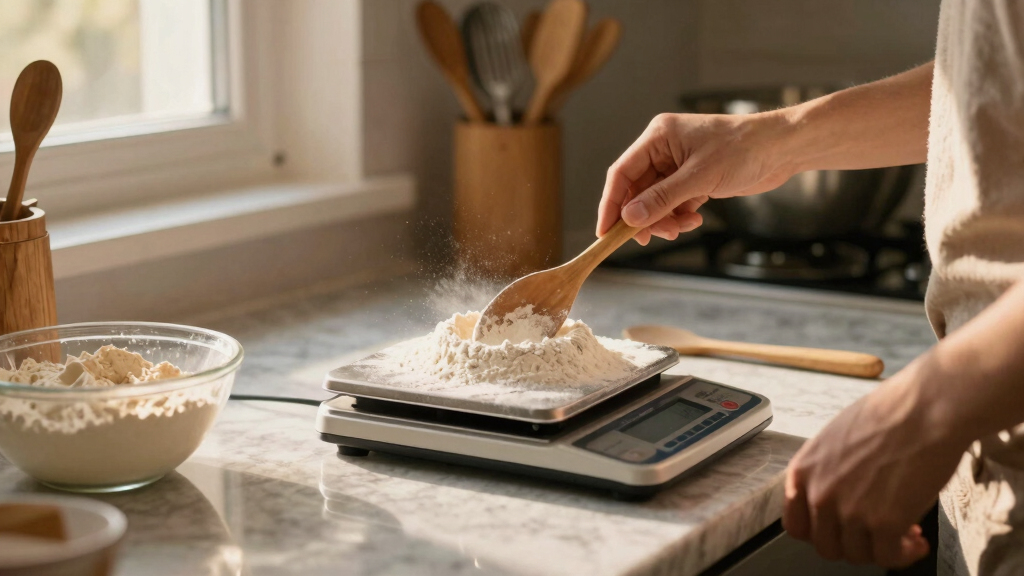
Place the bowl on the scale, press tare, add an ingredient, and repeat without dirtying extra cups.
How the Scale Changes Your Baking Routine
Place Bowl
Set your mixing bowl directly on the scale before adding ingredients.
Press Tare
Zero out the bowl so the display only tracks what you add next.
Add by Gram
Pour until the display matches the recipe, then stop with confidence.
Repeat
Tare again for flour, water, salt, sugar, butter, or any next ingredient.
Cups vs. Kitchen Scale
| Factor | Measuring Cups | Kitchen Scale | Baking Impact |
|---|---|---|---|
| Accuracy | ✗ Subject to packing and density | ✓ Exact weight measurement | Cleaner ratios and fewer failed textures |
| Consistency | ~ Changes from scoop to scoop | ✓ Repeatable every time | Better rises, crumbs, and spreads |
| Cleanup | ✗ Multiple cups and spoons | ✓ One bowl with tare | Less sink clutter after baking |
| Recipe Scaling | ~ Fractions get awkward fast | ✓ Double or halve by weight | More flexible batches and testing |
Where the Improvement Shows Up
From Guessing to Calibration
The biggest gain is control. A scale helps you keep hydration, flour, sugar, and fat in the exact proportions the recipe needs.
What to Look For in the Right Scale
Reliable Tare
A fast tare button is the feature that turns weighing into a clean one-bowl workflow.
Gram Accuracy
Choose a scale that measures to the gram or better for flour, yeast, salt, and spices.
Clear Display
A backlit, easy-to-read display matters when a large bowl shadows the platform.
Multiple Units
Grams, ounces, and milliliters help with international recipes and liquid conversions.
Why the Tiny Tool Changes the Whole Bake
The Smartest Baking Tip
Always weigh, never guess. The moment you switch from cups to grams, recipes become easier to troubleshoot, scale, and repeat.
The Practical Payoff
Expect fewer surprises, faster prep, less cleanup, and baked goods that look and taste more polished.
Why Precision Matters More Than You Think
Measuring ingredients by weight isn’t just about accuracy — it’s about control. Flour, for example, can vary by 20% depending on how tightly packed your cup is. That leads to dense or flat baked goods. Using a scale, you measure exactly what the recipe calls for — no guessing.
Imagine baking chocolate chip cookies and using 150 grams of flour every time. The cookies come out just right — chewy center with crispy edges. That consistency keeps your baking predictable and your guests impressed.
But why does this matter? Because baking is a delicate balance. Small variations in ingredient amounts can significantly impact texture, rise, and flavor. Over-measuring flour can make your bread dense, while under-measuring sugar can result in flat cakes. A scale minimizes these risks, allowing you to replicate perfect results each time. The tradeoff is that it requires an initial investment and a slight learning curve, but the payoff — reliable, professional-quality baked goods — is worth it.

Etekcity Food Kitchen Scale, Digital Grams and Ounces, 11lb
- Multiple Measurement Units: Supports oz, lb, fl oz, g, mL
- Tare Function Included: Zero out weight for accurate measurements
- Hassle-Free Operation: Includes 2 AAA batteries
As an affiliate, we earn on qualifying purchases.
As an affiliate, we earn on qualifying purchases.
How a Kitchen Scale Makes Baking Easier and Faster
When you have a scale, you eliminate multiple measuring cups and spoons. Just place your bowl on the scale, tare it, and add ingredients directly. It’s faster and less messy. Plus, you can measure multiple ingredients in one bowl without dirtying extra utensils.
Say you’re making bread. You weigh the flour, water, and salt in stages. No need to transfer between cups and bowls. It streamlines your process and reduces clean-up time.
Here’s a quick step-by-step:
- Place your mixing bowl on the scale.
- Press tare to zero out weight.
- Add your ingredient until the display shows the right number.
- Repeat for each ingredient without changing bowls.
This method not only speeds up your workflow but also reduces the chances of measurement errors that can occur when transferring ingredients between utensils. The tradeoff is that you need to get comfortable reading the scale and setting it up before each addition, but once mastered, it makes baking more efficient and precise.

MAXUS Digital Pocket Gram Scale 500g x 0.01g High Precision with Tray
- Capacity: 500g with 0.01g precision
- Includes Cover Tray: Clear cover doubles as a weighing tray
- Multiple Units: Supports 6 different measurement units
As an affiliate, we earn on qualifying purchases.
As an affiliate, we earn on qualifying purchases.
Compare Measuring Cups vs. Kitchen Scale — What’s the Difference?
| Measuring Cups | Kitchen Scale |
|---|---|
| Subject to ingredient density and packing | Provides exact weight, eliminating variability |
| Less precise for baking | Ensures consistent results |
| Often causes over- or under-measuring | Reduces measurement errors |
| Speed depends on scooping and leveling | Fast, with tare function for quick measuring |
Switching to a scale means less guesswork and more reliability in your baking. Professional bakers rely on weight for a reason — it’s the most accurate way to measure. The main implication is that using a scale minimizes the risk of inconsistent results caused by ingredient variability, which can be especially frustrating for recipes requiring precision. The tradeoff is that it may take some time to get used to weighing ingredients, but once you do, it becomes a seamless part of your baking routine, significantly elevating the quality of your baked goods.

Digital Kitchen Scale Rechargeable, 5kg/11lb Food Bakery Scale with Percentage Function, Tare Function
- High-Precision Sensor: Measures with 0.1g accuracy
- Multiple Measurement Units: Switch between oz, lb, g, kg
- Tare and Calibration: Easy to tare and calibrate
As an affiliate, we earn on qualifying purchases.
As an affiliate, we earn on qualifying purchases.
What to Look for in Your Perfect Kitchen Scale
Not all scales are created equal. Choose one with clear, easy-to-read display, accurate measurements (to the gram or ounce), and a reliable tare function. Durability matters too — a sturdy, easy-to-clean surface makes a big difference.
Other features to consider:
- Measurement units: grams, ounces, milliliters
- Rechargeable battery or quick-change batteries
- Compact size for easy storage
- Bluetooth connectivity for smart features
Investing in a good scale pays off. It’s a tool you’ll use daily, whether you’re baking bread or portioning ingredients for meal prep. A high-quality scale ensures long-term accuracy and reliability, which are crucial for achieving consistent baking results. Skimping on quality may lead to inaccurate measurements over time, undermining your baking efforts and leading to frustration. Therefore, it’s worth investing in a reputable brand that offers precision, durability, and ease of use.

Bakers Math Kitchen Scale by My Weight – KD8000 , Silver
- Percentage Weighing Function: Ideal for baking and soap making
- Multiple Weighing Modes: Includes lbs, oz, kg, and more
- Large Capacity: 8000 grams maximum weight
As an affiliate, we earn on qualifying purchases.
As an affiliate, we earn on qualifying purchases.
How a Kitchen Scale Elevates Your Baking Game
Using a scale turns baking from a hit-or-miss experiment into a science. You’ll notice more consistent textures, better rises, and flavors that shine. It’s like switching from a homemade map to a GPS for your recipes.
For example, when baking sourdough bread, precise flour and water ratios are key. A scale ensures you hit those targets perfectly, resulting in crusty loaves with airy crumb every time.
Plus, it’s easier to adjust recipes for dietary needs — more or less sugar, flour, or fat — by simply weighing your ingredients. This flexibility allows for experimentation and customization, leading to improved baking skills and more tailored results.
The Smartest Baking Tip? Always Weigh, Never Guess
Every professional baker knows that measuring by weight is the secret to perfect baked goods. It’s like the difference between a blurry photo and a crisp, detailed shot. Your baked bread, cakes, and cookies will look and taste better with this simple switch.
Start today. Zero your scale, add ingredients, and watch your baking improve overnight. It’s that easy.
Remember, a small investment in a scale is an investment in your baking confidence and delicious results.
Beyond just accuracy, weighing ingredients allows for precise adjustments—if you want a slightly sweeter cake or a denser bread, you can modify the exact amount of each ingredient. This level of control is crucial for refining recipes and achieving consistent results, especially when experimenting with new or complex baking techniques. The tradeoff is that weighing requires a bit more attention and practice, but the long-term benefits of consistency and mastery outweigh this initial effort.
Frequently Asked Questions
Why should I switch from measuring cups to a kitchen scale?
Because a scale provides exact, consistent measurements, reducing variability caused by ingredient density or packing. This leads to better, more reliable baked goods every time.What features should I look for in a good kitchen scale?
Look for accuracy, a clear display, tare function, multiple measurement units, durability, and ease of cleaning. Bluetooth or smart features are optional but can add convenience.Can I use a kitchen scale for other cooking tasks?
Absolutely. It’s perfect for portioning ingredients, meal prep, and even weighing non-food items, making it a versatile tool in your kitchen arsenal.Are digital scales better than mechanical ones?
Yes, digital scales are generally more precise, easier to read, and often come with extra features like tare and multiple units, which make baking more straightforward.How do I calibrate my kitchen scale?
Most digital scales have a calibration setting that requires a calibration weight or following specific instructions in the manual. Regular calibration keeps measurements accurate.Conclusion
Getting a kitchen scale is like giving your baking a secret weapon. It takes away guesswork, boosts confidence, and makes every batch better than the last. Once you taste the difference, you’ll wonder how you ever baked without it.
Ready to level up? Grab a scale, weigh your ingredients, and prepare for a new era of baking mastery. Your taste buds will thank you.