
TL;DR
Folding egg whites carefully is key to maintaining their fluffiness. Use a gentle, layered motion with the right tools and patience. Stabilizers like cream of tartar help keep the foam intact during mixing.
Imagine spending 15 minutes whipping egg whites into stiff, glossy peaks only to see them deflate just when you fold them into a batter. Frustrating, right? The secret isn’t in how long you whip but in how gently you incorporate those airy peaks.
In this guide, you’ll learn concrete techniques to fold egg whites without losing their precious volume. Whether you’re making a soufflé, sponge cake, or meringue, mastering this step transforms your baking from good to spectacular.
Always use room temperature egg whites for maximum volume and stability.
Add a stabilizer like cream of tartar to keep foam intact during folding.
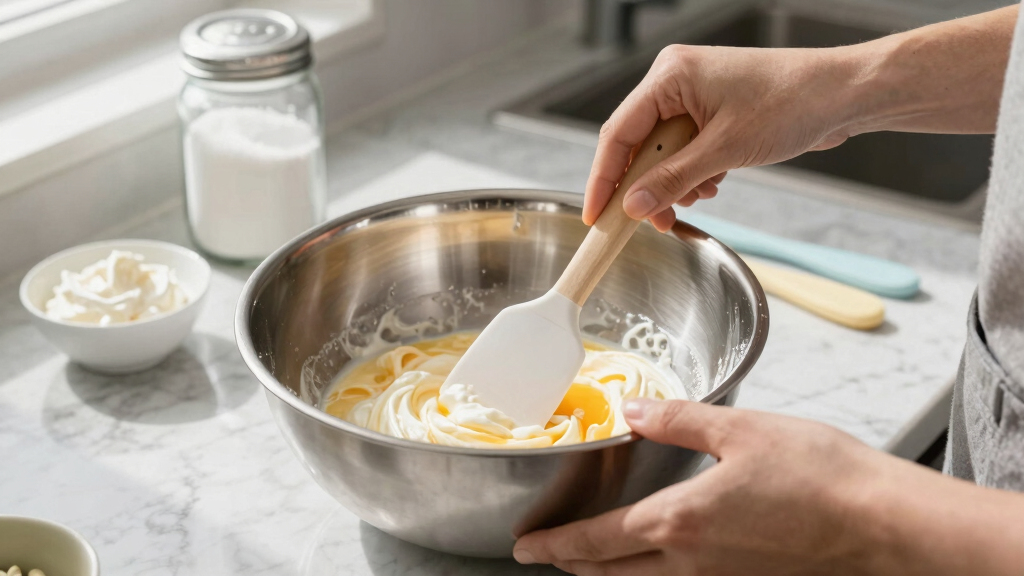
Fold gently with a silicone spatula or balloon whisk using a layered, scooping motion.
Stop folding as soon as ingredients are just combined, not smooth or uniform.
Avoid vigorous stirring or over-whipping, which causes deflation and graininess.
How to Fold Egg Whites Without Deflating Everything You Worked For
TL;DR: Folding egg whites is not stirring in slow motion. It is a gentle lift, turn, and stop-before-perfect technique that protects the tiny air bubbles responsible for soufflés, sponge cakes, chiffon, and meringues that rise instead of sulk.
The Air Is the Ingredient
Whipped egg whites are a protein network wrapped around air. Rough mixing crushes that network and releases volume. Gentle folding keeps the foam intact while slowly introducing batter, flour, chocolate, or custard.
Small bubbles rise best
Proper whipping creates tight, uniform bubbles. Folding preserves them so the finished bake stays light instead of dense.
Use the whites now
Foam weakens as it sits. Fold immediately after whipping for the most stable structure and highest volume.
Stop before smooth
The goal is combined, not beaten. A few faint streaks are safer than a perfectly smooth but flattened batter.

Pack of 2 Silicone Spatula Turners, Non Stick Slotted Kitchen Spatula Set, Heat Resistant BPA Free Kitchen Utensils, One-Piece Design, Suitable for Flipping Fish, Eggs, Steak, Pancakes (WHITE)
More Safe and Healthy: Our silicone spatulas are made of food-grade silicone, free of BPA;Even at high temperatures…
As an affiliate, we earn on qualifying purchases.
As an affiliate, we earn on qualifying purchases.
Cut, Scoop, Lift, Turn
Think deliberate layers. Each motion should move batter around the foam instead of pressing through it.
Whip
Use clean, dry tools and room-temperature whites. Stop at glossy stiff peaks.
Stabilize
Add about 1/8 teaspoon cream of tartar per egg white for extra resilience.
Lighten
Fold a small scoop of whites into the heavier batter first to loosen it.
Fold
Cut down the center, scoop from the bottom, lift over the top, then rotate.
Stop
Quit as soon as the mixture is just incorporated and still airy.

Calphalon Prime 8-Inch Balloon Whisk, Stainless Steel Kitchen Whisk for Eggs, Batter & Small Batch Mixing, Heavy-Gauge Wire Whip with Weighted Handle for Control
8-INCH BALLOON WHISK — One compact 8-inch stainless steel balloon whisk for whisking eggs, sauces, and small batches…
As an affiliate, we earn on qualifying purchases.
As an affiliate, we earn on qualifying purchases.
The Right Gear Makes Gentle Easier
A flexible spatula and wide bowl give you room to lift, turn, and preserve volume. The wrong tool encourages stirring, scraping, and overworking.
| Choice | Best Use | Foam Impact | Verdict |
|---|---|---|---|
| Silicone spatula | Folding whipped whites into batters, custards, or mousse bases. | Flexible edge lifts from the bottom with minimal bubble damage. | ✓ Best default |
| Balloon whisk | Whipping volume, then very delicate folding in loose mixtures. | Light wires can fold gently when used slowly. | ✓ Good option |
| Wide shallow bowl | Any batter where the whites need room to move. | Reduces crowding and lets the folding motion stay broad. | ✓ Strong support |
| Wooden spoon | Heavy mixing, not foam preservation. | Rigid shape tends to stir and compress the foam. | ✗ Avoid |
| Cold whites | Separating eggs cleanly, but not final whipping. | Harder to whip into maximum stable volume. | ~ Warm first |

Amazon Grocery, Cream of Tartar, 5 Oz
One 5 ounce container of Cream of Tartar
As an affiliate, we earn on qualifying purchases.
As an affiliate, we earn on qualifying purchases.
What Costs You the Most Volume
Most collapse comes from rough handling, poor foam condition, or temperature mismatch. The chart ranks the practical risks to watch while folding.

Chefmaster Meringue Powder Deluxe, Professional-Grade Egg White Substitute for Meringue Cookies, Pie Filling, Royal Icing, Non-GMO, Easy-to-Use, Made in USA, 8 oz
BAKING ESSENTIAL Meringue Powder Deluxe is your new kitchen staple for creating delicious meringue cookies, topping pies with…
As an affiliate, we earn on qualifying purchases.
As an affiliate, we earn on qualifying purchases.
What “Done” Looks Like
The best fold is intentionally unfinished.
When the last obvious streaks disappear, stop. Extra folding chases visual smoothness at the expense of rise, tenderness, and that cloudlike interior you created by whipping.
From Egg White to Lifted Bake
Every step protects the next one. The chain is simple: build stable foam, move it gently, and bake before the air has a chance to leave.
Common Folding Questions
Why did it deflate?
Usually from overmixing, cold whites, grease in the bowl, or a stirring motion that breaks the foam.
When are whites ready?
They should hold upright stiff peaks and look glossy, not dry, lumpy, or grainy.
Can aquafaba work?
Yes. Whip longer for stability, then use the same gentle folding rhythm and stop early.
Why Gentle Folding Matters More Than You Think
Folding is the magic step that keeps your baked goods light and airy. It’s not just mixing — it’s preserving the tiny air bubbles that make everything from chiffon cakes to soufflés melt in your mouth. When you fold gently, you avoid crushing those bubbles, keeping the mixture fluffy.
Imagine trying to fold a delicate, fluffy blanket — if you press too hard, it flattens. Egg whites are similar. Over-aggressive mixing causes the foam’s protein network to break down, releasing air and deflating your effort.
Understanding why gentle folding matters helps you appreciate the tradeoff: rushing the process might save time but at the cost of volume and lightness. Conversely, slow, careful folding preserves the structure but requires patience. Striking this balance ensures your baked goods rise beautifully and have the tender, airy texture you desire.
The Exact Step-by-Step How-To for Fluffy Egg Whites
- Whip your egg whites at room temperature until stiff peaks form. Use a clean, dry bowl and a balloon whisk or silicone spatula. Proper whipping creates a stable foam with small, uniform bubbles, which are crucial for a light texture. Under-whipped whites lack structure, while over-whipped ones become dry and grainy, making folding difficult.
- Add a stabilizer like 1/8 teaspoon of cream of tartar per egg white to help maintain structure. This acid strengthens the protein network, making the foam more resilient against collapse during folding. It’s a small addition with a big impact on stability, especially if you plan to fold multiple times or incorporate other ingredients.
- Start folding immediately after whipping to keep maximum volume. Delaying increases the risk of deflation as the foam begins to weaken over time.
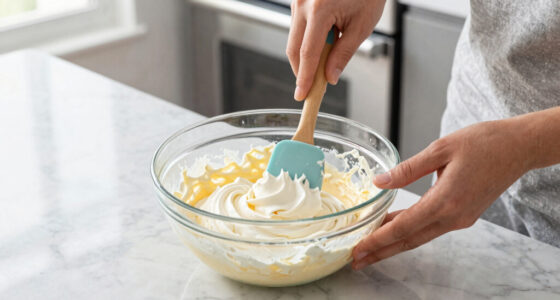
- Use a large, flexible spatula. Cut through the center, scoop from the bottom, and gently lift and fold over the top. This technique minimizes the disruption of air bubbles, maintaining the foam’s integrity.
- Rotate your bowl as you go, turning it clockwise or counterclockwise, so every part gets a gentle touch. Consistent motion ensures even incorporation without breaking the delicate structure.
- Stop once the egg whites are just incorporated — don’t overmix. Look for streaks of white to disappear, but don’t beat to a smooth batter. Overmixing risks deflating the foam, which compromises the final texture.
Picture this: a light, airy cloud being folded into your batter—every scoop and turn preserves that delicate structure, like turning a fragile snowflake. The key is understanding that each movement should be deliberate and gentle, as rough handling can cause irreversible damage to the foam’s network.
Tools and Tricks for Zero Deflation
Having the right tools makes a big difference. Use a wide, shallow bowl to give your whites room to expand, reducing the risk of overcrowding that can cause deflation. A silicone spatula or a balloon whisk offers the flexibility needed for gentle folding, allowing you to lift and turn without tearing the foam apart.
Here’s a quick comparison:
| Tool | Benefit |
|---|---|
| Silicone spatula | Flexible, gentle, easy to lift and fold, minimizes disruption of bubbles |
| Balloon whisk | Creates more volume during whipping, ideal for delicate folding due to its lightness and flexibility |
Pro tip: Always use a clean, dry bowl. Residual grease or moisture can weaken egg foam, making it easier to deflate because the protein structure becomes less stable, leading to collapse during folding.
Common Mistakes That Cause Egg White Collapse (And How to Avoid Them)
Many bakers accidentally deflate their egg whites by rushing or using cold whites. Over-whipping can turn them dry and grainy, making folding harder. Using a vigorous stirring motion is a recipe for disaster — it crushes those precious bubbles.
Here’s what to watch out for:
- Whipping egg whites straight from the fridge — always let them reach room temperature first. Cold whites are harder to whip into stable foam and are more prone to collapse during folding.
- Over-whipping beyond stiff peaks — stop when peaks are firm and glossy. Overwhipping damages the foam’s structure, creating a dry, crumbly texture that doesn’t hold air well.
- Using a metal bowl without stabilizers — add a pinch of cream of tartar to boost stability. Metal bowls can sometimes inhibit foam formation unless stabilized, while glass or plastic bowls are more forgiving.
- Folding too aggressively — remember, gentle layers are your friend. Rushing or stirring vigorously breaks the foam’s network, causing air to escape and resulting in flat baked goods.
Think of your egg whites like a delicate musical instrument. Handle them softly, and they’ll sing; handle them roughly, and the music stops. Recognizing these pitfalls allows you to maintain the integrity of your foam and achieve a perfect rise every time.
How Modern Techniques and Tips Keep Your Egg Whites Perfect
Recent innovations, like adding a splash of lemon juice or cream of tartar, boost foam stability by up to 30%, according to an anonymous researcher. These acids strengthen the protein network, making the foam more resistant to collapsing during folding and baking. Electric mixers with specific whipping settings help achieve consistent peaks without overwhipping, reducing variability and ensuring a stable structure.
Another trick: incorporate egg whites into batter at the same temperature — hot or cold — to prevent collapse. Temperatures that are too different can cause the foam to deflate or cook prematurely. If you’re making vegan meringues with aquafaba, the same gentle folding applies, but with a slightly longer whip time to achieve the desired stability.
Bottom line: using stable foam and proper technique transforms a simple step into a game-changer for your baking success. These modern methods enhance reliability and elevate your baked goods’ texture and appearance.
Frequently Asked Questions
Why do my egg whites deflate when I fold them into batter?
Overmixing, using cold whites, or folding too vigorously can break down the foam structure, causing deflation. Gentle, layered folding preserves the air bubbles essential for fluffiness.
How do I know when egg whites are whipped enough?
They should form stiff peaks that stand upright without drooping. When you lift the whisk or spatula, peaks should hold their shape firmly, glossy, and smooth.
Can I fold egg whites into hot or cold mixtures?
Egg whites are best folded into ingredients at similar temperatures. Cold whites can cause the foam to collapse, while very hot mixtures may cook the whites, ruining the structure.
What’s the best way to prevent egg white deflation?
Use room temperature whites, add stabilizers like cream of tartar, and fold gently with a spatula. Patience and a light touch are your best tools.
Is folding different from stirring?
Yes. Folding involves a gentle, layered motion that preserves air, while stirring is more vigorous and can deflate the foam. Use folding whenever you want fluffy, airy results.
Conclusion
Mastering the art of folding egg whites is about patience and finesse. Think of it like turning a delicate piece of art — gentle, deliberate movements preserve the beauty you’ve created.
Next time you whip up those whites, remember: a light touch turns simple ingredients into show-stopping baked goods. Your fluffy, airy masterpiece is just a fold away.