
TL;DR
In baking, ‘room temperature’ generally means 68°F to 72°F, but many bakers guess or misunderstand this. Using ingredients at the correct temperature improves texture, rise, and consistency in baked goods. Accurate measurement and preparation are key to perfect results.
Know that ‘room temperature’ in baking generally means 68°F to 72°F, but always verify with a thermometer if possible.
Use quick warming techniques like submerging eggs or microwaving butter in short bursts to bring ingredients to ideal softness.
Cold ingredients don’t blend well and can ruin the texture; warm ingredients can cause over-spreading or sinking.
A difference of just 5°F can impact your baked goods’ rise and crumb by up to 10%.
Always check your environment and adjust ingredient prep accordingly for consistent results.
What “Room Temperature” Actually Means in Baking
Most bakers guess. But in baking, “room temperature” usually means a narrow target: 68°F to 72°F. That small window helps butter cream properly, eggs blend smoothly, dairy mix evenly, and baked goods rise with a finer crumb.
A 5°F ingredient shift can change rise and crumb by up to 10%.
The range where ingredients blend instead of resisting the batter.
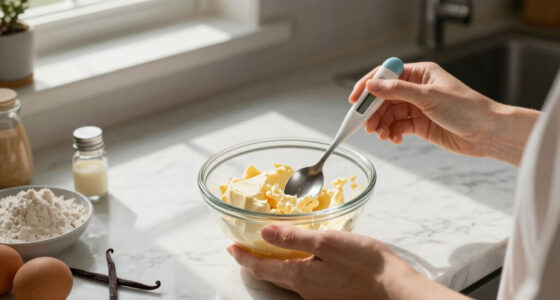
Cut into pieces, then wait until pliable but still cool.
Warm-water bath brings eggs closer to recipe-ready temperature.
Potential difference in rise and crumb from a small temperature swing.
“Room” is not your kitchen. It is a baking target.
A summer kitchen at 75°F and a winter kitchen at 65°F are both “rooms,” but they do not treat butter, eggs, and dairy the same way. Precision turns the vague instruction into a repeatable method.
Soft, not melted
Butter should yield when pressed, but still hold shape. Melted butter cannot trap air the same way during creaming.
Smooth blending
Room-temperature eggs emulsify more easily, helping cake batter stay stable and creating a finer crumb.
No shock effect
Cold milk or buttermilk can make batter seize or curdle. Gentle warming keeps the mixture uniform.

0.5 Sec Instant Read Meat Thermometer Digital with ±0.5℉ Precision, Food Thermometer for Cooking Kitchen Gadgets, Oven Grill Candy BBQ Essentials Accessories, Gifts for Him Dad Men Birthday, Red
【8X Faster + 4X More Precise】: Upgraded with an industrial-leading professional thermocouple sensor, Themomonster meat thermometer digital with…
As an affiliate, we earn on qualifying purchases.
As an affiliate, we earn on qualifying purchases.
How to get ingredients into the sweet spot.
The goal is not hot, melted, or loose. It is softened enough to blend seamlessly while still behaving like the ingredient the recipe expects.
Check the room
If the kitchen is below 68°F or above 72°F, adjust your prep time instead of trusting the clock.
Prep smaller
Cut butter into pieces, pour dairy into a bowl, and remove eggs from cartons so temperature equalizes faster.
Warm gently
Use 5-10 second microwave bursts for butter or a warm-water bath for eggs and dairy.
Verify texture
Use a thermometer for precision, or the finger test: soft, pliable, and no longer fridge-cold.
UNIVIVO 280g Butter Slicer Cutter and Airtight Container for Fridge, 2-in-1 PC Butter Dish with Stainless Steel Wires for Easy Portion Control, Slices After 15-20 Mins Softening, Clear Butter Keeper
[2-IN-1 CUTTER & KEEPER] Simplify your kitchen routine with this innovative butter dish that cuts and stores butter…
As an affiliate, we earn on qualifying purchases.
As an affiliate, we earn on qualifying purchases.
Cold vs. room temp vs. warm: what works best?
Most baking recipes want the middle column. Cold and warm ingredients can be useful, but only when a recipe asks for them.
| Ingredient | Cold Refrigerator | Room Temperature | Warm Quick Prep |
|---|---|---|---|
| Butter | ✗Hard, difficult to cream, and likely to leave dense spots. | ✓Soft and pliable, ideal for creaming and air capture. | ~Very soft or melted; risky for cakes and cookies. |
| Eggs | ✗Chilly eggs can tighten batter and resist emulsifying. | ✓About 68-72°F, blends smoothly into fat and sugar. | ~Fine if warm, not hot, and used immediately. |
| Dairy | ✗May curdle or shock the batter when added cold. | ✓Mixes evenly for a more consistent batter. | ~Useful when gently warmed below body temperature. |

FEPPO Electric Warming Tray, 4-in-1 Food Warmers for Parties Buffet with 10 Temp Settings and Timer, 33"x15" Glass Surface Warming Mat for Food, Modular Buffet Hot Plates for Catering and Gatherings
Modular, Expandable & Easy to Store – Built for Buffets & Gatherings: The FEPPO modular food warming system…
As an affiliate, we earn on qualifying purchases.
As an affiliate, we earn on qualifying purchases.
The 5°F difference is where baking gets sneaky.
Temperature affects creaming, emulsification, spread, rise, and crumb. The farther ingredients drift from the 68-72°F range, the more the finished bake changes.
Texture Risk by Ingredient Temperature
Ingredient Temperature Spectrum
The practical target is narrow because butter structure, egg emulsification, and dairy consistency all change quickly outside it.
Milk Refractometer 0-20% | Handheld Refractometer Tester for Dairy Farms, Milk Adulteration Detection & Quality Control | Portable Optical Refractometer with ATC 10-30°C | Precision ±0.2%
✅ Instant Water Dilution Detection & Multi-Purpose Use — Whether you run a dairy herd, manage a smallholding,…
As an affiliate, we earn on qualifying purchases.
As an affiliate, we earn on qualifying purchases.
What goes wrong when you ignore temperature.
The problem usually shows up after the oven has done its work: dense cake, greasy cookies, flat bread, uneven crumb, or batter that never looked quite right.
Cold butter
Fails to cream evenly, leaving dense patches or tunnels in cakes.
Melted butter
Can cause cookies to over-spread and cakes to lose structure.
Cold eggs
Can make batter split or seize instead of emulsifying smoothly.
Rushed timing
Fifteen minutes in a cold kitchen may not soften ingredients enough.
Fast answers for better bakes.
When in doubt, check the recipe first. Some pastry, biscuit, custard, or cheesecake methods intentionally ask for cold or specific temperatures.
How do I know it is ready?
Butter should yield to light pressure. Eggs and dairy should feel no longer fridge-cold. A thermometer gives the cleanest answer.
Can I bake with cold ingredients?
Yes, but expect possible changes in texture, rise, and consistency unless the recipe specifically calls for cold ingredients.
What if I forgot?
Use gentle shortcuts: warm-water bath for eggs, small pieces for butter, and short microwave bursts only when you can monitor closely.
What ‘Room Temperature’ Really Means and Why It Matters
In baking, ‘room temperature’ almost always refers to a range of about 68°F to 72°F (20°C to 22°C). This is the sweet spot where fats, eggs, and dairy blend smoothly, creating a homogeneous batter that rises evenly. Using ingredients at this temperature prevents issues like batter seizing or uneven leavening. Imagine trying to mix cold butter into flour—it’s like trying to stir cold honey; it just doesn’t blend well. When ingredients are at the right temperature, your baked goods develop a finer crumb, better rise, and a more appealing texture.
Many recipes specify ‘room temperature’ because it’s a proven key to consistency. But confusion arises because ‘room’ can mean different things depending on where you bake and the season. A home in summer might hit 75°F, while winter might dip below 65°F indoors. Knowing the precise temperature helps you control outcomes, especially when baking delicate cakes or soufflés.
The Big Misunderstanding: ‘Room Temperature’ Isn’t Always the Same
Many bakers assume ‘room temperature’ is universal, but it varies with climate, season, and even house heating. For example, in a cozy winter kitchen, the temperature might hover around 65°F, while summer could push it to 75°F or more. This variation can cause inconsistent results—like a cake that doesn’t rise or cookies that spread too much.
To avoid this, consider your environment. If your kitchen is chilly, ingredients might need a little help to warm up. Conversely, in hot weather, you might need to cool ingredients slightly before mixing. The key is to aim for that 68-72°F range as a practical standard, regardless of your home’s climate.
Using a simple thermometer helps. Just insert an infrared or digital thermometer into your butter or eggs. Once you see they’re in the right range, you’re set for consistent baking magic.
How to Bring Ingredients to Perfect ‘Room Temperature’ — Step by Step
- Butter: Cut into smaller pieces and leave on the counter for 30-60 minutes. For faster results, microwave in 5-10 second bursts, checking frequently, until pliable but not melted.
- Eggs: Take out of the fridge and let sit for 30 minutes. For quick warming, submerge in warm (not hot) water for about 10 minutes—gently, to avoid cracking.
- Dairy (milk, buttermilk): Pour into a small bowl and leave at room temp for 30-60 minutes. Or warm gently in a bowl of warm water for about 10 minutes, then stir well before adding.
Always check with your finger—ingredients should feel warm to the touch, soft, and slightly pliable. Use a thermometer for precision if you’re aiming for perfection.
Remember: the goal isn’t melted or hot, but just softened enough to blend seamlessly. This step makes a noticeable difference, especially in cakes and cookies, where even small temperature tweaks matter.
Why the Right Temperature Makes or Breaks Your Baking
Ingredients at the correct temperature help fats and liquids emulsify better, trapping air and moisture. This results in a lighter, fluffier crumb and better rise. For example, a cake batter with softened butter and room-temp eggs will incorporate more evenly, producing a finer texture.
Cold ingredients can cause batter to seize or not mix properly, leading to dense textures or uneven holes. Warm ingredients, on the other hand, can cause fats to melt prematurely, making cookies spread too much or cakes sink.
Research shows that even a 5°F difference in butter temperature can change a cake’s rise by up to 10%. That’s like the difference between a fluffy sponge and a dense brick.
Comparison Table: Cold, Room Temp, and Warm – What’s Best When?
| Ingredient | Cold (Refrigerator) | Room Temperature | Warm (Quick Warming) |
|---|---|---|---|
| Butter | Hard, difficult to cream | Soft and pliable, ideal for creaming | Melted or very soft, not recommended for creaming |
| Eggs | Chilly, may seize in batter | Warmed to about 68-72°F, blends smoothly | Warm but not hot, for quick use |
| Dairy (milk, buttermilk) | Cold, may cause curdling | At ideal temperature, mixes evenly | Gently warmed, no hotter than body temp |
Choosing the right temperature depends on your recipe and timing. For most baking, room temperature ingredients deliver the best results, while cold or warm can be used strategically for specific effects.
What Happens If You Ignore the Temperature? Common Mistakes
Ignoring ingredient temperature can lead to dense cakes, greasy cookies, or flat bread. For example, using cold butter in a cake batter can cause uneven mixing, resulting in dense spots or tunnels. Overly warm eggs might cause your batter to thin out and spread too much in the oven.
Another mistake is rushing ingredient prep—leaving butter out for only 15 minutes in a cold room might not soften it enough, leading to uneven creaming. Or microwaving butter until it’s melted, which ruins the texture altogether.
These missteps often show up as poor rise, dense crumb, or uneven baking. It’s a small detail that makes a big difference in professional results.
Your Baking Success Depends on This One Simple Fact
The most important thing to remember is that getting your ingredients to the right temperature is a game changer. It’s not just about following a recipe—it’s about understanding how ingredients behave and reacting accordingly. When you control their temperature, you control your results.
Next time you bake, take a moment to check your ingredients. Use your finger or a thermometer. Softened butter, warm eggs, and room-temp dairy make your baking smoother, more predictable, and way more satisfying.
It’s a small step that leads to big improvements. Because in baking, every detail counts—and this one is easy to fix.
Frequently Asked Questions
How do I know when my ingredients are at room temperature?
They should feel soft, pliable, and slightly warm to the touch. For butter, press it with your finger—if it yields easily, it’s ready. Eggs should be warm but not hot. Dairy should also be slightly warm or at least no longer cold from the fridge.
Can I bake with cold ingredients?
Yes, but it can affect the final texture and rise. Cold fats won’t cream properly, and cold eggs may cause batter to seize. For best results, follow your recipe’s instructions about ingredient temperature.
How long does it take to bring ingredients to room temperature?
Butter usually needs 30-60 minutes out on the counter. Eggs take about 30 minutes, or 10 minutes in warm water. Dairy, like milk or buttermilk, can be warmed gently in warm water for about 10-15 minutes. Always check for softness before mixing.
What if I forget to bring ingredients to room temperature?
You can gently warm ingredients in short bursts in the microwave or warm water bath. Just be careful not to melt or overheat—aim for softness, not heat. Adjust your timing accordingly next time to avoid surprises.
Why do some recipes specify ‘cold’ or ‘warm’ ingredients instead of ‘room temperature’?
Some recipes require precise temperatures for specific effects, like avoiding curdling in custards or controlling spreading in cookies. Always follow these instructions closely for the best results.